
- Release Year: 2013
- Platforms: Windows
- Publisher: Wargaming.net, Inc.
- Developer: Wargaming.net, Inc.
- Genre: Action
- Perspective: Behind view
- Game Mode: MMO
- Gameplay: Aircraft customization, Flight combat, Microtransactions, Progression system
- Setting: War, World War II
- Average Score: 61/100
Description
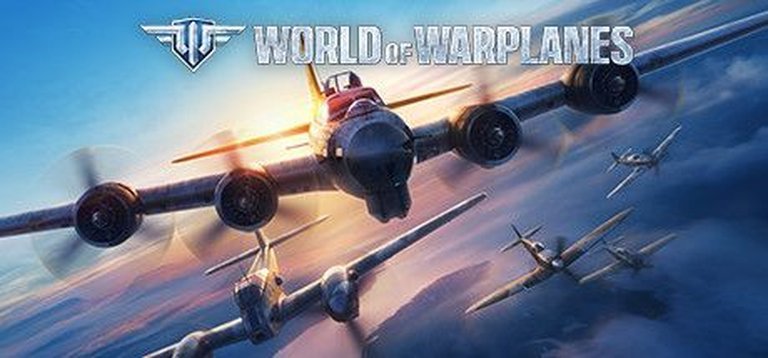
World of Warplanes is a free-to-play multiplayer action game developed by Wargaming.net, set in a mid-20th century warfare environment where players pilot historically accurate warplanes from various nations in team-based aerial combat. Matches, lasting up to 15 minutes, focus on achieving air superiority by destroying enemy aircraft or ground targets, with gameplay emphasizing dogfights, component-based damage, and a progression system involving experience points for crew training, aircraft upgrades, and unlocking new planes through in-game currencies or microtransactions.
Gameplay Videos
Where to Buy World of Warplanes
PC
World of Warplanes Patches & Updates
World of Warplanes Mods
World of Warplanes Guides & Walkthroughs
World of Warplanes Reviews & Reception
metacritic.com (60/100): World of Warplanes will continue to evolve, now let’s await the third and final game of the World trilogy, Battleships.
metacritic.com (60/100): World of Warplanes is a fun, arcady game with quick and exciting battles.
metacritic.com (70/100): Simplified flying is not even remotely as grabbing as tank battles.
metacritic.com (90/100): World of Warplanes manages to leave an excellent impression.
metacritic.com (80/100): World of Warplanes provides good aerial shooting fun, but its future lies in the future support that Wargaming will provide it with.
metacritic.com (0/100): Игра просто ужасна, графика, гемплей, все на низшем уровне!
metacritic.com (0/100): If you are looking for a combat simulation or any flying realism – save yourself the trouble and try something else.
pcgamer.com : With lovely graphics and great matchmaking stability, World of Warplanes remains entertaining even as its simplicity wears thin.
opencritic.com (60/100): World of Warplanes is not bad, but it’s not nearly as exciting as World of Tanks.
opencritic.com (78/100): Bravado is no match for sound dogfighting strategy in World of Warplanes.
opencritic.com (74/100): With lovely graphics and great matchmaking stability, World of Warplanes remains entertaining even as its simplicity wears thin.
opencritic.com (70/100): A ton of unlockable planes and exciting dogfights overshadow World of Warplanes’ tendency towards repetition.
opencritic.com (50/100): World of Warplanes needs some tune-ups before it can soar
opencritic.com (90/100): there’s every reason to expect that World of Warplanes will see the same ongoing upgrades that Wargaming brings to World of Tanks
opencritic.com (70/100): at its core WoWP is a very fun, addictive game
opencritic.com (70/100): World of Warplanes has a studio that prides itself on supporting its games long term
denofgeek.com : World of Warplanes can be a sharp and fun surprise when taken in quick, but refined doses.
World of Warplanes: A Sky Full of Ambition, A Ground Full of Grind
Introduction: The Promise of the Skies
In the early 2010s, Wargaming.net was an unstoppable force in free-to-play gaming. Its barnstorming success with World of Tanks (2011) had defied expectations, proving that a deeply mechanical, team-based vehicular combat game could thrive on a free model. The logical, audacious next step was to take that formula—the grind, the tech trees, the nation-based rivalry—and lift it into the third dimension. World of Warplanes (2013) was that step: an attempt to democratize the often insular world of combat flight sims, to package the romance of aerial combat frombiplanes to early jets into an accessible, addictive, and monetizable MMO. This review will argue that World of Warplanes is a game of profound and fascinating contradictions. It is a title built on a genuine passion for aviation history yet shackled by a free-to-play economy that often strangles its innate fun. It offers brilliantly intuitive controls that make anyone feel like an ace, yet provides a strategic and tactical depth that remains stubbornly shallow. Its legacy is not one of unequivocal triumph like its tank-bound sibling, but of a bold, flawed, and ultimately resilient experiment that found a second life through sheer iterative will.
Development History & Context: Building an Aerial Empire
The genesis of World of Warplanes lies not in its eventual Ukrainian development studio, but in the executive vision of Wargaming’s Minsk headquarters. As the MCV/DEVELOP interview reveals, the concept was born almost concurrently with World of Tanks‘ early success, with the Minsk team approaching Persha Studia in Kyiv with a “small demo” concept around 2010. The assignment was clear: translate the Tanks template—progression, nations, classes, modular upgrades—to the domain of flight.
This translation presented immense technical and design challenges. Persha Studia, led by Senior Producer Sergei Ilushin, had to adapt the BigWorld engine, which Wargaming had by then internalized. The core challenge, as Ilushin states, was “making a good balance of arcade and simulator.” The World of Tanks audience was “pretty casual,” but the “aviation fans” expected simulator heft. The solution was a radical simplification of flight physics. The team completely rebuilt the client-side rendering for Warplanes, as the scale of maps jumped from Tanks‘ one-kilometer squares to Warplanes‘ sprawling 16km x 16km landscapes, necessitating a wholly new approach to sky rendering, cloud layers, and environmental detail. The pursuit of atmosphere was literal; lead rendering programmers were taken for real flights to study the sky, and the team recorded engine sounds from actual WWII aircraft in the United States.
Launched into a market increasingly dominated by Gaijin Entertainment’s War Thunder—which explicitly promised a more simulation-focused “full real” experience—World of Warplanes positioned itself firmly in the arcade lane. Its release in November 2013 followed a lengthy beta (over two million applicants), but it was a game arriving to a direct, high-quality comparison that would define its critical reception.
Narrative & Thematic Deep Dive: The History is the Story
World of Warplanes possesses no traditional narrative. There is no campaign, no characters with arcs, no fictional plot. Its “story” is purely procedural and historical. The narrative is the player’s own progression through the tech trees, from the fragile biplanes of the 1930s to the jet-powered reflexes of the late 1940s. The theme is implicit: the evolution of air power itself.
Wargaming, as hinted in the Wikipedia source and explicitly stated by Ilushin, sees its games as educational tools. The “History of Aviation” section on the official website—featuring spotlights on the IL-2 “Flying Tank” or the F4U Corsair “Whistling Death”—is not mere flavor text. It is core to the studio’s mission: to use gameplay as a gateway to historical knowledge. By letting players experience the tactical roles—the turn-fighting of a Japanese Zero, the boom-and-zoom of a P-51, the rugged ground-pounding of an IL-2—the game teaches the doctrinal differences between air forces. Player actions create a “procedural history”: a dramatic bomber interception, a desperate low-altitude scissors fight, a successful ground-attack run. The drama emerges from the systems, not a script. This is a game where the only story is the one you write with your wings and your guns, framed by a museum-like reverence for the machines themselves.
Gameplay Mechanics & Systems: The Beautiful Simplicity and Its Limits
The core loop of World of Warplanes is deceptively simple: queue for a 15-minute, 15v15 match on one of several maps, select an aircraft from your hangar, and engage in aerial combat with two primary goals: destroy all enemy aircraft or achieve “air superiority” by destroying ground targets.
Combat & Flight Model: The game’s greatest achievement is its control scheme. Using a mouse and keyboard, players can execute complex maneuvers with minimal input. An “aim assist” lead indicator shows where to shoot to hit a maneuvering target. The flight model is firmly arcade: pitch, roll, and yaw are largely independent, planes have no stalling/spinning mechanics, and energy management is abstracted. This creates an immediately accessible, chaotic, and thrilling “furball” experience, praised by critics like IGN’s Andy Mahood for feeling “shockingly natural.” However, this simplicity is a double-edged sword. As PC Gamer’s Rob Zacny notes, the very accessibility that makes the game fun for beginners makes advanced techniques like barrel rolls feel artificial and difficult to master, creating a skill ceiling that is more about reflexes and prediction than deep flight dynamics.
Progression & Economy: The Tanks-inspired progression system is the game’s most contested design. Three currencies govern advancement: Free XP (universal, slow to earn), Aircraft XP (specific to a plane’s tree), and Crew XP (for pilot/gunner perks). Researching a new plane or module requires Aircraft XP, but purchasing it requires in-game Credits, earned per battle. This creates a constant resource loop. The criticism, most severe from Electronic Gaming Monthly and echoed by users, is that this loop is deliberately glacial to incentivize the purchase of Premium Account (50% more XP/Credits) or premium aircraft. The grind is “zäh” (tedious), as PC Games Germany states. Unlocks feel slow, and the variety in mid-tier tech trees can be stagnant, filled with minor variants of iconic planes (e.g., multiple P-51 Mustangs) while leaving out legendary aircraft like the Fw 190 or Hurricane—a frustration noted by multiple reviewers.
Game Modes & The Supremacy Problem: The original primary mode was a simple “elimination” deathmatch. The major 2.0 overhaul in 2017 introduced the “Conquest” mode with respawns and a supremacy mechanic (capturing zones by destroying ground targets). In theory, this adds MOBA-like strategic depth. In practice, as Zacny and others observed, it almost never works. Aircraft attacking ground targets are highly vulnerable to fighters. Ground targets are resilient, requiring bomb loads that are limited. The result is that “supremacy victories” were a rarity before 2.0 and remain a niche strategy. The mode’s potential is undermined by the core combat loop’s focus on air-to-air kills. The game is, at its heart, a team deathmatch with a complex economic wrapper.
Damage Model: A unique feature is the modular damage system. Wings, engines, and control surfaces can be disabled or destroyed independently of a plane’s total HP pool. A perfectly healthy aircraft can become a glider if its tail is shot off. This adds a layer of tactical consideration—aim for the wings to rob maneuverability, aim for the engine to cripple speed. However, critics like 4Players found it “too static” and “not detailed enough,” desiring a more granular, realistic failure model akin to War Thunder.
World-Building, Art & Sound: Beauty in the Arcade abstraction
Visuals: World of Warplanes delivers on the “lovely graphics” promise of the PC Gamer review. The aircraft models are intricate and historically authentic. The maps, while limited in number, are visually diverse and impressive in scale: frozen Arcticarchipelagos, desert canyons, Pacific atolls. The sky rendering, a major technical focus for the team, is a standout—clouds are volumetric and dynamic, and the sense of altitude is palpable. Explosions are spectacular, fire and smoke effects are dramatic, and the overall aesthetic is bright, crisp, and clear, favoring readability over simulation grit. The absence of a true cockpit view is a noted omission, especially compared to War Thunder.
Sound Design: The soundscape is exceptional. The team recorded real engine notes from vintage aircraft, as Ilushin proudly stated. The roar of a radial engine, the whine of a jet, the chatter of machine guns—all are authentic and powerfully rendered. The sound of tearing metal, breaking wood, and catastrophic engine failure provides crucial audio feedback that the simplified damage model sometimes lacks visually. The soundtrack, though limited in-game, was notably enhanced by a collaboration with Iron Maiden in 2018, using “Aces High” and featuring a Spitfire skin, tying the game to the cultural iconography of WWII air power.
Atmosphere vs. Simulation: The art and sound design work in service of an “arcade” fantasy of WWII/Korea air combat. It captures the feeling—the speed, the danger, the grandeur—without the practice. The beauty is in the spectacle of the dogfight itself, the ballet of tracer fire and diving planes, which the game’s camera and effects frame perfectly. It’s less about the cold, terrifying solitude of a real combat sortie and more about the glorious, sensational chaos.
Reception & Legacy: A Rocky Takeoff and a Successful Re-Launch
At Launch (2013): World of Warplanes received mixed to negative reviews, holding a Metacritic score of 69/100. Critics widely praised its accessibility, graphics, and stable netcode but panned its lack of depth, repetitive gameplay, and punishing economy. The direct comparison to War Thunder was fatal for its reputation. Games TM bluntly stated you could “play its direct competitor, War Thunder, and enjoy an experience with more depth.” Wargaming CEO Viktor Kislyi later admitted the game “failed to meet expectations.” It was a competent but unspectacular entry, unable to convert the Tanks player base en masse and failing to attract hardcore sim fans from War Thunder.
The 2.0 Reboot (2017): Recognizing the failure, Wargaming overhauled the game completely. World of Warplanes 2.0 added the crucial respawn mechanic and made Conquest the primary mode. It also upgraded the graphics engine. The reception shifted dramatically to generally positive. Critics like Gamereactor (8/10) and Inside-Indie (88%) praised the new dynamic, where losing a plane didn’t mean spectating for 10 minutes. The game now felt more like a continuous, strategic team battle rather than a series of disconnected duels. The economy was also tweaked to be less punitive.
Legacy and Influence: World of Warplanes did not become the cultural phenomenon World of Tanks did. Its legacy is twofold:
1. As a Case Study in F2P Design: It exemplifies the “gentleman’s agreement” between developer and player in a free-to-play model. The core combat is genuinely fun and free. The grind is the monetization lever. Its struggle is the struggle of balancing player retention against pay-to-win perceptions.
2. As a Niche Success: Post-2.0, it carved out a stable, dedicated community. It proved that a purely arcade, team-based aerial combat MMO with a Tanks-style progression could work, filling a specific niche between the hardcore sim of War Thunder and the pure chaos of games like Heroes & Generals. Its long-term support, with new nations (China, France, UK), new planes, and new maps, demonstrates Wargaming’s commitment to its “World of” ecosystem.
Conclusion: A Flawed Masterpiece of Its Kind
World of Warplanes is not a great game by many traditional metrics. Its narrative is nonexistent, its tactical depth is superficial, its progression is a grind, and its original game mode was fundamentally broken. Yet, to dismiss it entirely is to ignore its singular achievement: it made the complex, intimidating world of aerial combat immediately, joyfully playable for millions. The feeling of weaving through a cloud, lining up a deflection shot on a diving enemy, and seeing him erupt in a fireball is a pure, unadulterated gaming thrill, accessible with a mouse.
Its history is one of hubris, failure, and redemption. It arrived boasting the World of Tanks pedigree but underestimated the passion and sophistication of the flight combat audience, who largely preferred War Thunder‘s promise of realism. Its initial economy felt predatory, and its lack of strategic modes left gameplay repetitive. The 2.0 reboot was an admission of these faults and a successful course correction that finally aligned the game’s structure with its arcade-soul.
In the pantheon of combat flight games, World of Warplanes will never hold the revered place of IL-2 Sturmovik or the mainstream appeal of Ace Combat. But it occupies a unique, valuable space: the accessible, team-based, progression-driven dogfight MMO. It is a testament to the fact that you can build a compelling, long-lasting game on a foundation of glorious, shallow fun, so long as you respect your players enough to eventually fix your broken wings. It never achieved air superiority, but it learned, eventually, how to stay airborne.