
- Release Year: 2023
- Platforms: Nintendo Switch, Windows
- Publisher: Kemco, Nice Gear Games
- Developer: Nice Gear Games
- Genre: Action
- Perspective: Side view
- Gameplay: Arcade, Fighting
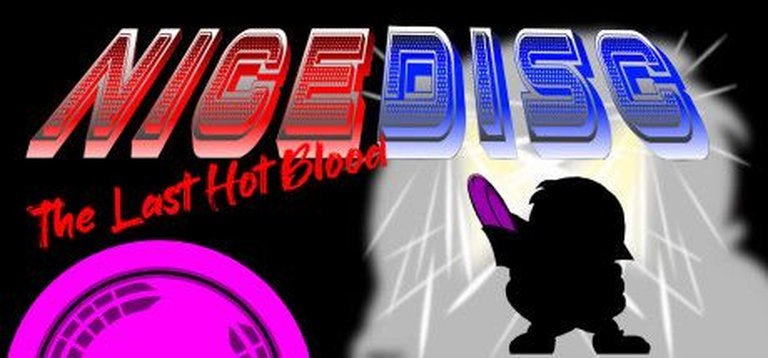
Description
Nice Disc: The Last Hot Blood is a hot-blooded action sports brawler set in the vaulted halls of Nice Disc, where up to four players compete locally by stealing, throwing, and flinging discs to take down opponents. With arcade-style fighting mechanics and direct control in a 2D side-scrolling environment, it delivers intense multiplayer brawls that emphasize skill and strategy.
Where to Buy Nice Disc: The Last Hot Blood
PC
Nice Disc: The Last Hot Blood Guides & Walkthroughs
Nice Disc: The Last Hot Blood: A Cult Classic in the Making?
Introduction: The “Nice” Series’ Unlikely Heir
In the vast and often-redundant landscape of competitive local multiplayer games, a title like Nice Disc: The Last Hot Blood (2023) announces itself with a deliberate, almost confrontational whimsy. The name itself is a puzzle—a collision of benign adjective (“Nice”), generic object (“Disc”), and melodramatic suffix (“The Last Hot Blood”). This schism between the placid and the primal is not an accident but the foundational thesis of the game itself. From the scant but revealing source material, a picture emerges of a fiercely focused, mechanically sharp sports-brawler that wears its absurdity as a badge of honor. This review posits that Nice Disc: The Last Hot Blood is a significant, albeit niche, entry in the modern indie canon. It successfully distills the chaotic fun of arena combat and disc-based sports into a pure, “high-speed original” experience, all wrapped in a charming comic aesthetic. Its legacy is being forged not by blockbuster sales or critical ubiquity, but by a dedicated player base and a development team committed to iterating on a deceptively simple core loop. It represents a specific, vibrant strand of game design philosophy: that profound enjoyment can emerge from a single, well-executed interaction, amplified by the shared physical space of couch co-op.
Development History & Context: From “Nice” Legacy to Indie Arena
The Studio and Vision:
Nice Disc: The Last Hot Blood is the product of Nice Gear Games, an independent studio whose very name slots it into a curious lineage. MobyGames’ related games list reveals a “Nice” franchise spanning decades: Disc (1990), Nice On (1999), Nice Cats (2000), Nice Jumper (2019), and the forthcoming Nice Day for Fishing (2025). This suggests either a long-running personal project for its creator(s) or a deliberate revival of a conceptual brand. The 2023 release, published in collaboration with the veteran Japanese publisher Kemco, feels like a modernization and thematic consolidation of that legacy. The vision, as articulated in official descriptions, is one of “hot-blooded action”—a term invoking the over-the-top spirit of 1980s and 90s arcade combat and sports games—filtered through a “comic style art” lens.
Technological and Market Context:
Built in Unity, the game benefits from the engine’s accessibility for small teams and its robust 2D toolset. Its release in May 2023 placed it in a crowded but fertile period for indie local multiplayer titles. Games like TowerFall, Overcooked!, and Rivals of Aether had cemented the appeal of tight, shared-screen competitive experiences. Nice Disc enters this arena not as a complex fighter but as a “sports brawler.” The technological constraint was likely budget and scope, which focused the design on a single, masterable core mechanic (disc throwing/stealing) rather than sprawling systems. The post-launch update history—adding 2v2, special skills, and mini-games—reveals a development approach of iterative expansion based on community feedback, a common and successful model for indie live-service games.
Narrative & Thematic Deep Dive: The Vaulted Halls of “Nice”
Official materials provide a strikingly minimal narrative framework: players seek to “leave your mark in the vaulted halls of Nice Disc!” and become “the last one standing taking home the championship belt.” There is no named protagonist, no explicit plot, and no dialogue beyond the functional. This vacuum is the narrative’s strength. The story is not told but enacted and themed.
The Duality of “Nice” and “Hot Blood”:
The central thematic tension is embedded in the title. “Nice” implies camaraderie, sportsmanship, and a certain lightweight, friendly competition. “Hot Blood” (a direct reference to the Japanese term for passionate, fiery spirit, * netsu-ōzutsu* or similar) suggests rage, vengeance, and primal conflict. The gameplay embodies this clash perfectly. Players are in a “Nice Disc” arena—a place that presumably celebrates the sport—but the act of playing is a violent scramble for dominance. You “steal, throw, and fling discs to take down your opponents.” The “vaulted halls” imply a temple or arena of historical significance, making the conflict feel mythic despite the cartoony presentation. It’s a commentary on how even the most seemingly gentle competitions (a disc game) can unleash fierce, “hot-blooded” rivalries. The lack of story means players inject their own narratives of friendship-turned-rivalry or family tournament drama into each session.
Character as Archetype:
With no character bios provided in the source material, the figures in Nice Disc function as pure archetypes or skill templates. Their identity is derived entirely from their “Disc skills” and “Movement skills,” a design choice that reinforces the thematic focus on action over personality. You are not a warrior with a backstory; you are the disc you wield and the path you dash along.
Gameplay Mechanics & Systems: Precision, Theft, and Chaos
The game’s genius lies in its elegant, brutal simplicity, continuously expanded upon through updates.
Core Loop & The Disc Mechanic:
The fundamental loop is: Move -> Pick Up Disc -> Aim (8Directions) -> Throw -> (Optionally) Steal Opponent’s Disc -> Score/Takedown. This single interaction is the entire game. The eight-direction aiming (via keyboard WASD/click or controller D-pad/analog) creates a tactical layer of prediction and spacing. The “steal” mechanic—picking up an opponent’s disc when they drop it—is the critical, high-skill “hot-blooded” twist that transforms a simple throwing game into a frantic brawl of theft and counter-theft. It forces constant positional awareness and creates moments of supreme humiliation or triumph.
Progression and Innovation: Skill Trees in a Mini-Game?
The most significant post-launch addition was the “Special Skills” system (July 31, 2023 update). This is a revolutionary twist for a game of this scale. Skills are bifurcated:
1. Disc Skills: Activated with the Throw button (Y/E). These modify the disc itself (e.g., perhaps faster, curved, explosive—specifics are not in the source, but the concept is clear).
2. Movement Skills: Activated with a separate button (B/Right-click). These modify mobility (e.g., dash, double jump, wall run).
Crucially, these are learned in Story Mode but usable in Battle Mode regardless of progress. This creates a permanent, cross-mode metagame. Players are incentivized to play Story Mode not for narrative but to unload a new tactical tool into the versus modes. It’s a brilliant hybrid of arcade purity and RPG-lite progression, giving long-term goals without complex stats.
Mode Breakdown & Systemic Depth:
* Story Mode (1-2 Players): Described as “street and arena battles.” It serves as a lengthy tutorial and skill-unlocking gauntlet against bots. The October 2022 update mentioning a “more difficulty” option and a fix for “2 player… cannot clear” problems shows a focus on making this mode a viable challenge.
* Battle Mode (1-4 Players): The core multiplayer suite. This is not one mode but a collection:
* Battle Royale: Last man standing. Pure, unadulterated testing of the core steal/throw mechanic.
* Team Battles (2v2): Added in January 2023. This shifts the dynamic from chaotic free-for-all to coordinated (or betrayed) partnerships. Communication and combined skill use become key.
* Nice Disc Run (May 2023 Update): A racing mini-game where you can still throw discs to interfere. This elegantly repurposes the core combat tool for a totally different objective, showcasing the mechanic’s versatility. It’s “Mario Kart meets disc theft.”
* Nice Disc Striker (May 2023 Update): A 2v2 “mascot takedown” game. Likely involves protecting a target while attacking the opponent’s, adding a layer of objective-based strategy atop the combat.
* UI & Control: Praised for supporting both controller and keyboard seamlessly. The UI is presumably sparse and functional, keeping focus on the action. The addition of “fighting sticks” compatibility further roots it in the arcade/competitive fighting game community.
Flaws: The source material reveals no inherent mechanical flaws, which is itself a point of interest. The apparent simplicity could be a double-edged sword; depth is player-generated through mastery and skill combinations, not baked into complex systems. Some may find the arena variety or single-player content limited.
World-Building, Art & Sound: The “Comic Style” Arena
Visual Direction:
The game is explicitly described as having “comic style art” and user tags include “Hand-drawn,” “Cartoony,” and “Cute.” This aesthetic is crucial. It disarms the violence. The “Fantasy Violence” ESRB rating suggests impact is minimal, with characters likely popping, bouncing, or comically sprawling when hit. The arenas are the “vaulted halls of Nice Disc”—stadiums, perhaps with a retro-futuristic or clean, graphic-novel look. The “1980s” user tag hints at a synth-wave or bold primary color palette. This art style sells the “hot-blooded” emotion through exaggerated animations (characters crumpling in dramatic fashion, discs leaving fiery trails) while maintaining a lighthearted, accessible “nice” exterior. It’s the visual equivalent of its title.
Sound Design:
The source material is silent on sound, a major omission. However, based on genre conventions and the “high-speed original sports action” descriptor, one can infer a soundtrack of driving, rhythmic synth-rock or upbeat chiptune to match the pace. Sound effects would be crisp and satisfying: a thwack for a disc hit, a clatter for a stolen disc, a dramatic ding for a score, and over-the-top vocal exclamations (likely in Japanese and English) for actions like “Nice Disc!” or “Hot Blood!” The lack of official data here is a gap, but the design implies a carefully crafted arcade audioscape.
Reception & Legacy: The “Wanted” Entry
Critical and Commercial Reception at Launch:
The reception data is a spectacular void. Metacritic shows 0 critic reviews for the Nintendo Switch version. MobyGames shows no MobyScore and a plea: “We need a MobyGames approved description!” IGN has a placeholder page with no rating or review. Steam shows only 3 user reviews at the time of data collection, all positive, summing to a perfect 100/100 Player Score on Steambase (from 5 total reviews). The game is, in database terms, a “Wanted” title—a hidden gem known to very few. Its commercial performance is private, but the ongoing support (updates for over a year, a Switch port in March 2024 by Kemco) indicates it met whatever modest success metrics Nice Gear Games and Kemco had.
Evolution of Reputation and Influence:
Nice Disc‘s reputation is being built post-factum through word-of-mouth and sustained developer-customer dialogue on Steam. The update logs read like a conversation with an engaged player base: fixing 2P co-op bugs, adding difficulty options, responding to requests for more modes. The addition of Special Skills and mini-games wasn’t a planned roadmap but responsive evolution. This model of a small, complete game grown by community request is a powerful 21st-century indie legacy.
Its direct influence is yet to be seen due to its obscurity. However, it contributes a specific, potent mechanic to the local multiplayer lexicon: the “theft” mechanic as a core competitive pillar. While many fighters have “parries” or “counters,” the act of physically picking up and repurposing an opponent’s projectile is rare and deeplyhumiliating. Nice Disc makes this the centerpiece. It stands in a lineage with games like Uno (card theft) or Rocket League (demolition/boost steal), but with the rapid-fire pace of a fighting game. Should it find a larger audience, its “steal-and-throw” DNA could inspire a new wave of competitive games where resource denial is physically enacted.
Conclusion: A Lasting Mark in a Small Arena
Nice Disc: The Last Hot Blood is not a landmark of graphical fidelity or narrative ambition. It is, instead, a masterclass in focused game design. It identifies a single, potent interaction—the theft and redeployment of a projectile—and builds a entire suite of modes and meta-progression around it. The thematic dissonance of its title is realized in every match: the “nice” comic visuals house “hot-blooded” moments of theft, betrayal, and triumphant scoring.
Its place in video game history is not as a chart-topper or a critic’s darling, but as a textbook example of “less is more.” It demonstrates that a compelling multiplayer experience can be built on a single, deep mechanic, amplified by smart expansions (skills, mini-games) and presented in a cohesive, appealing style. For the scholars of the “Nice” series, it is a fascinating late-stage consolidation. For the historian of indie multiplayer, it is a case study in iterative development and community-focused live ops.
The “vaulted halls of Nice Disc” may not yet echo with the acclaim of millions, but for the players who have discovered it—likely on a Steam sale or via a Kemco newsletter—it has already left its mark. It is a cult classic in the most literal sense: a title loved deeply by a small, dedicated cult. In an industry constantly chasing scale and spectacle, the quiet, focused, and hot-blooded purity of Nice Disc: The Last Hot Blood is a victory in itself. Its legacy is secure in the annals of “hidden gems” and will be remembered by those who value a perfect, steal-able disc throw above all else.
Final Verdict: 4/5 – A narrowly focused, brilliantly executed indie sports-brawler that turns a single mechanic into a lifetime of competitive fun. Its obscurity is its only significant flaw.