
- Release Year: 2014
- Platforms: Windows
- Publisher: Polynetix Studio, WIWD Development
- Developer: Polynetix Studio, WIWD Development
- Genre: Strategy, Tactics
- Perspective: First-person
- Game Mode: Single-player
- Setting: Futuristic, Sci-fi
- Average Score: 70/100
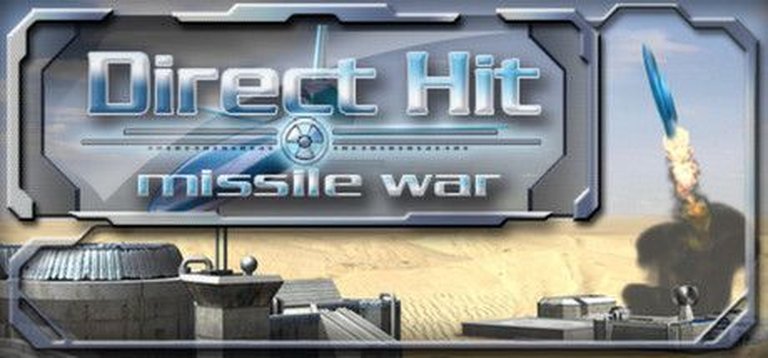
Description
Set in a futuristic Golden Age of space colonization, Direct Hit: Missile War tasks players with leading corporate factions in explosive duels on contested planets. To secure mining rights and colonial control, players must build bases, harvest resources, trade, research technology, and design customizable missiles in a strategic battle orchestrated by the Earth Federation to prevent all-out war.
Gameplay Videos
Where to Buy Direct Hit: Missile War
PC
Direct Hit: Missile War Reviews & Reception
moddb.com (70/100): it’s actually pretty damn fun.
Direct Hit: Missile War Cheats & Codes
Direct Hit: Missile War v1.8 (PC)
Open console by pressing the ~ key and type the codes below.
| Code | Effect |
|---|---|
| win | Skips the current level (destroys all enemy bases). |
| recon | Opens the enemy’s explored map. |
Direct Hit: Missile War: A Fragmented Legacy of Ambitious Misfire
Introduction: The Ghost in the RTS Machine
In the crowded pantheon of real-time strategy games, certain titles achieve canonical status through polish, innovation, or sheer market dominance. Others, like Direct Hit: Missile War, exist in the half-light of obscurity—games whose ambition is palpable but whose execution leaves them as fascinating artifacts of “what could have been.” Released in 2014 after a protracted development cycle visible in its shifting 2011–2014 release dates, Direct Hit: Missile War is not a failed game in the traditional sense; it is a curious one. Its core premise—a missile-centric RTS with asymmetric, fog-of-war-shrouded maps—was a genuine departure from the Command & Conquer template it openly decried. Yet, as we shall see, a cascade of developmental naivete, interface friction, and mechanical overcomplication consigned it to a fate of “mostly negative” Steam reviews and a dedicated but tiny cult following. This review argues that Direct Hit is less a bad game and more a poignant case study in the perils of indie development: a brilliant, idiosyncratic idea strangled by its own complexity and a lack of iterative design refinement. Its legacy is not one of influence, but of a clear, unheeded warning about the sacred triad of RTS design: information, agency, and flow.
Development History & Context: The Newbie’s Burden
The Studio and Its Vision
Direct Hit: Missile War was developed by Polynetix Studio in collaboration with WIWD Development, with both entities also acting as publishers. Very little concrete historical data exists about these studios, a fact that itself speaks to the game’s niche status. From the scant developer comments on ModDB and IndieDB, we glean that this was the team’s first strategy project. The lead developer’s admission—”it was our first strategy project and we were newbies, so forget us for some lack of skill”—is a rare and humble moment of postmortem clarity in an industry often marked by defensive posturing.
The stated vision, drawn from the official Steam/ModDB description, was to create a “deep strategic experience” as an antidote to “Command and Conquer clones.” The developers cited homage to the 1990s console RTS Megalomania, though intriguingly, they claimed to have been unaware of the similarly structured Metal Marines (SNES, 1993) until after release, despite players repeatedly drawing the parallel. This independent conception is significant; it suggests the core “missile as the primary unit” mechanic emerged from a genuine, albeit isolated, design impulse.
Technological and Market Context
The game was built on a custom engine, a common but risky choice for small teams. The system requirements (DX9, GeForce 6600) place it firmly in the early 2010s indie PC landscape—an era of burgeoning digital storefronts like Steam, Desura, and GOG, but before the current “indie explosion” saturation. The RTS genre itself was in a quiet depression. The late 2000s/early 2010s saw few major franchise entries, with the market dominated by MOBAs (League of Legends, 2009; Dota 2, 2013) and the lingering shadow of Blizzard’s StarCraft II (2010). This created both an opportunity (a hungry niche for “different” strategy) and a challenge (minimal audience and press coverage for mid-tier indie RTS).
The game’s protracted release—first appearing on Desura/IndieDB in 2011, reviewed by RTS Guru in 2013, but not hitting Steam until August 7, 2014—suggests a development hell marked by features creep, technical hurdles, and the scramble for a viable publisher (noted as “Impulse” in the RTS Guru review, likely referring to the now-defunct Impulse game client). This timeline is critical: it highlights a classic indie pitfall where a small team, lacking project management discipline, stretches a novel prototype into a full release that never quite loses its prototype-like roughness.
Narrative & Thematic Deep Dive: Corporate Satire in a Vacuum
The setting of Direct Hit: Missile War is its most conventionally polished asset. The official description provides a fully realized lore:
“In the distant future, the coming of a technological Golden-age brings reality to humanity’s dream of reaching out to other planets. Corporate exploration probes swarm the depths of space, seeking out resource-rich worlds to colonize and exploit. But even in the vastness of space, and true to human nature, disputes over colonization rights soon emerge. Great corporate war-fleets gather, ready to defend their claims. The Earth Federation, humanity’s central government, devises a contest called “Missile War” to prevent a descent into total war.”
This is a cyberpunk-tinged corporate dystopia straight from the Alien/Blade Runner playbook, filtered through the lens of 1990s Euro-western sci-fi like Space: 1999 or Battlestar Galactica. The “Missile War” itself is a brilliant piece of thematic world-building: a sanctioned, ritualized form of corporate warfare. It frames the entire gameplay loop—base building, resource harvesting, missile design—as a bureaucratized blood sport. The line, “Trade of harvested minerals is permitted, but interference by other corporations is not,” adds a layer of cold, logical mercantilism that fits the genre perfectly.
However, this narrative framework is almost entirely non-diegetic. There is no campaign story, no character development, and no in-game exposition. The lore exists solely in the store description and the “7 stages (14 missions)” feature list. The missions are abstract scenarios on randomized maps with no narrative context. This creates a profound dissonance: a game with a rich satirical premise presenting itself as a pure, abstract strategy puzzle. The theme of corporate dehumanization is not explored; it is merely a aesthetic skin. The “Golden-age” and “Earth Federation” are decorative labels, not active narrative forces. This represents a missed opportunity to use the RTS genre’s traditional storytelling methods (cutscenes, mission briefings, unit quotes) to deepen its satire. Instead, the narrative is relegated to a paragraph—a ghost haunting the mechanics rather than a driver of them.
Gameplay Mechanics & Systems: The Customization Labyrinth
Here lies the game’s profound ambition and its fatal flaw.
Core Innovation: Asymmetry and Missile-As-Unit
The most significant and repeatedly praised innovation is the “separate player maps” system. In a standard RTS, both players share a single, visible battlefield. In Direct Hit, each player sees only their own immediate territory, with the enemy base and approach paths hidden in a permanent fog of war. Reconnaissance is conducted via geological survey scans that reveal terrain and resource nodes on the shared planet, but enemy locations and movements are obscured. This creates a unique blend of solitary base-building and indirect, predictive combat. You are not microing armies in real-time; you are designing a missile strike to hit a target you can only estimate, then launching it and watching the result via a simple camera follow. This is a radical departure, shifting the RTS focus from tactical maneuvering to strategic forecasting and systems design.
The replacement of traditional unit types with customizable missiles is the second pillar. With “over 30 types of missile parts” across “5 tech levels (over 60 technologies),” the design space is enormous. Players combine chassis, propulsion, warheads, and guidance systems to create missiles tailored for specific roles: penetration, area-of-effect, shield-busting, speed, stealth. This turns every match into a technological arms race. Do you invest in faster, cheaper missiles for harassment, or massive, expensive warheads for a base-destroying first strike? The depth is commendable.
The Fatal Flaws: Interface and Resource Chaos
The game’s undoing is the brutal implementation of these ideas, most critically exposed in the user interface and resource management—the very feedback loops that define a playable RTS.
- Crippling Micro-Management: As detailed in the critical user review by “aiyel” on ModDB/IndieDB, the resource chain is needlessly complex. Multiple mineral types (e.g., “Tritanium,” “Duranium”—inferred from standard sci-fi) must be geologically scanned for, mined, refined, and then assembled into components (engines, warheads, guidance) before a missile can be constructed. There is no automation or “auto-fulfill” option for factories. To build ten missiles, you must manually queue each component, wait for production, and then queue the final assembly. This transforms strategic planning into a tedious chore of constant interface navigation.
- Opaque and Clunky UI: The interface is described as “beautiful” in art but “terrible in practice.” Functions like building and geological survey lack context-sensitive menus (e.g., right-click options). Critical information like resource stockpiles and production queues is buried in sub-menus. The separate maps system, while innovative, makes it difficult to correlate your scan data with your own base layout without constant mental cross-referencing. There is no integrated overview screen linking your intelligence to your production capabilities.
- Randomization as Punishment: The only randomized element in the campaign/stages is resource distribution. This means a level can be rendered “borderline unplayable” if the randomized deposits of a specific mineral needed for a key missile component are absent or sparse in your starting zone. Strategic agency is nullified by a luck-based scarcity that forces reloads rather than adaptation. A good RTS uses randomization to create replayability; Direct Hit uses it to create frustration.
- Ambiguous Feedback: The “point and select” interface in a first-person/isometric perspective offers weak feedback. Did your missile launch? Is it tracking? The user reports of needing to “pop up” defense displays suggest critical combat information is hidden, breaking the core RTS loop of gather information -> make decision -> see outcome.
In essence, the game’s core loop is: Navigate complex menus to manage a brittle supply chain for a single missile type you hope will counter your unseen enemy’s guesswork, all while hoping the random map generator hasn’t doomed you from the start. It is a strategy game that actively fights against the player’s desire for strategic clarity and control.
World-Building, Art & Sound: Aesthetic Coherence Amidst Chaos
Given the team’s admitted newbie status, the visual and auditory presentation is surprisingly cohesive.
- Art Direction: The game employs a clean, isometric sci-fi aesthetic reminiscent of late-90s/early-2000s RTS like Homeworld or Earth 2150, but simplified. Bases are collections of geometric, functional structures. Missiles are distinct models based on their component parts. The color palette is cool—blues, greys, metallic silences—reinforcing the sterile, corporate theme. The separate maps are rendered as different visual zones on the same planet, using texture and lighting changes to denote biomes (ice, desert, etc.). It is not a graphical powerhouse (DX9, 2014 standards), but it is consistent and readable in its core forms.
- Sound Design: The soundscape is minimal but effective. UI sounds are pervasive (and irritating, as noted by user “Deathninja82”), consisting of sharp clicks and beeps for every action. Missile launches have a satisfying roar, and impacts are accompanied by bassy explosions. There is little ambient sound or music to speak of, which reinforces the lonely, procedural nature of the “Missile War.” The audio is functional, not atmospheric.
- Contribution to Experience: The art and sound succeed in creating a cold, industrial, and lonely atmosphere. Your base is a clinkering, clicking factory in a silent wilderness. The lack of a musical score or bustling units (since your “units” are missiles you launch and forget) amplifies the feeling of isolation central to the separate maps mechanic. The aesthetic, therefore, perfectly mirrors the gameplay’s unique blend of solitary industry and distant, impersonal destruction. It is the one element of the game that feels fully realized and intentional.
Reception & Legacy: The Sound of One Hand Clapping
Critical and Commercial Reception at Launch
Direct Hit: Missile War existed almost entirely outside the mainstream critical gaze. Metacritic shows zero critic reviews for the PC version. The sole professional review cited across sources is from RTS Guru, which awarded it a 7/10. The review, summarized as calling it “simple, sleek, and enjoyable, though admittedly not without a few flaws,” is vague boilerplate common for small indie titles, offering no deep analysis of the systems that would later be criticized by players.
Commercially, it was a non-event. Its Steam chart performance is unknown but inferred to be minuscule, with only 3 players recorded as collectors on MobyGames as of 2025. Its Steam user reviews are “Mostly Negative” (31% positive from 24 reviews). The criticisms in these reviews align perfectly with the in-depth forum critiques: bad interface, complex resource management, crashes/save issues, and lack of multiplayer (a major point of inquiry from users like “Motör”). The “No demo, No Buy!” sentiment from user “Draugr” on Desura encapsulates the barrier to entry created by its opacity.
Evolution of Reputation and Influence
The game’s reputation has not evolved; it has stagnated in specialized niches. It is occasionally mentioned in forum threads asking for “games like Metal Marines” or “obscure RTS,” where it receives a mixed recommendation: praised for its novel concept but warned against for its technical and design flaws. Its influence on the industry is effectively zero. No major studio has cited it, and its core mechanic of “designer missiles” has not been meaningfully adopted elsewhere. The separate maps idea remains an intriguing footnote, too conceptually pure and friction-heavy for mainstream adoption.
Its true legacy is as a cautionary tale. In the ModDB/IndieDB comments, we see a rare, civil, and productive dialogue between a curious player (“aiyel”) and the humble developer. The player’s prescriptive feedback—streamlining resources, adding auto-fulfill factories, context-sensitive UI—reads like a perfect blueprint for a “Director’s Cut” that will never exist. The developer’s response, acknowledging their newbie status, is a poignant admission of a vision outrunning their execution capacity. This exchange is the game’s most significant historical artifact: a transparent record of an indie developer learning hard lessons in real-time, with the product still available for all to see.
Conclusion: The Beautiful, Cumbersome Missile
Direct Hit: Missile War is a noble failure. It is a game that dared to ask, “What if the core unit of an RTS wasn’t a tank or a grunt, but a fully customizable missile?” and “What if each player fought their war in splendid, isolating solitude?” The answers it provided were complex, fascinating, and ultimately unplayable for all but the most determined masochists.
Its place in video game history is not on a pedestal but in a museum of ambition. It represents a specific, vulnerable moment in indie development: the moment a small team, armed with a powerful idea but limited experience, tries to build a “deep” strategy game in an era that had long ago optimized RTS for mass appeal. The result is a game that is intellectually stimulating in theory but exhausting in practice. Its systems are a labyrinth without a clear path, its interface a barrier to its own brilliance.
For the historian, Direct Hit: Missile War is essential study material. It demonstrates that innovation without iteration is merely complexity. It shows how a single brilliant mechanic (separate maps) can be undermined by adjacent failures (UI, resource chains). And it stands as a testament to the fact that in the ecology of game design, agency is king. A game that strips the player of clear control over their own strategic tools—even in the name of “challenge” or “realism”—forfeits its claim to being a great strategy game.
Its verdict is therefore a paradox: a game that is highly recommended for design analysis and vehemently not recommended for play. It is a fascinating, frustrating ghost—a missile that launched, arced beautifully through the sky of creative possibility, and then missed every target it was aimed at, crashing into the hard ground of execution. Its final score is a reflection not of its lack of ideas, but of the tragic chasm between a visionary premise and a compromised reality.
Final Verdict: 5/10 – A Curious Artifact of Unfulfilled Promise.