
- Release Year: 2007
- Platforms: Windows
- Publisher: 1C Company
- Developer: Gaijin Entertainment Corporation
- Genre: Driving, Racing
- Perspective: Behind view
- Game Mode: Single-player
- Gameplay: Crashing, Customization, Day, Destruction, Drifting, night cycle, stunts, Tuning, Upgrades
- Setting: Europe, Moscow
- Average Score: 57/100
Description
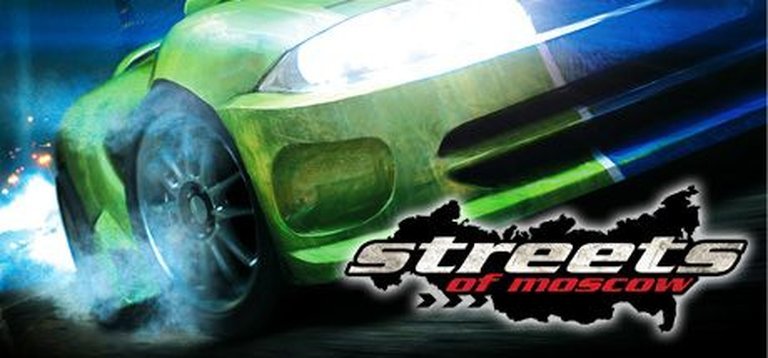
Streets of Moscow is an action-oriented racing game set in the bustling streets of Moscow, where players assume the role of Max, a young street racer from St. Petersburg. After his girlfriend is kidnapped by a gang of adrenaline junkies intent on destroying a city landmark, Max must compete in high-stakes races, perform dangerous stunts like drifting and crashes, and upgrade his car through a deep customization system to earn respect from fellow racers and save both his girlfriend and the city, all within a dynamic day/night cycle and physics-based destruction environment.
Where to Buy Streets of Moscow
PC
Streets of Moscow Free Download
Streets of Moscow Cracks & Fixes
Streets of Moscow Reviews & Reception
metacritic.com : it is playable plus it’s fun.
gamepressure.com (56/100): Streets of Moscow is a racing game with RPG elements created by developers from the Gaijin Entertainment studio.
mobygames.com (58/100): an action-oriented racing game and the standalone sequel to Adrenalin: Extreme Show.
Streets of Moscow: A flawed, fascinating relic of Russian street racing ambition
Introduction: The Capital’s Asphalt Underbelly
In the mid-2000s, the global racing game landscape was dominated by a few titans: Need for Speed’s tuner culture, Gran Turismo’s simulation purity, and Burnout’s crash-centric spectacle. Into this arena stepped a developer from a region not known for blockbuster racing titles—Russia’s Gaijin Entertainment—with a sequel to its domestic hit Adrenalin: Extreme Show. Rebranded for the West as Streets of Moscow (originally Adrenalin 2: Chas Pik, or “Rush Hour”), the game promised a gritty, authentic, and explosive tour of Moscow’s illegal racing scene. It arrived with a curious mix of technical ambition and fundamental design missteps. My thesis is this: Streets of Moscow is not a forgotten gem, but a crucial case study in the pitfalls of localization, scope versus polish, and the perils of chasing Western trends with limited resources. It remains a deeply flawed, often frustrating experience, yet its specific cultural context, audacious (if broken) systems, and sheer personality make it a fascinating artifact of mid-2000s Eastern European game development.
Development History & Context: Gaijin’s Dagor Engine and the 2007 Racing Rush
Streets of Moscow was developed by Gaijin Entertainment Corporation, a studio that would later achieve global fame with the meticulous War Thunder series. In 2007, Gaijin was carving out a niche with hardware-intensive simulation titles like the IL-2 Sturmovik series and this racing franchise. The game was built using the Dagor Engine, Gaijin’s in-house technology also seen in their combat flight sims. This engine was leveraged for its PhysX physics capabilities and FMOD sound integration, aiming for a high degree of environmental interaction and audio fidelity that was impressive for a mid-budget PC racer.
The context of its release was pivotal. It directly followed the success of Need for Speed: Most Wanted (2005) and Underground 2 (2004), games that defined street racing for a generation. Streets of Moscow was clearly attempting to capture that magic but with a distinct local flavor—real Moscow streets, Russian music, and本土 (local) car culture. However, this ambition crashed against severe technological constraints. The game was a PC exclusive (PEGI 12) in an era where multi-platform releases were becoming the norm for major racers. The Dagor Engine, while powerful, showed signs of strain: Russian-language reviews consistently noted optimization issues, texture pop-in, and crashes when pushed to maximum settings. The source material highlights that Gaijin was part of a small collective of developers (shared credits with IL-2 Sturmovik: Birds of Prey), meaning a specialized team was stretching a generalist engine to its limits for a genre it wasn’t primarily designed for.
The gaming landscape of 2007 also included ambitious open-world racers like Test Drive Unlimited (which Out of Eight directly compares it to unfavorably) and Burnout Paradise. Streets of Moscow tried to blend open-world exploration with structured races and RPG-like progression, a complex combination that proved too much for its execution. Its release as a digital download through publishers 1C Company (a giant in Russian game distribution) and later inclusion in bundles like the 1C Complete Collection speaks to a strategy of leveraging a domestic catalog for international bundles, often with little individual marketing push—a fate sealed by its poor critical reception.
Narrative & Thematic Deep Dive: From Reality TV to Urban Terror
The narrative is Streets of Moscow’s most earnest, if clumsy, attempt at differentiation. It serves as a direct sequel to Adrenalin: Extreme Show, explicitly abandoning that game’s “reality TV show” premise. The protagonist is Max, a young racer from St. Petersburg. The setup is pure B-movie thriller: he arrives in Moscow for the season’s biggest street race, only to have his girlfriend kidnapped by a gang of “adrenaline junkies” who plan to blow up a significant city landmark. His mission becomes a dual pursuit: win the respect of the city’s racing elite through victories and stunts to get closer to the gang, and ultimately save both his girlfriend and Moscow itself.
Thematically, the plot grapples with several potent but superficially explored ideas:
* The Corruption of Adrenaline: The title “Adrenalin” is ironic. The villains are addicts of the very thrill Max seeks legitimately through racing. The game posits that street racing’s raw excitement can be perverted into pure terrorism.
* Provincial vs. Capitalist Russia: Max as an outsider from St. Petersburg navigating the intimidating, ruthless Moscow underworld touches on regional tensions, though it’s rarely explored beyond surface-level “city tough” attitudes from opponents.
* The Spectacle of Destruction: The focus on physics-based destruction—both in stunts and the gang’s terrorist goal—frames Moscow itself as a playground and a victim. The day/night cycle and dynamic weather (praised by CNews) enhance this, making the city a character that shifts from glamorous to menacing.
However, the execution is rudimentary. Cutscenes are sparse and low-budget, dialogue is functional at best, and character development is nonexistent. The plot is merely a flimsy scaffold for race-to-race progression, a justification for the “earn respect” mechanic. It’s a story that thinks it’s a Drive or Fast & Furious plot but lands closer to a direct-to-video action flick. This disconnect between thematic ambition and narrative budget is a core part of the game’s identity.
Gameplay Mechanics & Systems: Drifting on a Layer of Black Ice
This is where the game fundamentally collapses for most players and where the source material’s reviews are most scathing.
Core Loop & Racing: The structure is an open-world sandbox (a limited, scaled-down section of Moscow) with race markers. You select events from a menu, race on closed-off city sections, earn cash and “Respect” points, and upgrade. The philosophy is Need for Speed: Underground, but the feel is catastrophically different. The driving physics are universally panned. As NoobFeed succinctly states, it’s like “driving over a road covered by a layer of black ice, whilst being intoxicated.” There is a persistent, severe oversteer and lack of grip. Cars feel impossibly slidesy, making simple cornering a battle. Out of Eight calls it “poorly designed,” noting you “have no idea what the result of turning right will be.” This isn’t challenging realism; it’s broken handling that turns the core act of driving into a penalty.
Stunt and Combat System: In a bid to add action, points are awarded for drifting, crashing into opponents to impede them, and other dangerous maneuvers. This creates a bizarre duality: you’re punished for poor handling in corners but rewarded for intentional, controlled slides (drifts). The combat is physics-based but clumsy. The “car magnetism” issue noted by Metacritic user reviews—where cars get bizarrely stuck on curbs or dragged along walls—sabotages any strategic ramming. The promised “physics-based destruction” feels more like a chaotic glitch than a feature.
Progression & RPG Elements: Between races, you visit a tuning garage. Cash earned from races and stunts is used for extensive car customization—visual decals, performance parts, and engine tweaks. There’s also an RPG-style driver progression system where you earn experience to unlock perks. The most significant is at Level 20: “Shockwave,” a special ability that flings nearby cars away. User reviews on Metacritic note this ability “mitigates all the frustrations” but also makes the late game “dull,” as it trivializes competition. This highlights a critical flaw: the progression is designed to fix the bad core physics rather than enhance an already-sound foundation.
UI and Controls: The interface is dated but functional. A notable positive, mentioned by yota234 on Metacritic, is the ability to use custom music by placing files in a folder—a rare and welcome feature. However, control issues persist: the turbo boost sometimes fails to activate, and AI drivers have unpredictable paths, with civilian cars often “drifting into yours” in the most inconvenient ways.
Multiplayer: LAN and internet multiplayer are supported, but with the core physics so divisive and broken, its appeal is severely limited to a niche audience who have mastered the intangible handling model.
World-Building, Art & Sound: A City of Contrasts
The game’s most consistent point of praise is its atmosphere and specific visual effects, even if the overall package is uneven.
Setting & World Design: The game attempts to recreate a recognizable, if compressed, segment of Moscow. Landmarks are implied but not extensively detailed. The scale is notoriously small; games.mail.ru derisively notes that districts are “cut down to the size of a Khrushchyovka kitchen” (a reference to tiny Soviet-era apartments). The open world feels sealed off and artificial, with dead ends and arbitrary borders breaking immersion—the antithesis of the seamless Test Drive Unlimited.
Visual Direction & Engine: The Dagor Engine’s strengths and weaknesses are on full display. Textural quality is wildly inconsistent. Road surfaces and some buildings are detailed, while others are flat, low-resolution blurs. Car models are decent but lack the polish of Western contemporaries. However, the game has two standout technical achievements that critics consistently highlight:
1. Dynamic Day/Night Cycle: Weather and time change in real-time during races and in the world.
2. Specific Weather Effects: The rain is singled out for exceptional praise. CNews calls it “truly wet, made of droplets,” a rare moment of visual brilliance. The HDR and self-shadowing on cars are noted as “non-intrusive” and impressive.
This creates a dichotomy: in perfect lighting or during a rainy night, Moscow can look surprisingly beautiful and atmospheric (earned it the “graphics are good when on max” comment). In flat daylight, it looks like a mid-2000s budget title.
Sound Design: This is the game’s most redeeming, universally praised element. The soundtrack is a compilation of Russian rock, pop, and electronic artists. As NoobFeed states, it’s “actually pretty good” and “stand[s] out in my mind,” a “beacon of light” in the disappointment. The in-game radio station concept is fully realized. Sound effects for engines, crashes, and the whoosh of turbo are also noted as effective and intense. The FMOD integration succeeds where the graphics sometimes falter.
Reception & Legacy: A Cautionary Tale
Critical Reception at Launch: The game was panned. The MobyGames average is a meager 48% from six critic reviews. The Russian press was slightly more forgiving (scores from 60-68%) but still identified major flaws—particularly the driving physics and limited city. Western outlets were brutal: Bonusweb (20%) and Sector (15%) represent the nadir, with the latter’s reviewer describing it as psychologically torturous. The primary criticisms were a verbatim checklist: broken/unpredictable handling, tiny open world, poor optimization, and repetitive races.
Commercial & Distribution Fate: It was a commercial afterthought. Its presence on Steam is almost exclusively through the 1C Racing Pack bundle, never sold individually. As NoobFeed acidly notes, this publisher decision “acknowledges that it’s unreasonable to charge any sum of money for one of its games.” This bundling strategy has kept it technically “available” but completely obscure, a filler title in a compilation of mostly better-remembered games.
Evolving Reputation & Influence: There is no significant positive legacy in terms of influence on major franchises. It did not pioneer mechanics that were adopted elsewhere. Its reputation has solidified as a cult curiosity and a warning label. For small studios, it exemplifies the danger of chasing a popular genre without nailing the foundational gameplay. For preservationists and historians of Eastern European gaming, it’s a fascinating, flop-filled data point. Its connection to Gaijin Entertainment is its main historical hook: it stands in stark, bizarre contrast to the meticulously detailed military simulations the studio would later perfect. It shows a path not taken—or a stumble on the way to mastery.
Conclusion: The Damaged Goods of a Dream
Streets of Moscow is an unequivocally bad racing game by almost any conventional metric. Its core handling is broken, its world is a claustrophobic caricature of a great city, its story is laughable, and its technical execution is riddled with compromises. Yet, to dismiss it entirely is to ignore its value as a cultural artifact and a lesson in development trade-offs.
It is the sound of a studio with ambition exceeding its resources and focus. The attempt to blend open-world exploration, stunt scoring, RPG progression, and a story-driven narrative in 2007 on a mid-tier budget was hubristic. The moments where it shines—the rain-slicked streets at night pulsing with Russian rock, the brief thrill of a perfect drift despite the physics, the audacity of its “shockwave” ability—are like brief lucid moments in a fever dream. It is not a forgotten classic, but a preserved specimen of what happens when a developer from outside the mainstream tries to synthesize the hottest trends without the foundational discipline to make them work.
Its place in history is not one of honor, but of instruction. It is a benchmark for “how not to design a driving model,” a case study in the perils of localization without refinement, and a footnote in the chronology of Gaijin Entertainment—a reminder that even studios that later achieve greatness must traverse valleys of flawed experimentation. For the intrepid historian or the masochistic completionist, Streets of Moscow offers hours of frustrating, baffling, and occasionally bizarrely atmospheric gameplay. For everyone else, its legacy is best served as a cautionary tale, bundled quietly away in a 1C compilation, a ghost in the machine of Russian game development.