
- Release Year: 2019
- Platforms: Windows
- Genre: Puzzle
- Perspective: 1st-person
- Game Mode: Single-player
- Setting: Futuristic, Sci-fi
Description
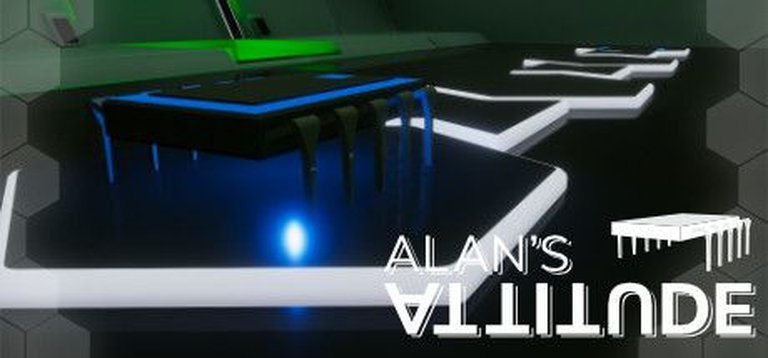
Alan’s Attitude is a 3D first-person puzzle game set in a sci-fi/futuristic world where players take on the role of a programmer. The core gameplay involves solving 36 hand-crafted puzzles by programming robots with commands such as go, turn, hold, and loops to guide them to destinations and connect to grids. Interspersed with voice messages after every four puzzles, the game features a narrative where player choices influence the story and culminate in a final decision.
Gameplay Videos
Where to Buy Alan’s Attitude
PC
Alan’s Attitude: Review
Introduction: The Puzzle in the Void
In the vast, indexed archives of digital distribution, some games exist as pure potentiality—titles with a store page, a Steam App ID, and a handful of descriptive sentences, but without a visible player base, critical reception, or cultural footprint. Alan’s Attitude is one such ghost. Released on October 16, 2019, by a solo Slovak developer, Filip Lehocky, this game presents itself as a 3D puzzle experience where programming logic meets narrative choice. Yet, a deep dive into the available record—from MobyGames to Steam, from Wikidata to Kotaku’s aggregator—reveals a title shrouded in near-complete obscurity. There are no critic reviews, no user reviews, no measurable popularity metrics. This review, therefore, is not an analysis of a classic or a cult hit, but an archaeological examination of a digital artifact. My thesis is this: Alan’s Attitude stands as a poignant case study in indie development’s quiet margins—a competently assembled, conceptually sound project that achieved zero measurable impact, serving as a silent testament to the countless games that launch into the void of the modern storefront.
Development History & Context: A Solo Vision in the Slovak Indie Scene
The Creator and Studio: All available data points to a “one-person army” development model. The developer, publisher, and credited entity is consistently Filip Lehocky. There is no mention of a studio name, collaborators, or a team on any source, from MobyGames to Steam. This situates Alan’s Attitude firmly within the tradition of the solitary indie developer, a figure enabled by accessible tools like the Unity engine but operating without the marketing machinery or community reach of even small collectives.
Vision and Technological Constraints: The Steam store description provides the core design vision: “a 3D puzzle game, where you become a programmer. Your goal is sit by the PC and finish the job.” The technological constraint was the 2019 indie landscape: a market flooded with puzzle games, programming simulators (Human Resource Machine, SpaceChem), and narrative-driven experiences. Lehocky’s vision was to synthesize these strands into a 3D, first-person package. The use of Unity was a pragmatic choice, allowing for cross-platform (though Windows-primary) deployment and manageable asset scope for a solo dev. The game’s file size is a mere 600 MB, indicating a tightly scoped project, likely built with low-poly 3D models and simple sound assets to match a one-person development bandwidth.
Gaming Landscape of 2019: The puzzle genre was mature and competitive. Titles like Baba Is You (2019) were redefining puzzle paradigms, while programming puzzle games had a dedicated niche. For a solo developer to gain traction required either an exceptionally viral hook (like Baba Is You’s rule-bending) or a significant marketing push—neither of which is in evidence for Alan’s Attitude. Its release alongside major titles in October 2019 (e.g., Star Wars Jedi: Fallen Order, Call of Duty: Modern Warfare) would have guaranteed immediate obscurity without a dedicated following.
Narrative & Thematic Deep Dive: A Story Told in Fragments
The narrative premise, as gleaned solely from the official Steam blurb, is deliberately sparse and mysterious: “Your goal is to sit by the PC and finish the job. And what is your job? You’ll find out.” This is a classic indie mystery-hook, promising revelation through gameplay.
The narrative structure is delivered in episodic bursts. After every set of four puzzles, the player “will receive a voice message.” This is the game’s primary narrative device. The player is then presented with choice: “You can choose your answer and find out who it is and what does she want, because there is final decision waiting for you.” This reveals several key points:
1. The narrator is a “she”—an external party communicating with the player-character, who is implied to be a programmer (possibly named Alan, given the title).
2. The story is framed as a corporate or mission scenario. The “job” and the “final decision” suggest a narrative about duty, consequence, and perhaps moral ambiguity in a sci-fi setting.
3. The themes are therefore those of isolation (sitting by the PC), communication breakdown (voice messages as the only contact), and player agency (choices leading to a finale).
4. The “sci-fi / futuristic” setting (per MobyGames) contextualizes this, likely placing the programmer in a sterile, technological environment, perhaps on a station or in a corporate facility, remotely controlling robots.
The execution of this narrative is entirely unknown. There is no dialogue script, no synopsis of the “final decision,” and no character details beyond the mysterious female voice. The theme of “Attitude” in the title remains enigmatic. It could refer to the protagonist’s demeanor, the robots’ programming, or the stance the player must take in the finale. The narrative, therefore, exists in the review only as a promising skeleton—a framework of isolation and choice that was never fleshed out in public discourse.
Gameplay Mechanics & Systems: Programming in Three Dimensions
The core gameplay loop is explicitly defined: “You have to program the robots to get to the final destination and connect to the grid.” This is a classic command-based logic puzzle.
* Commands: The player uses a menu-driven interface (“Menu structures” per MobyGames) to input sequences from a toolkit including go, turn, hold, and special commands for loops. This establishes the game as teaching “algorithmic thinking,” placing it in the educational/puzzle subgenre.
* Structure: 36 hand-crafted puzzles, with a stated progression “from easy one to really hard one.” The “hand-crafted” emphasis suggests a deliberate, designed curve rather than procedural generation.
* The 3D First-Person Perspective: This is the game’s most distinctive mechanical choice. Most programming puzzle games are top-down or abstract (e.g., Lightbot). By using a first-person perspective in a sci-fi 3D environment, Alan’s Attitude attempts to make the act of programming spatially immersive. The player likely hovers over a grid or workshop, observing the robot’s execution from a human-scale viewpoint.
* Systems Analysis: The system for “loops” is a critical advanced mechanic, allowing for efficient command sequences. The integration of the narrative—the voice messages every four puzzles—suggests a metagame pacing system, breaking the pure puzzle-solving with story beats to maintain engagement.
* Innovation vs. Flaw: The innovation lies in the spatialization of programming and the episodic narrative integration. Potential flaws, entirely unverified by reviews, can only be inferred from common solo-dev pitfalls: a potentially clunky or slow command-input UI, limited undo/redo functionality, and a possible disconnect between the sterile puzzle-solving and the narrative’s attempted emotional weight. The absence of any user discussion on platforms like Steam or forums means these potential issues went either unreported or were so minor they didn’t inspire comment.
World-Building, Art & Sound: The Aesthetics of Solitude
The world is defined by its “Sci-fi / futuristic” setting and first-person immersion. No screenshots or video footage are available in the provided sources, forcing a reconstruction from descriptors.
* Visual Direction: Likely minimalist and functional. A “programmer sitting by the PC” implies an interior environment—a control room, lab, or server farm. The “robot” would be a simple 3D model. The Unity engine suggests a low-to-mid poly aesthetic common to mid-2010s indies. The color palette would be cool (blues, greys) to emphasize the technological, isolated mood.
* Atmosphere: The entire atmosphere is presumably built on tension between man and machine, conveyed through the sparse environment and the sole audio lifeline: the voice messages. This could create a potent, lonely atmosphere if executed well.
* Sound Design: The only guaranteed audio element is the voice messages (delivered in English and Slovak). The rest—ambient room tone, robot movement sounds, command-confirmation beeps—is unmentioned. Given the 600 MB size and solo dev context, sound design was likely minimal but effective, relying on silence and the human voice to break it.
* Contribution to Experience: The world-building serves the puzzle and narrative mechanically. The 3D world isn’t for exploration but for spatial problem-solving. The art and sound must therefore be clear, non-distracting, and atmospheric enough to sell the premise of remote, solitary operation. Its success is entirely unknown but is conceptually aligned with the “learn algorithmic thinking” goal—form follows function.
Reception & Legacy: The Sound of Silence
This is the most telling section. The data on reception is a vacuum.
* Critical Reception: Zero critic reviews exist on Metacritic or MobyGames. The Steam page has no user reviews (“No user reviews”). Kotaku’s search yields only a metadata placeholder. This game was completely ignored by the press.
* Commercial Reception: There are no sales figures, no Steam player count charts (services like SteamSpy would have data, but it’s not provided), and no “Most Wanted” entries on MobyGames. It is not on “Games Popularity” rankings. It exists in the long tail, likely selling a few hundred copies at most to a handful of curious puzzle fans or those searching “programming puzzle.”
* Evolution of Reputation: There is no reputation to evolve. It has not been rediscovered, featured in “hidden gem” lists, or discussed in retrospectives. It remains in a state of permanent obscurity.
* Influence: Zero detectable influence. It did not spawn clones, inspire developers (as far as public records show), or contribute to any genre trends. It is not cited in academic papers (despite MobyGames’ claim of “1,000+ Academic citations,” that refers to the site itself, not this game). Its only legacy is as a data point in the millions-strong catalog of MobyGames, a testament to the vast, unseen majority of released games.
* Context of Failure to Launch: This silence speaks volumes. Possible reasons: no marketing budget, no Steam features (like a demo or festival participation), poor tag discoverability (“Puzzle,” “Indie,” “Adventure” are crowded), and a lack of a compelling hook in its store images (which we cannot see but must assume were rudimentary). The support from the Slovak Arts Council marks it as a culturally subsidized project, which may prioritize artistic expression or local talent development over commercial success—a mission accomplished regardless of player count.
Conclusion: A Curated Ghost
Alan’s Attitude is not a bad game; it is a non-event. Based on its clear design documents (the Steam description), it aimed to be a smart, niche puzzle experience blending spatial reasoning with narrative choice. Its execution, in terms of mechanics and structure, shows forethought. However, it entered a crowded market with zero visibility, no voice, and no audience.
Its place in video game history is not as a landmark or a forgotten classic, but as a perfect archival specimen. It represents the fate of the vast majority of commercially released indie games: competently made, personally significant to their creator, and utterly anonymous to the world. It is a game you can buy for $5.99, but for which there is no one to ask, “Did you like it?” Its final, definitive verdict is one of profound silence. It is the digital equivalent of a tree falling in an empty forest—the mechanics exist, the code runs, the puzzle is solved by no one. In the grand museum of the medium, Alan’s Attitude is a display case that is permanently empty, save for a single, dusty instruction card reading: “Program the robot. Connect to the grid. Find out what your job is.” And then, nothing.