
- Release Year: 2020
- Platforms: Linux, Nintendo Switch, Windows
- Publisher: ShotX Studio, Ultimate Games S.A.
- Developer: ShotX Studio
- Genre: Action
- Perspective: Diagonal-down
- Game Mode: Single-player
- Gameplay: Roguelike, Shooter
- Setting: Post-apocalyptic
- Average Score: 61/100
Description
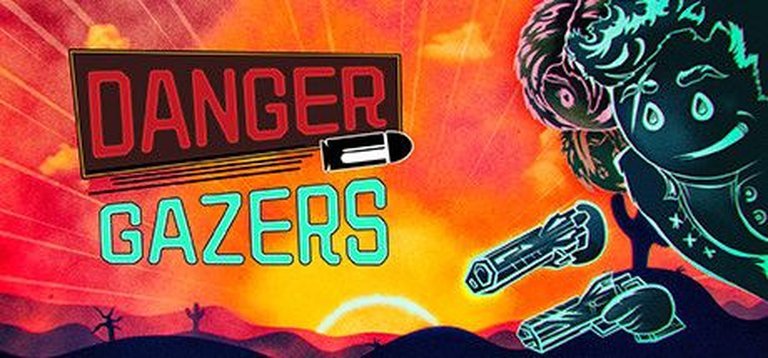
Danger Gazers is a post-apocalyptic roguelite top-down shooter where players traverse a hazardous world, making pivotal choices that determine whether they rise to become the new ruler or are reduced to windswept ashes. Inspired by games like Nuclear Throne, it combines fast-paced twin-stick combat with procedural generation and narrative depth, offering a challenging and dynamic experience in a desolate 2D scrolling environment.
Gameplay Videos
Where to Buy Danger Gazers
PC
Danger Gazers Free Download
Danger Gazers Reviews & Reception
opencritic.com (61/100): struggling to make a splash near the top of the list
Danger Gazers: A Post-Apocalyptic Pilgrimage Through the Roguelite Wasteland
1. Introduction: The Road Less Traveled
In the crowded landscape of the roguelite twin-stick shooter, a genre bursting at the seams with titles from Nuclear Throne to Enter the Gungeon, Danger Gazers emerges not with a revolutionary shout, but with a determined, if sometimes stumbling, stride. Released in January 2020 after a stint in Early Access, this game by the enigmatic solo developer Shota Bobokhidze (operating as ShotX Studio) represents a passionate, homespun attempt to capture the frantic, replayable spirit of its inspirations while injecting a distinct sense of perilous, choice-driven progression. Its core promise—”pave your own path”—posits a wasteland where destiny is a map drawn in real-time, where every node on the world map is a calculated risk. This review will argue that Danger Gazers is a game of stark contrasts: it achieves a gripping, addictive core loop and a wonderfully oppressive atmosphere, yet is frequently held back by uneven technical execution and a paucity of enemy variety that dulls its razor-sharp edges. It stands not as a genre-defining masterpiece, but as a compelling, deeply personal artifact of indie development that resonates most with players seeking a co-operative taste of the apocalypse, warts and all.
2. Development History & Context: One Man’s Wasteland
The story of Danger Gazers is, in microcosm, the story of the modern indie developer using accessible tools to chase a big dream. The entire credited development team, per MobyGames, is a single name: Shota Bobokhidze. Operating under the ShotX Studio banner, Bobokhidze is also responsible for other titles like Dead Ground, Kontrakt, and Dungeons of Clay (as seen in the Steam “Shotx Collector’s Mega Bundle”), painting a picture of a prolific creator working within a specific aesthetic and mechanical niche—often top-down, pixel-art action games with roguelike elements.
Danger Gazers was built in GameMaker, the quintessential engine for 2D indie projects. This choice speaks to both ambition and constraint. GameMaker empowers a single developer to create a fully-featured game with procedural generation, particle effects, and co-op functionality, but its inherent limitations often manifest in visual homogeneity and performance quirks on less optimized builds. The game’s Early Access period began on May 8, 2019, and concluded with its full release on January 2, 2020. This roughly 8-month period suggests a focused, if brief, public testing phase aimed at polishing core mechanics and expanding content.
The gaming landscape of early 2020 was saturated with top-down roguelite shooters. Enter the Gungeon (2016) and Nuclear Throne (2015) had already ascended to classic status. The genre’s conventions were well-established: permadeath, run-based progression, vast arrays of Synergistic items, and intense bullet-hell patterns. Danger Gazers‘ primary innovation, the “path-paving” world map, was its declared differentiator. In this context, the game was not trying to invent a new genre but to evolve an existing formula by adding a layer of strategic, meta-level decision-making between the chaotic combat runs. Its reception would hinge on whether this system felt meaningful or like a gimmick.
3. Narrative & Thematic Deep Dive: Echoes in the Ruins
Danger Gazers does not tell a story in the traditional sense. There is no protagonist with a named past, no sprawling expository dialogue. Its narrative is environmental, systemic, and philosophical, woven directly into its mechanics and setting. The post-apocalyptic world is not merely a backdrop; it is the antagonist.
The Wasteland as a Character: The “post-apocalyptic” tag is more than a descriptor; it informs every design choice. The pixel-art world is a study in desolation—crumbling concrete, muted color palettes of browns and grays punctuated by the violent red of enemy fire and the neon glow of pickups. This aesthetic of ruin creates a constant, low-grade tension. The world itself feels hostile and depleted, mirroring the player’s fragile existence.
The Theme of Calculated Risk: The game’s thesis, “the choices you make will decide your fate,” is enacted through its node-based world map. After each combat level, the player chooses the next destination from a randomized, branching web of possibilities: a Combat node, a Shop, a Relic vault, a random Event, or a Boss. This isn’t just level selection; it’s resource and risk management on a macro scale. Choosing a difficult Combat node for better loot risks death and the loss of that run’s entire progress. Opting for a safe path may yield fewer upgrades, making future runs harder. This system embodies the post-apocalyptic theme of scarcity and consequence. Every step is a gamble, reinforcing the feeling that “luck is not on your side,” as the official description states. The narrative is the player’s own struggle against entropy.
Heroes as Fragmented Lore: The 7 unlockable heroes, each with “unique abilities, powers and weaknesses,” serve as the game’s primary character elements. While their biographies are sparse (likely found in external materials or deduced from play), their designs and mechanics imply a fractured society. A hero might be a mutated brute, a stealthy scavenger, or a frail but powerful psychic. Their selection at the start of a run is the player’s first major narrative choice—what fragment of the old world will you embody in this new, brutal cycle? The lack of deep backstory actually strengthens the theme; these are survivors, not heroes, defined by function, not history.
Minimalist Storytelling: This approach is a double-edged sword. For the historically-minded player, it represents a classic arcade ethos: story is in the action. However, it also means the world lacks the poignant, written vignettes found in games like Dark Souls or the chaotic humor of Enter the Gungeon. The “ashes to be windswept away” ending feels less like a narrative conclusion and more like a mechanical status update. The theme is pure, unadorned survivalism.
4. Gameplay Mechanics & Systems: The Engine of Despair and Delight
The heart of Danger Gazers is its interplay between its two core systems: the Tactical World Map and the Chaotic Twin-Stick Combat.
A. The Path-Paving System (The Meta-Loop):
* Structure: The world map is a procedurally generated web of nodes connected by paths. Each run through the main game involves traversing several “areas,” each culminating in a boss fight. Between areas, the map refreshes with a new set of choices.
* Mechanics: Nodes include:
* Combat: Standard levels with enemy packs.
* Elite/Special Combat: Tougher fights with unique enemy types or modified rules (e.g., low visibility).
* Shop: Uses in-run currency (scrap) to buy guns, items, health.
* Relic Vault: Contains powerful, permanent-unlock “Relics” that are added to the pool for future runs.
* Random Events: Wild cards that can range from beneficial (a free upgrade) to catastrophic (a curse that shrinks your character).
* Analysis: This is the game’s defining feature and its most successful innovation. It transforms the roguelite from a series of disconnected combat challenges into a campaign of attrition and strategy. The tension of a low-health run, staring at a map dotted with dangerous but potentially run-saving Combat nodes, is palpable. It directly answers the “pave your own path” slogan. However, its randomness can be frustrating. A streak of bad luck—multiple consecutive shops, no health pickups—can feel insurmountably unfair, blurring the line between challenge and poor balance.
B. The Combat Loop (The Micro-Gameplay):
* Perspective & Control: A diagonal-down, top-down view using twin-stick shooter mechanics (move with left stick/WASD, aim with right stick/mouse). The perspective is slightly skewed, which can affect spatial awareness, especially in chaotic bullet-hell scenarios.
* Core Action: Shoot, dodge, reload. Gun physics vary from hitscan to projectile. The “bullet hell” tag is well-earned; enemy patterns, especially from larger foes and bosses, often fill the screen with dense, patterned fire that requires precise, continual movement.
* Progression Systems:
* In-Run: Collect scrap and “Gems” (a rarer currency) from enemies and chests to buy items at shops. Items include guns, passive buffs (increased speed, health regen), and active abilities (a bomb, a dash).
* Permanent: Between runs, spend Gems to unlock new starting items, permanent health upgrades, and, crucially, new Heroes. Each hero has a distinct stat spread (health, speed, damage) and a unique special ability (e.g., a shield, a teleport, a powerful melee attack). This is the primary “roguelite” hook, giving players a tangible sense of growth over multiple attempts.
* Analysis: The combat is tight, fast, and satisfying. Gun feel is punchy, and enemy hits are clearly telegraphed. The variety of guns and items, while not as vast as Enter the Gungeon, offers enough synergistic combinations to make each run feel distinct. The hero selection is a brilliant layer—playing as the slow, tanky brute versus the fast, fragile sniper completely changes the tactical approach to the same map. The core issue, repeatedly noted in user reviews, is enemy variety. After a few hours, players will have seen the vast majority of enemy types, and their attack patterns will feel recycled across the endless procedural levels. This is the single greatest factor that can drain replayability over time.
C. Co-operative Play:
The local split-screen co-op is a major selling point and a highlight. The game scales difficulty but doubles the firepower. The shared screen forces coordination (or friendly fire chaos), and the world map choices become a team strategy session. For a game focused on “sharing the fun, share the misery,” this mode is essential. However, user discussions indicate controller support can be problematic, especially on Linux, which hampers the co-op experience for some.
D. UI & Flaws:
The UI is functional but rudimentary. Health, ammo, and scrap are clearly displayed, but inventory management during a run can be clunky. The aforementioned controller issues are a significant blemish. Many Steam reviews specifically call out poor controller configuration and responsiveness, making the twin-stick control scheme—already requiring precision—frustrating for gamepad users. Performance dips are also occasionally noted, particularly on lower-end hardware, suggesting optimization could be deeper.
5. World-Building, Art & Sound: Beauty in the Decay
Danger Gazers’ presentation is where its indie charm and limitations are most apparent, yet it ultimately succeeds in building its intended atmosphere.
Visuals & Art Direction:
The game employs a retro pixel-art style with a deliberately muted, grimy palette. The environments—scrapyards, ruined highways, concrete bunkers—are detailed enough to feel tangible but simple enough to maintain high frame rates during chaotic fights. The character and enemy sprites are expressive, with clear silhouettes that are crucial for readability in bullet-hell sequences. The “post-apocalyptic” vibe is less Mad Max and more Fallout 1, with an emphasis on clutter and decay. The visual consistency is high, but the limited color range and sprite detail can make different areas blend together, exacerbating the feeling of repetitive enemy encounters.
Sound Design & Music:
This is a standout feature. The soundtrack, frequently tagged as “Great Soundtrack” by users, consists of driving, synth-wave/retro-wave tracks with a palpable sense of melancholy and momentum. It perfectly complements the lonely, relentless march across the wasteland. Sound effects are crisp: the thunderous report of a heavy gun, the electronic pop of a laser, the grotesque sounds of enemy death. The audio does heavy lifting in creating the game’s “great atmosphere,” providing an auditory counterpart to the visual desolation. It’s a masterclass in using music to reinforce theme and gameplay tempo.
Atmosphere Synthesis: The combination of the bleak pixel art, the relentless electronic score, and the brutally simple “choose, fight, die, repeat” loop creates a uniquely oppressive yet hypnotic atmosphere. It doesn’t want to be fun in a cheerful way; it wants to be fun in a grim, “I survived another hellscape” way. This is where it most successfully differentiates itself from the often more irreverent or cartoonish competition.
6. Reception & Legacy: A Cultish Resilience
Critical Reception: Professional critic coverage was and remains minimal. Metacritic lists zero critic reviews for the PC version. The sole notable critic review comes from Gameplay (Benelux), which acknowledged the game’s debt to Nuclear Throne but praised its added story elements and unique mechanics, calling it “a very strong game that will certainly appeal to fans.” OpenCritic aggregates a few more, with scores ranging from a 6.1/10 (Nindie Spotlight) to a positive “Liked” from LadiesGamers.com, focusing on its chaotic co-op potential.
User Reception: Steam user reviews tell a more nuanced story. With 69 total reviews and a “Mostly Positive” (72%) rating, the game has a solid, if not rapturous, fanbase. Analysis from third-party sites (like Niklas Notes) breaks down the sentiment:
* Praised (Top Tier): Addictive gameplay loop (12%), great atmosphere/soundtrack (7%), developer’s accessibility ethos (noting a free torrent version for those who can’t pay—6%).
* Praised (Mid Tier): Weapon/mechanic variety (9%), challenging but fair difficulty (6%), graphics/visual style (6%), co-op gameplay (4%), replayability (3%).
* Criticized: Lack of enemy variety (4% in negative, but implied throughout), poor controller support (6% as “Strongly Negative”), performance issues (4%).
Commercial Performance & Legacy: Exact sales figures are unavailable, but its presence on multiple platforms (Windows, Linux, Nintendo Switch), inclusion in developer bundles, and a persistent, if small, community on Steam suggest modest but sustainable commercial success for a solo-project. Its legacy is that of a cult co-operative roguelite. It didn’t redefine the genre but carved out a niche for players who prioritize the tense, strategic world-map layer and a grim, atmospheric experience over sheer item-crazy mayhem. It is frequently, and accurately, mentioned in the same breath as Nuclear Threne and Enter the Gungeon in “games like” discussions, but it retains its identity through its path-paving mechanic and distinct tone.
Its influence is likely indirect—demonstrating that a single developer can create a fully-featured, multi-platform roguelite with co-op in GameMaker. For the small group of players it resonates with, it is beloved; for the wider audience, it remains a curious, slightly rough-around-the-edges recommendation.
7. Conclusion: The Verdict from the Wasteland
Danger Gazers is a game that understands its own identity. It is not the most polished, the deepest, or the most varied entry in the roguelite shooter canon. Its occasional performance hitches, its repetitive enemy roster, and its finicky controller support are genuine barriers to entry. Yet, against these flaws, its strengths shine with a stubborn, unwavering light.
The “path-paving” meta-game is a legitimately brilliant addition that makes each run feel like a strategic campaign rather than a frantic sprint. The atmosphere, bolstered by a phenomenal synth-wave soundtrack and a visually coherent wasteland, is second to none in its genre for sheer, oppressive mood. The co-operative mode is not an afterthought but a fundamental pillar, transforming the already-gripping tension into shared triumph or disaster.
For the historian, Danger Gazers is a significant case study in focused indie development. It is the vision of one person, Shota Bobokhidze, executed with a clear scope and a distinctive voice. It proves that you don’t need a massive studio or a thousand item combinations to make a roguelite feel meaningful; you need a core mechanic that matters and an atmosphere that envelops.
Final Verdict: Danger Gazers is a 7.5/10—a game with a soul. It is an essential purchase for co-op enthusiasts and fans of the genre who crave a more deliberate, atmospheric, and strategic take on the formula. For the solitary player seeking endless item synergies, the lack of enemy variety may prove fatal. But for those willing to pave their own path through a beautifully desolate wasteland, this game offers a challenging, rewarding, and strangely solemn pilgrimage. It is not a king on the throne of roguelites, but it is a resilient, memorable scavenger—one that earns its keep in the pantheon of competent, heartfelt indie shooters.