
- Release Year: 2012
- Platforms: Macintosh, Windows
- Publisher: Big Fish Games, Inc
- Developer: Fanda Games
- Genre: Adventure, Puzzle
- Perspective: 1st-person
- Game Mode: Single-player
- Gameplay: Hidden object, Mini-games
- Setting: Castle, Historical
Description
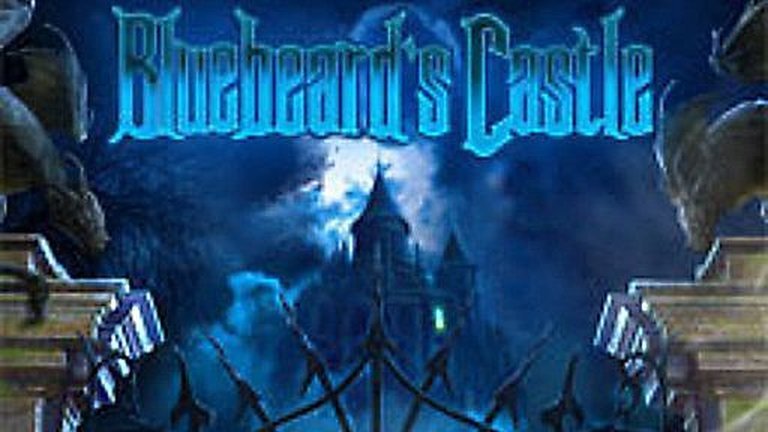
Bluebeard’s Castle is a first-person hidden object adventure game set in the ominous castle of Count Bluebeard in 1883 Nantes, based on the classic fairy tale. When Clarice, Bluebeard’s seventh wife, vanishes after discovering a forbidden chamber, her sister Emily embarks on an investigation, solving intricate hidden object scenes and mini-games to find her and liberate the souls of his previous victims from a dark curse.
Gameplay Videos
Bluebeard’s Castle Guides & Walkthroughs
Bluebeard’s Castle Reviews & Reception
jayisgames.com : Bluebeard’s Castle is a solid, dependable hidden object adventure game.
judsgamereviews.wordpress.com : This is a great game!
Bluebeard’s Castle: A Gothic Puzzle-Adventure Reimagined
Introduction: Unlocking a Dark Fairy Tale
The story of Bluebeard—the wealthy, murderous nobleman with a blue beard and a trail of vanished wives—has haunted Western folklore for centuries, most famously crystallized by Charles Perrault’s 1697 tale. It is a narrative steeped in misogyny, curiosity, and grim domestic horror. Bluebeard’s Castle (2012), developed by the Ukrainian studio Fanda Games and published by Big Fish Games, doesn’t merely adapt this story; it reconstructs it through the lens of a hidden object puzzle adventure (HOPA), shifting the perspective from the doomed wife to her investigating sibling. This review argues that Bluebeard’s Castle is a significant, if technically imperfect, entry in the casual adventure genre. It exemplifies a late-era HOPA that prioritizes intricate, narrative-integrated puzzles over exhaustive hidden object scenes, creating a moody, substantive experience that transcends the “laundry list” criticism often levied at its peers. Its legacy is twofold: as a clever folkloric retelling and as a showcase for how hidden object hybrids could achieve depth through mechanical and thematic cohesion.
Development History & Context: A Ukrainian Debut in a Crowded Market
Fanda Games, a small studio based in Ukraine, made its commercial debut with Bluebeard’s Castle. The core team, as listed on MobyGames, was led by producer and artistic director Elena Shvedova and game designer Iryna Shvedova, with a modest 25-person credits encompassing art, programming, sound, and animation. The game was built using the Funner Engine (© 2008-2011 UNT Games Studio), an in-house engine likely chosen for its accessibility and cross-platform Mac/Windows support—a practical decision for a studio targeting the dominant casual gaming platforms of the time.
The game’s release in March 2012 places it in a pivotal moment for the HOPA genre. The late 2000s and early 2010s saw an explosion of casual hidden object games, primarily from studios like Big Fish Games, alkazar, and Blue Tea Games. By 2012, the market was saturated, leading to a creative bifurcation: one branch emphasized relentless, high-volume hidden object scenes (the “laundry list” model), while the other, which Bluebeard’s Castle joins, strove to integrate those scenes more organically into adventure-style exploration and inventory puzzles. Fanda Games’s vision, as interpreted through the final product, was to create a game that felt more like a classic point-and-click adventure with hidden object elements, rather than the inverse. This approach was a risk in a market often driven by the sheer volume of object-finding content. The game’s setting—a 19th-century Gothic castle in Nantes, France—also tapped into a perennial aesthetic in casual games (think Mystery Case Files or Dark Parables), but its direct engagement with a specific, violent fairy tale gave it a more focused narrative spine than many contemporaries.
Technologically, the Funner Engine allowed for detailed, pre-rendered backgrounds with a fixed/flip-screen perspective, a staple of the genre. However, as noted in the JayisGames review, the engine exhibited a quirk: loading screens appeared frequently upon scene transitions. While brief, these interruptions were a consistent source of criticism, fracturing the atmospheric immersion the game otherwise strived for. This technical limitation highlights the challenges faced by smaller studios in optimizing experiences for diverse PC hardware without the resources of larger developers.
Narrative & Thematic Deep Dive: Sisters, Curses, and Subverted Agency
Bluebeard’s Castle reimagines Perrault’s tale by introducing two pivotal female characters who exert far more agency than the original wife. The player assumes the role of Emily, the sister of Clarice, who has married the eponymous Count Gilles de Brais (Bluebeard). Clarice’s disappearance after exploring a forbidden chamber sets the plot in motion. Emily’s investigation transforms her from a passive relative into an active detective, a narrative choice that immediately modernizes the tale’s gender dynamics.
The plot unfolds across five chapters, structured around the collection of seven “charmed keys” to unlock the final door where Clarice is held. Each key is earned through a major puzzle or sequence, creating a satisfying “Rule of Seven” progression. The story is delivered through environmental clues, rhyming riddles, notes, and ghostly apparitions—particularly the spirits of Bluebeard’s six previous wives, who are “Barred from the Afterlife,” as TV Tropes notes, trapped by their violent deaths and his dark magic. This establishes a core theme: the supernatural consequences of patriarchal violence. The wives are not just victims; they are active participants in Emily’s quest, their spectral forms providing hints and their freed souls representing a form of posthumous justice.
The game’s lore is significantly expanded by its sequel, Bluebeard’s Castle: Son of the Heartless (2014), but the first game plants the seeds. Through documents and puzzles, we learn that Bluebeard’s blue beard and immortality stem from a Deal with the Devil made after a near-fatal wolf attack. He must yearly sacrifice a wife’s heart to sustain himself. Clarice’s exploration of the forbidden room—where the hearts are kept—threatens to expose him, prompting her disappearance. Emily’s quest thus becomes twofold: rescue her sister and break the cycle of sacrifice.
A particularly rich thematic layer is introduced through the character of Soliel, revealed in the sequel as Bluebeard’s sister. In the first game, she is the “Light Keeper” in a tower, her hair magically long and blue from the curse affecting the land. Her rescue (via a complex puzzle involving weaving looms) and the transformation of her hair from blue to golden blond symbolize the restoration of natural order and the breaking of the curse’s geographical taint. This connects the personal (saving one woman) to the cosmic (healing a blighted region).
The narrative’s delivery is subtle. There are no lengthy cutscenes; the story is pieced together by the player through exploration. The “rhymes on a dime” trope (per TV Tropes)—messages and riddles written in verse—adds a fairy-tale authenticity and creates memorable puzzles (e.g., the rhyming clues for the “Door of Seven Deadly Sins”). This method respects the player’s intelligence, avoiding exposition dumps.
Gameplay Mechanics & Systems: Puzzle-Centric Hybrid Design
Bluebeard’s Castle distinguishes itself within the HOPA genre by drastically reducing the proportion of pure hidden object scenes (HOS) in favor of inventory-based puzzles and mini-games. A typical chapter might feature one or two HOS, but several multi-step logic puzzles, mechanical contraptions, and interactive set-pieces.
Core Gameplay Loops:
1. Exploration & Scenery Interaction: The player navigates a network of static, beautifully rendered screens (castle exterior, hall, library, study, kitchen, winter garden, dungeon, etc.). Interactive hotspots are indicated by a sparkle effect. Clicking reveals items for inventory, triggers puzzles, or advances the plot.
2. Inventory Management: Items are collected and stored in a persistent inventory. The sheer variety—from mundane tools (wrenches, screws, shears) to mystical artifacts (serpent’s eye, dark heart fragments)—requires constant review and creative combination. The game rarely tells you what to combine; it provides clues (notes, diagrams) that the player must interpret.
3. Puzzle & Mini-Game Integration: This is the game’s strongest suit. Mini-games are not isolated time-wasters but are deeply embedded in the world and narrative.
* Logical/Mechanical: Aligning symbols on doors, matching pairs (shield, bird color memory), rotating rings to align snakes, assembling mirror shards to reveal a ghostly figure, a “pattern memory” game on a slate (secret room), a frog-image reconstruction puzzle using bars.
* Alchemical/Crafting: A complex potion-making sequence in the kitchen requires following a recipe, grinding ingredients, and using specific tools in order—a rare moment of direct narrative parallelism (preparing a “Vanishing Dust” to bypass a magical guard).
* Environmental: Lifting a gate with a bucket-and-rope system, cutting vines to access areas, using a butterfly net, lighting candles.
* Thematic: The “puppet play” in the attic is a standout. Collecting disparate symbolic items (sun, octopus, swan, fish, mermaid) to stage a performance that magically produces the First Key is a brilliant fusion of gameplay and folkloric storytelling. It feels less like a puzzle and more like performing an incantation.
Hidden Object Scenes (HOS): They are present but functional. As the walkthrough details, they are randomized in their item lists, which adds replayability but can be frustrating if a key item is elusive. The penalty for “overclicking” (screen darkening) is a mild, genre-standard deterrent. Crucially, HOS are often gateways to key items or triggers for subsequent puzzle sequences (e.g., finding the birdcage key to access tail feathers; finding tweezers to retrieve a rooster’s head from a bottle). They are serviceable and atmospheric (gloomy, detailed scenes), but not the primary attraction.
User Interface (UI): The interface is standard for the genre: inventory at the bottom, hint button (with recharge), info button for context. The “Back” button allows exiting any scene or puzzle to explore elsewhere, a vital feature for non-linear puzzle-solving. The walkthrough emphasizes that puzzles can be skipped after a cooldown, a player-friendly option that acknowledges potential difficulty spikes.
Innovations & Flaws:
* Innovation: The puzzle density and variety are exceptional. The game avoids repetitive sliding-tile or jigsaw puzzles, favoring logic, deduction, and item combination. The narrative is woven into the environment; you learn about Bluebeard’s pact by examining his study, not through a narrator. The “seven keys” structure provides clear, compelling pacing.
* Flaws: The frequent loading screens (noted by both JayisGames and the walkthrough comments) are the most significant technical flaw, breaking immersion. Some puzzles can feel “Moon Logic” (TV Tropes terminology)—esoteric in their item combinations (e.g., cutting open a teddy bear to find an arrow to solve a lock). The randomized HOS lists can lead to shaky difficulty if a well-hidden item appears. Finally, while the game is lengthy (~5 hours per reviews), the final act (collecting fragments and crafting a potion) can feel slightly padded with backtracking.
World-Building, Art & Sound: A Labyrinthine Gothic Atmosphere
The game’s world is its most universally praised aspect. The visual direction crafts a cohesive, oppressive Gothic atmosphere. Each location is a hand-drawn, static tableau with meticulous detail: the cobwebbed library with towering bookshelves and a broken ladder, the cluttered alchemy kitchen with hanging herbs, the winter garden’s frozen statues and overgrown vines, the haunted, mist-shrouded “Lost Soul Garden.” The color palette is deep and moody—lots of browns, blues, and muted greens—with strategic use of light (candle flames, moonlight) to highlight interactive elements. This is not a bright, cheerful casual game; it embraces a macabre, “spooky” aesthetic consistent with its source material.
Character and environmental design reinforce the narrative. Bluebeard’s study is a space of cold power (armor, weapons, a skull). The attic is a chaotic repository of memories (the puppet theatre). The “Dead Silence Garden” and cemetery are overtly funereal. The design of Soliel’s tower—with her impossibly long, blue hair weaving through the machinery—is a visually striking and memorable set-piece that conveys supernatural weight.
The sound design is similarly atmospheric. Reviews mention “strange noises in the background,” and the walkthrough notes the ambient creepiness. It likely features subtle, haunting music, creaking floorboards, and distant echoes—all standard but effectively deployed to maintain tension. The lack of voice acting (common for budget casual games of this era) is a missed opportunity for character depth, but the written clues and rhyming riddles provide sufficient narrative texture.
Together, art and sound create a world that feels lived-in and cursed. You are not just solving puzzles; you are rummaging through the physical and spiritual wreckage of Bluebeard’s crimes.
Reception & Legacy: A Cult Favorite with a Niche Influence
Bluebeard’s Castle did not achieve mainstream blockbuster status, and formal critic reviews are scarce (MobyGames shows no critic reviews, Metacritic none). However, within the casual adventure and HOPA community, its reception has been consistently positive. The JayisGames review (by JohnB) is representative: it praises the “gorgeous” graphics, the focus on adventure over object-finding, and the “more creative” mini-games, while criticizing the “distracting” loading screens. Jud’s PC Game Reviews was effusive, awarding near-perfect scores for graphics, player participation, and satisfaction, citing the “macabre story” and the requirement for “ingenuity, logic, focus, cunning, and common sense.” The walkthrough’s popularity on Big Fish’s site and JayisGames indicates a player base that sought help, suggesting a challenging but rewarding experience.
Commercially, precise sales figures are unavailable (VGChartz shows negligible tracked sales), but its presence on Big Fish Games—the largest casual distributor—and the release of a sequel indicate it was profitable enough to warrant continuation. Its niche was clearly players tired of formulaic HOS and craving more integrated puzzle-adventure experiences.
Legacy and Influence are subtle but discernible:
1. Genre Positioning: It stands as a late-period example of a “puzzle-heavy hybrid” in an era where many HOPAs were moving toward simpler, faster gameplay. It demonstrates that the market could support games that demanded more cognitive engagement.
2. Folkloric Adaptation: Its specific blending of a classic fairy tale with adventure game mechanics—using the “seven keys” as a structural metaphor for the “seven wives,” incorporating rhyming riddles—shows a thoughtful approach to source material that goes beyond superficial theming. The sequel’s expansion into a multi-generational curse lore (Son of the Heartless) suggests the developers saw narrative potential in the setting.
3. Technical Benchmark: For a small Ukrainian studio, the game is a technical achievement in artistic consistency and puzzle variety on a modest budget. It’s a testament to the global nature of indie/casual development even in 2012.
4. Cult Status: Today, it is remembered fondly by enthusiasts of “hardcore” casual adventures. Walkthroughs are still sought, and it’s frequently mentioned in forums discussing underrated HOPAs. Its primary legacy is as a “hidden gem” (pun intended) that exemplified what the genre could be when it prioritized puzzles and atmosphere over sheer object-finding volume.
Conclusion: A Charmed, Yet Flawed, Key to the Genre
Bluebeard’s Castle is not a flawless masterpiece, but it is a distinguished and essential entry in the hidden object puzzle adventure canon. Its strengths—a brilliantly interconnected puzzle design, a mature and thematically rich adaptation of a dark fairy tale, and a consistently oppressive Gothic atmosphere—far outweigh its weaknesses. The frequent loading screens are a persistent irritant, and some puzzles may elicit cries of “moon logic,” but these are the inevitable scars of a modestly budgeted project with ambitious design goals.
Fanda Games succeeded in their core vision: to create an adventure that felt substantial, where every unlocked door and solved mechanism felt like a revelation in the mystery of Bluebeard. By shifting the protagonist to a sister on a rescue mission, they injected a proactive, familial motivation that elevates the grim source material. The game’s world is a character in itself—a castle that is simultaneously a prison, a tomb, and a puzzle box.
In the grand timeline of video games, Bluebeard’s Castle will not be remembered as a best-selling phenomenon or a critical darling. Instead, it deserves recognition as a meticulously crafted artifact of its genre’s potential. It proves that hidden object games can be intellectually rigorous and narratively coherent, offering a template—albeit one too rarely followed—for how to blend item-finding with meaningful adventure. For players willing to tolerate its technical hiccups, it offers a deeply satisfying, almost-literary journey into a Gothic nightmare, where the true monster is not just a blue-bearded count, but the cumulative weight of secrets, curses, and silenced women waiting to be unlocked. It is, ultimately, a charmed key to a darker, more thoughtful corner of casual gaming history.