
- Release Year: 2019
- Platforms: PlayStation 4, Windows
- Publisher: Square Enix Co., Ltd.
- Developer: Square Enix Co., Ltd.
- Genre: Action
- Perspective: Behind view
- Game Mode: Single-player
- Gameplay: Crafting, giant robot, Mecha, Stealth, Tactical shooter
- Setting: Futuristic, Sci-fi
- Average Score: 37/100
Description
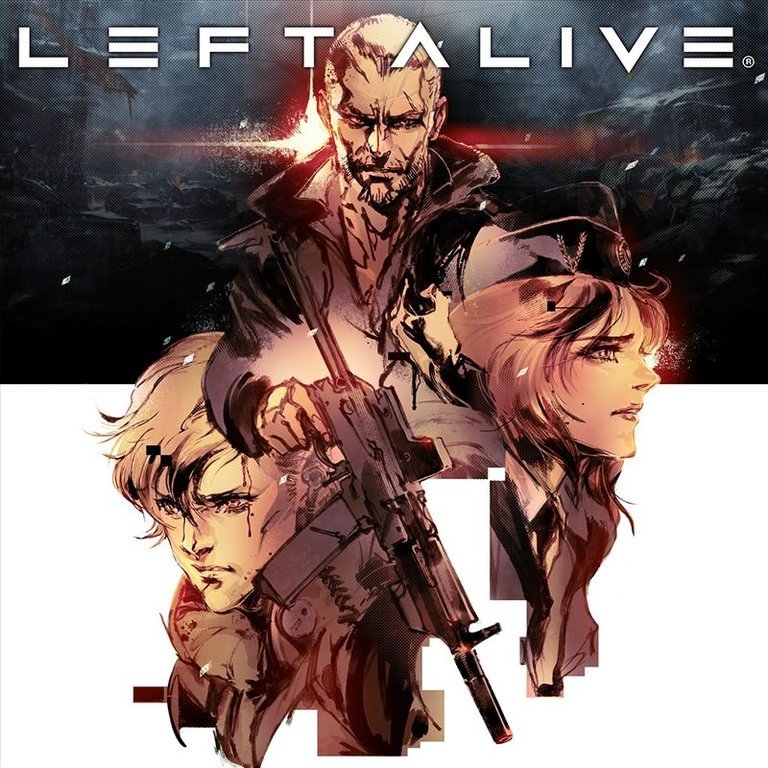
Left Alive is a survival-focused action game set in a sci-fi, futuristic Ukraine, where players engage in stealth and tactical shooter gameplay while piloting giant robot mecha. As part of the Front Mission series, it emphasizes narrative-driven survival in a war-torn environment, with options for a female protagonist and a behind-the-view perspective.
Gameplay Videos
Where to Buy Left Alive
Left Alive Guides & Walkthroughs
Left Alive Reviews & Reception
metacritic.com (37/100): Left Alive is most disappointing because it had such potential to revitalise the stealth genre. Instead you get something far behind even the titles it tries to emulate.
ign.com : A creaky and frustratingly broken mix of stealth and action.
opencritic.com (38/100): Left Alive’s mix of inconsistent stealth and aggravatingly unbalanced action make it a complete chore to play, and it runs terribly to boot.
Left Alive: A Chronicling of Ambitious Ruin – The Front Mission Spinoff That Forgot to Survive
Introduction: The Ghost in the Machine
In the crowded graveyard of ambitious video games that collapsed under their own weight, few tombs are as conspicuous as Left Alive. Announced with the kind of bullish confidence only a legacy publisher like Square Enix could muster, this 2019 spinoff of the venerable Front Mission series carried the potent combination of a beloved tactical-mech franchise, the legendary character design of Metal Gear Solid‘s Yoji Shinkawa, and the mech-action pedigree of Armored Core director Toshifumi Nabeshima. The premise was a narrative and mechanical siren’s call: a ground-level, survival-horror take on a Front Mission invasion, where players, as vulnerable infantry, must scavenge, craft, and stealth their way through a city under Wanzer (mech) siege. Yet, what washed ashore in March 2019 was not a revitalized franchise, but a shuddering, broken thing—a game that became instant shorthand for catastrophic mismanagement of talent and vision. This review will dissect Left Alive not merely as a failed product, but as a profound case study in how a confluence of noble ideas, developmental whiplash, and catastrophic execution can yield one of the most infamous “could-have-beens” in modern gaming. Its legacy is not one of play, but of a warning—a testament to the gulf between conceptual brilliance and playable reality.
Development History & Context: A Perfect Storm of Misalignment
Left Alive was born from a specific, fraught moment in the Front Mission timeline. The main series had been dormant since 2010’s Front Mission Evolved, a full nine years. Square Enix, seeking to revive the property, turned not to its internal teams steeped in the series’ tactical-strategy roots, but to an external developer: Ilinx, a Japanese studio with a history primarily in mobile games. This was the first critical, fateful decision. The project was helmed by director Toshifumi Nabeshima, a FromSoftware veteran whose expertise lay in the fast-paced, mechanical customization of the Armored Core series. Producer Shinji Hashimoto, a Final Fantasy and Front Mission veteran, provided series stewardship. The star power was undeniable: Yoji Shinkawa (Kojima Productions) was brought in for character design, and Takayuki Yanase (Xenoblade Chronicles X) for Wanzer design.
According to developer interviews sourced from publications like Red Bull and Siliconera, the project’s DNA was in constant flux. It originally began as a strategy game—a logical home for the Front Mission name—but under Nabeshima’s influence, it aggressively pivoted toward a third-person action-survival title. The director’s stated philosophy was telling: he viewed Front Mission not as a “game about robots,” but as a “game about war.” This desire to depict the human toll of mechanized conflict, the vulnerability of the “foot soldier,” was the game’s founding pillar. However, this shift from turn-based strategy to real-time survival action represented a genre leap of faith for the team. The chosen engine, Orochi 4 (from Silicon Studio), was capable of impressive visual effects but, as later evidenced, proved problematic in terms of optimization and stable performance, particularly on the PlayStation 4 and PC.
The development context was further strained by the team’s stated goal of creating a “realistic” war narrative within the Front Mission universe. This led to the fictional Eastern European setting of Ruthenia and Garmoniya (a clear analog for Ukraine) and an “evil conspiracy” plot involving a bioweapon (MODS virus) and a shadowy AI (M3). The ambition was to tell a gritty, grounded story of survival. Yet, the very act of grafting this “realism” onto a series known for its political anime tropes and stylish mech battles created an identity crisis. The game was marketed heavily on Shinkawa’s iconic art, creating an expectation of a Metal Gear Solid-esque stealth epic that the underlying mechanics could never support. The launch window, moved from 2018 to early 2019, did little to calm brewing concerns. When it arrived, it was met with a firestorm of criticism so severe that Square Enix temporarily disabled PS4 streaming functions in Japan to curb the viral spread of negative gameplay footage—a breathtaking admission of a botched launch.
Narrative & Thematic Deep Dive: Brilliant Ideas, Blunted Delivery
On paper, Left Alive‘s story is a compelling, if derivative, techno-thriller. Set in 2127 between Front Mission 5 and Front Mission Evolved, it depicts the surprise invasion of the Ruthenian city of Novo Slava by Garmoniya. Players experience the chaos through three protagonists: Mikhail Shuvalov, a Wanzer pilot who loses his unit early; Olga Kalinina, a police officer with a military past; and Leonid Ostermann, a convict with a score to settle. Their paths intersect in a desperate bid for survival, uncovering a conspiracy involving the MODS virus and the puppet-master Zaftra Republic and its shadowy council, Semargl.
Thematically, the game aspires to be a resoundingly anti-war statement. Reviews like Digitally Downloaded’s 80% praise highlight this: it asks “all the right questions that a game about war should,” focusing on civilian casualties, the moral ambiguity of survival, and the dehumanizing scale of mechanized conflict. The powerlessness of infantry against Wanzers is meant to be a constant, terrifying reminder of this asymmetry. The secret ending, where the AI Koshka uploads data to the predictive M3 system for “the next phase” of population control, is a chillingly bleak capstone, suggesting the cycle of war and engineered chaos is institutional and inescapable.
However, the narrative execution is fundamentally fractured. The three-character structure, a clear attempt at Metal Gear Solid 2-style perspectival storytelling, fails to coalesce. Their arcs are disjointed, with minimal cross-pollination until the very late game. Critic James Swinbanks (GameSpot) noted that the “lack of story set-up initially leads to significant plot revelations having no emotional impact.” The dialogue, while occasionally sharp, is often weighed down by wooden delivery and cliché. Supporting characters like the orphan Julia and the cyborg antagonist Ruslan are introduced with promising paths but are navigated through a series of binary, often consequence-free, dialogue choices. The game’s attempt at moral weight—rescuing 30 civilians for a “good” ending—feels less like a harrowing ethical calculus and more like an arbitrary, punishing collect-a-thon, as documented by TV Tropes’ “Guide Dang It!” and “Too Dumb to Live” entries, where civilians frequently run into gunfire.
Ultimately, the story is a classic case of style over substance. The geopolitical backdrop (Ruthenia vs. Garmoniya, Zaftra’s manipulation) is sketched with the broad strokes of a techno-thriller but lacks the political nuance of the best Front Mission or Metal Gear entries. The themes of survival and futility are constantly at odds with a game that demands repetitive, mechanical play to unlock narrative outcomes. The potential for a poignant, soldier’s-eye-view of a Front Mission war is there, buried under layers of poor pacing and disjointed perspective.
Gameplay Mechanics & Systems: The Anatomy of a Frustrating Loop
Left Alive‘s gameplay is where its foundational ambitions curdle into a punitive, inconsistent experience. The core loop is a hybrid of stealth, survival crafting, and third-person shooting, all framed within semi-open urban environments. The intention, as per director Nabeshima, was to create a tense, methodical survival experience where resources are scarce and direct confrontation with Wanzers or armored infantry is suicidal.
Stealth: The stealth system is the game’s primary stated pillar but is fundamentally broken. There is no dedicated silent takedown button. Neutralizing enemies quietly requires a clumsy melee weapon combo (a three-hit strike followed by an execution), which is often noisy and exposes the player. Enemy AI exhibits Artificial Stupidity of legendary proportions. As cited by countless reviews and TV Tropes, enemies willgunblast a wall you hide behind instead of flanking, ignore grenades exploding at their feet, and have utterly inconsistent detection cones—sometimes oblivious, sometimes omniscient. This creates a stealth experience that is less tactical cat-and-mouse and more trial-and-error frustration. The lack of a silencer on any firearm means any gunfire, even from a pistol, is “loud,” yet enemies often ignore it if it’s “far away” (about 50 meters), breaking any sense of realistic audio perception.
Combat: When stealth fails—often through no fault of the player—the game collapses into a clunky, punitive cover-based shooter. Gunplay is described as “sluggish” and “unresponsive” (Kotaku). Enemies are infamous bullet sponges, requiring entire magazines to the torso or multiple headshots (4-5 from a pistol) to down a standard trooper, despite the player character being equally fragile. This creates a brutal asymmetry where firefights feel overwhelmingly unfair. The infamous “jumping” physics—where killed enemies convulse and leap into the air—became a meme for the game’s jank.
Survival & Crafting: The survival elements—scavenging for parts, metal, cloth, gunpowder; crafting IEDs, traps, and medical kits—are conceptually sound and praised in some reviews (4Players notes the crafting is “motivating”). However, their implementation is clunky and ill-tuned. Crafting requires stopping at workbenches, breaking immersion. Resources are so scarce that players are forced into a conservative playstyle, but the punishing AI and enemy health often make conservative play impossible, forcing desperate, resource-draining fights. The survival-horror inventory management feels more like an annoyance than a strategic layer.
Wanzer (Mech) Combat: This is the aspect that most attracted fans and the one with the highest highs and lowest lows. Piloting a Wanzer is infrequent and segmented, usually for a single objective per character. When it happens, it’s a blast—customizable loadouts, powerful weaponry, and a satisfying power fantasy. However, these sequences are short, scripted, and highlight the disconnect between the mech fantasy marketed in trailers and the grindy infantry reality of 90% of the game. The fact that Mikhail, the Wanzer pilot, loses his mech in the prologue and spends the rest of the game on foot became a symbol of the game’s broken promises.
Progression & Structure: The game employs a New Game+ system where skill points earned on subsequent playthroughs can upgrade character abilities (e.g., faster crafting, more health). This is a direct admission that the game is unplayably difficult on a first run without these upgrades. The escort mechanic for civilians is a particular sore point. Civilians follow predetermined, often suicidal paths that force players into combat, making the “golden ending” (saving all 34 key NPCs) feel like a game design trick rather than an achievement.
World-Building, Art & Sound: A Gritty Facade
Visually and aurally, Left Alive presents a deeply schizophrenic identity. The artistic vision, courtesy of Yoji Shinkawa and Takayase Yanase, is undeniably potent. Shinkawa’s character designs are striking—haggard, expressive, dripping with the grimy realism the story demands. The promotional art promised a Metal Gear Solid meets Front Mission aesthetic. The Wanzer designs are particularly noteworthy, blending the Front Mission zenith-type heritage with Yanase’s more angular, aggressive style.
In-game, however, this vision is shattered. The game runs on the Orochi 4 engine, but its technical execution is notoriously poor. Reviews consistently cite “low-resolution textures that gave the game a ‘drab’ look” (Destructoid), pop-in, dated animations reminiscent of the PS3 era, and inconsistent frame rates, especially on PC. The war-torn city of Novo Slava is meant to be a character—a bleak, snow-covered landscape of rubble and urban decay. Instead, it often feels like a repetitive, empty sandbox. The environmental storytelling is minimal, with graffiti (noted by TV Tropes for its “Gratuitous Russian” and often nonsensical messages) being one of the few lively touches.
The soundtrack, composed by Hidenori Iwasaki (a Front Mission veteran) and recorded at Abbey Road Studios, is a rare point of near-universal praise. It’s a moody, orchestral, and tense score that perfectly captures the desolation and dread of the invasion. Unfortunately, it is often undermined by the game’s other audio flaws, most notably the voice acting, which reviewers called “varied” at best (some decent, some sounding “like the actors gave up after one take” – Destructoid) and “laughable” at worst.
The disconnect is stark: a soundtrack and concept art that evoke a grim, cinematic war story, paired with a game that looks and feels like a low-budget 2010 release. The “style and mood” Kotaku admits the game “drips with” is entirely visual-aural on paper, constantly sabotaged by the shoddy interaction and presentation.
Reception & Legacy: A Catastrophic Launch and a Polarized Afterlife
Left Alive‘s reception was a firestorm of negative press. Its Metacritic scores are damning: 37/100 on PS4, 40/100 on PC, indicating “generally unfavorable” reviews. Out of 45 critic reviews aggregated on MobyGames, only a handful scored above 60%. The consensus was brutal: IGN’s DM Schmeyer called it a “failure on every level,” GameSpot said it offered “almost no joy,” and Destructoid found it “a horridly-conceived experience.” The few defenders, like Digitally Downloaded (80%) and PlayStation Lifestyle (70%), did so with heavy caveats, praising the ideas and narrative while acknowledging the “shoddy execution” and “glacial pace.” They positioned it as a difficult, niche, “janky but unique” title for patient masochists.
Commercially, it was a disaster. In Japan, it sold approximately 17,622 physical units in its launch week—a fifth-place finish that immediately triggered deep discounts, with reports of 60% off within days. Square Enix’s decision to disable PS4 streaming in Japan was a shocking move that backfired, seen as an attempt to hide the game’s poor state rather than fix it. PC performance on Steam was abysmal, with peak concurrents under 700 and a “Mostly Negative” review rating that persists. The “Mech Edition” with its action figure became a curious collector’s item for the wrong reasons.
Its legacy is multifaceted:
1. A Cautionary Tale for Publishers: It stands as a textbook example of the dangers of assigning a beloved franchise to an underprepared external team without proper oversight, of letting a director’s personal vision wildly diverge from the core mechanics expected by the fanbase, and of releasing a clearly unfinished product.
2. A Cult of “So Bad It’s… Interesting?”: A small, vocal minority of players and some retrospective Steam reviews argue the game’s sheer dysfunction has a perverse, ironic appeal. Its punishing difficulty and bizarre AI can create unintentional comedy and a unique, if frustrating, challenge. For these players, it’s a “survival” in the most literal sense—a test of patience.
3. The Death Knell for Core Front Mission: For Front Mission fans, it was the final betrayal. After a decade of silence, the return of the series was not a tactical, Wanzer-focused RPG, but a broken stealth-survival hybrid that barely featured the franchise’s iconic mechs. It confirmed fears that Square Enix no longer understood the series’ soul. The subsequent release of the Front Mission 1st remake in 2022 felt like a direct, apologetic course correction.
4. A Benchmark for “Jank”: In discourse, Left Alive is frequently cited alongside other infamous “broken” launches like Cyberpunk 2077 (though on a smaller scale) or Big Rigs, as a shorthand for a game whose foundational mechanics are fundamentally flawed.
Conclusion: A Tragic Artifact of Wasted Potential
To judge Left Alive solely by its playability is to miss the full tragedy. It is not merely a “bad game.” It is the physical manifestation of a brilliant concept existentially compromised by developmental catastrophe. Every review that called it a “bundle of genuinely brilliant ideas” was correct. The anti-war narrative, the infantry-vs-mech asymmetry, the desperate survival crafting, the branching choices—these are the makings of a genre-defining, memorable experience. But these ideas were suffocated by controls that felt like they were underwater, an AI that was either blind or omniscient, a world that looked dated and felt empty, and a structure that punished experimentation with relentless, unfun difficulty.
Its place in video game history is secure, but not for the reasons its creators hoped. Left Alive is a monument to misaligned ambition. It proves that having titans of the industry (Shinkawa, Nabeshima, Hashimoto) and a rich universe is no safeguard against catastrophic execution. It is a funeral dirge for the Front Mission series’ credibility for a generation of fans. It is the game you point to when arguing that “ideas don’t matter if the fundamental gameplay loop is broken.”
Ultimately, Left Alive is not a game to be played for enjoyment, but to be studied for its failures. It is a fascinating, deeply flawed artifact that asks us to consider: what happens when a game about survival is itself unable to survive the gauntlet of its own design? The answer, for Left Alive, is a slow, public, and well-documented death on the operating table of critical reception. Its legacy is a simple, stark warning: ambition without competent execution is not just failure—it is a waste of everything it touched. The only thing truly left alive is the memory of what could have been.