
- Release Year: 2021
- Platforms: Windows
- Publisher: FreeAnimals Software
- Developer: Dnovel
- Genre: Action
- Perspective: Side view
- Gameplay: Shooter
- Setting: Futuristic, Sci-fi
- Average Score: 88/100
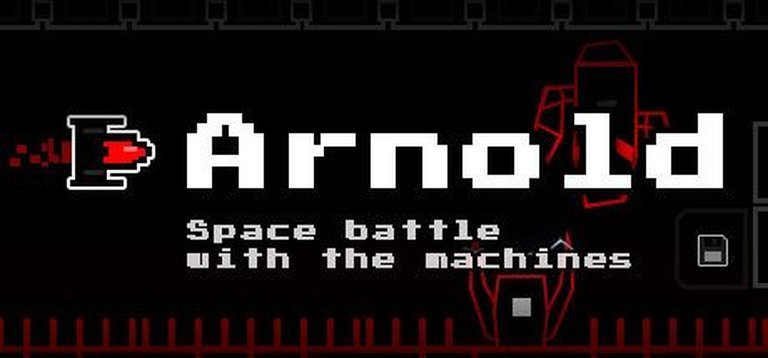
Description
Arnold is a side-view action shooter set in a sci-fi futuristic universe, featuring vehicular space flight and direct control gameplay. Players engage in intense shooting mechanics while navigating through space environments, emphasizing fast-paced combat in a futuristic setting.
Where to Buy Arnold
PC
Arnold: Review
Introduction
In the sprawling digital bazaar of Steam, where thousands of titles vie for attention, few games attain notoriety, and even fewer achieve lasting recognition. Arnold, a 2021 release from the obscure developer Dnovel, exists in the profound stillness of this void—a minimalist sci-fi shooter that embodies the ephemeral nature of indie game obscurity. With a premise as thin as its digital footprint, Arnold offers a functional but unremarkable experience, serving more as a case study in preservation challenges than a landmark in interactive entertainment. This review posits that while the game’s core mechanics provide fleeting arcade satisfaction, its near-total absence of narrative depth, world-building, and critical reception relegates it to a historical footnote—a testament to the countless titles that flicker briefly on storefronts before fading into digital oblivion.
Development History & Context
Arnold was released on January 11, 2021, for Windows by publisher FreeAnimals Software, with development credited to the little-known studio Dnovel. The game was built using the Cocos2d engine—a popular, accessible framework for 2D games often employed by small teams or solo developers due to its flexibility and low barrier to entry. This technical choice suggests a project constrained by limited resources, aiming for efficiency over graphical grandeur. The gaming landscape of early 2021 was saturated with indie shooters, from roguelike innovations (Enter the Gungeon, Binding of Isaac) to precision platformers (Celeste, Super Meat Boy). Against this crowded field, Arnold received virtually no marketing push, and its presence on Steam appears to be that of a quiet Early Access title (as noted in MobyGames’ groupings) that transitioned to a full release without significant community traction. No developer diaries, interviews, or post-mortems exist in the provided material, leaving the creators’ vision and production journey entirely shrouded—a common fate for micro-budget projects that lack the institutional support to document their process.
Narrative & Thematic Deep Dive
Narratively, Arnold is a skeletal construct. The official Steam description offers a lone sentence: “Space pilot Arnold goes to a space base to study secret data, but falls into an insidious trap of evil aliens.” This premise is not explored through dialogue, cutscenes, text logs, or environmental storytelling. The protagonist, Arnold, is an enunciated blank—a name without personality, history, or motivation. There are no supporting characters, no moral quandaries, and no thematic underpinnings beyond the most rudimentary “hero versus alien threat” dichotomy. The plot exists solely as a transactional justification for gameplay: the player must shoot and navigate because a vague scenario demands it. This narrative vacuum contrasts sharply with even the most basic genre expectations; games like Dead Cells or Cuphead embed their action in evocative worlds and minimal yet effective storytelling. Here, the absence is total, reducing the experience to a pure mechanics-driven exercise with no emotional or intellectual investment. The name “Arnold” itself—common in gaming from Hey Arnold! to the FNAF series’ recent protagonist—feels arbitrarily applied, lacking any connection to a character or brand that might lend it meaning.
Gameplay Mechanics & Systems
Arnold’s gameplay is presented as a side-view, 2D shooter with vehicular space flight elements, blending run-and-gun action with what user tags describe as “Shoot ‘Em Up” and “Precision Platformer” sensibilities. The core loop, distilled from the feature list, involves:
- Exploration & Traversal: Players navigate level layouts populated by traps. The “teleport the spaceship to the next level” mechanic suggests either fixed stage transitions or a procedural generation system where completion triggers a teleportation to a new arena. Given the “Action Roguelike” user tag, runs may feature random level seeds, though this is not explicitly confirmed.
- Combat: Engagement centers on shooting “dangerous opponents” and “turrets (homing guns).” The inclusion of “shoot and dodge bullets” implies bullet-hell patterns, requiring precise movement to avoid incoming fire while returning fire. Weapons and enemy types are undocumented, but the emphasis on “destroy enemies” points to score-based or required elimination clear conditions.
- Progression & Resources: Players collect “first aid kits” for health restoration. Achievements are tied to level completion, offering extrinsic goals but no indication of permanent upgrades, skill trees, or meta-progression (the latter would align with roguelike tags). The “learn the level and destroy your opponents” phrasing suggests that mastery of stage layouts is key, possibly akin to precision platformers where repetition breeds familiarity.
- Interface & Control: “Direct control” indicates traditional keyboard/gamepad input without simulationistic flight mechanics. The space flight aspect likely manifests as horizontal or vertical scrolling shooter movement, possibly with free-range movement confined to the screen’s bounds.
The systems appear streamlined to an extreme—a minimalist design philosophy that prioritizes tight, repeatable action loops over complexity. However, without access to build notes or designer commentary, the depth of mechanics (e.g., weapon variety, enemy AI patterns, trap variety) remains speculative. The user-generated tags on Steambase (“Atmospheric,” “Pixel Graphics,” “Cute”) suggest an aesthetic that contrasts with the grim sci-fi premise, hinting at a possible dissonance between visual tone and narrative framing.
World-Building, Art & Sound
The setting is a generic “sci-fi / futuristic” space base, defined in the source material only as a location infiltrated by “evil aliens.” There is no lore, historical context, or environmental storytelling—no readable logs, no architectural hints, no atmospheric cues that would breathe life into the world. Concept art, screenshots, or gameplay footage are absent from the provided sources, leaving the art style to be inferred from user tags: “Pixel Graphics,” “Hand-drawn,” “Colorful,” and “Cute” point toward a deliberately retro, perhaps charming visual presentation that undercuts the ominous premise. This juxtaposition might be intentional—a “cute” aesthetic softening a shooter’s violence—but without visual evidence, it remains conjecture.
Sound design is entirely unaddressed in the documentation. No composers, sound effects descriptions, or musical styles are listed. Given the game’s minimalist profile and likely budget, audio may be minimal or synthesized, serving purely functional purposes (shooting sounds, hit feedback) without attempting immersion through thematic scoring. The atmosphere, therefore, rests entirely on gameplay tension—the anxiety of bullet patterns and trap avoidance—rather than audiovisual world-crafting. This stands in stark contrast to the hallmarks of immersive game design, where environmental details and soundscapes work in concert to make a world feel lived-in (as discussed in general lore articles). Arnold’s world is a blank canvas, a mere container for action.
Reception & Legacy
Arnold exists almost entirely outside critical discourse. No professional reviews appear on MobyGames, and it is absent from 2021 best-of lists at IGN and Metacritic, which feature acclaimed titles like Deathloop, Psychonauts 2, and Chicory: A Colorful Tale. This omission is telling: the game did not register on the radar of mainstream critics or award circuits.
Its reception is confined to Steam user feedback, aggregated by Steambase as a Player Score of 88/100 from 33 reviews—a “Positive” rating. This small-sample positivity suggests a niche appeal, likely to players seeking minimalist, retro-inspired shooters. However, the low review count and the game’s steep price drop from a listed $6.99 to $0.76 on Steam indicate poor commercial performance and limited visibility. No patches or updates are documented in the provided sources, hinting at a static, possibly abandoned project.
Legacy-wise, Arnold has none. It has not inspired clones, been cited in developer talks, or cultivated a community. The name “Arnold” in gaming is more famously associated with Hey Arnold! (which had multiple adaptations, including a 2002 Avalanche Software platformer) and, as of 2025, with the protagonist of Five Nights at Freddy’s: Secret of the Mimic—a technician embroiled in horror lore. These are unrelated, but the coincidence underscores how a generic name can’t anchor a game’s identity without strong branding or narrative weight. Arnold (2021) is thus an orphan in nomenclature, a title that fails to leverage its moniker for any cultural resonance.
For historians, the game is a preservation challenge: a digital artifact with scant metadata, no cultural footprint, and a high risk of being delisted or lost as storefronts evolve. It represents the long tail of Steam’s library—the myriad experiments, passion projects, and possibly asset flips that populate the platform but rarely enter the historical record.
Conclusion
Arnold is a minimalist sci-fi shooter that achieves little beyond the execution of basic gameplay loops. Its strengths are its focus and simplicity: a clear objective, straightforward controls, and a presumably challenging bullet-dodging mechanic that may appeal to genre purists. Yet these are undermined by a complete lack of narrative, world-building, or systemic depth. The game is a functional prototype rather than a finished experience, seemingly content to exist as a bare-bones arcade diversion without ambition beyond its immediate play.
In the grand tapestry of video game history, Arnold occupies a space of near-invisibility. It is not a forgotten gem, nor a notorious flop—it is simply a non-entity, a title that evokes no strong reactions, generated no discourse, and left no descendants. Its place in history is that of a cautionary example: a reminder that without compelling design, narrative, or marketing, even a competent technical foundation cannot elevate a game from the abyss of obscurity. For archivists and historians, it underscores the urgency of documenting the vast, unwritten majority of digital games—the Arnolds of the world—that risk being erased as platforms and technologies change. In the end, Arnold is less a game and more a ghost in the machine, a faint signal in the noise of an industry that moves ever forward, leaving such quiet experiments behind.