
- Release Year: 2012
- Platforms: Browser, Macintosh, Windows
- Developer: Mateusz Skutnik
- Genre: Adventure
- Perspective: 1st-person
- Game Mode: Single-player
- Gameplay: Graphic adventure, Puzzle elements
- Setting: Futuristic, Sci-fi
- Average Score: 92/100
Description
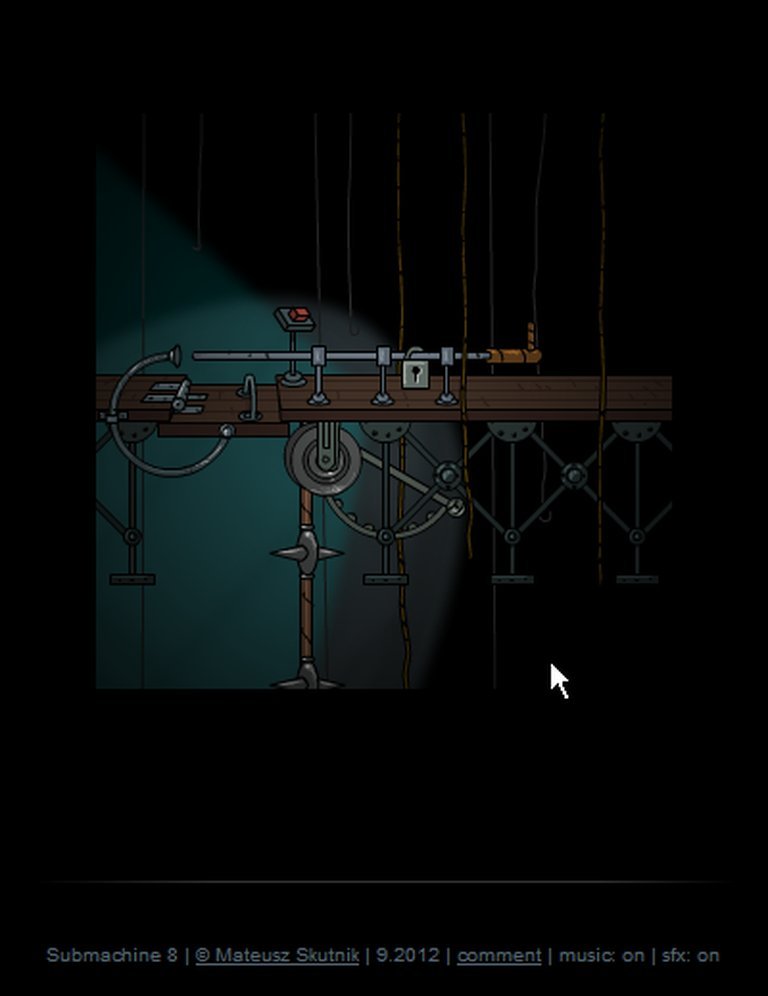
Submachine 8: The Plan is a point-and-click adventure game set in a mysterious sci-fi world where players navigate multiple layers of reality. Each layer features unique visuals but interconnected structures, and puzzle-solving involves using items found in one dimension to progress in another, advancing the series’ narrative around the enigma of the ‘fifth layer’.
Gameplay Videos
Submachine 8: The Plan Guides & Walkthroughs
Submachine 8: The Plan Reviews & Reception
jayisgames.com (92/100): Submachine 8: The Plan is a fantastic addition to the series.
Submachine 8: The Plan: A Masterpiece of Dimensional Puzzle-Design and Narrative Enigma
Introduction: The Plan Unfolds
After a nearly two-year hiatus following Submachine 7: The Core, the return of Mateusz Skutnik’s seminal episodic adventure series with Submachine 8: The Plan was a momentous event for a dedicated global audience. The game did not merely continue a story; it fundamentally re-engineered the series’ core spatial logic, introducing a multi-layered reality that became both its greatest mechanical triumph and a source of profound narrative intrigue. This review posits that Submachine 8: The Plan stands as a landmark in point-and-click adventure design, primarily due to its revolutionary “layer-hopping” mechanic, which transformed environmental puzzles into exercises in multidimensional spatial reasoning. However, this mechanical brilliance is intimately tied to a narrative approach that deepens the series’ mysteries while deliberately withholding traditional closure, creating a title that is as frustrating as it is brilliant—a perfect crystallization of the Submachine project’s ambitions and its inherent contradictions.
Development History & Context: A Solo Vision in the Flash Era
Submachine 8: The Plan was developed by a single auteur, Mateusz Skutnik, with music composed by ThumpMonks. It was released in 2012 for Windows, Macintosh, and browser (Flash), a platform that defined its distribution and technical constraints. The game arrived at a time when browser-based Flash games were nearing the end of their cultural dominance, yet the Submachine series had built a fiercely loyal following precisely within this ecosystem. The two-year gap since Submachine 7 was notable; Skutnik’s pace was deliberate, allowing for the conception of the game’s central innovation: the systematic use of seven parallel “layers” of reality, each with identical spatial layouts but wildly divergent aesthetics and interactivity.
The technological constraints of Flash were both a limitation and a creative catalyst. The 2D scrolling, first-person perspective was a series staple, but SM8 pushed it to its limit by necessitating a mental model where the player’s position on a “card” (layer) corresponded directly to the same location on every other card. This required no new engine, but a monumental leap in puzzle design logic. The game’s dual release model—a free, unsaved browser version and a $2 downloadable HD version with a soundtrack—reflected the era’s indie monetization strategies, offering a premium experience to committed fans while maintaining accessibility.
Narrative & Thematic Deep Dive: Portals Within Portals
The narrative of Submachine 8 is delivered almost exclusively through fragmented notes, diagrams, and cryptic dialogue, continuing the series’ tradition of environmental storytelling. The opening exchange between Liz and Murtaugh—”You can create dimensional portals while being inside of such portals?… you change direction. Of everything.”—is not just exposition; it is the thematic and mechanical thesis statement. The “Plan” refers to Murtaugh’s scheme to navigate or escape the endless, recursive Submachine by manipulating its foundational layers.
The plot is minimalist: the player learns what Elizabeth meant by “getting to the fifth layer” and must activate a sequence of devices across seven distinct layers (Catwalk, Palace, Forest, Pipes, Rooftop, Bunker, Bamboo) to open a final gate. What little dialogue exists (from the opening and a final, enigmatic transmission) hints at a conflict or plan between characters like Murtaugh and Elizabeth, but no concrete resolution is provided. The themes arerecursion, systemic control, and the nature of reality as a construct. The layers are not just different places; they are different modes of the same structure, suggesting the Submachine is a simulated or infinitely regressive system. The “secrets” hidden in the game—five special items—do not elucidate the story but rather add more cryptic notes (e.g., “the plan_sector 9”), emphasizing that the “Plan” is part of a larger, inscrutable schema. The narrative’s power lies in its negative space; what is not explained becomes the fuel for a decade of fan speculation, making the game a participatory text.
Gameplay Mechanics & Systems: The Architecture of Interconnection
The core gameplay loop is a masterclass in non-linear, cross-layer puzzle dependency. The player is equipped from the outset with the “OIIIIIII” device (later “IOIIIIII”), a multi-button portal gun. Its seven buttons correspond to the seven layers. The critical rule, discovered through play, is that pressing a button transports the player to the exact same spatial coordinate in the target layer. If you are at the “base of the ladder” on Layer I, using the upper-left button sends you to the “base of the left staircase” on Layer II—locations that are functionally equivalent in the shared layout.
This system creates several profound gameplay consequences:
1. Inventory as a Cross-Layer Currency: An item found in one layer (e.g., a red stone with a plus sign on Layer I) is often useless there but vital in another layer (to place in a specific pillar on Layer III). Solving puzzles requires constant mental mapping of “what I have” and “where it might be used across all layers.”
2. Blocked Passage Workarounds: A dead-end on one layer (a raised catwalk section) can be bypassed by traveling to another layer, moving to the corresponding location where the obstacle is absent, and then returning. This makes navigation feel fluid and intelligent rather than linear.
3. State Change Propagation: Actions in one layer can permanently alter another. The most elegant example is the “circular device” on a pole, present in both Layer II (Palace) and Layer III (Forest). Rotating the triangular indicator on Layer II via a lever causes the corresponding notch in Layer III to cover/uncover a hidden stone. The state of the machine is global across layers.
4. The Lever Grid Endgame: The final puzzle, requiring the player to return to all seven layers and set a series of “push levers” to specific depths (all the way in, halfway, all the way out) based on a grid diagram, is the ultimate test of this interconnected logic. It forces the player to treat the entire game world as a single, contiguous puzzle board split across seven visual skins.
The interface is minimalist to the point of austerity: a point-and-select cursor, an inventory bar, and the layer device. This purity focuses all mental energy on spatial reasoning. The only significant flaw, noted in multiple player reviews (e.g., on Kongregate and JayisGames), was a persistent inventory bug where items could become “stuck,” forcing a restart—a critical flaw in a game where progress is state-dependent and the free version offers no save function.
World-Building, Art & Sound: Seven Skins, One Structure
The game’s world is a triumph of atmospheric diversity within rigid structural unity. Each of the seven layers is a stunningly realized vignette:
* Layer I (The Catwalk): A rusted, industrial steel catwalk under a bleak sky, with satellite dishes and a tethered, retro-futuristic spaceship. Conveys a sense of abandoned infrastructure.
* Layer II (The Palace): An ornate, decaying Islamic-inspired palace with intricate tiles, domes, and a multi-door cabinet. Suggests a once-civilized, now-empty, ceremonial space.
* Layer III (The Forest): A lush, top-down view of a forest canopy with tree-ladders and pulleys. Feels organic and slightly magical.
* Layer IV (The Pipes): A claustrophobic, utilitarian network of water pipes and tunnels, initially flooded. Represents a foundational, infrastructural layer.
* Layer V (Rooftop): A windswept, Cyclopean rooftop with a cat statue and a monumental arch. Evokes ancient, monumental architecture.
* Layer VI (The Bunker): A grim, concrete military bunker with artillery and a barrel mechanism. The only layer with explicit, if decayed, martial imagery.
* Layer VII (Bamboo): A serene, elevated bamboo walkway on a mountainside, leading to a cave and a mound. The most “natural” and peaceful layer, culminating in a mysterious device.
The visual direction by Skutnik is consistently exceptional, with hand-drawn assets that maximize the limited resolution for maximum mood. The reuse of a 13-scene layout per layer is genius, as it makes the player’s dawning realization of the structural equivalence a core part of the discovery process. ThumpMonks’ soundtrack is a character in itself—a haunting, ambient score with looping electronic pulses and melancholy melodies that perfectly underscore the eerie, empty beauty of each layer. The sound design, from the clank of mechanisms to the drain of water, is precise and satisfying, providing crucial audio cues (like the water draining in Layer IV).
Reception & Legacy: Critical Darling, Narrative Divisive
At launch in September 2012, Submachine 8 was met with overwhelming praise from its core community. On Kongregate, it holds a 4.1/5 rating from over 465,000 plays. The JayisGames review by “grinnyp” gave it a 4.6/5, calling it “fantastic” and praising the “multi-dimensional layout” and “chilling atmosphere.” Player comments are effusive: “This dimension-hopping mechanic, it blew my freaking mind” (John Goodwin), “The level design for this entry… is absolute genius” (ImpSyndrome), “I literally gasped when I saw this” (BrittaBot).
However, MobyGames data shows a stark contrast: only 2 critic reviews and 2 player ratings with an average of 3.5/5, with no written reviews. This suggests a disconnect between the passionate, engaged fanbase and broader critical recognition, likely due to the game’s niche genre and Flash platform.
The legacy of Submachine 8 is multifaceted:
1. Mechanical Innovation: Its layer-hopping system is arguably the series’ most significant mechanical contribution to adventure game design. It influenced the cognitive approach to puzzle design, emphasizing systemic thinking over inventory-combination logic.
2. The “Secrets” Culture: The five well-hidden “surprises” (requiring non-obvious actions like moving a pole back in Layer I or smashing a cat statue with a hammer in Layer V) and their unlockable “secrets hub” cemented the series’ reputation for rewarding obsessive, lateral exploration. This became a template for later entries.
3. Narrative Debate: The game intensified a long-standing debate within the fanbase. While many praised the mystery (“Creating more questions than answers, it is still fantastic” – grinnyp), others like the reviewer “Shudog” and commenter “DAM” criticized it as a “scrapbook” of puzzles that lacked narrative integration: “the rooms don’t tell a story… there was far more thought put into the stale, unclickable bread in Sub5’s opening scene than the whole of this.” The feeling that the story was becoming “convoluted” and might not be satisfactorily concluded (prefiguring concerns about the later games) began here.
4. Technical Shortcomings: The inventory bug marred the experience for many, highlighting the fragility of complex state-tracking in browser-based engines. The lack of a save function in the free version was a persistent pain point.
Conclusion: A Flawed Apex
Submachine 8: The Plan is the puzzle-design apex of the Submachine series. Its layer-based navigation system is a landmark achievement in 2D adventure gaming, transforming environmental spaces into a multidimensional logic grid. The distinct, beautiful, and atmospheric visuals for each layer, coupled with ThumpMonks’ superb soundtrack, create a world that feels vast and deeply considered.
Yet, it is also the game where the series’ narrative ambitions began to feel structurally strained. The “Plan” itself remains largely abstract, and the player’s journey feels less like uncovering a story and more like operating a vast, beautiful, and silent machine. The cryptic lore and hidden “secrets” deepen the mystery but offer little in the way of emotional or explanatory payoff. Coupled with the notorious inventory bug, the game can feel like a breathtaking but sometimes frustrating architectural marvel.
Its place in video game history is secure: as the definitive example of how to build complex, systemic puzzles within the constraints of the classic point-and-click format. It demonstrated that a game world could be a single, interconnected puzzle across multiple “skin” layers, a concept that would echo in later indie titles. For fans of the series, it is a essential, beloved, and occasionally aggravating chapter—a game that asks not just “what is this?” but “how does this connect to everything else?” and then delights in the sheer difficulty of answering that second question. It is the Submachine distilled: enigmatic, beautiful, mechanically profound, and stubbornly, intentionally incomplete.