
- Release Year: 2010
- Platforms: Macintosh, Windows
- Publisher: City Interactive S.A., Merscom LLC, Paramount Digital Entertainment
- Developer: Anino Games, Inc., Merscom LLC
- Genre: Adventure
- Perspective: 1st-person
- Game Mode: Single-player
- Gameplay: Hidden object, Puzzle elements
- Setting: 1950s
Description
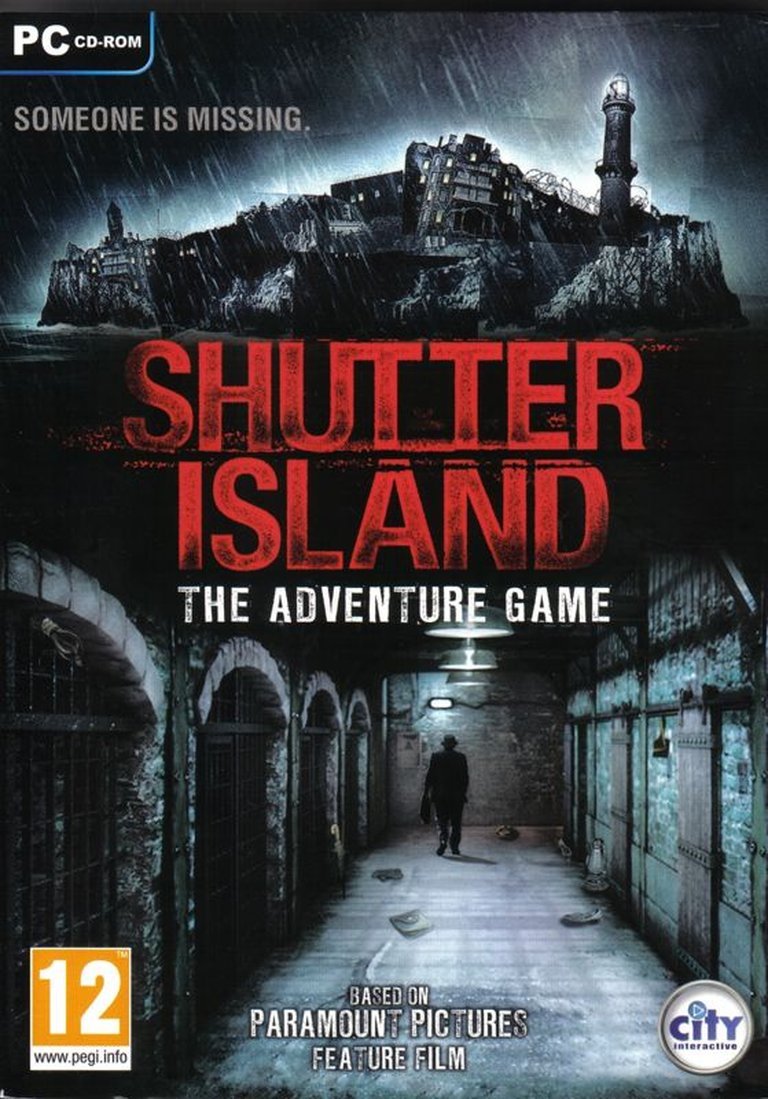
Shutter Island is a hidden object adventure game set in a 1950s mental institution on a remote island, serving as a tie-in to the film of the same name. Players assume the roles of two federal agents dispatched to investigate the disappearance of a dangerous patient, exploring various locations to find clues and solve puzzles while uncovering dark secrets that blur the line between reality and fantasy.
Gameplay Videos
Shutter Island Patches & Updates
Shutter Island: The Adventure Game – A Review
Introduction: The Fog of Adaptation
In the landscape of licensed video games, few projects arrive with more precipitous expectations and inherent contradictions than Shutter Island: The Adventure Game. Tied to Martin Scorsese’s 2010 neo-noir psychological thriller—a film celebrated for its atmospheric dread, labyrinthine plot, and a finale that ignited years of debate—the game had a monumental shadow to emerge from. Developed by Anino Games and published by City Interactive, this 2010 Windows/Mac title entered a market saturated with casual hidden-object adventures (HOGs), tasked with translating a complex cinematic meditation on guilt, trauma, and institutional gaslighting into a genre defined by object lists and pixel hunts. The result is a fascinating, deeply flawed artifact: a technically competent but utterly hollow adaptation that succeeds as a functional piece of casual entertainment while failing catastrophically as an interpretive work of art. This review argues that Shutter Island: The Adventure Game is not merely a bad game, but a critical case study in the profound limitations of the hidden-object format when applied to psychologically dense source material, revealing a fundamental mismatch between interactive mechanics and narrative ambition that doomed it from the start.
Development History & Context: The Casual-Adaptation Assembly Line
Studio & Vision: The game emerged from Anino Games, a developer with a portfolio heavily weighted toward casual and family-friendly titles (Mystery of Cleopatra, Wisegal, Empire Builder series). There is no evidence of a deep, authorial vision driving this project; instead, the credits list a “Lead Game Writer” (Scott Olson) and a team of producers and designers who collectively handled “Game Writing” and “Design.” This suggests a small, cross-functional team operating under a tight deadline, likely following a template established by other Paramount-licensed HOGs of the era. The vision was not to interrogate Lehane’s or Scorsese’s themes, but to produce a marketable tie-in for the film’s release window—a common, often cynical, practice in the early 2010s casual gaming boom.
Technological & Market Context: 2010 was the zenith of the “Playground” engine’s popularity in the casual space. This proprietary engine, used in numerous hidden-object games, provided a standardized, low-cost framework: a static, beautifully painted background with clickable hotspots, an inventory system, and basic puzzle integration. The technological “constraint” was less a limitation and more a deliberate design philosophy—prioritizing accessibility and low system requirements over graphical fidelity or complex simulation. The game’s business model as shareware (a demo with a locked full version) placed it squarely in the “impulse buy” section of digital storefronts like Big Fish Games, targeting an audience of primarily older, female casual players seeking relaxing scavenger hunts, not psychological thrillers.
The Licensed Game Trap: The decision to adapt Shutter Island fits a then-common pattern: major studios licensing popular films to casual game publishers for quick, low-budget cash-ins. The source material’s genre (psychological horror/thriller) was notoriously ill-suited to the HOG format, which thrives on clear, tangible objects and straightforward progression. The game’s existence speaks less to a desire to expand the film’s universe and more to a contractual or financial imperative to capitalize on the film’s massive marketing campaign.
Narrative & Thematic Deep Dive: The Anatomy of a Hollow Adaptation
Plot Synopsized: The game follows U.S. Marshals “Teddy Daniels” and “Chuck Aule” to Ashecliffe Hospital to find the missing patient Rachel Solando. Players explore various locations—the hospital, a lighthouse, a cave, a graveyard—finding clues and solving inventory-based puzzles. The climax reveals that “Teddy” is actually patient Andrew Laeddis, the role-play was therapeutic, and the ending presents his famous dilemma: “Which would be worse, to live as a monster, or to die as a good man?”
Surface-Level Adherence, Profound Thematic Failure: The game mechanically follows the film’s plot beats but amputates the very themes that made the story powerful. The novel and film are dense with:
* Trauma & Memory: Teddy’s WWII Dachau flashbacks and his wife Dolores’s pyromania are not just backstory; they are the engine of his psychosis.
* Institutional Power & Ethics: The debate between lobotomy and psychotropic drugs, the staff’s moral ambiguity, the systematic use of the role-play as treatment.
* The Unreliable Narrator & Metafiction: The audience experiences the story through Teddy’s compromised perception. The twist reframes everything, forcing a reevaluation of every prior scene.
The game treats these elements as window dressing. Flashbacks are reduced to static images or brief, disconnected vignettes. The ethical debate is absent; Dr. Cawley’s motivations are simplified to a benign, almost paternalistic “we’re trying to help.” The core metafictional conceit—that the player, like Teddy, is being manipulated by the game’s “director” (the staff)—is completely lost. You are not experiencing a delusion; you are performing tasks for a linear, transparent narrative.
The Dialogue Catastrophe: As the user review by piltdown_man devastatingly notes, the dialogue is delivered via text boxes with character portraits, often containing only one to three lines. Conversations are stripped of subtext, nuance, and emotional weight. The infamous “…” response to a question perfectly encapsulates the adaptation’s laziness—it acknowledges the need for interaction but provides zero substance, reducing dramatic conversation to a series of meaningless clicks. This is not a stylistic choice for a HOG; it is a profound failure of adaptation. The film’s power lies in DiCaprio’s haunted expressions, the weighty silences, the tonal delivery. The game has no performance, only placeholder text.
The “Twist” That Wasn’t: The user review is again incisive: the ending’s supposed shock is “heavily hinted at throughout the whole game.” The film’s genius is in burying clues in the cinematic language (anagrams in names, visual cues, pacing). The game, lacking visual storytelling or verbal performance, is forced to tell you the twist through its clunky dialogue system, destroying any mystery. The final question (“monster or good man?”) loses all philosophical ambiguity when delivered as a plain text box after a simplistic plot reveal. It becomes a maudlin gimmick, not a haunting ethical quandary.
Gameplay Mechanics & Systems: Functional, Then Forgettable
Core Loop: The gameplay is a pure, unadulterated hidden-object experience with light adventure elements. Each scene presents a static, isometric or first-person view. A list at the bottom shows object names or silhouettes. Players click to find them. Found items go into an inventory (a sliding tab from the bottom-left), and some must be dragged onto “hotspots” (slots in the scenery) to progress. This is the genre’s basic formula, executed competently.
Strengths (The Competence Ceiling):
* Precision & Hitboxes: The piltdown_man review correctly praises the pinpoint accuracy. In a genre often ruined by frustratingly large or small click zones, the game’s collision detection is reliable. You know when you’ve missed an object because it’s there, not because the game’s coding is faulty.
* The Flashlight Hint System: This is the game’s most intelligent design choice. When stuck, a flashlight button highlights the general area of a missing item after a recharge period. Crucially, there is no penalty for using it. This respects the player’s time and avoids the punitive frustration of other HOGs, making the experience smoother and more casual-friendly.
* Technical Stability: The reviewer notes flawless performance on Windows 7, no crashes or hangs. For its audience, this reliability is paramount.
Weaknesses (The Creative Void):
* Puzzle Integration: The puzzles are standard HOG fare: “find differences between two images,” simple mathematical riddles, and the aforementioned inventory drag-and-drops. They are generic and contextually meaningless. Finding a “medal” for Ben Kingsley’s character (as Games.cz sarcastically notes) has no narrative justification; it’s an arbitrary hurdle. The puzzles do not teach you about the world, characters, or plot. They are pure busywork.
* Lack of Scale & Logic: The reviewer’s complaint about objects not being to scale hits at a deeper issue: the game’s world is a disjointed collage. A massive, easily visible object might be the target while a tiny, logical tool is ignored, breaking immersion and making the scene feel less like a real place and more like a contrived list-container.
* The Illusion of Exploration: Despite first-person perspective, there is no true exploration. You are confined to a series of beautifully rendered still lifes. The sense of “investigating Ashecliffe” is an absolute fiction. You are not a marshal; you are a cursor.
The Mini-Game Abyss: The separate-screen mini-games (spot-the-difference, math puzzles) are jarring, non-diegetic interruptions. They do not advance the story or reveal character. They are throwaway time-fillers that actively kill any emergent tension the atmospheric art might create.
World-Building, Art & Sound: Pretty Pictures on an Empty Stage
Art Direction & Atmosphere: This is the game’s sole, undeniable strength. Using photographs of the film’s cast for character portraits (a smart, cost-effective tie-in) and painting detailed, moody backgrounds, the artists capture the 1950s institutional aesthetic and the film’s grim, rain-swept palette. Screenshots show rain-lashed windows, dimly lit corridors, cluttered offices, and the stark lighthouse. For a HOG, the scenes are attractive and sufficiently atmospheric. Adventurespiele’s German review (90%) rightly praises the “schaurige Stimmung” (eerie mood) and “gute Grafik” (good graphics). It looks the part.
The Fatal Disconnect: However, the art serves a decorative, not narrative, function. In the film, every detail—the rain, the gray walls, the flickering lights—is a psychological projection. In the game, they are just… details. There is no visual storytelling. No hidden meaning in object placement. The art creates a feeling of mystery but provides no evidence for the player to synthesize. It’s a haunted house ride with no story inside.
Sound Design & Music: The soundtrack, as noted, is “heavy-handed” but functional. It uses brooding, minimalist strings and ambient drones to maintain a low level of unease. It does its job of preventing total silence, which would be even worse. The absence of voice acting (a budget necessity) is the final nail in the coffin of immersion. The silent, text-box dialogue removes the last vestige of life from the world. The soundscape is wallpaper; the lack of spoken word makes the island feel dead, not ominously quiet.
Reception & Legacy: The Critic’s Verdict and a Forgotten Footnote
Contemporary Critical Reception: The 55% aggregate score from four critics on MobyGames tells the full story. The reviews are polarized in a way that reveals the game’s target audience divide:
* Adventurespiele (90%): Evaluates it as a HOG. Praises the story’s “spannend erzählt” (excitingly told) and the atmosphere. For a player seeking a casual, atmospheric object hunt, it delivers.
* Adventurearchiv (79%): Explicitly calls the “Adventure” subtitle “Etikettenschwindel” (label fraud). It gives a high score for HOG players but warns adventure fans they will be disappointed. This is the key critical insight: the game is being sold under false premises.
* GameZebo (40%) & Games.cz (10%): These are the voices of the disappointed. GameZebo calls it a “slapdash, half-hearted attempt to cash in.” Games.cz’s scathing review mocks the absurdity of finding random objects (Ben Kingsley’s war medal) in a detective story, highlighting the complete divorce between gameplay and narrative logic.
Player Reception: The single Moby user review (2.8/5) echoes the critic consensus: “looks good and which plays well but ultimately fails to deliver a satisfactory gaming experience.” The core complaint is the abysmal length (3-3.5 hours for a full-price game, demo-length) and the meaningless story.
Commercial & Cultural Legacy: The game was a commercial footnote. The cited Reddit post claims the PC version sold only 400,000 copies worldwide—a respectable number for a budget casual title, but a stark failure compared to the film’s $295M gross. Its legacy is threefold:
1. A Peak Example of a Trend: It stands as a textbook case of the early-2010s “film tie-in HOG” model, illustrating why the model was ultimately unsustainable for serious franchises. It is mentioned alongside Wisegal and Mystery of Cleopatra in the credits as part of a portfolio of similar low-effort adaptations.
2. A Cautionary Tale for Adaptation: For game scholars, it is a prime example of mechanical mismatch. You cannot translate a film about the construction of reality into a game about finding a list of disparate objects. The interactivity must serve the theme; here, it actively works against it.
3. A Lost Artifact: The mentioned, fully lost Nintendo DS version (rated by ESRB/OFLC but never released) underscores its disposable nature. It was so forgettable that its cancellation passed with little notice, a forgotten blip in the DS’s vast library.
Its influence is negative—it likely taught publishers that complex, auteur-driven films were poor candidates for casual game adaptations, reinforcing a cycle of safer, more formulaic licenses.
Conclusion: The Lighthouse is Empty
Shutter Island: The Adventure Game is not a “bad” game in the way a broken, buggy, or offensive game is bad. It is a profoundly inadequate adaptation. It is a ghost—a beautifully painted, technically sound, functionally playable ghost—haunting the machinery of a genre it was never built to serve.
Its artwork and stable mechanics earn it a passable grade as a generic hidden-object experience. But as an adaptation of Shutter Island, it is an absolute failure. It strips away the film’s (and novel’s) soul—the psychological depth, the thematic resonance, the cinematic language, the haunting performances—and replaces it with a chore list set against a pretty backdrop. The central, devastating twist about the nature of reality and identity is rendered toothless because the gameplay itself never creates a reality to be subverted. The player is never immersed, never fooled, never invested in the protagonist’s perspective because they are behind a cursor, not inside a mind.
In the history of video games, it will be remembered not for its craftsmanship, but for its * glaring missed opportunity. It proves that technical polish and atmospheric art assets are not enough. A great adaptation requires understanding that interactivity is not just about *doing, but about experiencing the core conflict of the source material. You cannot make a game about the erosion of sanity by having the player unfailingly complete simple tasks for a guaranteed reward. The only mystery here is how such a fundamentally misconceived project got greenlit, and the only truth it reveals is that in the rush to cash in on a cinematic phenomenon, the very essence of what made that phenomenon compelling can be lost, replaced by a hollow shell where the only thing you’re really searching for is a reason to care.
Final Verdict: 4/10. A competently engineered but artistically bankrupt tie-in, representative of the lowest tier of licensed casual games. It is a functional product with zero interpretive insight, serving only as a cautionary tale in adaptation theory.