
- Release Year: 2016
- Platforms: Windows
- Genre: Educational, Puzzle
Description
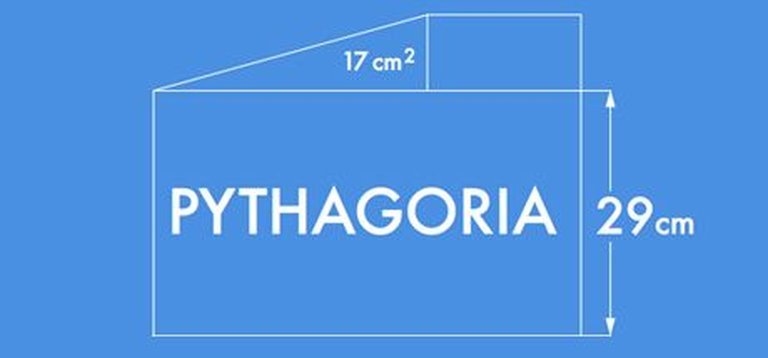
Pythagoria is an educational puzzle game that challenges players to solve area-based number puzzles using only whole numbers. The core mechanic involves finding missing values in rectangle configurations through basic multiplication, with the twist that fractions are not allowed, requiring logical reasoning and inspiration. Featuring 60 unique puzzles, a minimalist design, calm music, and achievements, it offers a brain-teasing experience suitable for all ages, blending mathematical thinking with relaxing gameplay.
Where to Buy Pythagoria
PC
Pythagoria Guides & Walkthroughs
Pythagoria Reviews & Reception
aperiodical.com : I’ve had a pleasant morning of puzzling.
Pythagoria: A Minimalist Ode to Geometric Purity
In an era where blockbuster titles strive for ever-greater complexity and sensory immersion, a quiet, unassuming puzzle game from a lone Russian developer dares to ask a deceptively simple question: what if the entire universe could be understood through the integer relationships of rectangles and triangles? Pythagoria, released in January 2016 by Vladimir Maslov, is not merely a game; it is a conceptual haiku, a distilled meditation on the Pythagorean ideal that numbers are the fundamental substance of reality. It is a digital artifact that, despite its modest production values and fleeting playtime, captures the essence of an ancient philosophical quest: to find harmony, order, and truth through pure, unadulterated reason. This review will argue that Pythagoria is a significant, if niche, cultural artifact—a successful translation of a centuries-old mathematical mystique into an interactive, contemplative experience that highlights both the profound beauty and the inherent limitations of its namesake’s worldview.
1. Development History & Context: The Solitary Vision of Vladimir Maslov
The story of Pythagoria is, fittingly, the story of a single craftsman working in near-isolation. Developer Vladimir Maslov is a quintessential independent developer—a “bedroom coder” whose public profile is virtually non-existent beyond his Steam storefront. His prior and subsequent works (such as Aurora Nights and the True or False series) suggest a developer fascinated by minimalist, logic-based interactivity. Pythagoria represents the apex of this focus: a game stripped of narrative, character, and even a traditional scoring system, reducing interaction to the purest form of problem-solving.
The game emerged in a specific technological and market context. Its system requirements—a 1.4 GHz processor and 512 MB of RAM—place it firmly in the era of Windows XP/Vista, yet it was released in 2016, a time when the indie scene was dominated by more graphically ambitious titles. This anachronism is telling; Maslov was not competing on technical prowess but on conceptual purity. The game’s existence on Steam, part of bundle collections like “Smart Games” and “Smart Games Plus,” indicates a strategy of low-cost aggregation rather than standalone marketing. Its price point of $1.99/€1.99 positions it squarely in the “impulse buy” category, a digital curiosity akin to a pamphlet or a monk’s illuminated manuscript sold at a market.
The gaming landscape of early 2016 was rich with puzzle games (The Witness being a notable high-budget contemporary), but Pythagoria deliberately eschews the lavish presentation and sprawling open worlds of its peers. Instead, it carves a niche for itself as an “educational” or “logic” puzzle game, a标签 that on Steam often leads to obscurity. Its development history is thus a testament to the power of a singular, unwavering vision in an ecosystem that often rewards scale and spectacle.
2. Narrative & Thematic Deep Dive: The Quest for Integer Certainty
Pythagoria possesses no narrative in the conventional sense. There is no protagonist, no plot, no dialogue, and no unfolding story. Yet, it is profoundly narrative in its thematic structure. The player’s journey through 60 puzzles is a metaphorical ascent, mirroring the Pythagorean path from the confusion of sensory experience (doxa) to the clarity of intellectual understanding (episteme).
Each puzzle is a static diagram: a collection of rectangles, sometimes augmented with circles and right-angled triangles. One or more regions are marked with a vibrant question mark. The core instruction is the game’s entire “lore”: “find the missing value… The only mathematics you need to know… is that the area of a rectangle is the length multiplied by the width. … you are not allowed to use fractions in the solutions. All area puzzles can be solved using only whole numbers.”
This constraint—the prohibition against fractions—is the game’s central, defining myth. It is the “law” of this digital cosmos. Thematically, this resonates deeply with Pythagorean doctrine. The Pythagoreans were numerologists who believed whole numbers (the monad, dyad, triad, etc.) were the principles of all things. The discovery of irrational numbers (like √2, the diagonal of a unit square) was, according to legend, a devastating secret that led to the drowning of the Pythagorean Hippasus. Pythagoria’s rule is a conscious avoidance of that horror; its universe is one where the harmony of integers remains inviolate. Every solution is a clean, discrete number between 1 and 9. This creates a closed, perfect system—a Pythagorean cosmos where every length and area is a harmonious whole number, a reflection of the tetractys (the sacred triangular figure of ten).
The “inspiration” mentioned in the Steam description is the moment of anagoge—the soul’s leap from the diagram’s multiplicity to the single, unifying integer. The player is not a character but an anonymous seeker, a modern akousmatikos (“listener”) receiving the symbolic diagrams (symbola) of the Pythagorean school. The act of solving is an ascetic practice: eliminating the noise of fractional possibility to hear the pure note of the correct integer, a tiny echo of the musica universalis, the music of the spheres that Pythagoras believed governed the cosmos.
3. Gameplay Mechanics & Systems: The Elegance and Agony of Integer-Only Reasoning
Pythagoria’s gameplay loop is as minimalist as its concept. The core cycle is: Observe Diagram → Apply Constrained Reasoning → Input Integer Answer (1-9) → Confirm Success/Failure → Next Puzzle. There is no time limit, no penalty for wrong answers (beyond a simple buzz), and no progression gates beyond the linear unlocking order.
The Core Genius: The Integer Constraint. This is the game’s masterstroke. The area of a rectangle is length × width. If you know the areas of two rectangles that share a side, you can deduce the shared side length as the Greatest Common Divisor (GCD) of the two areas, provided the GCD yields a whole number that divides both areas. This is the fundamental insight. Later puzzles introduce circles (where the area formula πr² is implicitly sidestepped by treating circular segments as parts of rectangular areas) and composite shapes that require chaining this GCD logic across multiple linked rectangles. The constraint forces elegant, mental arithmetic. You cannot set up (x)(y) = A and (x)(z) = B and solve for x = √(AB/x). You must see that x must be a factor of both A and B. This transforms algebra into a game of factor relationships and divisibility.
Innovative Systems:
* Freehand Drawing Tool: A simplistic pencil allows players to annotate diagrams on screen—marking known lengths, jotting down factor pairs, or sketching auxiliary lines. It’s a vital tool for externalizing one’s thought process, directly mirroring how a mathematician might work on parchment. Its implementation is rudimentary (the “pencil” issue mentioned in Steam discussions points to a clunky, non-smooth drawing algorithm), but conceptually it is essential.
* Ultra-Simple Input: Answering with a single digit (1-9) removes all friction between insight and submission. There is no keyboard typing error, no complex menu navigation. The interface is transparent.
Flawed Systems:
* Opaque Puzzle Identification: As noted in the Aperiodical review, the level select screen is a grid of numbers (1-60) with no previews. If you wish to revisit a specific puzzle you found challenging, you must rely on memory or guesswork. This is a significant UI failing for a game whose pleasure lies in retrospective understanding.
* The Eraser Tool’s All-or-Nothing Approach: The eraser clears all drawn lines. A selective eraser would have been vastly more useful, a small but frequent source of frustration.
* Scalability and Presentation: The puzzles are not drawn to scale. A rectangle labeled “6” might be visually smaller than one labeled “4”. While this is intentional to prevent measurement-based cheating, it can initially disorient. The visual style is stark, functional, and arguably uninspired, using basic colored shapes on a grey background.
The gameplay is, ultimately, a pure logic engine. It is math homework, as John Walker at Rock, Paper, Shotgun famously (and accurately) quipped. Its success depends entirely on whether the player finds this type of constrained reasoning pleasurable. For the target audience—those who enjoy factorizing numbers in their head—it is a sublime, zen-like experience. For others, it will feel like an arid, scholastic chore.
4. World-Building, Art & Sound: The Aesthetic of the Void
Pythagoria constructs its world through radical absence. The “setting” is a non-space, a dimensionless plane where geometric forms float in a neutral grey expanse. There is no environment, no story, no characters. The only “world” is the logical relationship between the shapes on screen.
- Visual Direction: The art is utilitarian. Shapes are solid, flat colors—primary reds for the question marks, blues and greens for known areas. There is no texture, no lighting, no animation. The UI is a stark, high-contrast menu. This minimalist aesthetic is perfectly aligned with the Pythagorean ideal of asceticism and the pursuit of form over matter. The game visually rejects the material world to focus on the formal world of shapes and numbers. It is the digital equivalent of a monk’s bare cell, designed to eliminate distraction.
- Sound Design: The soundtrack is described as “Calm BGM Music.” In practice, this is likely a simple, looping ambient track—probably a synthesized pad or minimalist piano melody—intended to soothe and focus, not stimulate. Sound effects are likely limited to a positive “chime” for a correct answer and a dissonant “buzz” for failure. The audio exists purely as a auxiliary layer to the primary experience of silent, internal reasoning. It underscores the game’s “relaxing” user tag but never intrudes.
- Contribution to Experience: This sparse audiovisual palette is not a budget limitation but a philosophical statement. The game’s atmosphere is one of contemplative isolation. You are alone with the diagram and your thoughts. The calm music prevents the silence from feeling oppressive, while the lack of visual noise ensures 100% of your cognitive resources are dedicated to the puzzle. This is the opposite of the bombastic, score-driven audio-visual assaults of mainstream gaming; it is an experience designed for concentration, similar to a Sudoku or chess app but with even fewer external hooks.
5. Reception & Legacy: The Cult of the Integer
Pythagoria’s reception was, and remains, a story of quiet niche appreciation. Its Steam user reviews are “Mostly Positive” (73% of 229 reviews at the time of writing), but the total review count is tiny compared to mainstream titles. The critical reception consists almost entirely of one widely cited review from John Walker at Rock, Paper, Shotgun and a thoughtful analysis on The Aperiodical (a blog for math enthusiasts).
Walker’s review is pivotal. He admitted getting stuck halfway, framing his difficulty as a “lack of practise in geometry.” This is the game’s most important critical insight: Pythagoria does not test advanced math, but intimate familiarity with the heuristic tricks of integer area relationships. It rewards pattern recognition and mental factor manipulation over formal mathematical knowledge. His “maths homework weirdoness” line perfectly encapsulates the game’s polarizing nature—it’s either your precise cognitive jam or an unwelcome throwback to schoolroom drills.
The Aperiodical review provided essential context, linking the game to Naoki Inaba’s Area Maze puzzles and clarifying the subtle ways Pythagoria expands the concept with circles and Pythagoras’s theorem (used without calculating square roots, as the final areas remain integers). This review cemented the game’s reputation within the “math puzzle” community.
Community discussions on Steam are sparse and reveal a small, dedicated player base troubleshooting minor bugs (the “pencil” issue, a potential “Trojan” false positive from an antivirus—likely a false alarm given the game’s simplicity) and sharing puzzle solutions. The request for a mobile version, noted in the Aperiodical review, is a common sentiment; the game’s mechanics—touch-draw, single-digit input—are perfectly suited for tablets, suggesting its true native platform may be the smartphone, not the desktop.
Legacy and Influence: Pythagoria will not be remembered as a trendsetter. Its influence on the broader industry is negligible. Its legacy is as a perfect, self-contained artifact of a specific idea. It demonstrates that a compelling, thoughtful interactive experience can be built on a single, rigorously enforced mathematical constraint. It stands as a modern companion to ancient puzzles like the Kakuro or KenKen, and a digital successor to the “area maze” pen-and-paper puzzles. Its true influence is pedagogical and philosophical: it is a proof-of-concept for a particular kind of thinking. In the vast library of gaming, it is a single, beautifully carved stone, not a building. Its place in history is as a curio of intellectual minimalism, a game that asks more of the player’s mind and less of their machine than almost any other commercial release.
6. Conclusion: The Snapshot of a Philosophical Ideal
Pythagoria is a flawed gem. Its UI oversights—the poor level selection, the clumsy eraser—are undeniable blemishes. Its 60-puzzle catalogue, while carefully graded in difficulty, can be consumed in a single sitting for those with the right mindset, limiting its long-term hold. It is, as Walker said, more “maths homework” than “game” for many.
Yet, to judge it by the standards of The Last of Us or Elden Ring is to misunderstand its fundamental purpose. Pythagoria is not an experience in the narrative sense; it is a tool for a specific mode of thought. It succeeds brilliantly in its narrow mission: to create a closed, consistent system where every solution is an integer, and to challenge the player to operate within that system using pure logic. The moment of insight—the sudden clarity when a complex, overlapping shape resolves into a single, simple number—is a genuine, quiet thrill. It mirrors the Pythagorean epiphany that the cosmos is not chaotic, but numerically ordered.
Historically, it sits at a fascinating intersection: a 21st-century digital game implementing a puzzle logic inspired by 5th-century BCE mysticism, released by an anonymous developer in the age of billion-dollar franchises. It is a testament to the enduring power of a single, elegant idea. Its legacy will not be in sales charts or franchise spinoffs, but in the mind of the player who, years later, idly factors a number in the shower and remembers the satisfying click of inputting that correct digit in a grey, shapeless void.
Final Verdict: Pythagoria is a 7/10 masterpiece of conception and a 6/10 execution. For the patient thinker who enjoys number theory puzzles, it is an essential, affordable experience—a three-hour séance with the ghost of Pythagoras. For anyone seeking traditional “game” pleasures, it is a curious and likely frustrating diversion. It is not for everyone, but for its intended audience, it achieves a rare and beautiful purity. It is, in the end, a perfect little theorem: a self-evident truth presented in the simplest possible form.