
- Release Year: 2019
- Platforms: Windows
- Publisher: Masangsoft Inc.
- Developer: Masangsoft Inc.
- Genre: Role-playing (RPG)
- Perspective: Behind view
- Gameplay: Action RPG
- Setting: Fantasy, Medieval
- Average Score: 52/100
Description
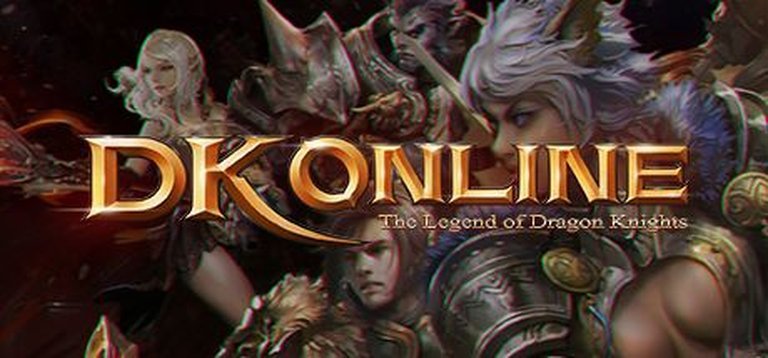
DK Online is a free-to-play fantasy action RPG set in a medieval world where players choose from five races—Human, Elf, Gray Elf, Lycan, Diel—and five classes—Warrior, Sorceress, Warlock, Paladin, Archer—to explore diverse territories like Balt Island and Redisse Territory, complete quests, battle monsters in dungeons such as Lava Dungeon, and engage in social features including guild wars, PvP, crafting, enchantment, and transformation systems.
Gameplay Videos
Where to Buy DK Online
DK Online Guides & Walkthroughs
DK Online Reviews & Reception
metacritic.com (52/100): DK Online is a frustrating mess of a game.
DK Online: A Chronicle of a Forgotten Fantasy
Introduction: Echoes in a Digital Graveyard
To encounter DK Online in 2026 is to perform a kind of digital archaeology. It is not a forgotten classic in the manner of Star Wars: Galaxies or a cult phenomenon like City of Heroes. Instead, it stands as a meticulously preserved artifact of a specific, now largely discredited, design philosophy that dominated the Korean MMORPG export market in the late 2000s and early 2010s. Re-released on Steam in March 2019 by its original developer, Masangsoft Inc., DK Online (often stylized as DKO) arrives with a whisper, not a roar, its presence marked by a “Mixed” Steam user score (49/100 as of March 2026) and a single, damning critic review. Yet, within its jumbled interface, dated graphics, and brutally grindy loops lies a testament to an era of ambition constrained by convention, of fantasy painting by the numbers, and of a live-service model built on a foundation of relentless repetition. This review will argue that DK Online is historically significant not as a great game, but as a perfect specimen of its sub-genre—the “paragon-crafting, transformation-obsessed, medieval fantasy grinder”—and a stark lesson in how such designs became obsolete in the face of evolving player expectations and market saturation.
Development History & Context: The Aeria Games Pipeline and a Steam Reboot
The provenance of DK Online is itself a tangled web, reflective of the complex publishing pipelines of its time. Initial sources from Metacritic and MMORPG.com attribute its original development to a collaboration between RPG Factory and SG Internet, with publication handled by Aeria Games & Entertainment, a known specialist in localizing and servicing free-to-play Asian MMORPGs for Western markets (e.g., Aion, Rappelz). This aligns with its original circa-2013 release window, placing it alongside contemporaries like Vindictus and the Western launch of Blade & Soul.
The version analyzed here, however, is the 2019 Steam reboot. The MobyGames and Steam storefront data consistently list Masangsoft Inc. as both developer and publisher. This suggests a re-acquisition or self-publishing move by the original Korean studio, attempting to resuscitate the title on the modern, global Steam platform. The motivation is clear: the free-to-play, low-barrier-to-entry model of Steam presented a final, low-cost avenue for a game that had likely faded from Aeria’s roster. The technological constraints are blatant. The game requires DirectX 9 and has system requirements from a bygone era (Pentium 4, 2GB RAM), yet its Steam store blurb paradoxically claims “high-quality graphic compared to the specification by the detail of the original art, reduced the unnecessary polygons, also requires less client & patch size than other MMORPG titles.” This is less a boast of efficiency and more a candid admission of its deliberately low-fidelity, asset-light design—a necessity for a game targeting potentially underpowered PCs in its original market.
The 2019 gaming landscape was dominated by Final Fantasy XIV‘s resurgence, World of Warcraft‘s enduring power, and the rise of “theme park” MMOs with strong narrative and QoL features. DK Online entered this arena offering none of these. It was a pure, unadulterated throwback to the “grind-first” philosophy, where the journey was the目的地, and the destination was merely a new area to grind in.
Narrative & Thematic Deep Dive: A Plot in Name Only
Any analysis of DK Online‘s narrative must begin with a profound caveat: it is almost entirely absent from the provided source material and community discourse. This is, in itself, the first and most telling thematic statement. The game’s lore is not a draw; it is an excuse.
The sole narrative anchor comes from the MMORPG.com description: “Players will take the role of the legendary Dragon Knights to challenge the evil dragon Kharvag.” The wiki’s monster lists include entities like “Infuriated Shuriel” and “Soul Sealing Stone of Sabnok,” suggesting a pantheon of antagonists, but no context. There are no iconic villains, no quest chains with memorable characters, and no environmental storytelling. The world of Litos is a setting, not a story.
The core theme, therefore, is not “good vs. evil” in any literary sense, but “progression vs. stagnation.” Every system—from the transformation cards to the reinforcement mechanics—feeds this central, mechanical loop. The “Dragon Knight” is not a chosen hero with a destiny; it is the ultimate prestige class, a title earned through hundreds of hours of monster slaying and item accumulation. The “evil dragon Kharvag” functions merely as a final, statistical hurdle, a Jar Jar Binks of antagonism whose existence justifies the player’s entire numerical ascent. The medieval fantasy is purely aesthetic: boob-plate, elf ears, castles, and dragons serve as a recognizable, uncomplicated veneer for the core activity of number-crunching. In this, DK Online is thematically honest, if creatively bankrupt. It wears its purpose on its sleeve: you are here to get stronger, and the story is the thing you click through to do it.
Gameplay Mechanics & Systems: The Grind Engine Exposed
DK Online’s gameplay is a masterclass in mid-2000s Korean MMO architecture, stripped of any modern concessions.
Core Loop & Progression: The loop is brutally simple: Hunt monsters → Acquire EXP & Loot → Upgrade Equipment → Hunt Stronger Monsters. Leveling is slow, with “Hunting Grounds” explicitly listed for level brackets (11-20, 21-30, etc.), confirming a design built on static, level-gated zones. The community is acutely aware of this; a 2020 Steam guide bluntly states, “The only way to play DK in 2019… you have to find a group… this way you can progress through the game instead of wasting hours on a single quest.” The game is effectively unplayable as a solo experience beyond very early levels, a critical flaw in an era where solo-friendly questing is the norm.
Combat & Systems: It employs action RPG controls with a tab-targeting underpinning (as noted in the Steam Input guide). The innovation, and the game’s primary advertised feature, is the Transformation System. Players collect “Transformation Cards” from monsters, allowing them to morph into a vast array of creatures—from Violent Wolves to Eagler Warriors. This serves dual purposes: cosmetic flair and statistical buffs. The wiki details extensive systems around “Transformation Card Combination,” “Transform Point,” and “Soul Sealing Stones” for boss monsters, creating a deep, collectible meta-game layered atop the combat. However, as the Metacritic critic notes, this system, “although useful at first, ends up fading into the background just like any other gimmick.” Its depth is ultimately transactional: you transform to hunt more efficiently to get more cards and better gear.
Character Customization & Flaws: Players select from four Races (Human, Elf, Gray Elf, Lycan, Diel) and four Classes (Warrior, Sorceress, Warlock, Paladin, Archer)—notably, five classes are listed in the wiki against four in the ad blurb, hinting at patchwork development. The weapon choice at character creation is presented as a monumental, permanent decision in community guides (“select correct place to Lv.ing… select weapon to increases power”), suggesting a lack of respeccing or fluid class identity. Other noted systems include:
* Attribute Enchant & Crafting: A standard, RNG-based reinforcement system likely tied to the premium cash shop.
* Guild System & Sieges: The advertised “massive castle siege battles.” The Steam community features videos titled “GvG FreeFight,” indicating active (if likely small-scale) PvP guild conflicts.
* Inclination & PvP: A “free PvP zone” in the Monster Hunting Contest where “EXP and Inclination points do not decrease,” pointing to a karma or flagging system.
* Premium Economy: Constant references to “Premium Point,” “Premium Buff,” and “DK Shop” in event notes. The 2026 events offer “Eos” versions of items, indicating a tiered, monetized progression system where free players are perpetually behind.
UI & Technical State: The “You are currently login” stuck-screen bug reported on Steam, the weapon disappearing bug, and the constant advice to disable antivirus software paint a picture of a fragile, poorly optimized client. The UI appears functional but dated, with a weight system and minimap as staples. The game’s persistent existence is a testament toMasangsoft’s minimal maintenance, not robust engineering.
World-Building, Art & Sound: A Pastel-Painted Cage
The world of Litos is delivered via a third-person “behind view” camera in a 3D space that is technically competent for its era but utterly devoid of artistic vision. The “Medieval Fantasy” setting is a collage of generic tropes: temperate forests (Silent Jungle), volcanic islands (Nadkath Lava Dungeon), icy towers (Lumen Tower), and Asian-inspired pagodas (Pagan Temple). There is no cohesive art direction; each zone feels like a different, forgettable assets pack.
The visual style is best described as “anime-adjacent.” Character models feature large eyes and exaggerated proportions on both male and female armor (the infamous “boob-window” mentioned in the Massively Overpowered roundup). This was a common aesthetic for Korean imports seeking a slightly more stylized, youthful appeal than pure realism. Textures are low-resolution, and environmental detail is sparse, consistent with the “reduced unnecessary polygons” claim. Atmosphere is non-existent; there is no dynamic day/night cycle mentioned, no weather that affects gameplay, and sound is purely functional—background music tracks likely loop without consequence, and sound effects are standard fantasy sword-swishes and monster roars.
The world is not a place to explore for wonder; it is a staging ground. The wiki meticulously lists “Drop Regions” for event items (e.g., “Twilight Coast,” “Valley of Death”), turning the map into a spreadsheet of farming locations. The sense of place is sacrificed to utility. This is the antithesis of modern open-world design; DK Online‘s world is a theme park where all the rides are identical grinding machines.
Reception & Legacy: The Sound of One Hand Clapping
DK Online’s reception is a study in quiet oblivion. The critical reception is virtually non-existent. The single critic review on Metacritic (52/100 from MMORPG.com in 2013 for the Aeria version) is a blueprint for its failings: “a frustrating mess… grinding and generic leveling system… Castle Sieges and the Shapeshifting system breathe some life… but only for a few brief moments.” This captures the core tragedy—its unique features are not integrated into a compelling whole but exist as brief respites from the monotony.
The commercial and player reception is documented through its Steam presence. A Player Score of 49/100 from over 700 reviews is “Mixed,” but the breakdown (as of early 2026) shows a razor-thin margin between positive (356) and negative (376). Reading the reviews reveals the split: the positive reviews are from players who have internalized the grind, found a stable guild, and enjoy the simple, mindless loop and the collection aspect of transformations. The negative reviews are torrents of frustration: “Broken Achievements,” “How TF do you learn skills?”, “Stuck at ‘You are currently login’,” and “Weapon disappear.” The technical instability and opaque systems are deal-breakers for most.
Its legacy is one of a cul-de-sac in MMO evolution. It represents the last gasp of a certain type of design: the pure, unadorned “Korean grind” that was being phased out even in Korea by the late 2010s in favor of more action-oriented, quest-driven, and visually spectacular games like Black Desert Online. Its reliance on transformation for novelty was not adopted as a core genre convention. Instead, it highlights how that mechanic, without a compelling world or narrative, remains a cosmetic side-grade. DK Online had no measurable influence on the industry. It left no progeny. Its sole legacy is as a preserved specimen, a game so untouched by modern design trends that it serves as a living museum piece for scholars of the genre. The fact that Masangsoft continues to push monthly events (Hot Time, Burning Events, Cherry Blossom Seedling Growing) in 2026 is not a sign of vitality, but of a museum curator meticulously dusting the same display case.
Conclusion: A Definitive Verdict in the Court of History
DK Online is not a good game by any modern standard. It is clunky, opaque, visually bland, and founded on a gameplay loop that most players find tedious after a few hours. Its narrative is anemic, its community is fragile, and its technical backbone is suspect. To recommend it to anyone seeking a fulfilling MMORPG experience in 2026 would be an act of cruelty.
However, as a historical document, it is invaluable. It is a pristine example of the “classic 3D MMORPG” as defined by a specific Korean developmental tradition: one prioritizing endless vertical progression through stat increases, collectible transformation systems, static hunting zones, and a robust, if exploitative, monetization framework over narrative cohesion, world immersion, or player-friendly quality-of-life. It is the video game equivalent of a saber-toothed tiger—a perfectly adapted predator for an environment that no longer exists.
In the grand canon of video game history, DK Online occupies a tiny, unglamorous footnote: the last Steam release of a dying design paradigm. It proves that even in an era of live-service dominance, some models are simply not sustainable without a captive audience cultivated in a different time. It is a game that asks not “What story do you want to live?” but “How many hours can you spend clicking the same monster?” Its answer, for the vast majority, is “None.” For the historian, however, every click is a data point, every transformation card a fossil, and every negative review a testament to how far we have, for better or worse, come.
Final Verdict: 4/10 – A fascinating, functional ruin. Of profound historical interest for genre scholars, but an ordeal for any player seeking contemporary enjoyment.