
- Release Year: 2024
- Platforms: Windows
- Publisher: Ishtar Games Inc.
- Genre: Role-playing (RPG)
- Perspective: Diagonal-down
- Game Mode: Single-player
- Gameplay: Turn-based tactics
- Setting: Fantasy
- Average Score: 70/100
Description
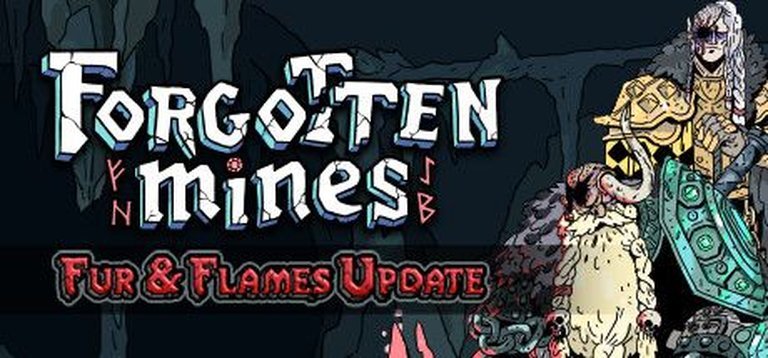
Forgotten Mines is a minimalist turn-based tactical roguelite RPG set in a fantasy world where players venture into the Dwarves’ Lost Mines to reclaim them. Using rare gems mined from the mountain depths, they unlock new gear, classes, and strategic options, with charming pixel-art graphics and high replayability through extensive customization and fast-paced, unpredictable combat.
Gameplay Videos
Where to Buy Forgotten Mines
Forgotten Mines Guides & Walkthroughs
Forgotten Mines Reviews & Reception
rogueliker.com : There’s a good game here, but sometimes I found its best moments were having to contend with challenging difficulty spikes that are often so sudden as to feel quite harsh.
metacritic.com (70/100): If you’re truly patient and can put up with dying many, many times in your quest to retake the mines, you’ll find a game to love here. For everybody else, this is a harder sell.
Forgotten Mines: Review
Introduction: A Descent into Design Brilliance
In the crowded landscape of indie roguelites and tactical RPGs, Forgotten Mines arrives not with a thunderous roar but with the precise, unsettling click of a minecart on rails. Released in July 2024 by solo Brazilian developer Cannibal Goose and published by Ishtar Games, this minimalist title immediately distinguishes itself through a brutal, elegant paradox: it is a game of profound depth confined to an 8×8 grid, of punishing difficulty forged from charming pixel art, and of a grand, nihilistic narrative told through the frantic clicks of a mouse. Its legacy, though still nascent, is already that of a cult classic—a title whispered among genre aficionados as a pure, uncut distillation of strategic tension and roguelike escalation. This review argues that Forgotten Mines is not merely a competent entry in the tactical roguelite space but a deliberately ascetic masterclass in systemic design, where every limitation breeds innovation and every defeat feels like a dialogue with the game’s unforgiving, and deeply philosophical, heart.
Development History & Context: The Solo Descent from Rio
The story of Forgotten Mines is intrinsically the story of Cannibal Goose, a developer based in Rio de Janeiro for whom this was a debut commercial project. Development began in mid-2022, fueled by a “personal strategic roguelike fever” sparked by playing FTL and Into the Breach. The initial vision, as the developer revealed in an interview with IndieGames, was paradoxically grandiose yet humbly scoped: to create “my own Into the Breach” with a specific twist—a one-way, downwards journey. This “descent” narrative, contrasted with the common “ascent” of most RPGs, became the project’s foundational pillar.
The technological constraints were those of a solo dev: the game was built in the Godot engine, chosen for its accessibility and power for a one-person team. The aesthetic choice for “timeless, retro visual design” was explicitly inspired by the second generation of Pokémon (Pokémon Silver), a title the developer has played for thousands of hours. This influence manifests in the clean, information-dense pixel art that communicates mechanics with stark clarity, a necessity for a game where every tile matters.
A pivotal moment came after the first demo in December 2022. The unexpected surge of interest and publisher proposals led to a partnership with Ishtar Games. The developer candidly states this collaboration “drastically changed the way I looked at and designed the game (I believe for the better).” Most notably, the user interface, which was initially “quite bad,” was overhauled with advice from Ishtar’s UI/UX designers. The tutorial, which the developer “hates” and originally wanted to eschew for organic learning à la Animal Well, was added based on player feedback—a crucial concession that highlights the tension between auteur vision and player accessibility. The game’s evolution was thus a dialogue between a singular, meticulous creative vision and the pragmatic realities of reaching an audience.
Narrative & Thematic Deep Dive: The Madness of the Deep
Forgotten Mines presents a lore that is both classic fantasy and strikingly unconventional. The kingdom of Dorvgrad, dwarven and wealthy, dug “so deep that they uncovered the Gates of Hell,” specifically the “physical boundary of non-Euclidean space.” This is not a simple demon incursion; it is an ontological breach. The antagonist is not merely a demon lord but “a being, born from the repressed evil desires of the inhabitants of the material plane. In short, it is pure madness.” This framing is crucial. The mines are not just a dungeon to be cleared; they are a wound in reality, a descent into the id of the world itself.
The player’s role as the leader of a new dwarven expedition is framed not as heroic adventure but as a grim, centuries-old act of reclamation and sealing. The narrative theme of “moral decadence, revenge, and political conquest,” as the developer put it, rejects horizontal exploration for a vertical, inexorable plunge. There is no ascent to a higher moral ground; the deeper one goes, the more one confronts the “madness” and must, in turn, embrace violent resolve. The unlockable playable species—kobolds seeking a home, the undead—expand this theme. The dwarves are not paragons; they are stubborn, territorial, and defined by a greed that doomed them. The catharsis the developer hopes players feel upon completion is “sadness for the characters who helped them reach their goal”—a poignant admission that victory in this abyss requires a sacrifice of self, a loss of the very humanity (or dwarven-ness) that began the quest.
Gameplay Mechanics & Systems: The Calculus of the 8×8 Grid
At its core, Forgotten Mines is a turn-based tactics game played on procedurally generated 8×8 flip-screen rooms. This spatial constraint is its genius. Every decision—movement, attack, mining—is freighted with consequence because the board is so tight, so claustrophobic. The primary systemic driver is the Turn Limit. Each room must be cleared within approximately eight turns. Failure summons a “second wave of enemies,” and a third wave exists for the truly adept. This is not a mere difficulty slider; it is the game’s central philosophical mechanic. As the developer explained, “The turn limit reflects that, the discomfort of those who seek change. If time passes and nothing changes, the conservatives win.” It forces aggression, calculated risk, and impeccable sequencing. Hesitation is the true enemy.
The combat loop is a masterclass in granular action. Players control a party of three (increasing to four with certain mechanics). Actions have precise costs. Positioning is paramount due to enemy movement ranges and area-of-effect attacks. The “punchy,” fast-paced combat praised by critics like Hey Poor Player stems from this lack of bloat. There are no wasted animations; every turn feels urgent.
The progression meta is bifurcated. Between runs, players spend Gems (mined during runs) at a central hub to unlock new Classes (over 50, from Knights and Rogues to specialized roles like the Planeswalker) and Amulets (which provide team-wide buffs). This is where the “grand in depth” claim holds. The combinations are vast: a class with a randomly assigned buff/debuff per run must synergize with two chosen amulets and the other two classes. The developer designed this with “time-based balance”: weak-starting classes like Archers receive more powerful late-game perk possibilities, encouraging long-term investment. However, this balancing act is where the game stumbles. Critics noted the current blacksmith class as overpowered, and class balance is acknowledged as an ongoing challenge. The “dopamine injection” test—ensuring every class has a glorious, powerful moment—is a brilliant design goal but admits a subjective, tuning-heavy process.
The mining and resource management layer is equally critical. Each room contains 0-4 diamond ore nodes. Mining consumes precious exploration/mining actions. The tension between clearing enemies quickly to avoid waves and taking time to secure the gems needed for meta-progression is constant. Gems are also awarded at area completion, creating a risk-reward calculus: dying early in Area 1 yields poor returns, encouraging skillful runs for efficient farming. The “Descent Mode” supercharges this, awarding gems equal to your descent level per room, creating a brutal but lucrative meta-game for veterans.
The difficulty curve is the game’s most debated element. Rogueliker’s Mike Holmes and Hey Poor Player both cite “punishing” and “cruel” difficulty spikes, particularly between Areas 1 and 2, where enemies gain new abilities like poison. Losing even one character often feels like a “prolonged death sentence” for the subsequent boss. Yet, this is not a flaw in the eyes of the design. The reinforcement waves after turn 8 are explicitly “to educate the player… they’ll understand that they can’t wait.” The game is a demanding tutor, and its harshest lessons are its most memorable. The “do-over” battle option is a vital lifeline, acknowledging that mastery requires failure.
World-Building, Art & Sound: Minimalism as Communication
Forgotten Mines’ world is built on suggestion, not exposition. The visual design is a triumph of economical information delivery. The 2D diagonal-down perspective, fixed flip-screen rooms, and chunky, colorful pixel sprites do more than evoke Pokémon Silver nostalgia; they serve gameplay. Enemy types are instantly readable by color and silhouette. Terrain—water tiles that block movement, breakable ore rocks—is clear. Your equipped gear is visibly present on your sprites, providing immediate, satisfying feedback. The “timeless, retro aesthetic” is not a style choice alone but a functional one, ensuring the complex tactical picture is parseable at a glance in a tiny 64-tile arena.
The sound design complements this with punchy, retro-styled effects for attacks and impacts. However, the “deep rumbling sound effect” on defeat, noted by The Magic Rain’s reviewer, is a fascinating point. Intended to convey the weight of failure, it can inadvertently feel “too intimidating and discouraging,” showcasing how even minor audio choices can clash with the roguelite ethos of “just one more try.” The atmosphere is one of grim, dwarven perseverance. The mines are not gothic horror but industrial, claustrophobic, and teeming with hostile life. The descent is visually monotonous (all rock and torchlight), reinforcing the Sisyphean, repetitive nature of the task.
Reception & Legacy: A Cult Forged in Difficulty
Upon its July 2024 release, Forgotten Mines garnered a 73% average from critics (IndieGames 76%, Hey Poor Player 70%) and a “Mostly Positive” (78%) rating from 284+ Steam users as of early 2026. The critical consensus is remarkably consistent: this is a brilliant, deeply challenging game with a significant barrier to entry. IndieGames called it a “must-play title… with exceptional replayability, interesting mechanics, and charming pixel graphics,” while Hey Poor Player succinctly summarized its divisive nature: it’s a game for the “truly patient” who can endure “dying many, many times.”
Its commercial performance is that of a modest indie success. Priced at a low $7.99 (frequently discounted), it has found its audience through word-of-mouth among tactical roguelite enthusiasts. The Metacritic user score is pending more reviews, but Steambase shows a stable, positive 80/100 Player Score from over 300 reviews, indicating strong grassroots approval.
The game’s influence is currently latent but potentially significant. It stands as a powerful case study in micro-scale tactical design. In an era where roguelites often sprawl with massive maps and sprawling skill trees, Forgotten Mines proves that immense strategic depth can be compressed into a grid smaller than a single screen in many modern RPGs. Its “turn limit as core mechanic” is a bold, underutilized concept that other designers will study. It also reinforces the viability of the solo-dev-plus-publisher model (Cannibal Goose + Ishtar Games) for niche, polished experiences. It is unlikely to spawn direct clones soon, as its design is so specific, but its principles—information density, punishing urgency, meta-progression as a key to unlock deeper challenge—will echo in the genre’s evolution.
Conclusion: A Flawed Jewel of the Deep
Forgotten Mines is not for everyone. Its steep difficulty spikes, its occasionally unbalanced classes, and its relentless pressure will alienate players seeking a power-fantasy stroll. Yet, for those willing to descend with it, it offers one of the purest strategic experiences in recent memory. It is a game that earns its difficulty, where every loss whispers a lesson about positioning, action economy, and build crafting. The minimalist presentation is a masterstroke of clarity, not a lack of budget. The descent narrative, while simple, is powerfully felt through every grueling turn.
Cannibal Goose has crafted more than a game; he has built a精密 (jīngmì -精密) (precise) and unforgiving tactical engine, wrapped in a dark, dwarven fable about the cost of reclaiming what was lost. Its legacy will be that of a cult classic—a title that may not top sales charts but will be forever referenced in strategy forums and “games like” lists for its audacious focus and systemic integrity. It is a challenging, sometimes frustrating, but ultimately profound achievement that proves the most compelling adventures can be found not in vast open worlds, but in the disciplined, daunting darkness of a single, well-designed 8×8 grid. The mines are forgotten by the world above, but for those who dare to dig, they are a treasure trove of strategic insight.