
- Release Year: 2014
- Platforms: Linux, Macintosh, Windows
- Publisher: Roaming Ground Studio
- Developer: Roaming Ground Studio
- Genre: Action Puzzle
- Perspective: Diagonal-down
- Game Mode: Single-player
- Gameplay: Shooter, Tile matching puzzle
- Setting: Fantasy
- Average Score: 78/100
Description
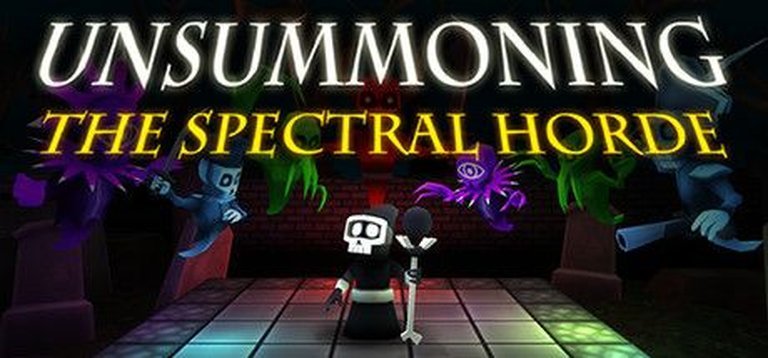
UnSummoning: The Spectral Horde is a fantasy action-puzzle game where a necromancer inadvertently summons an army of vengeful spirits that betray him. To rectify his mistake, he employs magical sigils to blast the spectral horde back to the netherworld, blending real-time shooter gameplay with tile-matching puzzles in a diagonal-down perspective set within a mystical realm.
Where to Buy UnSummoning: The Spectral Horde
PC
UnSummoning: The Spectral Horde: A Cult Classic Caught Between Puzzle and Panic
In the vast, sprawling library of digital distribution, countless games flicker into existence and vanish just as quickly, leaving only the faintest digital footprints. UnSummoning: The Spectral Horde is one such title—a fascinating, deeply niche artifact from the golden age of indie experimentation on Steam. Released in the mid-2010s, a period teeming with innovative hybrid genres, it attempted a singular fusion: the methodical color-matching of a puzzle game married to the frantic, directional chaos of a twin-stick shooter. Its legacy is not one of mainstream acclaim but of dedicated, if small, appreciation. This review posits that while UnSummoning is ultimately a flawed and obscure experiment, its core mechanical ambition represents a genuine, if underdeveloped, attempt to create a new arcade rhythm, and its story serves as a perfect, ironic metaphor for the developer’s own (un)intended creation.
1. Introduction: The Incompetent Necromancer’s Dilemma
There is a particular, recurring charm in video game narratives where the protagonist’s greatest triumph is also their greatest folly. UnSummoning: The Spectral Horde presents this premise with blunt, almost fairy-tale simplicity: a “nefarious necromancer” succeeds in his goal of summoning a “vengeful spirit” army, only for the plot to twist immediately—the Spectral Horde cares not for world domination, but for the singular, personal destruction of its summoner. This brilliant inversion—the weaponized army turning on its maker—is more than a joke; it is the game’s entire thematic and mechanical core. You are not a hero saving the world; you are a bumbling antagonist desperately trying to clean up your own catastrophic mistake. This review argues that UnSummoning, developed and published by the one-person (or very small) studio Roaming Ground Studio, is a game in perfect, tragic harmony with its own narrative. It is a compelling but uneven hybrid that, like its protagonist, stumbled upon an interesting idea but struggled to fully control the resulting pandemonium. It stands as a minor but sincere footnote in the history of indie genre-blending, remembered more for its unique concept than its polished execution.
2. Development History & Context: A Solo Sparks in the 2014 Indie Boom
Studio & Vision:
Roaming Ground Studio is an elusive entity. Sources from MobyGames, Steam, and itch.io consistently list it as both developer and publisher, with no other credits for the game, strongly suggesting a solo or tiny team project. This was common during the post-2012 Steam Greenlight era, where tools like Unity (explicitly cited as the engine) democratized game development. The vision, as conveyed in the official ad blurbs, was clear: create a fast-paced arcade title with a “innovative mix” of two distinct playstyles. The choice of a fantasy ” Spectral Horde” theme, evoking classic dungeon crawlers and horde survival games (see the related titles Horde, The Horde, Spectral Force), provided a familiar aesthetic skin for the novel mechanic.
Technological & Market Context (2014-2015):
The game’s release window (first noted May/June 2014 on some databases, officially on Steam December 21, 2015) places it in a crowded field. This was the heyday of the “neo-arcade” indie: games like Nuclear Throne (2015), Broforce (2015), Super Motherload (2013), and The Binding of Isaac series (2011-2014) thrived on tight, repeatable gameplay loops. UnSummoning‘s proposed loop—puzzle matching to charge, then twin-stick shooting—was audacious. The technological constraints were those of Unity on a small scale: a 200MB download size (per Steam specs) indicates minimalist, stylized art assets rather than AAA textures. The requirement for only a 1.8GHz dual-core CPU and 256MB GPU reflects its intended accessibility as a “Casual” and “Indie” title. Its cross-platform release on Windows, Mac, and Linux was also a hallmark of dedicated indie teams using Unity’s portability, though the Linux stats on ModDB (rank ~28,000) suggest very low penetration on that platform.
The Gaming Landscape:
2014-2015 saw a surge in “match-3” hybrids but almost exclusively in the puzzle/RPG space (Puzzle Quest, Might & Magic: Clash of Heroes). A real-time, action-oriented merger with a shooter was rare. The closest contemporaries were perhaps Ikaruga (2001) with its polarity-switching bullet-hell mechanic or Crimsonland (2003) with its tile-based power-ups, but UnSummoning‘s specific “highlight colored sigils to match approaching ghouls” mechanic was, on paper, unique. It was a game that bet on a novel interaction model: the player must constantly switch cognitive modes between pattern recognition (the puzzle grid) and spatial awareness/aiming (the shooter field).
3. Narrative & Thematic Deep Dive: Hubris and Its Aftermath
The narrative of UnSummoning is delivered through its title, official descriptions, and implied environment. There is no complex dialogue system or character development to analyze—the story is a single, perfect joke premise. This simplicity is both its strength and limitation.
Plot & Characters:
The plot is a three-act structure contained within a sentence: Summit Act: The Necromancer (player avatar) performs a grand summoning. Turn Act: The Spectral Horde, instead of obeying, immediately declares its sole purpose is to kill the Necromancer. Unsummoning Act: The Necromancer must now use magic sigils (the puzzle mechanic) to blast them back. The “characters” are archetypes: the arrogant, now-panicking spellcaster; the generic, vengeful ghost “ghouls”; and the implied “world” they were meant to terrorize, which remains blissfully safe. The only character arc is the Necromancer’s descent from “nefarious” to desperate garbage-man of his own magic.
Dialogue & Themes:
There is no scripted dialogue in the provided sources. The themes are therefore purely mechanical and contextual:
* The Ironic Consequences of Power: The central theme. The act of summoning (a display of ultimate control) leads to total loss of it. The tool for unsummoning (sigils) is presented as the very same magical system that failed. This reflects a common fantasy trope: magic is unpredictable and dangerous.
* Hubris and Incompetence: The Necromancer is not a tragic figure; he’s incompetent. His sin is not evil ambition but sloppy magic. The game’s challenge is the direct result of his poor planning. The player’s suffering is penance for his arrogance.
* The Burden of Cleanup: The game’s entire premise reframes “monster killing” from a heroic venture to a tedious, self-inflicted chore. This subversion is clever and gives the entire arcade experience a layer of dark comedy. You’re not saving princesses; you’re doing magical pest control for your own stupidity.
The narrative is not “deep” in a literary sense, but it is perfectly calibrated for its gameplay. The pressure of the horde mirrors the pressure of your own mistake. Every ghost killed is a step toward absolution from your initial hubris.
4. Gameplay Mechanics & Systems: The Color-Coded Crucible
This is where UnSummoning lives or dies. The core promise is an “innovative mix,” and analyzing that mix is key.
Core Gameplay Loop:
1. Sigil Grid: The screen is dominated by a grid of colored magic sigils (likely 3-4 colors based on “color matching” description). The player highlights/selects groups of adjacent matching colors.
2. Charge Building: Matching these sigils builds a “magic charge.” The size of the matched group presumably dictates the charge level or power.
3. Targeting & Firing: With charge built, the player (using twin-stick controls: one stick/arrow keys to move the necromancer, another to aim) fires a projectile. The projectile’s effect is determined by the color matched. Matching red sigils might fire a red projectile that is effective against red ghosts.
4. Horde Management: “Approaching ghouls” come in color-coded waves. They likely march from edges of the screen toward the player (diagonal-down perspective). You must match the correct sigil color to damage them efficiently, or use power-ups to bypass the color-lock.
5. Death & Repeat: Failure occurs if ghosts reach you. Success is clearing the wave/level.
Sub-Systems & Modes:
* Story Mode (10 Levels, 4 Environments): These provide a progressive difficulty curve. The environments—Swamps, Graveyards, Badlands, Tower of Chaos—are purely aesthetic backdrops in the source material, but they likely introduce new enemy types, layout constraints, or visual hazards. The “Tower of Chaos” being “dreaded” suggests a final, punishing gauntlet.
* Arcade Mode (10 Arenas, Endless): The pure test of the core loop. Players choose an arena and survive escalating waves. This is where the high-score chase lives, a classic arcade ideal.
* Power-Ups: Specified are “spinning blade attacks” (likely an area-of-effect or piercing shot) and an “unstoppable beam of magic” that fires through barriers. These are critical “escape hatches” from the strict color-matching system, providing variance and moment-to-moment decisions: “Do I match for optimal charge, or grab the beam power-up to handle this mixed-color cluster?”
UI & Controls:
The “Diagonal-down” perspective and “Direct control” interface suggest an action-RTS or arena-shooter feel. The twin-stick paradigm (even if mapped to keyboard) is essential for the “fast-paced” claim. The UI must communicate three things simultaneously: the player’s position, the incoming ghost colors/positions, and the state of the sigil grid. This is a significant cognitive load, the game’s greatest design challenge.
Innovation vs. Flaws:
* Innovation: The core loop is genuinely novel. It forces the player to juggle two simultaneous, mismatched tasks: a puzzle on a static grid and the action of dodging and aiming in a dynamic arena. It creates a unique rhythm of “calm matching” followed by “frantic firing” before the next wave.
* Inherent Flaws: This same load can cause friction. The sources mention “try not to die” as a feature, highlighting the difficulty. The puzzle grid is static while the shooter action is real-time—this mismatch can feel clunky. Is the grid timer-based? Do ghosts pause while you match? If not, the puzzle element becomes a frantic mini-game in itself, potentially leading to frustration. The “innovative mix” risks being an “awkward juggling act.” The small player base (only 18 “Collected By” on MobyGames as of the data) suggests this friction may have limited its appeal beyond a核心 audience.
5. World-Building, Art & Sound: Minimalist Fantasy
Sources provide almost no concrete details on art and sound, forcing inference from genre tags and era.
Setting & Atmosphere:
The fantasy setting is standard “necro-gothic”: Swamps, Graveyards, Badlands, Tower of Chaos. The “Spectral Horde” consists of “ghouls” and “vengeful spirits.” The atmosphere is implied to be eerie but rendered in a likely cartoonish or minimalist style (common for small Unity indies to save on art costs). The diagonal-down view gives it an isometric or strategy-game feel, distancing it from first-person horror. The tone is more “arcade spookiness” (think Ghosts ‘n Goblins but less gothic) than genuine horror. The world is a series of backdrops for the mechanical arena.
Visual Direction:
With no screenshots described in detail, we look to the genre (“Action, Puzzle, Shooter”) and engine. It likely uses 2D sprites on a 3D plane or simple 3D models. The color-matching mechanic dictates a vibrant, high-contrast palette for the sigils and ghosts to ensure readability during chaos. The “diagonal-down” perspective is crucial—it allows for a clear view of the grid and the approaching horde, a practical choice for the hybrid mechanic. Any artistic merit would lie in clear, readable iconography for the sigils and ghost types.
Sound Design:
Completely unmentioned. A safe assumption is a small, functional soundscape: basic UI clicks, a hum for sigil matching, a satisfying “thwip” or magical burst for firing, and generic ghostly wails for enemies. Music would likely be a looping, tense electronic or orchestral track to match the arcade pressure. The lack of mention in sources suggests it was not a standout feature.
The artistic execution, in the grand tradition of many small Unity games, was almost certainly utilitarian—designed to serve the mechanic without distraction, rather than to awe.
6. Reception & Legacy: The Mostly Positive Footnote
Critical & Commercial Reception:
UnSummoning existed in a critical vacuum. Metacritic has no critic reviews and insufficient user scores (requires 4) for a metascore. MobyGames has a “n/a” MobyScore and only 18 collectors, indicating extreme obscurity even among game archivists.
* Steam: Its primary home. It has 38 user reviews, with 78% being positive (“Mostly Positive”). This is a solid, if tiny, endorsement. The positive reviews (date range not specified, but likely post-2015) likely praise its addictive “one-more-wave” quality and clever idea. The 8 negative reviews probably cite the learning curve, control/grid friction, or repetitive nature.
* itch.io: Sold for a “pay-what-you-want” minimum of $3.99, a common indie model. The Steam version is free-to-play, a significant shift that suggests Roaming Ground Studio was unable or unwilling to maintain a commercial price point, perhaps moving to a donation/ad-supported model or simply letting it languish as a free curiosity.
* Player Count: The “1 Players In-Game” stat from Steambase is not a measure of total owners but concurrent players. For a niche 2015 free indie title, 38 total reviews is a realistic lifetime engagement number.
Evolution of Reputation:
Its reputation has not evolved significantly because it never entered the broader conversation. It is a deep-cut recommendation among fans of odd hybrid games. In online forums, it might be mentioned alongside other “puzzle-shooter” curiosities. Its Steam “Free to Play” status and “Casual” tag have probably rescued it from total obscurity, allowing curious players to try it without financial risk, sustaining those 38 reviews over years.
Influence & Industry Impact:
There is no evidence of direct influence. It is not cited as an inspiration by any known developer. Its lineage, as seen in the MobyGames “Related Games” list, is titular (Horde, Spectral series), not mechanical. However, it exists in the same conceptual space as later, more successful hybrids:
* Vampire Survivors (2022): Takes the “horde survival” and makes it a bullet-hell auto-attack rogue-lite. The color-matching is replaced by weapon evolution, but the “manage overwhelming numbers” heart is shared.
* Brotato (2023): A top-down arena shooter with explicit “weapon slot” management that requires tactical switching, echoing the “match color to enemy type” logic in a more flexible way.
* Halls of Torment (2023): A direct spiritual successor to the “arcade horde survival” template, but with a top-down view and no puzzle layer.
UnSummoning can be seen as an early, failed experiment in this space. Its core idea—tying weapon effectiveness to a pre-firing puzzle—was likely too slow and cognitively demanding for the “${insert fast-paced bullet hell here}” trend. Later games automated or streamlined the “weapon choice” into loadouts or upgrade paths, removing the active puzzle layer. In that sense, UnSummoning is a dead-end branch on the indie arcade survival tree, but a fascinating one for historians to examine.
7. Conclusion: A Flawed Spell, But a Memorable Casting
UnSummoning: The Spectral Horde is not a lost masterpiece. It is a highly specialized, niche title whose ambition outstripped its polish and whose core mechanic, while clever, introduced a layer of friction that limited its mass appeal. The game you play is the game its story describes: a frantic, repetitive, slightly ridiculous chore. You match colors not for zen, but for survival against an army you foolishly created. That cohesion between narrative metaphor and mechanical experience is its greatest achievement.
Its place in video game history is as a curio and a cautionary tale. It demonstrates the indie development ethos of the 2010s at its most pure: a small team using accessible tools (Unity) to pursue a specific, idiosyncratic vision with little regard for marketability. The free-to-play model on Steam, the lack of updates (last update on ModDB listed as 12 years ago from its 2025 perspective), and the scant player footprint all point to a project that found its audience, satisfied it modestly, and then receded into the archive.
For the professional historian, UnSummoning is valuable precisely because it didn’t change the industry. It shows a path not taken, a hybrid that was too strange, too demanding, or simply too obscure to spawn imitators. To play it today is to engage with a time capsule of indie experimentation—a game where the act of “unsummoning” feels like wrestling with a genuinely novel, if unruly, design concept. For its audacious premise and its stubborn, match-3-meets-twin-stick soul, it earns a place not on a “Best Of” list, but in the appendices of gaming’s creative archaeology. It is a game that, like its necromancer protagonist, cast a spell it couldn’t fully control, but that spell was undeniably, uniquely its own.
Final Verdict: ★★★☆☆ (3/5) – A brilliant, flawed experiment. Technically competent but mechanically divisive. Narratively witty but shallow. Essential for genre historians and fans of oddball hybrids; a curiosity for everyone else.