
- Release Year: 2021
- Platforms: Nintendo Switch, Windows
- Publisher: Morning Shift Studios, Ultimate Games S.A.
- Developer: Morning Shift Studios
- Genre: Adventure
- Perspective: 1st-person
Description
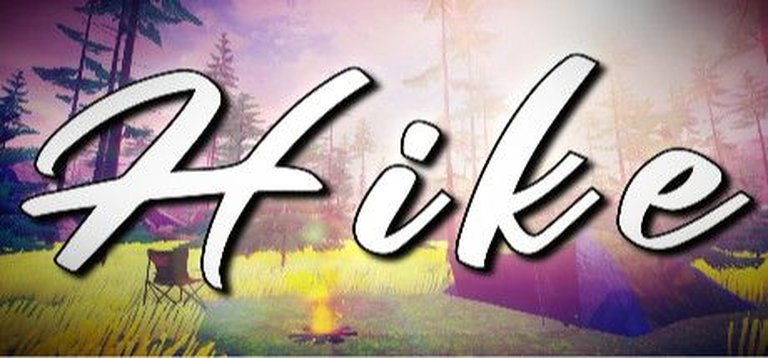
Hike is a first-person adventure game that tasks players with exploring a stylized wilderness environment through direct control mechanics. Featuring a remarkable color palette and immersive atmosphere, it delivers a concise and engaging trekking experience designed for a few hours of relaxed gameplay.
Where to Buy Hike
PC
Hike Free Download
Hike Reviews & Reception
metacritic.com : Hike is just plain bad, boring, and totally disrespectful of players’ time.
gaming-age.com : This isn?t just a game that does nothing right, it?s a game that almost seems like it?s actively trying to do everything wrong.
cthulhuscritiques.com : I found the environment very empty and heavy on asset reuse.
Hike Cheats & Codes
PC
Type ‘cheatsplz’ on your keyboard to enable cheat codes.
| Code | Effect |
|---|---|
| cheatsplz | Allows other cheats to be entered |
| featherplz | Gives Claire one Golden Feather |
| nopeplz | Remove a feather |
| sunhatplz | Gives Claire the Sunhat |
| coinsplz | Gives Claire 50 coins |
| shellsplz | Gives Claire 14 Shells |
| shovelplz | Gives Claire a Shovel |
| shoesplz | Gives Claire the running shoes |
| greedyplz | Gives Claire 1 of each item in the game |
| allfishplz | get a fish of each species |
| allspeciesplz | Gives Claire one of each fish |
| fpsplz | toggle fps counter display |
| speedrunplz | Shows a game time clock in the lower right |
| hideuiplz | hide user interface |
| showuiplz | show user interface |
| 15fpsplz | set maximum fps to 15 and disable vsync |
| 45fpsplz | set maximum fps to 45 and disable vsync |
| lowresplz | render with a width of 480 |
| midresplz | render with a width of 622 |
| highresplz | render with the width of the current display |
| omgresplz | Sets pixel size to minimum |
| cinemaplz | enable cinema camera |
| bundleplz | Bundles terrain draw calls |
| unbundleplz | unbundles terrain calls |
| oldterrainplz | stops using baked terrain |
| newterrainplz | starts using baked terrain |
| occonplz | Turns on occlusion Culling |
| occoffplz | Turns off occlusion Culling |
| cullonplz | Turns on Culling groups |
| culloffplz | Turns off Culling Groups |
| pixoffplz | Turns off pixel perfect mode |
| pixonplz | Turns on pixel perfect mode |
| lowqplz | Reduces Terrain quality ? |
| highqplz | Sets Terrain Quality back to normal |
| hidetreesplz | Removes most small trees and other shrubs |
| showtreesplz | Restores trees to default |
| terrianbadplz | I don’t see any difference in game from this commmand. Also note the typo in “terrain” |
| terraingoodplz | Reverts the “terrianbadplz” command |
| treebanplz | Couldn’t find an effect in game. The code changes the “tree Distance” of the terrain to 5 |
| treebackplz | Couldn’t find an effect in game. The code changes the “tree Distance” of the terrain to 350 |
| animplz | Logs some stuff how many objects are animating |
| 60fpsplz | In spite of the name, sets target framerate to 15fps |
| 120fpsplz | Sets target framerate to 120fps |
| swapiplz | Toggles the interact key between the “Jump” and “Use Item” keys |
| mapsplz | Gives Claire all 4 treasure maps (“A Stormy View”, “In Her Shadow”, “The King’s Throne”, “The Treasure of Sid Beach”) |
| fishplz | Speeds up the whole fishing interaction by 10 (catching, bobbing, reeling) |
| allrareplz | Gives Claire all of the rare fish veriants |
| markrulz | Makes Claire run faster, jump higher, gives her 5 golden feathers and activates the “stuffplz” cheat |
| ezbballplz | Makes the ball always go towards Claire in the beackstickball minigame |
| boatplz | Toggles tank controls vs relative controls for the boat |
| fasterplz | Doubles the timescale |
| slowerplz | Halves the timescale |
| tagplz | After you enter this command, the keyboard will wait for another string until you hit enter, then it will set the tag of that name to true |
| falseplz | same as above, but sets it to false |
| dumptagsplz | prints the tag to the log |
| deletemytagsplz | deletes the tags |
| loadgameplz | loads game save |
| newgameplz | starts a new game |
| saveplz | saves the game |
| restoreplz | restores all your feathers to full |
| credsplz | Loads the credits |
| mainroomplz | Brings you back to your Aunt’s house |
| testroomplz | Brings you to a void where you can only fly around |
| oldmovementplz | Increases your “Movment Force” to 800 (from 450) and slightly decreases your max speed. Toggles. |
| whosawakeplz | logs “awake” rigidbodies |
| noactiveplz | sets “sleeping” rigidbodies to inactive |
| noaudiosync | enables/disables audio sync |
| debugaudio | enables/disables debug audio |
| updatebase1plz | sets base resolution to 426, 240, not sure what effect this has in game |
| updatebase2plz | sets base resolution to 384, 216, not sure what effect this has in game |
| aunttalk1plz | starts first aunt conversation ? |
| aunttalk2plz | starts second a |
PlayStation and Switch (In-Game)
Press R, ZR, L, ZL, Left Stick Down, Right Stick Down, and Minus simultaneously to activate the Cheats menu.
| Code | Effect |
|---|---|
| stuffplz | Gives a shovel, a fishing rod, a bucket, a pickaxe, 300 coins, the running shoes, and 5 feathers |
| showtimeplz | Graphic settings |
| nouiplz | Hide the user interface |
| loadgameplz | Loads the game’s most recent saved state |
| nopeplz | Remove a feather |
| saveplz | Saves the game in its current state |
| newgameplz | Starts a new game |
| imstuckplz | Teleports the player in front of the starting house |
Hike: A Tale of Two Trails – Disentangling a Masterpiece from a Misfire
The title “Hike” presents a fascinating case study in the fickle nature of video game legacy. It refers not to one, but two distinct titles separated by two years and a chasm of quality. On one hand, there is the 2019 indie darling A Short Hike, a seminal work that redefined cozy game design and won the prestigious Seumas McNally Grand Prize. On the other, there is the 2021 release simply titled Hike, a title that stands as one of the most critically disparaged and functionally broken releases in recent memory. This review will treat them as the inseparable yet antithetical pair they have become, using their juxtaposition to illuminate what makes a game transcendent and what renders it forgettable. The central thesis is this: A Short Hike is a landmark achievement in atmospheric storytelling and constrained design, while Hike (2021) is a cautionary tale of incoherent vision and technical negligence. Understanding both is essential to appreciating the true weight of the former’s success.
1. Introduction: The Name, The Confusion, The Legacy
To discuss “Hike” in the landscape of video games is to first navigate a semantic thicket. A search for the title yields two primary results: the universally lauded A Short Hike (Whippoorwill, 2019) and the near-universally panned Hike (Morning Shift Studios/Ultimate Games S.A., 2021). This review will use “Hike” in its general sense when discussing themes of traversal and nature, but will be rigorously specific when attributing design, narrative, or critical reception to one or the other title. The legacy of the concept “hike” in gaming is forever altered by A Short Hike, which stripped the activity of its traditional survivalist or punitive connotations and replaced them with meditative exploration and gentle human connection. Hike (2021), by contrast, represents a regressive step, misunderstanding the very essence of what made its namesake a genre touchstone. This analysis will first deconstruct the masterpiece, then use the failure as a foil to highlight its brilliance.
2. Development History & Context: A Story of Burnout and Breakthrough vs. Opaque Obscurity
A Short Hike is the phoenix from the ashes of creative burnout. Developer Adam Robinson-Yu ( adamgryu ) had slogged for over a year on an ambitious Paper Mario-inspired RPG, only to find himself mired in writing difficulties and scope anxiety. The project’s scale—balancing a full battle system with an overworld and narrative—felt insurmountable. In a pivotal moment of clarity during a road trip through North American national parks, Robinson-Yu found inspiration not in management sims (his initial “RollerCoaster Tycoon” concept for a park manager) but in the simple, profound act of hiking. At the 2018 Stugan accelerator, a game jam prototype called The Secret of Dank Mountain proved the core stamina-based climbing mechanic was compelling without conflict or violence.
This “break project” was developed in a compressed, intense burst. With funding from Humble Bundle, Robinson-Yu committed to a three-month development cycle for a Humble Monthly exclusive (April 2019), followed by another 4-5 months for the full Steam/Itch.io release (July 2019). He employed a stripped-down Scrum framework, separating “core” goals (movement, dialogue, save system) from “stretch goals” (fishing, volleyball). His philosophy was deliberately anti-Big Studio: “The game would still be fun even though the stretch goals were not made.” This constraint bred ingenuity. The game’s iconic “crunchy” pixel art style was born from technical and artistic necessity—a way to create beautiful, readable 3D worlds quickly despite limited art skills. Tools like Yarn Spinner for dialogue and custom shaders for flat, consistent lighting defined a handmade, cohesive aesthetic.
Hike (2021), developed by Polish studio Morning Shift Studios and published by Ultimate Games S.A., exists in stark contrast. Its development history is obscure, with no public-facing developer diaries or clear creative vision statements. It emerged on Steam and Nintendo Switch in January 2021 with a generic “exploration” blurbs and no notable pre-launch hype. Its existence feels transactional, a product of a certain boom in “relaxing exploration” games following the success of titles like A Short Hike and Animal Crossing: New Horizons. There is no evidence of the personal, therapeutic journey that defined Robinson-Yu’s work. Instead, it appears as a checklist exercise: open forest, find items, complete quests. The context is one of opportunism, not inspiration.
3. Narrative & Thematic Deep Dive: Intimacy vs. Emptiness
A Short Hike’s narrative is deceptively simple. Claire, a young anthropomorphic bird, visits her aunt, a park ranger, at Hawk Peak Provincial Park. Her mother informs her she needs to reach the summit for cell reception for an important call. What follows is an open-ended journey where the player can choose the direct path or get lost in countless distractions.
The genius lies in what is unsaid and the themes embedded in the side characters. Robinson-Yu, battling his own writer’s block and anxiety about his stalled RPG, poured his insecurities into the NPCs. Each one is a portrait of quiet doubt or gentle ambition: the struggling artist who can’t finish a painting, the kid running a marathon who feels they’re not fast enough, the fisherman worried about his catch. Claire’s own silent protagonist journey becomes a canvas for the player’s own feelings of perseverance and small triumphs. The final phone call with her mother—revealing she’s recovering from surgery—is a masterstroke of emotional weight, transforming the hike from a simple errand into a metaphor for growing up and familial love. The game is a “subversion of technology,” as Polygon’s Nicole Carpenter noted, using the cell phone as the initial goal only to have the island’s organic activities and connections distract from it, arguing that doing nothing and being present is more valuable.
Hike (2021) possesses no such thematic coherence. Its narrative, such as it is, is delivered via sparse, tiny subtitles without voice acting or character sprites. The premise—a weekend camping trip where you set up camp, find firewood, locate an axe—is presented as a series of disjointed, context-free tasks. There is no central emotional anchor, no character with a name or motivation, no thematic through-line. The “storm” mentioned in its Steam description is a random environmental event with no narrative consequence. It is a hollow shell of tasks, a proto-walking simulator without the “simulator” part. Where A Short Hike uses its world to tell a story about people, Hike uses its world as a bland backdrop for item-hunting.
4. Gameplay Mechanics & Systems: Fluency vs. Friction
A Short Hike’s gameplay is a masterclass in “easy to learn, impossible to master.” The core loop—run, climb, glide—is fluid and immediately gratifying. The Golden Feather stamina system is elegant: it limits flight and climbing, creating natural puzzles. The player learns to read the terrain, use updrafts, and plan routes. The freedom is absolute; Robinson-Yu intentionally designed the world to be traversed “the opposite of the obvious route,” adding secrets like a hidden cave to loop lost players back. The stretch goals (fishing, beach stickball, parkour races) are not afterthoughts but organic extensions of the exploration mindset, rewarding curiosity with new tools (shovel, bucket) and activities. The adaptive soundtrack by Mark Sparling (inspired by Joe Hisaishi and Studio Ghibli) is a gameplay system itself, with layers of instrumentation swelling as you climb or fly, dynamically reinforcing the emotional tone.
Hike (2021) is a compilation of friction points. Its first-person “direct control” is sluggish and unresponsive. The review from Gaming Age is a litany of failures: “invisible walls” blocking all non-flat terrain, “enormous rocks” you get stuck in with “no rhyme or reason,” and a “crowbar” pickup that fails to trigger, forcing a restart. Platforming is introduced abruptly and is described as “about as well as it does everything else—which is to say, not at all.” The lack of a map or compass in a visually homogenous forest (where “every single tree and rock look exactly the same”) turns exploration into a punitive exercise in repetition and frustration. Tasks like “find firewood” or “find an axe” are not integrated into world logic but are arbitrary activations tied to “weird mist” triggers. There is no sense of progression, no meaningful reward for exploration beyond the next arbitrary task. The “relaxing” aspect is murdered by the constant, unpolished friction.
5. World-Building, Art & Sound: A Living Painting vs. A Bland Asset Flip
A Short Hike’s world, Hawk Peak Provincial Park, is a character. Inspired by Algonquin Provincial Park and Mount Pilchuck, it is a patchwork of distinct biomes: a sunny bay, dense forests, a fire tower, snowy peaks. Robinson-Yu’s “crunchy” pixel art is not a stylistic default but a deliberate aesthetic philosophy. He aimed to make a beautiful world “with as few pixels as possible.” Using Unity’s point filter mode, flat custom shaders, and no anti-aliasing, he created a world that feels simultaneously retro and vibrantly modern. The color palette was sampled from autumn photos of the Canadian Shield, giving the world a warm, earthy, yet specific coherence. Post-processing effects like fog (to focus attention) and edge detection (for readability) show meticulous craft. The world is staged—landmarks like the fire tower or a lone chair on a cliff are placed to “pique curiosity.” You feel Robinson-Yu’s love for hiking in every vista.
The sound design is equally integral. Mark Sparling’s adaptive soundtrack is a celebrated achievement. Percussion and active melodies layer in as you enter new areas; strings swell during flight; trumpets join in the motorboat. It’s a dynamic, emotional companion to exploration. The ambient forest sounds are calm and immersive. The decision to use text-only “speech sounds” (chirps, mumbles) rather than voice acting preserves the universal, storybook feel and avoids breaking the intimate, meditative tone.
Hike (2021)’s world is its greatest betrayer. The Gaming Age review details “visual glitches” as a constant companion: “large rocky areas… floating in places, exposing the grass beneath and making the rocks look like dirty towels frozen in the air.” This is not a charming technical choice but plain, broken asset implementation. The forest is a repetitive smear of green and brown, with no distinct landmarks or visual language to create memorable geography. The art direction is generic and forgettable, the antithesis of the curated, intentional beauty of Hawk Peak. The soundscape is described as “awkward” and “disconnected,” with music that “sounds more appropriate for a 2D action platformer.” The audio, rather than enhancing the mood, actively works against the purported “relaxing” goal, highlighting the game’s fundamental misunderstanding of its own premise.
6. Reception & Legacy: IGF Grand Prize vs. Scathing Condemnation
The reception of these two games forms a perfect dichotomy.
A Short Hike is a modern classic. It holds Metacritic scores of 82 (PC), 83 (PS4), and 88 (Switch). Reviewers consistently used words like “dreamy,” “Zen,” “love letter,” and “masterpiece.” It won the Seumas McNally Grand Prize at the 2020 Independent Games Festival (IGF), along with the Audience Award. It was nominated for Best Indie Game at the Golden Joystick Awards and for Family Game of the Year and Outstanding Achievement in Game Direction at the D.I.C.E. Awards. It appears on countless “Best of the Decade” and “Best Cozy Games” lists. Its legacy is profound:
* It proved the viability of the “short, dense” open-world: It demonstrated that a 2-4 hour experience could be more memorable and artistically complete than a 60-hour slog.
* It defined the “cozy game” renaissance: Its mix of low-stakes tasks, charming characters, and stress-free exploration directly influenced the boom in cozy, therapeutic gaming.
* It championed solo dev integrity: Robinson-Yu’s GDC postmortem is a staple in indie dev education, a template for scoping, constraint-based design, and personal storytelling.
* It influenced design philosophy: Critics and developers cite it as a touchstone for “design by subtraction,” where removing traditional conflict (combat, fail states) creates a more powerful, contemplative experience.
Hike (2021) has no such legacy. Its Metacritic score is “tbd” based on a single critic review—a scathing F from Gaming Age, which called it “just plain bad, boring, and totally disrespectful of players’ time.” On MobyGames, it has no Moby Score and only a single Dutch review calling it a simple, forgettable experience. It has zero awards, zero “Best of” list appearances, and is cited only as a negative example. Its legacy is one of caution: a warning about chasing trends without understanding their core appeal, and the perils of releasing a technically deficient product. It serves as the dark mirror to A Short Hike—what happens when you have the idea of a peaceful hike but none of the craft, heart, or design intelligence to execute it.
7. Conclusion: The Summit and the Swamp
In the final analysis, A Short Hike is an undeniable masterpiece, a succinct and profound piece of interactive art that captures a specific, universal human feeling—the quiet awe of a summit view earned through gentle perseverance. Its constrained development was its greatest strength, forcing a focus on atmosphere, character, and player-directed discovery over bloat. Adam Robinson-Yu’s personal journey from burnout to clarity is etched into every pixel and line of dialogue. It transcends its “cozy game” label to be a thoughtful commentary on anxiety, family, and the value of unproductively being.
Hike (2021), by contrast, is a failed facsimile. It possesses the surface-level descriptors of its inspiration—forest, camping, exploration—but none of the soul. It is a game of friction without purpose, of emptiness without suggestion, of broken code without charm. It is not a “bad game” in an interesting way; it is a tedious, frustrating, and technically shoddy experience that disrespects the player’s time utterly.
The existence of both titles under the same name is a perfect storm of market confusion. Yet, this confusion ultimately serves to elevate A Short Hike even higher. In an ecosystem that can sometimes produce thoughtless clones, the radiant specificity of Robinson-Yu’s creation shines all the brighter. A Short Hike is not just a game about a hike; it is the experience of a hike—the getting lost, the helping strangers, the small victories—rendered in code. Its place in video game history is secure as a pinnacle of indie design, a proof that less can be infinitely more, and that the most powerful journeys are often the shortest ones. Hike (2021) will be remembered, if at all, only as the cautionary footnote to that triumph.
Final Verdict:
* A Short Hike: 10/10 — A foundational text for the modern indie era.
* Hike (2021): 2/10 — A broken, empty relic with no redeeming qualities.