
- Release Year: 2015
- Platforms: Windows
- Publisher: DeanForge
- Developer: DeanForge
- Genre: Adventure
- Perspective: 1st-person
- Game Mode: Single-player
- Average Score: 70/100
Description
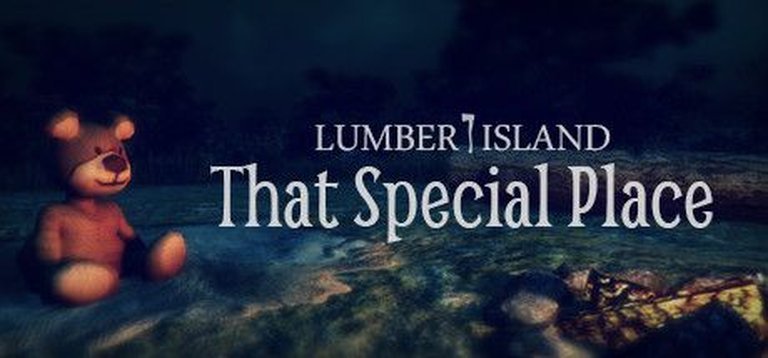
Lumber Island: That Special Place is a psychedelic first-person horror adventure game where players awaken on a desolate island after a yacht party, with no memory of how they arrived. Set on an abandoned island formerly known for its rare lumber but ravaged by oil exploitation, the game emphasizes atmospheric immersion through exploration, featuring no on-screen UI or inventory, and relies on environmental storytelling, music, and sound to reveal the island’s obscure and tragic history.
Gameplay Videos
Lumber Island: That Special Place Mods
Lumber Island: That Special Place Reviews & Reception
metacritic.com (70/100): This is a surprisingly good game.
Lumber Island: That Special Place: A Critical Deconstruction of an Obscure Atmospheric Horror Experiment
Introduction: A Whisper in the Woods
In the vast, often-overgrown forest of indie game history, certain titles exist not as towering redwoods but as peculiar, isolated saplings—games whose influence is negligible but whose strangeness demands examination. Lumber Island: That Special Place (2015), the sole commercial release from the enigmatic DeanForge studio, is precisely such a specimen. It arrives not with a bang, but with a haunting, psychedelic hum, promising an immersive first-person horror experience stripped to itsbare essentials. This review posits that Lumber Island is a fascinating, deeply flawed artifact of a specific moment in indie development: a game that prioritizes pure, unmediated atmosphere above all else, yet is often defeated by the very limitations of its minimalist design. Its legacy is not one of widespread acclaim or innovation copied by others, but of a bold, almost confrontational, design thesis that reveals as much about the ambitions and constraints of mid-2010s indie horror as it does about the game itself.
Development History & Context: The Forge of an Idea
Developed and published by the singular entity DeanForge, Lumber Island was the product of a micro-studio operating at the very edge of the indie spectrum. The use of the Unity engine in 2015 was a common, accessible choice for small teams, but it also speaks to a certain technological constraint. This was not a project backed by a publisher’s marketing muscle; it was a vision realized with whatever resources and time a dedicated individual or tiny team could muster, subsequently released directly to Steam for a modest $4.99.
The game’s development appears to have been episodic, as hinted at in IndieDB comments from 2013 and 2014 discussing “chapters.” This model, popular among fledgling indie developers, allowed for incremental funding and community feedback but inevitably led to a fragmented release and potential continuity issues. The final Steam release in October 2015 compiled these efforts into a single package.
Lumber Island emerged into a horror landscape still reeling from the “Slender Man” phenomenon and the rise of accessible first-person horror via YouTube let’s plays. The market was hungry for atmospheric, experiential fear over combat-heavy mechanics. Games like Dear Esther (2012) and Antichamber (2013) had popularized the “walking simulator” with mind-bending environments, while Amnesia: The Dark Descent (2010) had perfected the “no combat, only hide” formula. Lumber Island tried to synthesize these trends: the environmental puzzle-box of Dear Esther, the relentless threat of Amnesia, and the psychedelic, reality-warping aesthetics of indie darlings like Kairo (2012). Its stated goal of “maximum immersion” by removing the HUD and inventory was a direct reaction against the UI-clutter of mainstream titles, aligning it with the purist school of experiential design.
Narrative & Thematic Deep Dive: Echoes of Exploitation
The game’s narrative is not told; it is unearthed, a ghost story written in the decay of the environment itself. The provided backstory is a potent allegory for ecological and cultural devastation.
The Fall of Lumber Island:
In the 1970s, the island was a thriving, almost Arcadian, hub of specialist craftsmanship and tourism, valued for its “rare wood species of the highest quality.” This establishes a baseline of sustainable harmony between humanity and nature. The discovery of petroleum is the inciting catastrophe—a classic “resource curse” narrative. The ensuing oil boom acts as a virulent pathogen: it “doomed the island.” The inhabitants are forcibly removed, the ancient forests are “chopped down to the ground,” and the island is strip-mined. The final, ironic punishment is that after the oil is exhausted, the island is left as a “totally exhausted” husk, its two primary resources—timber and oil—both permanently depleted. This is a brutal, cyclical tale of boom, bust, and permanent scarring.
The Player’s Awakening:
You begin “in a life-boat ashore an island, and the last thing you can recollect is having fun at a great yacht party.” This amnesiac protagonist is the perfect narrative vehicle. They are an outsider, a visitor to this scarred land, mirroring the player’s own role as an explorer of a digital ruin. The disconnect between the memory of luxury (the yacht party) and the present reality (the derelict island) is immediate and disorienting.
Thematic Layers:
1. The Haunting of Progress: The island is haunted not by ghosts in the traditional sense, but by the phantoms of industrial progress. The abandoned machinery, the clear-cut stumps, and the oil-slick aesthetic are the malevolent spirits. The “psychedelic” element likely manifests as a psychological distortion caused by this poisoned landscape—a reality breaking down under the weight of its own traumatic history.
2. Guilt and Retroactive Punishment: The player, unwittingly representing the outside world that consumed the island’s resources, is implicitly punished. The “death threat that walks around” (as noted in user reviews) can be interpreted as the embodied vengeance of the island itself, a lumberjack or forester spirit protecting what’s left of its domain from further exploitation.
3. Obscurity as Theme: The developers’ claim that the “plot doesn’t lead you by the hand” is thematically consonant. The history is “obscure,” fragmented like the broken industrial remnants. Understanding requires active, contemplative work—the player must earn the story through environmental literacy, much like an archaeologist reconstructing a vanished civilization from artifacts.
Character & Dialogue:
There are no traditional characters. The antagonists are environmental or spectral (the lumberjack figure). The protagonist is a blank slate. “Dialogue” exists only in the form of scattered notes and documents, which function as found footage. This reinforces the game’s commitment to diegesis—the story exists within the world, not imposed upon it via cutscenes or exposition.
Gameplay Mechanics & Systems: The Tyranny of Minimalism
Lumber Island’s design is a radical exercise in subtraction. The Steam store description proudly proclaims: “you’ll see no buttons on your screen; there is no inventory in the game.” This is its defining, and most divisive, mechanical thesis.
Core Loop & Exploration:
The loop is pure environmental navigation and puzzle-solving. The player explores a (likely semi-open or hub-based) island, searching for key items or ways to progress. The “puzzles” are not logic-grid challenges but spatial and observational: finding a key that blends in with its surroundings, interpreting a crude map scrawled on a wall, or triggering an environmental sequence by interacting with specific machinery. This aligns with the “self-contained exploration” philosophy—the world itself is the puzzle.
The Pursuer Mechanic:
The most significant gameplay element, attested to in user reviews, is the constant, looming threat of a pursuer—”the lumberjack.” This is the game’s tension engine. Unlike Amnesia, where the monster’s location is often unknown, user reports suggest the lumberjack’s presence is always perceptible (“you could always know where he is”), creating a different, more oppressive kind of stress: a relentless, grinding awareness that limits exploration and forces hasty, nervous progression. The criticism that this mechanic becomes “annoying” and “on your feet non stop” points to a critical flaw: when a threat is constant but not immediately lethal, it can devolve from horror into frustrating friction, breaking the exploratory immersion the game so desperately seeks.
Progression & Failure States:
Progression is likely non-linear and key-based, requiring the collection of specific tools or documents to unlock new areas. The mention of “two key items you need to find that have variable spawn places” is a major red flag for game design. This suggests either a procedural generation element that was poorly tuned or, more likely, a design where critical path items can be placed in multiple locations, potentially leading to frustrating dead-ends and brute-force searching. This directly contradicts the ideal of elegant, logical puzzle-solving and can turn discovery into a chore.
UI/UX and Immersion:
The no-HUD, no-inventory approach is brilliant in theory but perilous in practice. For immersion, it works—you are a person, not a character menu. However, it provides zero systemic feedback. How do you know you’ve picked up an item? How do you know what you’re carrying? How do you access a map or journal if one exists? The game likely relies on diegetic interfaces (e.g., physically holding a note), but if not implemented flawlessly, this leads to confusion. User reports of “mouse issue & FOV” and a broken cursor on Steam forums indicate that the technical execution of this minimalist UI was problematic, with navigation and interaction itself becoming a source of frustration rather than an invisible conduit.
World-Building, Art & Sound: The Psychedelic Ruin
The “psychedelic first-person horror” descriptor is the game’s most evocative and least explained promise. In practice, this likely translates to a surreal, hallucinatory distortion applied to an otherwise grounded, dilapidated environment.
Setting & Visual Direction:
The setting is the star: the post-industrial ruin of a defunct logging and oil town. The art direction would aim for a “beautiful decay” aesthetic—gigantic, ghostly stumps, rusting machinery half-swallowed by strange, vibrant fungi, the architectural bones of a once-thriving community now slumped under vines and graffiti. The “psychedelic” element would come via visual filters, warping geometries, impossible color palettes, or shifting textures that suggest the island’s trauma has bled into the fabric of reality itself. Think of the lo-fi, texture-swapping weirdness of Kairo or the color-drenched dread of The Forest‘s deeper caves, but applied to an outdoorindustrial landscape.
Sound Design:
Sound is explicitly cited as a pillar of immersion (“aided by music, sounds”). The audio landscape is likely a biophonic-industrial collage: the whisper of wind through dead, needle-less branches, the distant, melancholic cry of seabirds, the constant, dripping resonance of water in metal pipes, and the irregular, metallic creak and groan of unsteady structures. The score would be minimalist, perhaps using ambient drones, discordant piano notes (as one user noted in a trailer), or environmental sound as its melody. The sound of the pursuer would be crucial—not a jumpscare sting, but a steady, rhythmic sound (a dragging chain, a heavy boot on gravel, a saw revving in the distance) that becomes a psychological metronome of dread.
Atmosphere as the Primary Mechanic:
The entire technical and artistic effort is bent toward creating an inescapable, palpable atmosphere. The removal of UI is in service of this. The player should feel the damp chill, hear the isolation, and be visually disoriented by the psychedelic touches. When successful, this makes exploration a tense, almost meditative act of absorption. When it fails (due to poor lighting, repetitive asset placement, or technical glitches), the atmosphere collapses into mundane navigation.
Reception & Legacy: The Cult of the Flawed Experiment
Lumber Island achieved neither critical nor commercial prominence. Its Metacritic user score sits at a “Mixed or Average” 5.7, and on Steam it holds a “Mostly Positive” rating (~74-75%) from around 107 reviews. This patchy reception perfectly captures the game’s dichotomous nature.
Critical and Community Consensus:
The praise is almost universally directed at its atmosphere and ambition. Reviewers and players consistently note its “well-made ambience,” “scary” initial tone, and successful creation of a “horror feeling.” The immersive, no-UI approach is applauded as a brave design choice. Conversely, the criticism is sharp and focused:
* The Pursuer’s Flawed Execution: The constant, predictable presence of the lumberjack turns fear into irritation. It lacks the terrifying unknown of a Slender Man or the strategic hide-and-seek of an Amnesia monster.
* Obtuse Progression: The “variable spawn places” for key items and lack of guidance lead to “brutal” and “annoying” periods of aimless wandering, breaking the atmospheric spell.
* Technical Hiccups: Persistent issues with mouse control, cursor visibility, and FOV (field of view) on release marred the core experience, as evidenced by dedicated Steam forum threads. A user review specifically notes that the older “retail version” was “broken beyond repair,” and that the Steam version only became “nicely polished” after patches—a telling indictment of its initial state.
* Narrative Obscurity: While some appreciate the environmental storytelling, others find the plot “not very… perceptible, or even logical.” The line between “elegant mystery” and “incoherent mess” is thin, and Lumber Island often stumbles over it.
Legacy and Influence:
In terms of direct industry influence, Lumber Island has virtually none. It is not cited as an inspiration by major developers, nor did it spawn a genre. Its legacy is that of a curated exhibit in the museum of “almost great” indie horror. It serves as a potent case study in:
1. The Immersion Trade-off: The extreme no-UI design is a lesson in how far one can push a feature before it becomes a bug. Every subsequent immersive sim or walking simulator that implements a minimalist HUD does so with Lumber Island’s pitfalls in mind.
2. Pacing of Threats: It demonstrates that in horror, presence is not the same as pressure. A constant, non-lethal threat can deaden tension rather than sustain it.
3. The Importance of Feedback Loops: In a game with no inventory or explicit objectives, the environment must provide clear, satisfying feedback for player actions. Lumber Island’s sometimes-vague item spawns and progression breaks violate this principle.
4. The “Atmosphere First” Pitfall: It is a cautionary tale about building a world at the expense of a game. A beautiful, frightening environment is inert without a robust, fair, and responsive set of systems to interact with it.
It remains a cult curiosity, a game whose Steam page tagline—”psychedelic first-person horror adventure”—is more intriguing than the experience itself for most. Its 20+ collectors on MobyGames are likely completists and fans of the deeply obscure.
Conclusion: The Exhausted Island’s Final Verdict
Lumber Island: That Special Place is a game of profound and tragic contradictions. It is a visceral lament for a destroyed ecosystem whose own design feels equally exhausted, struggling to find a functional core within its beautiful shell. DeanForge’s vision—a pure, unadulterated horror experience where the world is the only interface—is one of the most daring in indie horror. The execution, however, is plagued by the classic indie pitfalls of over-ambition and under-resourcing: frustrating procedural gaps, unpolished mechanics, and a central antagonist mechanic that achieves the opposite of its intended effect.
Its place in history is secure, but it is a niche one. It is not a lost masterpiece. It is a significant “what if”—a document of a designer trying to carve a radically minimalist path through the dense forest of horror game conventions, only to find the terrain too uneven, the tools too blunt. For historians, it is an invaluable study in the perils of prioritizing theme above workflow and atmosphere above affordance. For players, it is a cautionary tale wrapped in a gorgeous, creepy package—a reminder that even the most evocative setting cannot compensate for a game that too often feels like it is fighting against the very person holding the mouse.
Final Verdict: 6.5/10 — A fascinating, deeply flawed experiment. Its heart is in the right, atmospheric place, but its systems are stuck in the mud. A must-play only forCompletionists and scholars of immersive horror design flaws.