
- Release Year: 2019
- Platforms: Windows
- Publisher: Droid Riot Studio
- Developer: SAFING
- Genre: Action, Strategy, Tactics
- Perspective: First-person
- Gameplay: Arcade
Description
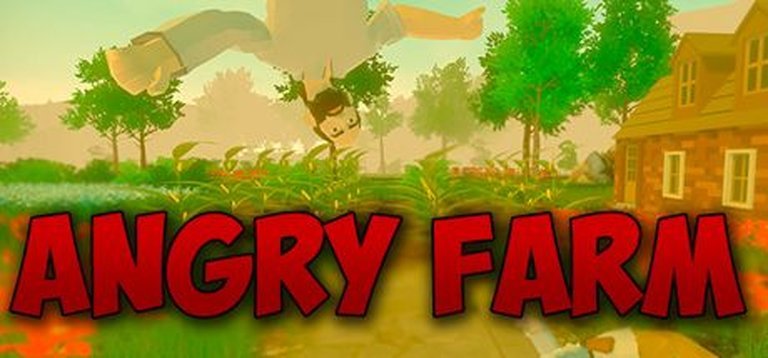
Angry Farm is a strategy-action game set on a farm where players must develop their agricultural operation by selling crops to earn coins for upgrades and new constructions. As the commander, they lead trained farm residents in tactical battles to defend against enemies, with all decisions impacting the outcome, and can enjoy uniquely generated battles in the sandbox mode for endless replayability.
Where to Buy Angry Farm
PC
Angry Farm Guides & Walkthroughs
Angry Farm: A Forgotten Skirmish in the ‘Angry’ Franchise Wars
Introduction: The Scarcest of Harvests
In the crowded battleground of indie gaming, where titles often rise and fall on the strength of a single compelling hook or a wave of social media sentiment, Angry Farm presents a fascinating case study in obscurity. Released in July 2019 by the enigmatic SAFING and published by Droid Riot Studio, this game promised a unique synthesis of agricultural simulation and tactical combat, standing amidst a curious “Angry” franchise ecosystem that included titles like Angry Putin and Angry Toys. Yet, despite its clear thematic premise and a Steam storefront presence, Angry Farm has all but vanished from the collective consciousness, evidenced by its complete absence from critic aggregators like Metacritic and its abysmal “Mostly Negative” user score on Steam. This review posits that Angry Farm is not merely a bad game, but a profound void—a title whose legacy is defined not by its gameplay, but by the stunning lack of material, discourse, and impact surrounding it. It serves as a stark monument to the vast, silent majority of games that flicker onto storefronts only to be immediately swallowed by the void.
Development History & Context: Shadows in the Unity Engine
The development history of Angry Farm is a masterclass in opacity. The developer, SAFING, and publisher, Droid Riot Studio, leave virtually no digital footprint beyond this single title and its brethren in the “Angry” family. There are no developer blogs, no post-mortems, no interviews, and no credited individuals on MobyGames beyond the studio names themselves. This suggests a micro-indie or possibly pseudonymous operation, likely operating with minimal resources and marketing budget.
Technologically, the game was built in Unity, the engine of choice for countless indie projects in the late 2010s. This speaks to a development approach focused on accessibility and rapid prototyping rather than graphical fidelity or complex proprietary systems. The technological constraints of the era were those of a saturated Unity marketplace: the barrier to entry was low, making discovery against giants like Stardew Valley or Factorio nearly impossible without a significant marketing push or viral mechanic.
The gaming landscape of mid-2019 was dominated by battle royales, live-service models, and refined indie darlings. A game blending farm sim and RTS/action elements was not novel—titles like Rune Factory or * shelter-building survival games* had explored adjacent spaces. Angry Farm‘s positioning was unclear from the start, and its release without a discernible hook or critical attention meant it was doomed to immediate obscurity. Its later appearance in bundles like the “Droid Riot All Games” pack for $16.07 suggests a publisher’s attempt to liquidate assets rather than a vibrant commercial strategy.
Narrative & Thematic Deep Dive: A Summary, Not a Story
Any analysis of Angry Farm‘s narrative is inherently an analysis of a vacuum. The official Steam description provides the only canonical text:
“The Farm – is a way to survive in Angry Farm, improve it, gradually prepare for an attack or defense. Plant plants, sell crops, improve the farm and prepare your army. The army of animals wants to take your land and eat the whole crop!”
This is not a plot but a gameplay directive. There is no named protagonist, no villain with motivation beyond generic “anger,” and no unfolding story. The “themes” are purely mechanistic: survival through economic management and defense through tactical command. The juxtaposition of “infiltrate the economy” with “lead your troops straight into battle” hints at a dual-loop design, but the language is flat, functional, and devoid of any world-building context. Why are the animals angry? Is this a post-apocalyptic allegory, a humorous take on pest control, or a surrealist farm fable? The text offers no clues. The narrative depth is effectively zero, existing only to justify the two core gameplay activities described. This lack of narrative ambition or even basic framing is a critical failure for a genre (farm sims) often propelled by cozy, character-driven stories.
Gameplay Mechanics & Systems: Two Halves of a Broken Whole
Based solely on the store description and the game’s genre tags (Action, Strategy, Arcade), we can attempt a reconstruction of its intended core gameplay loops.
1. Economic/Management Loop: The player begins by “infiltrating the economy” of their farm. This involves:
* Cultivation: Planting and growing crops.
* Market Dynamics: Selling crops at a “favorable exchange rate,” implying a fluctuating market or timing-based mechanic.
* Reinvestment: Using coins to “make improvements or build new buildings.” The nature of these upgrades—whether they boost crop yield, unlock new units, or improve defenses—is unspecified.
2. Tactical/Combat Loop: The player’s economic decisions feed into a military force (“army of animals” is a confusing phrase, likely meaning “army of farm animals” or “animal army”).
* Unit Training: The description mentions “trained residents,” suggesting the farm’s animal inhabitants (cows, chickens, pigs?) are recruited and upgraded as military units.
* Command Role: The player becomes a “commander” leading troops “straight into battle,” indicating a shift from the presumably top-down farm view to a direct, likely first-person (per MobyGames’ perspective tag) tactical view.
* Unit Behavior: The poignant detail that units are “ready to fight to the last, but sometimes they are not awkward” is the only hint at flawed AI or pathfinding—a potential source of player frustration. The term “not awkward” likely means “clumsy” or “ineffective,” suggesting units may not execute commands reliably.
* Sandbox Mode: A “hot battles” sandbox is offered for “each battle is unique,” which may imply procedural generation or dynamic enemy waves, but without specifics.
Innovation or Flaws? The primary conceptual innovation—tying farm output directly to unit quality/quantity—is not novel (seen in games like Gnomoria or Dwarf Fortress‘s military system). The greatest flaw, as suggested by the Steam community bug report (“After bandits attack the ingame menu is gone”), is a catastrophic break in core loop functionality. A game where you cannot access management functions after a random encounter is fundamentally broken. This single reported bug points to a severe lack of quality assurance and a shattered player experience, where the two promised loops (economy and battle) cannot even coexist without causing a critical failure state. The UI (Interface: Direct control) and progression systems are completely undocumented, implying they were either simplistic or non-functional.
World-Building, Art & Sound: The Unseen Harvest
There is a cruel irony in reviewing the art and sound of a game with no accessible screenshots in the provided sources and zero mention of an audio design. MobyGames lists only a single, non-descriptive “Promos” section. The Steam store page, as captured in the sources, contains the store description but no embedded images or videos in the provided text dump. Kotaku’s page merely aggregates the same blurb.
Therefore, any description would be pure speculation based on its Unity 2019-era indie contemporaries and the “Angry” branding, which typically involves exaggerated, cartoonish, and comically aggressive character designs. One can assume a low-poly, unpolished aesthetic common to micro-budget titles, with functional but unmemorable asset store graphics. The sound design is a complete mystery—no composer, no sound effects are listed. The atmosphere is entirely derived from the player’s imagination filling the gaps left by the absence of sensory data. This invisible art direction is perhaps the game’s most definitive feature: it is a phantom, experiencing it requires constructing it yourself from a handful of words.
Reception & Legacy: A Mire of Negative Silence
Critical Reception: It is non-existent. Metacritic lists “0 Critic Reviews.” MobyGames has no approved critic reviews, requesting contributions. This indicates the game received no press coverage, no review copies sent, and was entirely ignored by professional outlets. It was born dead to the critical world.
Commercial & Player Reception: The numbers are brutal. As of the latest data from Steambase (March 2026), Angry Farm holds a Player Score of 38/100, categorized as “Mostly Negative,” based on 13 total reviews (5 positive, 8 negative). On Steam, with only 4 user reviews logged, the score is insufficient to generate a summary, but the external aggregator confirms the trend. The sole Steam community discussion is a critical bug report about the game-breaking menu issue post-bandit attack. This is the only verified player experience documented.
Evolution of Reputation: There is no evolution. The game launched into near-total silence in Early Access (Feb 2019) and full release (July 2019) and has remained there. Its reputation has not soured over time because it never had a reputation to sour. It is a static artifact of disinterest.
Industry Influence: There is none. It left no footprint. It did not inspire clones, it did not pioneer a mechanic, and it is not cited in discussions of indie farm sims or strategy games. Its only “legacy” is as a data point in the “Angry” franchise, a curious branding exercise that includes unrelated titles like Angry Putin (2022) and Angry Shark (2020), none of which seem to have influenced each other. Angry Farm is a solitary, forgotten outpost in a failed branding war.
Conclusion: The Price of Obscurity
Angry Farm cannot be judged as a failure of design in any traditional sense because its design is not fully knowable. It cannot be praised for innovation because its innovations, if any existed, were never communicated or experienced. To play Angry Farm today is not to engage with a game but to confront an absence. It is the digital equivalent of a seed that never sprouted, stored in a forgotten warehouse.
Its place in video game history is as a perfect specimen of obscurity. It demonstrates the abyss that awaits the vast majority of indie titles: those without a marketing narrative, without a community, without functional code, and without a single critic or player willing to carp about its flaws beyond a brief bug report. For every Stardew Valley or Valheim, there are hundreds—perhaps thousands—of Angry Farms: games that exist as entries in a database, tagged with vague genres, built in a common engine, and then erased from memory by the next click. Its definitive verdict is not a score, but a epitaph: Hic jacet Angry Farm. Here lies Angry Farm. It was released. It was purchased. And then, it was gone.