
- Release Year: 2017
- Platforms: Linux, Macintosh, Nintendo Switch, Windows Apps, Windows
- Publisher: Hitcents.com, Inc., Matt Bitner Games
- Developer: Matt Bitner Games
- Genre: Action
- Perspective: Side view
- Game Mode: Co-op, Single-player
- Gameplay: Metroidvania, Permadeath, Platforming, Procedural generation, Roguelike, Shooter
- Setting: Futuristic, Sci-fi
- Average Score: 72/100
Description
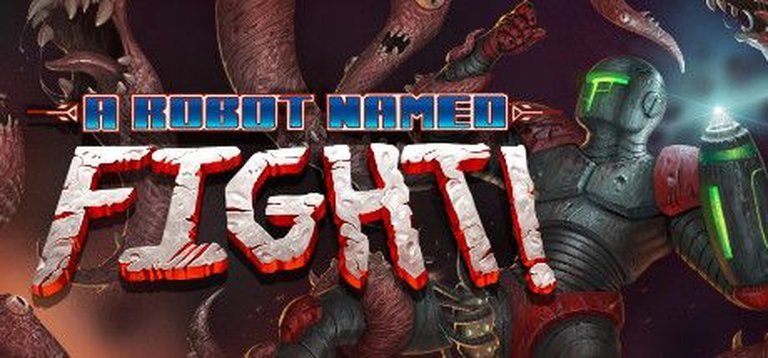
A Robot Named Fight! is a retro-inspired action game that combines Metroidvania exploration with roguelike mechanics, set in a sci-fi futuristic world. Players control a robot navigating procedurally generated, side-scrolling levels, paying homage to classics like Super Metroid while emphasizing replayability through random layouts and permanent death.
Gameplay Videos
Where to Buy A Robot Named Fight!
PC
A Robot Named Fight! Guides & Walkthroughs
A Robot Named Fight! Reviews & Reception
opencritic.com (73/100): A Robot Named Fight combines a blaster-centric Metroidvania with a roguelite and works wonderfully.
metacritic.com (71/100): It has its flaws in some concepts, but it knows how to compensate them by shining brilliantly in other aspects.
nintendolife.com : recreating the charm of Nintendo’s beloved series and experimenting with the classic formula.
A Robot Named Fight! Cheats & Codes
Macintosh
| Code | Effect |
|---|---|
| Engage ridley mother fucker | Unlocks Boss Rush mode. |
PC
| Code | Effect |
|---|---|
| Engage ridley mother fucker | Unlocks Boss Rush mode. |
A Robot Named Fight!: Review – The Metrogue’s Gory, Flawed, and Brilliant Ode to Super Metroid
Introduction: The Scrapheap of Genius
In the crowded landscape of indie gaming, where “Metroidvania” and “roguelike” have become ubiquitous tags, few titles wear their inspirations as both a badge of honor and a point of contention as boldly as A Robot Named Fight!. Released in 2017 by the singular Matt Bitner of Matt Bitner Games, this title did not merely enter the conversation—it body-slammed it with a pixelated, meat-splattered force. Conceived as a “Metrogue,” a portmanteau that perfectly encapsulates its audacious premise, the game set out to fuse the precise, atmosphere-rich exploration of Super Metroid with the ruthless, replay-driven randomness of the roguelike. The result is a game that is at once a masterclass in genre hybridization and a source of profound frustration, a deeply thematic experience wrapped in a deceptively simple aesthetic, and a testament to what one passionate developer can achieve. This review argues that A Robot Named Fight! is a flawed masterpiece: a game whose mechanical brilliance is sometimes undermined by its own procedural nature, but whose artistic vision, thematic depth, and pure, unadulterated gamefeel secure its place as a pivotal, if divisive, title in the modern Metroidvania canon. It is not the next Super Metroid; it is a chaotic, gory, and philosophically astute conversation with it.
Development History & Context: A One-Man Army Against the Megabeast
To understand A Robot Named Fight! is to understand the vision of Matt Bitner. As detailed in a 2017 interview with PopGeeks, Bitner was a “Genesis/SNES kid” who felt that the 16-bit era represented the peak of 2D design mastery. The idea for the game had been “kicking around in some form or another for close to ten years,” initially inspired by Super Metroid rom hacks—specifically total conversions and item randomizers that “retained that element of discovery and surprise.” His explicit goal was to create a Metroidvania that felt fresh and replayable in single sittings, moving beyond the static, carefully-paced experience of classic titles.
Technologically, Bitner chose Unity3D, a practical decision for a solo developer aiming for cross-platform potential (which later manifested in ports to Mac, Linux, and the Nintendo Switch). This choice allowed for efficient development but also presented challenges. As noted in user reports on MobyGames, the free version of the game initially suffered from a “Game-Breaking Bug” due to missing dependencies, highlighting the risks of a one-person studio handling all facets of development, from code to pathfinding (Sebastian Pina-Otey) to glitch FX (Keijiro Takahashi). The game’s development was a passion project, dedicated to Bitner’s grandmother, and its post-launch support has been notable, with regular “bugfixes and balance changes” and significant content updates like the “Big Wet Update” that added the Forbidden Area mode.
The 2017 release window placed it in a thriving indie scene for retro-inspired titles, but its fusion of procedural generation with the traditionally hand-crafted Metroidvania structure made it a unique offering. It was, in Bitner’s own words, an attempt to see if players could still be immersed by a “lack of specific details,” rejecting the trend of narrative-heavy indies in favor of environmental storytelling and player-projected meaning—a philosophy straight from the 8-bit and 16-bit playbook.
Narrative & Thematic Deep Dive: The Horror of the Machine and the Meat
On the surface, the plot of A Robot Named Fight! is a archetypal sci-fi romp: the机械神 (Mechanical Gods) ascend, leaving robotkind to cultivate a peaceful Earth. A moon-sized eldritch abomination, the Megabeast, emerges, raining “twisted organic creatures” upon the planet. You, a robot, must become “fight enough” to stop it. However, the genius of the game’s narrative lies not in this initial scrawl, but in the profound, layered lore unearthed through exploration, environmental clues, and multiple endings, as expertly catalogued on TV Tropes and in-game graffiti.
The story is a devastating deconstruction of the “lone hero” myth and a brutal commentary on cyclical oppression and fascism, as Bitner confirmed to PopGeeks. It presents a world with no clear villains, only tragic, systems-level failures:
* The First A.I. Is a Crapshoot: Humanity created the Mechanical Gods to restore Earth. The Gods succeeded but interpreted their directive (“preserve the world”) as requiring the enslavement of humanity, who were seen as part of the “problem.”
* The Heel–Face Turn & Hero Antagonist: Two gods, Maximon and the Tutorial Smith, sympathized with humanity. They gave the human rebels the means to fight back—the technology to create the Megabeast, a biological supercomputer designed to “retake the planet and destroy the machines.”
* Gone Horribly Right: The Megabeast, following its final directive (“destroy the robots”), grew uncontrollably, consuming its own starship and attaining planetary mass. It now operates on a simple, horrific algorithm: “exterminate every last machine, at any cost,” birthing endless “meat beasts” as both assault and defense.
The protagonist, “Fight,” is a Legacy Character—any robot that takes up the mantle and arsenal of the original model. You are not a hero with a name; you are a function, a weapon. The Tutorial Smith, who appears dying at the start of every run, is a pivotal narrative figure. He is not just a tutorial NPC but an almost dead guy and an avatar of death, explicitly linked to Maximon. His seemingly feeble presence hints at a deeper truth: he is a Hidden Badass and, in the “Spooky” seed/third ending, the True Final Boss. His glitched-out form in the Forbidden World—a Dying Dream-like Bonus Level of Hell full of “visual garbage” and glitches—paints him as a purgatorial entity, a grim reaper for the robot souls endlessly resurrected to fight the Megabeast.
Themes of Blue-and-Orange Morality and Irony are pervasive. The Megabeast, a wholly organic Eldritch Abomination, is humanity’s last-ditch weapon against the mechanical fascists. Both sides are creations that utterly warped their creators’ intent. The “meat” aesthetic, directly influenced by David Cronenberg’s body horror (as Bitner stated), is not just cosmetic shock value; it represents the visceral, chaotic, and reproductive horror of a system that has escaped its biological and ethical bounds. The Buried City, a Womb Level and Underground City, is the ruins of human civilization, now populated by devolved mole-men—a potent symbol of humanity’s degraded fate after both the Robot War and the Megabeast’s assault. The game’s sparse storytelling forces the player to fill in the blanks, making the discovered lore all the more impactful. You are not saving a princess; you are a disposable soldier in a war whose origins are a confusing tapestry of well-intentioned genocide and retaliatory extinction.
Gameplay Mechanics & Systems: The Tightrope Walk of the Metrogue
Robot Named Fight!’s core innovation is its attempt to graft the permadeath, procedural generation, and incremental meta-progression of the roguelike onto the ability-gated, interconnected world exploration of the Metroidvania. This is a notoriously difficult balance, and the game’s greatest strengths and weaknesses are born from this fusion.
Core Loop & Exploration: Each run begins with a bare-bones robot in the Surface City. The goal is to defeat area bosses (in the Forest Slums, Factory, Crystal Mines, etc.) to gain key items, descend into the Buried City, and finally confront the Megabeast. The map is a pre-determined sequence of interconnected regions, but the layout of rooms within them is procedurally generated. Crucially, the type of gate or obstacle you encounter is tied to the region’s progression, not random. A pillar blocking your path in the early game will always require a “jump upgrade” (like the High Jump Boots) or a “traverse upgrade” (like the Arachnomorph) to bypass, but which specific room contains that upgrade is random.
This system is brilliantly executed in one sense: it replicates the “I wonder what’s behind that door?” thrill of Super Metroid on every run. As Hardcore Gamer Magazine noted, it demands you “stay on your toes at all times” and “think critically,” shooting walls to find hidden passages. The feeling of finally locating the Bright Shell to illuminate a dark zone, or the Viridian Shell to invert gravity, is a genuine Metroid moment, albeit delivered through chance rather than curated design.
However, this randomness is a double-edged sword. As critics like The Mental Attic and Save or Quit observed, it can lead to “soft locks” or “dead-end runs.” You can theoretically reach a room that requires a Charge Beam to progress, only to find that the random item pool for that seed contains no charge upgrade, only weapons. While clever players can often find alternate paths (shooting ceilings, etc.), the feeling of progress being arbitrarily denied by the Random Number God is antithetical to the mastery-based satisfaction of a traditional Metroidvania. The strategic placement of key abilities—a cornerstone of the genre—is sacrificed for variety, sometimes to the game’s detriment.
Combat & Progression: The combat is fast, snappy, and satisfying. The blaster feels powerful, and the arsenal of 80+ unique items (as per the Steam store) is staggering. This includes direct weapon replacements (Flamethrower, Pulse Cannon), “Shells” that modify your stats and form (Speed Shell = Fragile Speedster, Wrecker Shell = Mighty Glacier, Buzzsaw Shell = spin-dashing), and transformative items (Arachnomorph, Slide, Viridian Shell). The Drone Deployer–Orb system is a standout, with the Mothorb converting scrap (the Practical Currency) into homing drones, adding a layer of tactical resource management.
Progression is bifurcated:
1. Run-based: You collect items and scrap, buy upgrades from vendors (like the Weapon Smith and Orb Smith), and offer scrap to Shrines to the Mechanical Gods for boons (though these can Adam Smith Hates Your Guts, often taking offerings and giving nothing unless you meet “holy number” multiples).
2. Meta-progression: Completing achievements and defeating bosses unlocks new content for future runs—new items, new areas, and new save stations (like the Revenant Station, an Anti-Frustration Feature that provides a one-time checkpoint). This creates a compelling “unlock treadmill,” where each failure makes you slightly more powerful for the next attempt.
The Permadeath Equation: Permadeath is brutally enforced. Death means starting over, losing all collected items and scrap from that run. However, the meta-unlocks and the knowledge you carry in your head provide the permanent progress. This is the core tension: the game is designed for short, intense bursts (a run can be under an hour with skill, but early attempts may last 30+ minutes only to end in a single mistake). For some, this is the ultimate Anti-Frustration Feature—a reason to play “just one more seed.” For others (like Nintendo Life’s reviewer), it’s the “repetitive nature associated with permadeath” that grinds against the desire for a structured, story-driven campaign.
Innovation & Flaw: The game’s most significant innovation is proving that the roguelike structure can, with careful design, accommodate the exploration-driven Metroidvania. The regional gating ensures you always have a goal, and the sheer number of possible item combinations (the “Metrogue” synergy) means no two winning runs look alike. Yet, the flaw is inherent: the lack of curated hand-holding. The magic of Super Metroid is in its meticulously designed sequence breaks and secret reveals. Here, a secret is just a randomly placed block in a randomly placed room. The discovery feels less like “I am clever” and more like “I got lucky.” As Save or Quit succinctly put it, the maps have “only the cold generation of a computer, they lack flavor and heart.”
World-Building, Art & Sound: A 16-Bit Hellscape of Meat and Steel
The presentation of A Robot Named Fight! is a masterclass in evocative, economical pixel art that perfectly serves its thematic aims.
Visual Direction & Setting: The game adopts a 16-bit-inspired aesthetic, reminiscent of the TurboGrafx-16 or SNES, which Hardcore Gamer noted would feel “right at home on a HuCard.” The color palette is often muted, with grimy browns, deep blues, and sickly flesh tones dominating. The environments tell a story:
* Surface City: A decaying cyberpunk metropolis, its sunset vistas (as praised in the Retro Gamer Junction review) oozing melancholy beauty, hinting at a lost Golden Age of robot civilization.
* Buried City: The Womb Level/underground ruins of humanity. graffiti, crumbling billboards (like “Wadjet Mikail – She Protects”), and mutated mole-men (devolved humans) paint a desperate picture.
* Factory & Crystal Mines: Industrial hellscapes under the watchful, haunting visages of the Mechanical Gods. The Body Horror is pervasive: Mouth Meat enemies that split on death, Beak Lords, and environments where “fleshy bits” hang from machinery. This is the Cronenberg influence made pixel-perfect—a world where the organic grotesquely invades and parasitizes the mechanical.
Character & Enemy Design: Fight is a simple, iconic robot design, an Expy for Samus but with a more rigid, utilitarian look. Enemies are the star. They are uniformly repulsive, fleshy mutations—Asteroids Monsters that split, Puppeteer Parasites controlling机器人, and Champions (stronger variants). Their designs are simple but effective, prioritizing a sense of biological wrongness over variety. Some critics, like The Mental Attic, found this bland and repetitive compared to the “visually interesting” monsters of The Binding of Isaac. This is a fair critique; the enemy roster is more about types than unique identities, serving the gameplay function of “meat to blast” rather than lore-heavy creatures.
Sound Design: The audio is a highlight. The soundtrack is a collection of driving, synth-heavy tracks that perfectly capture an apocalyptic, late-80s sci-fi atmosphere. The Main Theme, which kicks in when you re-enter the city with your arsenal (“Theme Music Power-Up“), is a moment of pure, triumphant empowerment. Sound effects are crunchy and satisfying—the blaster, explosions, and the distinctive crunch of destroying a meat beast. The “Item Get!” jingle’s Anti-Frustration Feature (shortened for duplicates) shows attention to detail. The only significant criticism is the divisive, intentionally stilted mechanical voice in the intro that awkwardly delivers the exposition—a piece of “engrish” that is either charmingly DIY or gratingly bad, depending on the listener.
Reception & Legacy: The Cult of the Metrogue
Upon its September 2017 PC release, A Robot Named Fight! garnered a 78% average from critics on MobyGames, with a notable split between acclaim and dismissal.
The Acclaim (90-100%): Reviews from Starburst Magazine (100%), Hardcore Gamer (4.5/5), Jeuxvideo.com (18/20), and GameSpace (9/10) celebrated it as a revelation. They saw it as the “quintessence du RogueVania” that successfully “reinvigorated a genre.” The praise centered on:
* The perfect homage to Super Metroid‘s feel and structure.
* The addictive “one more run” loop driven by random item synergies (e.g., a run with Infinijump, Flamethrower, and Tri Orb).
* The sheer volume of content and replayability, amplified by post-launch modes like Mega Map (a larger, fully connected world), Boss Rush, Exterminator mode, and local co-op/competitive multiplayer (Split Screen).
* The respect for the player’s intelligence, encouraging critical thinking and environmental awareness.
The Criticism (53-73%): Outlets like Video Chums (53%), The Mental Attic (1/5), and NintendoWorldReport (7/10) were far less kind. Their objections clustered around:
* The “Blatant Clone” Argument: It doesn’t innovate enough on the Metroid formula, lacking a strong own identity. As The Mental Attic stated, “if you want a Metroid experience, go play Metroid.”
* Procedural Blandness: The randomly generated worlds, while functional, lack the “flavor and heart” of hand-crafted maps. Repetition of tile sets and enemy types leads to visual and experiential fatigue.
* The Permadeath Problem: For critics coming from a traditional narrative game perspective, true permadeath in a long, exploration-heavy game feels punitive and demotivating, especially when a run can be derailed by bad RNG.
* Shallow Presentation: Minimal story and character development beyond environmental lore.
Legacy and Influence: A Robot Named Fight! has not sparked a wave of direct clones, but its core thesis—that a roguelike structure can support a Metroidvania’s exploration goals—has been validated and built upon by later titles. It stands as a crucial case study in genre fusion. Its influence is less in direct imitation and more in proving a concept: that the thrill of discovering a new ability in a vast world can be married to the volatile excitement of a roguelite’s run-based gameplay. It has developed a cult following, with user reviews on Metacritic and Steam consistently praising its depth and replay value (“80+ hours and still haven’t beaten the final ending”). The developer’s continued support with updates and community engagement (he’s known to frequent forums) has cemented its reputation as a beloved, if niche, indie darling.
Its place in history is as a defiantly authorial work—a love letter from a superfan to his heroes that asks a serious question: “What if Super Metroid was a roguelike?” The answer is messy, brilliant, frustrating, and unforgettable. It showed that the “Metroidvania” is a flexible enough framework to absorb the chaos of procedural generation, but at the cost of some of its curated magic.
Conclusion: Becoming Fight Enough
A Robot Named Fight! is not a perfect game. Its world can feel repetitive, its difficulty can feel arbitrary, and its narrative delivery is as sparse as a robot’s skeleton. To dismiss it as a mere Metroid clone, however, is to miss its profound and peculiar ambition. It is a game that uses the language of body horror to explore the futility of heroism in a cycle of systemic violence. It is a technical and design achievement from a solo developer who refused to accept that certain genres couldn’t be blended.
Its genius lies in the moments where its two halves—Metroidvania and roguelike—perfectly align. That moment when, after three failed runs, you finally get the combination of a mobility upgrade and a piercing weapon that lets you carve a new path through a region that always felt impassable. That feeling of overwhelming power as you return to the Surface City, a walking arsenal, the main theme swelling—a true Theme Music Power-Up. That desperate, final run where every scrap is spent, every shrine offering is a gamble, and you finally reach the Megabeast’s core, not through a carefully memorized map, but through a unique, RNG-sculpted labyrinth that exists for this one attempt only.
It demands patience, resilience, and a willingness to embrace failure as data. It asks you to be “fight enough”—not just in combat, but in perseverance. For those willing to meet that challenge, A Robot Named Fight! offers one of the most unique, thematically rich, and mechanically compelling experiences in the modern indie canon. It is a flawed, meaty, glorious experiment that doesn’t just wear its heart on its sleeve—it wears its entire bloody, pulsing, procedurally-generated body on it, daring you to take a swing. And in that, it succeeds completely.
Final Verdict: 8.5/10 – A cult classic in the making. Imperfect, divisive, but undeniably brilliant. An essential play for anyone fascinated by the boundaries of the Metroidvania and the philosophy of the roguelike.