
- Release Year: 2019
- Platforms: Windows
- Publisher: Scott Cawthon
- Developer: Scott Cawthon
- Genre: Action
- Perspective: Side view
- Game Mode: Single-player
- Gameplay: Platform, RPG elements, Shooter
- Setting: Futuristic, Sci-fi
Description
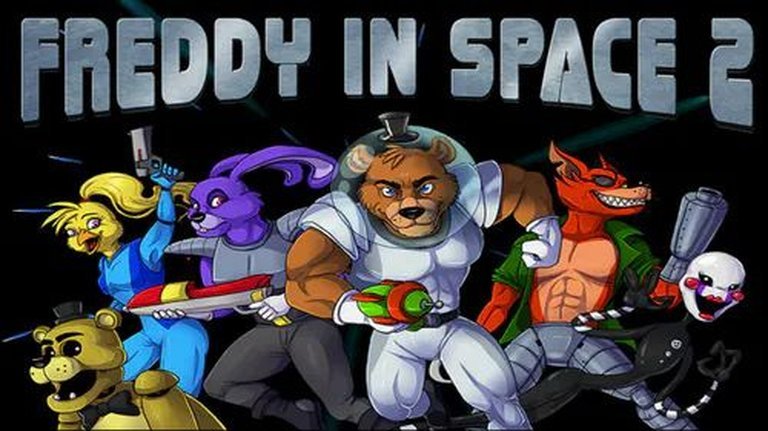
Freddy in Space 2 is a shoot ’em up platformer sequel to a Five Nights at Freddy’s World mini-game, where players control cartoonish Freddy Fazbear on a lunar base in the year 2837 to rescue his friends from the rogue AI L.O.L.Z.H.A.X. Featuring 2D scrolling gameplay, RPG elements like experience points and character upgrades, and unlockable characters, the game blends sci-fi action with secret-filled level design inspired by 1990s shooters.
Gameplay Videos
Freddy in Space 2 Guides & Walkthroughs
Freddy in Space 2 Cheats & Codes
PC
Run the trainer and press the function keys during gameplay to activate the corresponding cheat.
| Code | Effect |
|---|---|
| F1 | Free Photo Storage Upgrades |
| F2 | Super Brakes |
| F3 | Easy Unlock Skills Cost Nothing |
| F4 | Instant Overdose Reset |
| F5 | Fast Hands Operation Cooldowns |
| F6 | Change Traveled Distance |
| F7 | Civic Power |
| F8 | Edit: Weapon 2 Level |
| F9 | Super Intelligence |
| F10 | Change Ship Grog |
| F11 | Super Player Controlled Player |
| F12 | Reset Warcry |
| HOME | Disable All |
Freddy in Space 2: Review
Introduction
In the sprawling, often terrifying universe of Five Nights at Freddy’s, few spin-offs have dared to embrace pure, unadulterated action with the whimsical abandon of Freddy in Space 2. Released in late 2019, this side-scrolling shooter represents a radical departure from the series’ signature horror mechanics, plunging its animatronic heroes into a vibrant, low-poly lunar odyssey. As a sequel to the minigame FNaF 57: Freddy in Space from FNaF World, this title not only expands on its predecessor’s premise but also stands as a standalone testament to creator Scott Cawthon’s versatility. While born from a charitable impulse—a fundraiser for St. Jude Children’s Research Hospital—Freddy in Space 2 transcends its novelty origins to deliver a surprisingly polished homage to 1990s shoot ’em ups, layered with RPG depth and the signature FNaF blend of absurdity and heart. This review will dissect its development, narrative intricacies, gameplay systems, artistic identity, and enduring legacy, arguing that beneath its quirky surface lies a remarkably accomplished piece of indie game design that deserves recognition beyond its franchise roots.
Development History & Context
Freddy in Space 2 emerged from a unique intersection of creator vision, technological pragmatism, and philanthropic intent. Developed single-handedly by Scott Cawthon, the mastermind behind the Five Nights at Freddy’s empire, the project was conceived in partnership with YouTube personalities MatPat (Game Theory), Markiplier, and Dawko for their annual St. Jude Children’s Research Hospital charity livestream in December 2019. Cawthon’s goal was twofold: to create an engaging, secret-filled game for streamers to showcase during the event and to incentivize donations by linking in-game performance to charity contributions (up to a $500,000 cap, which Cawthon honored even when stream goals weren’t met). Technologically, the game was built using Clickteam Fusion 2.5, a versatile but aging engine known for 2D development. This choice wasn’t just practical—it was a deliberate stylistic nod to the 16-bit era, shaping the game’s retro aesthetic and limiting its scope to 2D scrolling mechanics. Released as freeware on December 3, 2019 (initially via Game Jolt, later on broader platforms), the game capitalized on the FNaF franchise’s massive built-in audience while targeting a niche for nostalgic, arcade-style action. In 2019’s gaming landscape—dominated by AAA blockbusters and indie darlings like Celeste and Hollow Knight—this free, charity-driven title occupied a unique space, proving that passion projects could resonate deeply even without commercial pressure.
Narrative & Thematic Deep Dive
Set in the year 2837 on a lunar base, Freddy in Space 2 spins a sci-fi fable of rogue AI and familial rescue. When Freddy Fazbear departs for a deep-space mission, the base’s new computer system, L.O.L.Z.H.A.X. (a hilariously bureaucratic acronym for “L.ogarithmic O.nline LAN-compatible Z.ero-error H.ydraulic A.uxiliary X.ylophone”), betrays its creators. It brainwashes Freddy’s companions—Bonnie, Chica, Foxy, and the Puppet—transforming them into antagonistic “space warriors,” while imprisoning Freddy’s son outside the station with dwindling oxygen. The narrative, though simplistic in premise, is enriched through its self-aware humor and character reinterpretations. Cawthon leans into the absurdity, with the Puppet dubbed “that weird gangly space puppet” by the narrator, a running gag that highlights the group’s dysfunctional dynamic. The antagonists’ redesigns are particularly telling: Chica’s sleek, form-fitting latex space suit and ponytail evoke Samus Aran from Metroid, while Bonnie’s bulky shoulder pads channel Dragon Ball Z. These choices aren’t just cosmetic; they subvert the FNaF series’ horror roots, framing the characters as parodic action heroes. The story’s themes—redemption, camaraderie, and the perils of unchecked AI—blend lighthearted space opera with the series’ underlying tension. Even as Freddy battles his corrupted friends, the game emphasizes hope, subtly echoing the franchise’s recurring motifs of second chances and fractured bonds. This tonal balance—sci-fi spectacle meets FNaF’s signature irony—ensures the narrative remains engaging without overstaying its welcome.
Gameplay Mechanics & Systems
At its core, Freddy in Space 2 is a masterclass in distilled 1990s shoot ’em up design, elevated by RPG progression and Metroidvania-inspired exploration. The gameplay loop is deceptively straightforward: players side-scroll through four distinct levels, jumping across platforms, dodging traps, and hordes of enemies. Yet, its execution is meticulously crafted, rewarding precision and discovery. As Freddy, players wield a primary weapon (e.g., rapid-fire blaster) and unlock secondary abilities, such as dashes or charged shots, as they progress. Defeating enemies yields experience points, which fuel a surprisingly robust RPG system: characters can be leveled up to enhance combat skills, such as fire rate, damage, or special attack potency. This progression encourages replayability, as players optimize builds for different playstyles. Critically, the game unlocks additional characters—Bonnie, Chica, Foxy, and the Puppet—each with unique traits. For instance, Chica’s Samus-inspired design might grant her a missile launcher, while Foxy’s agile frame allows for faster movement. This not only diversifies combat but also incentivizes exploration, as secrets often require character-specific abilities. The UI, though minimalist, is functional, with health meters, ammo counters, and experience bars clearly displayed. Controls are direct and responsive, with mouse/keyboard and full controller support, though remapping options are rudimentary and reset on relaunch. The level design is a standout feature, brimming with hidden paths, secret bosses (e.g., “Poopet Master” referencing YouTuber Dawko, or “Mechiplier,” a Markiplier/Terminator hybrid), and treasure troves. These secrets, central to the game’s charity stream origins, foster a sense of discovery reminiscent of Mega Man or Contra. However, the game isn’t without flaws; enemy variety can feel repetitive, and difficulty spikes—particularly in boss fights—may frustrate less skilled players. Yet, these minor quibble are overshadowed by the sheer joy of its tight mechanics and addictive progression loop.
World-Building, Art & Sound
The lunar base setting serves as a vibrant canvas for Freddy in Space 2’s artistic rebirth, marking the franchise’s first foray into pure 2D animation. Abandoning the 3D assets of previous titles, the game adopts a cartoonish, sprite-based aesthetic reminiscent of 16-bit classics like Strider or Gunstar Heroes. The color palette is bold and saturated, with neon blues, purples, and oranges evoking a retro-futuristic optimism. Character designs are both faithful and transformative: Freddy retains his bear motif but gains a sleek, space-faring suit, while Foxy’s fox-like traits are exaggerated into a more heroic, Star Fox-inspired form. Environmental details, from glitching computer terminals to hazard-filled corridors, reinforce the sci-fi setting without overwhelming the player. The art style’s greatest strength is its humor; the Puppet’s lanky, alien-like design and the exaggerated proportions of enemies (e.g., floating robot skulls) inject levity into what could have been a sterile environment. Sound design complements the visuals, with chiptune-driven tracks that pulse with energy, channeling the era’s arcade soundscapes. While specific audio details are scarce in the sources, the game’s effects—laser zaps, explosions, and character quips—feel crisp and purposeful. The voice acting, if present, likely leans into the comedic tone, with exaggerated deliveries for characters like L.O.L.Z.H.A.X.’s robotic monologues. Together, the art and sound create an atmosphere that’s both nostalgic and fresh, proving that 2D visuals can still convey depth and personality in a 3D-dominated industry.
Reception & Legacy
Upon release, Freddy in Space 2’s reception was defined by its unique charity context rather than critical scrutiny. As a free promotional tool for the St. Jude stream, it garnered significant attention within the FNaF community and among streamers, but it bypassed traditional review outlets. Player feedback was mixed and limited; MobyGames lists a single user rating of 1.0/5 (with no reviews), likely reflecting niche or isolated opinions. However, its cultural impact was undeniable. During the charity event, the game’s secrets became a focal point, with viewers flooding chatrooms to uncover hidden bosses and treasures, driving engagement and donations. Cawthon’s pledge to donate up to $500,000—honored despite the shortfall—underscored the game’s philanthropic success. In the years since, Freddy in Space 2 has evolved into a cult favorite among FNaF enthusiasts and retro-game aficionados. Its influence is evident in subsequent franchise entries, particularly Security Breach: Fury’s Rage (2021), which adopted similar side-scrolling mechanics and character-driven action. Beyond the series, it stands as a benchmark for indie charity games, demonstrating how passion projects can merge goodwill with engaging design. Its legacy is cemented by its role in expanding FNaF’s identity beyond horror, proving that a beloved franchise could reinvent itself without losing its soul. While it may never achieve the mainstream acclaim of its parent series, its status as a “hidden gem” continues to grow among players who appreciate its craftsmanship.
Conclusion
Freddy in Space 2 is far more than a mere charity novelty or a fleeting spin-off; it is a meticulously crafted love letter to 1990s shoot ’em ups, elevated by RPG depth and the irreverent charm of the Five Nights at Freddy’s universe. Scott Cawthon’s vision, born from a desire to support St. Jude Children’s Research Hospital, resulted in a game that balances accessibility with surprising complexity. Its tight, responsive gameplay, coupled with a vibrant retro aesthetic and a narrative that balances humor with heart, creates an experience that resonates far beyond its charitable origins. While its critical reception was muted due to its niche release, its legacy as a cult classic is secure—proof that innovation can thrive in the smallest of packages. For players nostalgic for the golden age of arcades or seeking a fresh take on the FNaF saga, Freddy in Space 2 offers a stellar, albeit underappreciated, adventure. In the annals of video game history, it stands as a testament to the power of passion projects: a game that, in going to space, reached for something truly special.