
- Release Year: 2017
- Platforms: Macintosh, Nintendo Switch, PlayStation 4, Windows Apps, Windows, Xbox One
- Publisher: COTTONGAME Network Technology Co., Ltd., Dreamoji, Mechanic Arms, Shanghai Meng Ji Wang Luo Ke Ji Co., Ltd.
- Developer: COTTONGAME Network Technology Co., Ltd., Dreamoji
- Genre: Action
- Perspective: Side view
- Game Mode: Co-op, Single-player
- Gameplay: 2D, Boss fights, Level Design, Platform, Platforming, Secrets
- Average Score: 79/100
Description
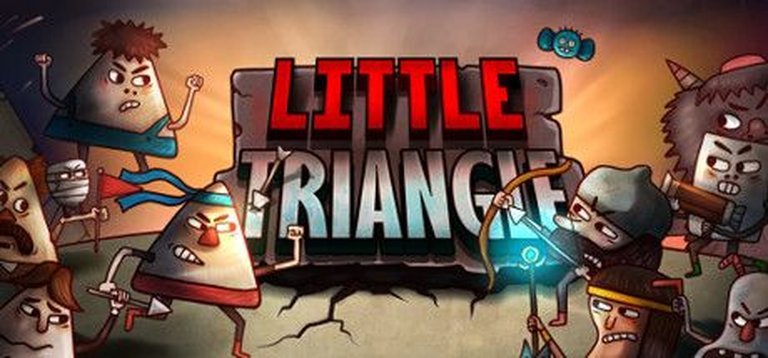
Little Triangle is a charming 2D side-scrolling platformer that combines a challenging single-player campaign filled with secrets and boss fights with a multiplayer battle mode supporting up to four players. Developed by COTTONGAME and Dreamoji, the game features tight controls, substantial content, and polished mechanics across multiple platforms including Windows, macOS, Xbox One, PlayStation 4, Nintendo Switch, and Windows Apps.
Where to Buy Little Triangle
PC
Little Triangle Reviews & Reception
metacritic.com (74/100): Overcoming a few minor issues in presentation, the end result is an excellent game that is worth a serious look for anyone who enjoys ballistic local multiplayer or intense precision platforming.
opencritic.com (76/100): Charming, challenging yet never frustrating to the levels of the designed to do so Super Meat Boy, this little triangle that could might just turn you into a geometry fan for life. Recommended from every angle.
Little Triangle Cheats & Codes
Mobile
Enter codes at the main menu.
| Code | Effect |
|---|---|
| FIREWORK2026 | Unlocks July 4th ‘Stars & Stripes’ triangle skin |
| TRIANGLELOVE | Unlocks Valentine’s Day heart particle trail |
| GEARUPNOW | Unlocks rare gear pack (speed boots + hat) |
| REDWHITEFRIES | Unlocks burger triangle + ketchup particle trail |
Little Triangle: Review
Introduction
In the crowded landscape of indie platformers, where geometric heroes and pixelated worlds are a dime a dozen, Little Triangle emerges as a deceptively simple yet remarkably versatile title that defies easy categorization. Developed by Shanghai-based studios COTTONGAME and Dreamoji, this unassuming 2D adventure began its life on PC in January 2017 before conquering consoles like the Nintendo Switch, Xbox One, and PlayStation 4. Its premise is almost minimalist: control a triangle, jump, rescue citizens, and battle foes. Yet beneath this geometric exterior lies a masterclass in multi-modal design, seamlessly blending a single-player campaign with local cooperative and competitive multiplayer modes. This review argues that Little Triangle’s true legacy lies not in revolutionizing a single genre, but in delivering an exceptionally polished, budget-friendly package that maximizes replay value through its triumvirate of experiences—a feat that earned it critical acclaim (averaging 80% from critics) and surprising commercial success, particularly in its native China where it outsold Celeste on PC during Early Access. As we dissect its development, narrative, mechanics, and cultural impact, we’ll uncover how this geometric underdog became a testament to focused design and adaptive game development.
Development History & Context
The story of Little Triangle is intrinsically tied to the burgeoning Chinese indie scene and the strategic embrace of crowdfunding platforms and digital storefronts. Founded in Shanghai, COTTONGAME Network Technology Co., Ltd. and Dreamoji operated during an era where Chinese developers were increasingly leveraging global platforms like Steam and Tencent’s WeGame to bypass traditional publisher gatekeeping. The game’s initial PC launch on January 21, 2017, coincided with the rise of accessible Unity-based development tools, allowing smaller studios to create visually competent titles without prohibitive costs. This technological democratization is evident in Little Triangle’s clean 2D rendering, which runs smoothly even on modest hardware (minimum specs: Intel Pentium 4, 512MB RAM, Intel GMA 950).
The developers’ vision, as revealed in a 2018 Reddit AMA, was ambitious yet pragmatic: “We originally targeted the same price with only the single-player content!” This initial focus on a tight platforming experience—inspired by classics like Super Meat Boy but with a modern twist—evolved dramatically based on player feedback. During Early Access on WeGame, the game sold over 50,000 copies in China alone, maintaining a staggering 94% recommendation rate. This success, particularly in a market dominated by online multiplayer titles, provided the financial runway to expand the game’s scope. The team added two full multiplayer modes—cooperative platforming and a “Duck Game”-style battle royale—polishing both for the March 2018 console release. This shift reflects a savvy adaptation to the Nintendo Switch’s hardware strengths, where local multiplayer is king. The game’s multiplatform expansion (Windows, macOS, Xbox One, PS4, Switch, iOS) showcases a developer attuned to diverse audiences, culminating in a Steam release priced at just $9.99—positioning it as an accessible “all-in-one” platformer against higher-profile competitors.
Narrative & Thematic Deep Dive
Little Triangle’s narrative unfolds with the deliberate brevity of a classic fable, prioritizing gameplay over exposition. The plot is elegantly straightforward: the eponymous geometric hero’s “Little Kingdom” has been overrun by alien-like antagonists, who have abducted its citizens. As the player-controlled triangle, you embark on a quest to traverse treacherous levels, defeat eccentric bosses, and liberate your imprisoned compatriots. This rescue mechanic doubles as a progression system—each freed triangle unlocks a new playable character with subtle visual variations, adding a meta-layer of reward without narrative complexity.
The dialogue and text are sparse, relying on environmental storytelling and visual gags. For instance, rescued citizens animate with triumphant wiggles, while enemy designs (like floating orbs or spike-encrusted creatures) imply malevolent intent through their hostile behaviors rather than explicit lore. This minimalism serves a thematic purpose: it positions the game as a pure power fantasy, where heroism is defined by action, not words. The underlying themes of resilience and liberation are amplified by the game’s structure. Hidden areas and optional citizens encourage exploration, framing heroism as both a duty and a personal challenge. The two-tiered difficulty system (“casual” and “hardcore”) further reinforces this, allowing players to tailor their struggle—whether as a casual savior or a relentless perfectionist.
Critically, the narrative never overstays its welcome. As noted by Nintendo Life, the game avoids the “designed to do so” frustration of Super Meat Boy, ensuring that even in its most punishing moments, the focus remains on empowerment. This balance—where story serves as a scaffold for gameplay—demonstrates a mature understanding of indie game design, where every element, however simple, reinforces a cohesive experience of heroic agency.
Gameplay Mechanics & Systems
Little Triangle’s brilliance lies in its deceptively simple yet deeply layered mechanics, all revolving around a single control scheme: movement via the analog stick and action via a single jump button. This button serves dual purposes—jumping and attacking—creating elegant risk-reward dynamics. Landing on enemies’ heads defeats them, but mistimed jumps can lead to damage, emphasizing precision over brute force. The core gameplay loop is divided into three distinct, yet interconnected, systems:
Single-Player Campaign
The campaign comprises over 30 stages packed with hidden areas, collectible diamonds, and citizens to rescue. Each level is a masterclass in environmental storytelling, featuring springs, traps, and enemy patterns that demand mastery. The three-hit-per-life system (with hearts replenished at save points) ensures fair difficulty progression, while respawning at checkpoints eliminates punitive “game over” screens. Two difficulty modes cater to diverse skill levels: “casual” streamlines challenges, while “hardcore” amplifies enemy aggression and precision requirements. The optional boss-rush “Challenge Mode” adds replay value with time-based leaderboards and unlockable skins, rewarding dedicated players with cosmetic and rule-based variations.
Local Cooperative Mode
Supporting up to four players, co-op transforms the linear platforming into a chaotic ballet. Players must collaborate to reach high platforms by stacking triangles, turning isolated challenges into social puzzles. As Garage Band Gamers observed, the camera zooms out significantly to accommodate multiple players, which can obscure details but preserves the fun. This mode shines with its “Cooperation” variant, where players assist in the story mode, while the “Combat” variant offers randomized levels focused on teamwork against environmental hazards.
Battle Royale Mode
The standout multiplayer component, often likened to Duck Game, is a frantic local PvP experience. Armed with map-specific weapons (from hammers to lasers), players compete in small arenas. Victory comes from eliminating opponents via head jumps or weapon use, blending platforming tactics with arena-brawler chaos. The mode’s procedural generation ensures high replayability, though critics like Garage Band Gamers note it lacks the narrative depth of the campaign.
UI and Polish
The minimalist UI presents health, coins, and objective markers without clutter. Achievements (34 on Steam) and trading cards add meta-engagement, while Steam Cloud support enables seamless progress across devices. The controls—praised for their “smooth and responsive” feel (MikeTendo64)—consistently deliver satisfying feedback, whether executing a double-jump or landing a precise head-stomp.
World-Building, Art & Sound
Little Triangle’s aesthetic is a study in controlled contrast. The world-building is conveyed through stark juxtapositions: the “Little Kingdom” features gritty, industrial backdrops (grays, rust, and concrete) that evoke a sense of oppression, while the protagonist’s triangular form and rescued citizens radiate cheerful simplicity. This dichotomy creates a compelling visual narrative: the game’s heroism is not just about defeating foes but restoring color and life to a monochrome world. The art direction, described by MikeTendo64 as “weird but nicely done,” emphasizes function over flourish. Enemies—from spiky orbs to flying drones—are designed for immediate readability, ensuring players can react instinctively during fast-paced sequences.
The sound design amplifies this contrast. Upbeat, spy-themed musical tracks (reminiscent of James Bond scores, per MikeTendo64) infuse even boss battles with energetic tension, making challenges feel thrilling rather than oppressive. Sound effects are crisp and purposeful: coin chimes, enemy defeat squawks, and jump landings provide satisfying auditory feedback. The 2D scrolling backgrounds, though static, are rich with details like conveyor belts, crumbling platforms, and hidden corridors that reward close inspection. This environmental storytelling extends to the game’s textures, where hand-drawn elements (cited in Steam tags like “Stylized” and “Hand-drawn”) coexist with Unity-rendered physics, creating a tactile, lived-in world. The overall effect is cohesive: the art and sound work in tandem to make Little Triangle’s minimalist universe feel expansive and immersive.
Reception & Legacy
At launch, Little Triangle enjoyed a warm reception, particularly on the Nintendo Switch where its local multiplayer strengths aligned with the console’s ethos. Critics praised its value proposition: Nintendo Life deemed it “snugly among the great 2D platformers,” highlighting its “tight controls” and “generous content,” while Nindie Spotlight lauded its “substantial amount of content for its price of admission.” However, some critiques centered on its lack of innovation. Cubed3 noted that “none of the aspects… are perfected,” and NintendoWorldReport felt it lacked a “unique hook,” framing it as a solid but derivative experience. Commercially, the game found unexpected success in China, where it outsold Celeste on PC during Early Access, selling over 50,000 copies on WeGame and 10,000 on Steam. This regional triumph underscored a growing appetite for locally developed titles in a market often dominated by Western AAA games.
Over time, Little Triangle’s reputation has solidified as a cult favorite, particularly for its multiplayer versatility. On Steam, it maintains a “Very Positive” user rating (89% from 592 reviews), with players praising its “hilarious” battle mode and polished co-op. Its legacy is less about genre innovation and more about accessibility and adaptability. The game influenced subsequent indie developers by demonstrating that a single title could cater to solo enthusiasts, casual groups, and competitive players alike. It also highlighted the viability of Chinese-made global hits, paving the way for titles like Skul: The Hero Slayer. In retrospect, Little Triangle is remembered not as a revolution, but as a blueprint for efficient, multi-modal design—a small triangle with a disproportionately large impact on the indie landscape.
Conclusion
Little Triangle stands as a testament to the power of focused design in an era of bloated game budgets. Its greatest achievement is not in reinventing platforming, but in perfecting a trifecta of experiences: a satisfying single-player campaign, a cooperative adventure for friends, and a raucous competitive mode—all within a budget-friendly package. The game’s geometric simplicity belies a depth of mechanics, from its precise controls to its robust multiplayer systems, ensuring hours of replayability. While it may not reach the artistic heights of Celeste or the mechanical genius of Super Meat Boy, its charm lies in its versatility and unpretentious execution. As Nintendo Enthusiast noted, it’s “excellent… for anyone who enjoys ballistic local multiplayer or intense precision platforming.”
In the grand tapestry of video game history, Little Triangle occupies a unique niche: it is a small, unassuming hero that proved size doesn’t determine impact. For players seeking a polished, multifaceted experience that respects their time and budget, it remains a diamond in the rough—a geometric gem worth discovering. Verdict: Highly Recommended.