
- Release Year: 2000
- Platforms: Dreamcast, Windows
- Publisher: Agetec, Inc., CyberFront Corporation, Proware Multimedia International Co., Ltd., SNK Corporation, SourceNext Corporation
- Developer: SNK Corporation
- Genre: Action, Fighting
- Perspective: Side view
- Game Mode: Hotseat, Single-player
- Gameplay: Fighting, Striker system
- Setting: Martial arts
- Average Score: 76/100
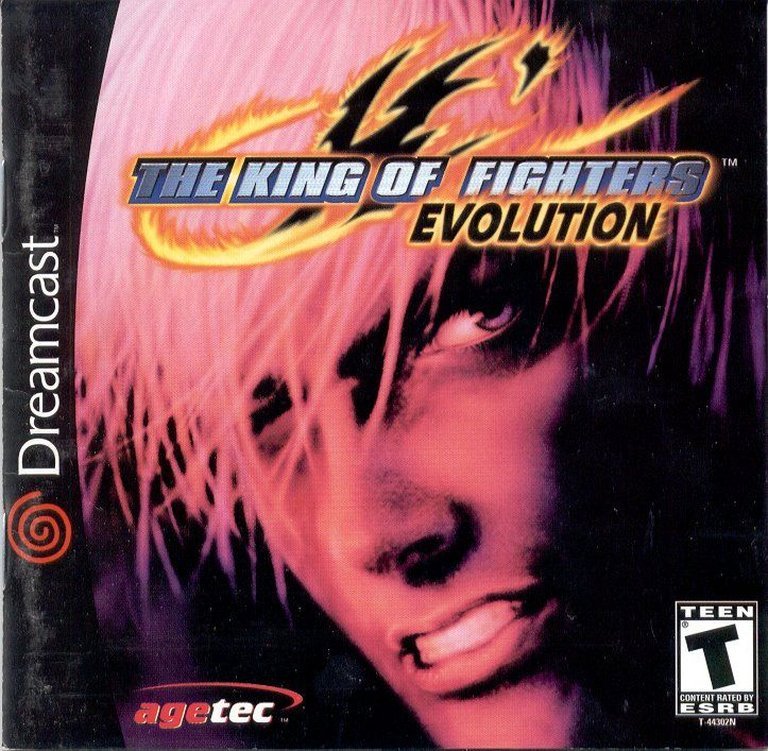
Description
The King of Fighters ’99: Evolution is an enhanced installment in SNK’s legendary fighting game series, blending elements from both KOF ’99 and KOF 2000. Set in the iconic King of Fighters tournament, it features a roster of both classic and new fighters delivering hardcore 2D martial arts combat. The Dreamcast version introduces additional strikers like Vanessa and Seth, fully rendered 3D backgrounds, and a remixed arrange soundtrack, while maintaining the series’ signature anime/manga art style and side-scrolling gameplay.
Gameplay Videos
The King of Fighters ’99: Evolution Reviews & Reception
ign.com (85/100): Good God, you’ve got a whole lot of fighters with new play mechanics. I know some KOF purists hate the Striker system, but I like it lots.
The King of Fighters ’99: Evolution Cheats & Codes
PlayStation
Codes are entered at various menus. Some codes are for the Japanese version only. Other codes require a Game Shark or CodeBreaker device.
| Code | Effect |
|---|---|
| hold Start + Triangle and press Circle | Infinite survival mode time |
| hold Select and press Circle, X, Triangle, Square | Play as Krizalid |
| hold Start and press Square, Circle, X, Triangle, Square | Play as Krizalid (Japanese version) |
| hold [L1] and press any button | Unlock bonus characters (Japanese version) |
| Hold [Start] + [Select] | In-game reset |
| select a character with ‘LP’ or ‘HP’ | Normal color palette |
| select a character with ‘LK’ or ‘HK’ | Inverted color palette |
| Hold [Start] when selecting your character’s fighting order | Display character order |
| D00BCF6 ?????? | Reverse Joker Command (Japanese Version, Game Shark) |
| 8008DB6E 0702 | Play as Krizalid (Japanese Version, Game Shark) |
| 800BA002 2060 | Infinite Fight Time (Japanese Version, Game Shark) |
| 800B9174 0065 | Infinite Health P1 (Japanese Version, Game Shark) |
| D00B9174 0065 800B9174 0000 |
No Health P1 (Japanese Version, Game Shark) |
| 800B921C 0003 | Infinite Strikes P1 (Japanese Version, Game Shark) |
| 800B921C 0000 | No Strikes P1 (Japanese Version, Game Shark) |
| 800B9130 9000 | Max Special Bar P1 (Japanese Version, Game Shark) |
| 800B9130 0000 | Empty Special Bar P1 (Japanese Version, Game Shark) |
| 800B934C 0065 | Infinite Health P2 (Japanese Version, Game Shark) |
| D00B934C 0065 800B934C 0000 |
No Health P2 (Japanese Version, Game Shark) |
| 800B93F4 0003 | Infinite Strikes P2 (Japanese Version, Game Shark) |
| 800B93F4 0000 | No Strikes P2 (Japanese Version, Game Shark) |
| 800B9308 9000 | Max Special Bar P2 (Japanese Version, Game Shark) |
| 800B9308 0000 | Empty Special Bar P2 (Japanese Version, Game Shark) |
| 800455AE 2400 | Infinite Health P1 & P2 (Japanese Version, Game Shark) |
| 300B8D42 0099 | Infinite Time (NTSC-U, CodeBreaker) |
| 300B7EB4 0065 | Infinite Health P1 (NTSC-U, CodeBreaker) |
| E00B7EB4 0065 300B7EB4 004B |
P1 75% Energy (NTSC-U, CodeBreaker) |
| E00B7EB4 0065 300B7EB4 0032 |
P1 50% Energy (NTSC-U, CodeBreaker) |
| E00B7EB4 0065 300B7EB4 0019 |
P1 25% Energy (NTSC-U, CodeBreaker) |
| 300B7EB4 0000 | No Energy P1 (NTSC-U, CodeBreaker) |
| E00B7EB4 0065 300B7EB4 0001 |
P1 1-Hit Death (NTSC-U, CodeBreaker) |
| 300B808C 0065 | Infinite Health P2 (NTSC-U, CodeBreaker) |
| E00B808C 0065 300B808C 004B |
P2 75% Energy (NTSC-U, CodeBreaker) |
| E00B808C 0065 300B808C 0032 |
P2 50% Energy (NTSC-U, CodeBreaker) |
| E00B808C 0065 300B808C 0019 |
P2 25% Energy (NTSC-U, CodeBreaker) |
| 300B808C 0000 | No Energy P2 (NTSC-U, CodeBreaker) |
| E00B808C 0065 300B808C 0001 |
P2 1-Hit Death (NTSC-U, CodeBreaker) |
| 300B7E71 0090 | Max Special P1 (NTSC-U, CodeBreaker) |
| 300B7E71 0000 | No Special P1 (NTSC-U, CodeBreaker) |
| 300B8049 0090 | Max Special P2 (NTSC-U, CodeBreaker) |
| 300B8049 0000 | No Special P2 (NTSC-U, CodeBreaker) |
| 300B8D5E 0000 | P1 Never Wins (NTSC-U, CodeBreaker) |
| E00B8D5E 0000 300B8D5E 0001 |
P1 Needs 1 Round To Win (NTSC-U, CodeBreaker) |
| 300B8D78 0000 | P2 Never Wins (NTSC-U, CodeBreaker) |
| E00B8D78 0000 300B8D78 0001 |
P2 Needs 1 Round To Win (NTSC-U, CodeBreaker) |
| D00BBCA0 0400 800B15CE 0001 D00BBCA0 0400 800B121E 0001 |
P1 Play As Boss (NTSC-U, CodeBreaker) |
Dreamcast
Codes entered during gameplay or at pause menu. Some codes require a GameShark / Pro Action Replay device. One code involves accessing the game disc on a PC.
| Code | Effect |
|---|---|
| X + Y | Full pause screen (Pause game first) |
| Place game disc in PC CD-ROM drive and access ‘Omake’ directory | View bonus files and images |
| 9C5D88F8 | [M] Must Be First (NA, GameShark) |
| E5386B6C00000009 | Get Hit Anywhere (NA, GameShark) |
| 656DED0500000018 | Hit Opponent Anywhere (NA, GameShark) |
| CBBAF4C600000008 C34AFCC500000008 |
Infinite Health (both players, NA, GameShark) |
| 9CA981643406504B CBCAF4C60000534C CBBAF4C600003436 |
Infinite Health (player 1, NA, GameShark) |
| 9CA981643046504B CBCAF4C60000534C CBBAF4C600003346 |
Infinite Health (player 2, NA, GameShark) |
| ABBDE09F00000018 609DE49600000018 |
Infinite Sp. Meter (both players, NA, GameShark) |
| 7C92B0CD3D3653DB 3D2EAD763046504C |
Infinite Sp. Meter (player 1, NA, GameShark) |
| 3D2EAD763406504C 7C92B0CD33D653DB |
Infinite Sp. Meter (player 2, NA, GameShark) |
| E9D86DAF00000009 77433BB900000009 |
Infinite Time (NA, GameShark) |
| 443ACB8700000008 444ACB8700008B20 |
Only Throws Damage (NA, GameShark) |
| 15340AAC33D653DC 444ACB8700008B20 |
Only Throws Damage Player 1 (NA, GameShark) |
| 15340AAC3D3653DC 444ACB8700008B20 |
Only Throws Damage Player 2 (NA, GameShark) |
| 666DAC2B0000FFFF | Infinite Points (player 1, NA, GameShark) |
| 251DEC5800000018 AF9DE20B00000008 |
Weak Throws (NA, GameShark) |
| AF9DE20B00003246 | Weak Throws (player 1, NA, GameShark) |
| AF9DE20B00003426 | Weak Throws (player 1, NA, GameShark) |
| 245EECA9 | [M] Must Be Last (NA, GameShark) |
| 9C5D88F8 | [M] Must Be First (JP, GameShark) |
| 656DED0500000018 | Hit Opponent Anywhere (JP, GameShark) |
| 77433BB900000009 | Infinite Time (JP, GameShark) |
| 5335EE8600003ED6 256DEC0400003456 |
Only Throws Damage Player 1 (JP, GameShark) |
| 5335EE8600003DE6 256DEC0400003546 |
Only Throws Damage Player 2 (JP, GameShark) |
| 251DEC5800000018 | Weak Throws (JP, GameShark) |
| 245EECA9 | [M] Must Be Last (JP, GameShark) |
The King of Fighters ’99: Evolution: Review
Introduction
In the twilight of the 20th century, as arcades waned and home consoles ascended, SNK stood as a bastion of 2D fighting game purity. The King of Fighters ’99: Evolution, released for Dreamcast in 2000, emerged as a pivotal juncture in the series’ storied history. More than a mere port of the Neo Geo original, it reimagined the formula through 3D backgrounds, new strikers, and an arranged soundtrack while launching the ambitious “NESTS Chronicles” narrative arc. This review dissects the game’s layered legacy—its technological leaps, narrative ambition, gameplay innovations, and the bittersweet context of SNK’s looming collapse. Though its divisive Striker system and port inconsistencies temper its brilliance, Evolution remains a defining moment for both the franchise and 2D fighters at a crossroads.
Development History & Context
SNK’s Osaka headquarters approached KOF ’99 with dual mandates: revitalize the series after the Orochi Saga and adapt its signature gameplay for new hardware. Directed by Tomoyuki Hosokawa and produced by Takashi Nishiyama (whose departure post-release signaled internal turmoil), the team faced extraordinary pressure. The original arcade release (July 1999) introduced protagonist K’ and the NESTS storyline, but the Dreamcast port—codeveloped by SNK and Agetec—harnessed Sega’s console to pioneer fully 3D backgrounds. This technical feat, achieved via parallax scrolling and dynamic depth, contrasted sharply with the PlayStation’s cut-down port, which suffered from loading times and reduced animation.
The Dreamcast’s hardware enabled enhancements like seamless load times and an arranged soundtrack, yet the Windows port (2002) was catastrophically flawed. As a MobyGames reviewer noted: “They’ve perfectly managed to ruin the graphics… sprite rendering is totally messed up on every machine.” Control input lag and music-looping errors further crippled the PC version, highlighting the era’s porting challenges. SNK’s financial instability during development—culminating in its 2001 bankruptcy—imbued Evolution with poignant historical significance. It was the last major title published by the original SNK before its reformation as SNK Playmore, arriving as the Dreamcast itself faced obsolescence against the PlayStation 2.
Narrative & Thematic Deep Dive
Evolution resets KOF’s narrative canvas with the “NESTS Chronicles,” a sci-tinged saga of cloning, identity, and rebellion against a shadowy syndicate. The game opens two years after the Orochi defeat, with Kyo Kusanagi and Iori Yagami vanished. The enigmatic NESTS organization orchestrates a clandestine tournament to harvest DNA from world-class fighters, setting the stage for a new protagonist: K’.
K’ is a masterclass in subversion. A white-haired, amnesiac former NESTS agent clad in leather, he embodies the “dark hero” contrast to Kyo’s fiery legacy. His dynamic with cyborg partner Maxima forms the core of the Hero Team, alongside Benimaru Nikaido and the earnest Shingo Yabuki. Their journey against NESTS explores themes of manufactured humanity—Krizalid, the game’s two-phase boss, seeks to perfect Kyo clones, forcing players to confront what defines a person when replicated.
The narrative’s richness lies in its character tapestry. Returning icons like Mai Shiranui (now a Fatal Fury team stalwart) and newcomers like Whip (a NESTS defector with a tragic past) intersect in pre-match dialogues steeped in subtext. Kyo and Iori’s hidden encounters reveal mutual relief at surviving Orochi, a subtle nod to their rivalry’s depth. Even minor characters, such as Li Xiangfei (imported from Real Bout Fatal Fury 2), add cultural texture. The climax—Krizalid’s defeat by collapsing debris and NESTS’ pursuit of K’—perfectly sets up the saga’s sequels.
Gameplay Mechanics & Systems
Evolution‘s most audacious innovation is the Striker system, which replaces KOF’s traditional 3v3 format with 4-character teams. The fourth member acts as a summonable assist, executing special moves a limited number of times per match—a clear nod to Capcom’s Versus series. This added tactical depth but polarized fans. Purists argued it diluted combat focus, while others appreciated its versatility. The Dreamcast version introduced “Extra Strikers” (e.g., Vanessa, Seth, and Metal Slug’s Fiolina), unlockable via points or linked to the Neo Geo Pocket Color’s Battle de Paradise (a feature omitted in the West).
Power-gauge mechanics saw radical overhaul. The “Advanced” and “Extra” modes were unified into a single system featuring Counter Mode (unlimited supers, heightened offense) and Armor Mode (enhanced defense, disabled supers). These demanded split-second strategic decisions, elevating KOF’s cerebral gameplay. The tactical roll now involved a backward leap followed by a forward dash, expanding mobility.
Battle Points and ranking incentivized mastery, with high scores unlocking Krizalid’s second, deadlier form. The Windows port, however, was lambasted for its “weird” controls and input lag, as one MobyGames reviewer lamented: “In the emulator I could easily do half circles… in the computer version, it’s completely impossible.” The standard Dreamcast controller was also criticized as inadequate, necessitating an arcade stick for optimal play. Despite these flaws, Evolution‘s core combat—fast-paced, combo-driven, and team-centric—remained KOF’s soul.
World-Building, Art & Sound
Visually, Evolution represented a generational leap. The Dreamcast’s 3D backgrounds (designed by Toshiaki Mori) transformed static stages into living dioramas. The Amusement Park featured animated carousels and fireworks, while the Cuckoo Clock Tower boasted gears that shifted with fighters’ movements. These retained the 2D aesthetic’s integrity while adding unprecedented depth. Character sprites, filtered with a subtle anti-aliasing effect, blended seamlessly, though pixelation occasionally occurred against high-res backdrops.
Shinkiro’s art direction shifted to a darker, cleaner palette. Kyo’s redesign—from school uniform to casual wear—symbolized the series’ modernization, while portraits adopted sharper, more anime-influenced lines. This contrasted with the PlayStation port’s degraded visuals, as GameSpot noted: “The Neo Geo’s quality was not handled well by the PlayStation.”
Sound design was Evolution‘s triumph. The arranged soundtrack (by Hideki Asanaka, Toshio Shimizu, and Yasuo Yamate) remixed KOF ’99’s original tracks with richer rock, jazz, and electronic elements. The Dreamcast version perfectly looped audio, while the Windows port’s “fading out and restarting” music (per a MobyGames critique) underscored technical incompetence. Voice acting retained SNK’s signature intensity, and sound effects—from whip cracks to fireball roars—cracked with impact.
Reception & Legacy
Evolution launched to critical divergence. Metacritic averaged a 67 for the Dreamcast version, with IGN praising its “lots of personality and character” awarding 8.5/10, while GameSpot deemed it a “flawless port of an inherently disappointing game” (6.6/10). Gaming Age lauded the Striker system as “a step in the right direction,” but Daily Radar dismissed it as the “Court Jester of Fighters” (50/100). Player reviews on MobyGames mirrored this split: one hailed the Dreamcast version as a “nice port” with “lovely” 3D stages, while another condemned the Windows port as “totally awful.”
Commercially, Evolution sold 41,387 Dreamcast units in Japan but struggled amid the PlayStation 2’s launch. Its legacy, however, proved enduring. The NESTS Chronicles became a fan-favorite saga, and K’ is now regarded as SNK’s most successful new protagonist. The Striker system, though divisive, influenced KOF until 2003, while its 3D backgrounds set precedents for future ports. The Dreamcast version is enshrined as one of the console’s premier fighters, alongside Garou: Mark of the Wolves. Modern ports (e.g., ACA NeoGeo) are celebrated for their preservation of SNK’s vision, with Nintendo Life noting its “new gameplay mechanics” prevented it from feeling dated.
Conclusion
The King of Fighters ’99: Evolution stands as a testament to SNK’s defiant artistry amid corporate turmoil. Its technical ambition—3D backgrounds, arranged audio, and expanded strikers—redefined KOF for a new era, while the NESTS Chronicles injected fresh narrative depth. Yet, its legacy is dual-edged: the Striker system’s imbalance and the Windows port’s failures remind us of the era’s porting inconsistencies. Still, Evolution remains a vital artifact. It preserved 2D fighting’s relevance during the 3D revolution, launched one of gaming’s most compelling anti-heroes, and cemented KOF as a genre cornerstone. For historians, it captures SNK at its innovative peak; for players, it offers timeless combat layered with thematic weight. In the pantheon of fighters, Evolution is not flawless—but it is undeniably essential.