
- Release Year: 2012
- Platforms: PlayStation 3, Windows, Xbox 360
- Publisher: Ubisoft Entertainment SA
- Genre: Compilation
- Average Score: 86/100
Description
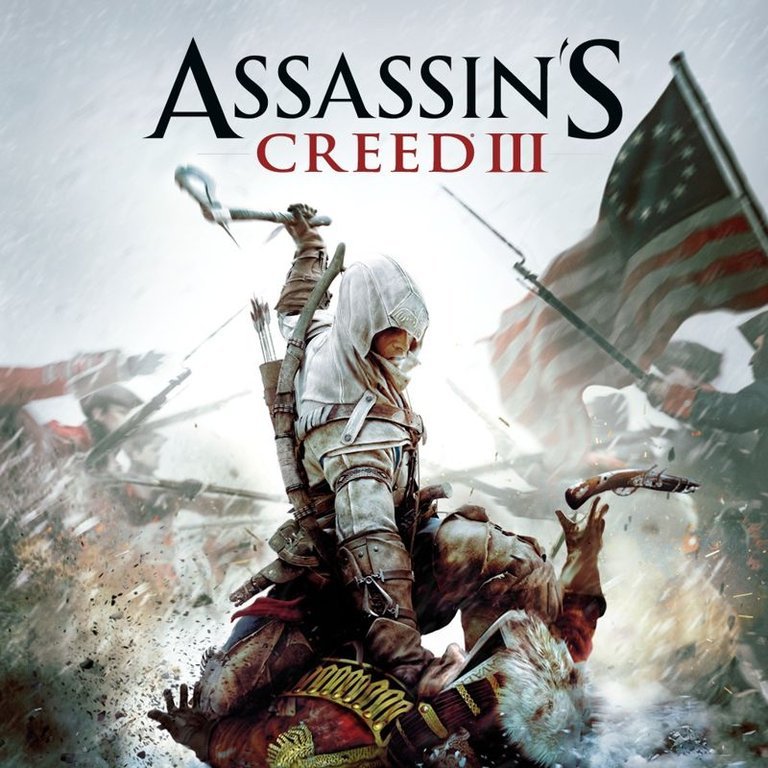
Assassin’s Creed III: Season Pass is the compilation of downloadable content for the fifth installment in the Assassin’s Creed series, set in 18th-century Colonial America during the French and Indian War and the American Revolution. The game follows interconnected narratives of Haytham Kenway, a British Templar, and his half-Mohawk son Connor, an Assassin who battles Templars while protecting his people and shaping the outcome of the Revolution through open-world exploration of Boston, New York City, and the American frontier.
Assassin’s Creed III: Season Pass Mods
Assassin’s Creed III: Season Pass Guides & Walkthroughs
Assassin’s Creed III: Season Pass Reviews & Reception
metacritic.com (84/100): Assassin’s Creed III is a pretty damn fine game. It loses none of what makes the series fun with the translation to another time and continent, and creates a whole new set of experiences which define the franchise.
imdb.com (88/100): Damn is this good.
Assassin’s Creed III: Season Pass Cheats & Codes
PlayStation 3
At any point after Sequence 6 go to the Davenport Homestead and walk around the right side of the manor and hide around the corner at the back. Then in Stealth mode lean against the wall and whistle. Approach the turkey when it appears nearby and enter the code.
| Code | Effect |
|---|---|
| Up, Up, Down, Down, Left, Right, Left, Right, O, X | The turkey will now don an assassin’s hood, and follow you around. |
Assassin’s Creed III: Season Pass: Review
Introduction
The Assassin’s Creed series, a titan of historical action-adventure gaming, reached a pivotal crossroads with Assassin’s Creed III (2012). Beyond its revolutionary open-world rendition of Colonial America, the game’sSeason Pass emerged as a cornerstone of its post-launch strategy, offering a curated suite of downloadable content (DLC) that expanded both narrative horizons and mechanical depth. While the base game introduced players to Ratonhnhakéton/Connor and the brutal moral ambiguities of the American Revolution, the Season Pass—comprising The Tyranny of King Washington, The Hidden Secrets Pack, and The Battle Hardened Pack—transformed the experience into a more comprehensive, albeit uneven, saga. This review deconstructs the Season Pass as both a commercial proposition and a creative experiment, analyzing its impact on Assassin’s Creed III‘s legacy and its place in the series’ evolution. The thesis is clear: while the Season Pass elevates the base game through ambitious alternate-history storytelling and multiplayer enhancements, it also embodies the era’s growing pains in design cohesion and narrative focus.
Development History & Context
Ubisoft Montreal, the series’ primary steward, spearheaded Assassin’s Creed III with unprecedented ambition. Development began in January 2010, following the critical and commercial triumph of Assassin’s Creed II and its sequels, spanning two and a half years and involving over 300 collaborators across global studios. This cycle—twice as long as Assassin’s Creed—aimed to redefine the franchise with a new engine (AnvilNext) and a radical shift from Renaissance Europe to 18th-century Colonial America. Creative Director Alex Hutchinson framed the move as a “true next generation” of interactive storytelling, leveraging the setting to explore themes of freedom and control amidst a backdrop where historical figures like George Washington and Benjamin Franklin coexisted with the ancient Templar-Assassin conflict.
The Season Pass was conceived as a direct response to player demand for expanded content, priced at a premium to bundle five DLC packs into a single purchase. Ubisoft marketed it as a “save big” opportunity, emphasizing three key pillars: an alternate-reality narrative (Tyranny of King Washington), multiplayer enhancements (Battle Hardened), and bonus single-player missions (Hidden Secrets). Technologically, the DLC built upon AnvilNext’s foundations but faced constraints on Xbox 360 and PlayStation 3, where the base game’s already ambitious scope had taxed hardware limits. The 2012 gaming landscape was dominated by annualized releases, and Assassin’s Creed III’s Season Pass exemplified this trend, though its narrative-driven approach diverged from the multiplayer-centric DLC of contemporaries like Call of Duty.
Narrative & Thematic Deep Dive
The Season Pass’s crown jewel is The Tyranny of King Washington, a three-part alternate-history saga that reimagines George Washington as a power-hungry monarch corrupted by an Apple of Eden. This expansion stands as the Season Pass’s most ambitious contribution, trading historical fidelity for speculative fiction. In The Infamy, Connor discovers a dystopian “United Kingdom of America” where Washington’s tyranny has erased the Revolution, forcing Connor to wield enhanced “Wolf” and “Eagle” powers to dismantle the regime. Subsequent installments—The Betrayal and The Redemption—deepen this conspiracy, with Connor confronting a Washington who orchestrates assassinations and rules with an iron fist. Thematically, it critiques the corruption of idealism, contrasting the base game’s nuanced portrayal of revolution with a cautionary tale about absolute power. Connor’s arc here is more visceral, though less nuanced, as he becomes a mythic savior rather than a disillusioned advocate for his people.
The Hidden Secrets Pack adds context but lacks narrative heft. Missions like Ghost of War and Lost Mayan Ruins are standalone vignettes, expanding Connor’s exploits without advancing the core plot. They reintroduce historical curiosities—e.g., Captain Kidd’s treasure—but feel disjointed. The Battle Hardened Pack is purely multiplayer-focused, offering no story. Together, the DLCs reinforce the base game’s central theme: the cyclical nature of conflict. Where Assassin’s Creed III explored how the Revolution’s ideals were betrayed by pragmatism, the Season Pass literalizes this through Washington’s tyranny, though it risks oversimplifying the base game’s moral complexity. Connor’s characterization remains a point of contention; his rigid idealism clashes with the DLC’s more fantastical tone, while Haytham Kenway’s Templar motivations—better developed in the base game—are sidelined.
Gameplay Mechanics & Systems
The Season Pass enhances Assassin’s Creed III’s gameplay without fundamentally reworking its core systems. The Tyranny of King Washington introduces supernatural abilities that disrupt the game’s stealth-centric balance. Connor’s “Wolf” power (rapid assassination streaks) and “Eagle” vision (enhanced eagle sense) streamline combat, making stealth optional rather than strategic. While fun, these powers reduce encounters to button-mashing sessions, contrasting sharply with the base game’s deliberate, methodical combat. Naval gameplay, a highlight of the base game, is absent here, a missed opportunity given the expansion’s nautical setting.
The Hidden Secrets Pack adds minor mechanical novelties: new weapons (e.g., the Pontiac War Club) and costumes (e.g., the Colonial Assassin outfit) that offer cosmetic variety but no gameplay depth. The missions themselves are formulaic, relying on recycled traversal and combat sequences. The Battle Hardened Pack focuses solely on multiplayer, introducing new maps (e.g., Charlestown) and characters (e.g., the Highlander). These additions inject variety into competitive modes like Wolfpack and Domination, but the multiplayer—already criticized for its buggy launch—feels dated by modern standards. Servers were shut down in 2022, rendering this content inaccessible post-remaster.
Ui and progression systems see minor tweaks. The Season Pass integrates with the base game’s economy and Homestead mechanic, allowing players to craft exclusive items. However, the DLC’s disjointed release schedule (spread over six months) fractured player engagement, and the lack of a unified narrative thread weakened its impact. The Remastered version (2019) later addressed some issues by improving stealth mechanics and UI clarity, but it did not overhaul the DLC’s structural flaws.
World-Building, Art & Sound
The Tyranny of King Washington thrives on its atmospheric reinterpretation of Colonial America. Boston and New York City are reimagined as opulent, oppressive capitals under Washington’s rule, with lavish architecture contrasting with base game’s grittier colonial aesthetics. The Frontier becomes a war-torn wasteland, its forests and rivers echoing with the tension of a failed revolution. Art direction leans into grim fantasy, with Washington’s palace—a fusion of neoclassical grandeur and Apple-fueled corruption—serving as a visual metaphor for tyranny.
Sound design similarly elevates the expansion. Lorne Balfe’s score shifts from the base game’s orchestral patriotism to dissonant, eerie melodies, underscoring Washington’s descent into madness. Voice acting remains strong, particularly Adrian Hough as Haytham in cameos, but Connor’s portrayal—now more mythic than grounded—feels inconsistent. The Hidden Secrets missions borrow from the base game’s authentic colonial ambiance, with ambient sounds of taverns and markets reinforcing immersion, yet their brevity prevents true world-building. The Battle Hardened maps, while detailed, lack the narrative weight of the base game’s locales.
Reception & Legacy
Upon release, Assassin’s Creed III received “generally favorable” reviews (Metacritic: 84–85/100), praised for its scale and naval combat but criticized for its pacing and Connor’s characterization. The Season Pass, however, garnered less attention. Tyranny of King Washington polarized critics: some lauded its bold alternate-history premise, while others deemed it a shallow diversion. The multiplayer-centric packs were dismissed as forgettable filler. Commercially, the base game sold over 12 million copies, but the Season Pass’s long-tail appeal was hampered by fragmented content drops.
Legacy-wise, the Season Pass is a microcosm of Assassin’s Creed III’s dual identity. Tyranny influenced later series experiments, like Assassin’s Creed Odyssey’s Legacy of the First Blade DLC, by proving that alternate-history narratives could resonate. However, its mechanical excesses—particularly the overpowered abilities—highlighted the series’ struggle with balance post-Brotherhood. The multiplayer’s eventual shutdown in 2022 rendered Battle Hardened obsolete, a stark reminder of live service’s transience.
Yet, the Season Pass preserved the base game’s strengths. The Remastered edition (2019) bundled all DLC (minus multiplayer), introducing legacy outfits from later games and refined mechanics, cementing Assassin’s Creed III as a flawed but essential entry. Fandom remains divided: Connor’s complexity is debated on platforms like Fanlore, while Tyranny’s alternate timeline remains a “what if” fan favorite.
Conclusion
Assassin’s Creed III: Season Pass is a product of its time—ambitious yet inconsistent, bridging the gap between series traditions and innovative experimentation. Its narrative apex, The Tyranny of King Washington, reimagines history with creative flair, though at the cost of the base game’s thematic depth. The multiplayer and single-player packs, while mechanically sound, lack cohesion, reducing the Season Pass to a mixed bag of highlights and fillers.
Ultimately, the Season Pass’s value lies in its role as a companion to the base game. It expands Connor’s world without redefining it, offering fleeting thrills and memorable set pieces but not the series-defining impact of Assassin’s Creed II or Black Flag. As a historical artifact, it captures Ubisoft’s 2012-era ambition: bold, sprawling, and occasionally unfocused. For modern players, the Remastered edition makes it accessible, but its legacy endures as a cautionary tale of how DLC, even when bundled, can amplify a game’s strengths without fully mitigating its flaws. Verdict: A worthwhile addition for franchise completists and fans of alternate-history storytelling, but an essential purchase only for those invested in Assassin’s Creed III’s specific vision of Colonial America.