
- Release Year: 2017
- Platforms: Windows
- Publisher: Airdorf Games
- Developer: Airdorf Games
- Genre: Action
- Perspective: Diagonal-down
- Game Mode: Single-player
- Gameplay: Action sequences, Exorcism, Exploration
- Setting: Contemporary, North America
- Average Score: 46/100
Description
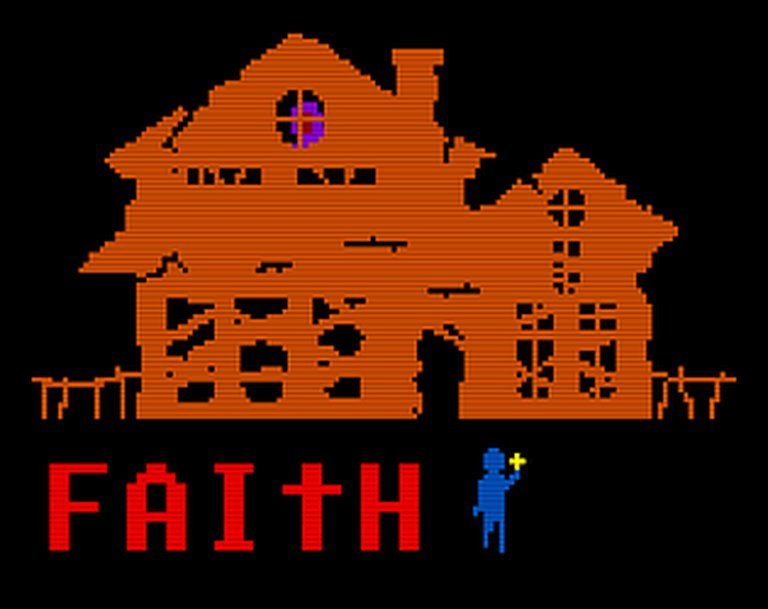
A year after an exorcism gone horribly wrong, a young priest returns to a cursed house in the dark woods of contemporary North America to finish the job, armed with only his crucifix and faith. Players must navigate the eerie environment, find the front door key, and face a fateful encounter within the house. FAITH is a retro-styled horror game featuring pixelated graphics reminiscent of classic 8-bit systems, with dialogue delivered via text-to-speech. The gameplay requires quick reflexes to survive action sequences and thorough exploration to uncover backstory lore, using the crucifix as the sole defense to scare away demons and exorcise ghosts from objects, revealing documents that piece together the terrifying tale.
Gameplay Videos
Where to Buy Faith
PC
Faith Free Download
Faith Patches & Updates
Faith Guides & Walkthroughs
Faith Reviews & Reception
metacritic.com (88/100): Faith: The Unholy Trinity is a masterpiece in minimalist horror that no fan of the genre should miss.
opencritic.com : The thing that I appreciate the most about this game is the effort that’s put into making everything consistent. From the start menu to the end of the game you are forced into this supernatural world and the devs spared no efforts in making everything encapsulate the story.
hundredwordreviews.com (5/100): I had hoped “Faith”’s retro horror approach (it looks like an Atari 2600 title at a glance) would satisfy my sweet tooth, but it gets just as much wrong as it does right. The sparing use of fluid character animations coupled with the feat that is walking through its unnerving woods hint there is substantial frights to be had with this aesthetic, so it’s unfortunate that this is all in service of a tale that aims to be reverential in its references but instead lands on paint by numbers (seriously, you’ve already successfully guessed the story). Interesting but hardly inspired.
Faith: Review
Introduction
In the dimly lit cathedrals of indie horror, few games have cast a shadow as long and unsettling as Faith. Crafted by solo developer Mason Smith under the moniker Airdorf Games, this survival horror trilogy—later compiled as Faith: The Unholy Trinity—transports players to the cursed woodlands and haunted households of 1980s Connecticut. Armed only with a crucifix and faltering faith, players step into the cassock of Father John Ward, a tormented priest confronting the demons of his past and a Satanic cult’s apocalyptic ambitions. Faith is not merely a game; it is a visceral, retro-futuristic confession booth, where its 8-bit aesthetic and synthesized whispers merge to create an experience that is both a love letter to classic horror and a searing indictment of societal paranoia. Its legacy lies in its meticulous world-building, labyrinthine narrative, and the unshakeable dread it instills through deliberate constraints. This review deconstructs Faith as a landmark achievement in atmospheric storytelling, demonstrating how its limitations—technical and thematic—forge an unforgettable journey into the heart of religious terror.
Development History & Context
Faith emerged from the singular vision of Mason Smith, an indie developer who channeled the cultural zeitgeist of the 1980s Satanic Panic into a gaming artifact. Released episodically between 2017 and 2022, the trilogy began as a freeware project on itch.io in October 2017, with Chapter II following in February 2019. The final chapter, published by New Blood Interactive in October 2022, was packaged as Faith: The Unholy Trinity, adding refinements like alternate screen filters and a “turbo” mode.
Smith’s development ethos was defined by technological constraint and homage. Built in GameMaker, Faith deliberately mimics the graphics of early 1980s computers—Atari 2600 and Apple II—with an isometric, low-framerate display and a limited color palette. This wasn’t merely stylistic choice; it was a narrative device. As Smith noted in interviews, the retro aesthetic evokes “the fear of the unknown,” where pixelated demons and flickering text-to-speech voices amplify uncertainty. The rotoscoped cutscenes—featuring real actors distorted into uncanny specters—further blurred the line between retro art and visceral horror, drawing inspiration from classic animations like SpongeBob SquarePants for their grotesque realism.
The gaming landscape in 2017 was ripe for Faith’s arrival. The indie horror genre was flourishing, with titles like Outlast and P.T. redefining scares, but Faith differentiated itself by embracing obsolescence. Its freeware model and episodic release leveraged platforms like itch.io and YouTube, where influencers like Markiplier and Wendigoon dissected its lore and jump scares, fueling a cult following. By 2022, with the trilogy compiled for consoles (Switch in 2024, Xbox in 2025), Faith transitioned from a niche curiosity to a critical darling, praised for its DIY resilience in an era of AAA spectacle. Smith’s vision—rooted in the Satanic Panic’s real-world hysteria and films like The Exorcist—transformed technical limitations into thematic strengths, proving that horror thrives not in excess, but in restraint.
Narrative & Thematic Deep Dive
Faith’s narrative unfolds like a fragmented relic: a tapestry of letters, exorcised notes, and non-linear chapters that demand active interpretation. At its core is Father John Ward, a priest shattered by a botched exorcism in 1986 that claimed the lives of Amy Martin’s parents and his superior, Father Allred. A year later, John returns to the Martin house, confronting Amy’s demonic possession only to fail again, launching a trilogy where redemption battles against damnation. The plot’s non-chronology—blurring dreams, flashbacks, and reality—mirrors John’s unraveling psyche, with each chapter peeling back layers of cultist rituals and cosmic horrors.
Key characters embody the trilogy’s thematic weight:
– John Ward: A vessel for guilt and crisis of faith. His journey from cowardice to resolve hinges on confronting the “Unspeakable,” a demonic entity that preys on his past failures.
– Amy Martin: More than a victim, she is a symbol of innocence corrupted. Her possession exposes the horror of helplessness, culminating in a bittersweet redemption where John finally absolves her soul.
– Gary Miller: The cult leader, a “normal human being, like you and me” he insists, yet revealed as a hellspawn spawned from Sister Bell’s depraved ritual. His obsession with summoning Malphas—the Antichrist—satirizes Satanic Panic-era paranoia, positioning him as a proxy for societal fear of the occult.
– Father Garcia: John’s foil and moral anchor, his unwavering faith contrasts John’s doubt. His recitation of Psalm 91 during Chapter II’s climax underscores the power of collective belief against evil.
Dialogue and voice design amplify the unease. Text-to-speech voices, processed through the archaic SAM software, lend conversations a chilling artificiality, as if spoken through static. Notes exorcised from objects reveal cultist manifestos (“Gary loves you”) and John’s tormented letters, with backward text and blood-scrawled messages (“KILL HER”) emphasizing the fragility of truth. Themes permeate the narrative: Faith vs. Despair is John’s central conflict, as he oscillates between divine intervention and diabolical temptation. Redemption is earned through sacrifice, as John’s willingness to embrace his past failures enables Amy’s salvation. The Satanic Panic is not just backdrop but critique, with the cult’s rituals reflecting 1980s moral panics over Dungeons & Dragons and heavy metal music. The trilogy’s ultimate triumph lies in its ambiguity—is John a saint or a madman? Are the demons real, or manifestations of guilt?—leaving players to grapple with the fine line between salvation and damnation.
Gameplay Mechanics & Systems
Faith’s gameplay is a masterclass in minimalist design, stripping survival horror to its essentials: movement, observation, and faith. Players control John Ward with simple keyboard inputs—arrow keys for navigation, space to hold the crucifix—yet these mechanics are layered with tension. The crucifix is both weapon and key: held aloft, it repels demons like Michael Davies, the pale, chupacabra-like entity from Chapter I; lowered, it becomes a vulnerability. Exorcising possessed objects—by facing them and holding the crucifix—reveals notes, keys, or lore, rewarding thorough exploration while punishing haste.
Combat is brutally unforgiving. John is a one-hit-point wonder, a design choice that amplifies helplessness. Demons move unpredictably—Michael spawns randomly in forests, accelerating with each repulsion—demanding split-second reflexes. Chapter I’s five endings hinge on a single-bullet rifle: shooting Amy (arrest), a shadow figure (death by Michael), a deer (retribution), a fox (cult sacrifice), or Michael (canon survival). This mechanic forces moral reckoning, illustrating how faith is tested through choice.
Puzzles are environmental and intuitive. In Chapter II’s church basement, John must navigate a tile puzzle in pitch darkness, guided by glowing glyphs. Chapter III’s daycare subverts this with a “no-gear” segment, where John abandons the crucifix to enter a pitch-black elevator, forced to rely on a camera’s flashes to evade the “Elevator Lady,” a terrifying entity immune to holy power.
The Unholy Trinity secret bosses—The Mother, The Daughter, and The Unholy Spirit—epitomize Faith’s depth. Defeating them unlocks the true ending, where Gary is cast into Hell, and Amy ascends. This meta-requirement transforms exploration into a pilgrimage, rewarding players who engage with the lore. Flaws exist: some deaths feel arbitrary (e.g., the “Airdorf truck” running John over), and puzzles can be opaque. Yet these imperfections align with the game’s ethos: horror thrives in chaos, not fairness.
World-Building, Art & Sound
Faith’s world is a character unto itself, a meticulously crafted nightmare where every pixel drips with dread. Set in rural Connecticut—a crucible of 1980s paranoia—the trilogy’s locations are meticulously layered: the Martin house’s decaying facade, the Gallup Cemetery’s overgrown graves, and the daycare’s secret cult stronghold. Environmental storytelling reigns supreme: a portrait of the nun Sister Bell in Chapter II hints at her demonic past; crude drawings in the daycare depict Satanic symbols, foreshadowing the Profane Sabbath.
Art direction is retro yet revolutionary. The isometric view, borrowed from Apple II classics like Oregon Trail, uses a restricted palette of greens, browns, and purples to evoke autumnal decay. Rotoscoped cutscenes shatter the 8-bit veneer, with rotoscoped footage of actors melting or contorting into abominations. This contrast—pixelated realism—creates an uncanny valley effect, as John’s jerky movements clash with the fluid horror of demonic manifestations. Sound design is equally potent. SAM’s synthesized voices—grating, monotonous, and devoid of inflection—turn dialogue into a dread-laden incantation. Real-world elements amplify authenticity: recordings from the actual Exorcism of Anneliese Michel underscore Chapter III’s possession sequences, while classical pieces like Beethoven’s “Moonlight Sonata” and Erik Satie’s “Gnossiennes” juxtapose beauty with horror.
The soundscape is a tapestry of unease: the crunch of leaves underfoot, the static EVPs of cultists chanting “Gary loves you,” and the guttural Spanish curses of Michael. Even silence is weaponized—Chapter II’s “Blackout Basement” segments, where John must navigate in darkness with only a flashlight, emphasize the terror of the unseen. Together, art and sound forge an atmosphere where the mundane becomes monstrous: a scarecrow’s vacant eyes, a child’s drawing of “Satin,” the hum of a refrigerator in an empty apartment. Faith’s world is not just a setting; it is a confessional, where every creak and whisper compels players to confront their own demons.
Reception & Legacy
Faith’s journey from freeware phenomenon to critical darling is testament to its singular vision. At launch, Chapter I garnered praise for its innovative use of retro aesthetics and tension. Critics like Axel Bosso of Bloody Disgusting lauded its “dismal and disturbing puzzle” narrative, where letters felt like “small jigsaw pieces” to an unsolvable horror. By 2022, The Unholy Trinity scored an 8.8 on Metacritic, with OpenCritic reporting 90% critic recommendation. Nintendo Life awarded it 8/10, praising its “atmospheric storytelling,” while Slant Magazine (4.5/5) celebrated its “retro-style” as a “frightening lo-fi triumph.” Player reviews were equally fervent, though divided on difficulty; some lauded its punishing design as integral to the horror, while others found it inaccessible.
Its legacy, however, extends beyond scores. Faith revitalized the retro horror genre, inspiring titles like Blasphemous and Dread X Collection to embrace pixelated dread. Its influence permeates culture: a film adaptation was announced in 2024, directed by Brandon Salisbury, and the game’s lore spawned deep dives on YouTube, where creators like Wendigoon dissected its hidden connections to other games (e.g., cameos from DUSK’s Jakob). The trilogy’s impact lies in its proof that limitation is strength—its 8-bit constraints became a signature, proving that horror is not in high-definition graphics, but in what the mind conjures from the void. As Airdorf Games continues developing a fourth chapter, Faith endures as a benchmark for atmospheric storytelling, a game where faith is not just a theme, but the core mechanic of survival.
Conclusion
Faith: The Unholy Trinity is more than a horror game; it is a sacrament of pixels and prayer. Through its unyielding commitment to retro aesthetics, labyrinthine narrative, and punishing gameplay, Airdorf Games has crafted an experience that is both a product of its time and a timeless parable of faith and fallibility. Its strengths lie in its synthesis: the synthesized whispers of SAM’s voice, the rotoscoped demons flickering into life, the quiet terror of a darkness pierced only by a crucifix’s glow. These elements coalesce to create a universe where every exorcism is an act of penance, every note a fragment of a larger truth.
Flaws—occasional opacity in puzzles, the sting of arbitrary deaths—are eclipsed by the game’s emotional resonance. John Ward’s journey from broken priest to reluctant redeemer mirrors the player’s own descent into doubt and ascent toward hope. The Unholy Trinity’s secret bosses, the bittersweet endings, and the Satanic Panic’s echo in modern paranoia all speak to Faith’s ambition: to show that horror is not in the monsters we face, but in the faith we summon to confront them.
Ultimately, Faith stands as a landmark in video game history. It proves that in an age of photorealistic excess, the most profound terror arises from the sparsest strokes. As John Ward murmurs “Amen” in the trilogy’s golden ending, so too does Faith absolve the player, leaving not just a scar of fear, but a testament to the power of belief. In the confessional of gaming, Faith is a masterpiece of contrition and redemption, an unforgettable prayer of pixel and pulse.