
- Release Year: 2010
- Platforms: Windows Phone, Windows, Xbox 360
- Publisher: Awesome Games Studio Sp. z o. o.
- Developer: Awesome Games Studio Sp. z o. o.
- Genre: Action
- Perspective: Diagonal-down
- Game Mode: Co-op, Single-player
- Gameplay: Base building, Loot, Shooter, Tower defense, Wave-based
- Setting: Zombies
- Average Score: 63/100
Description
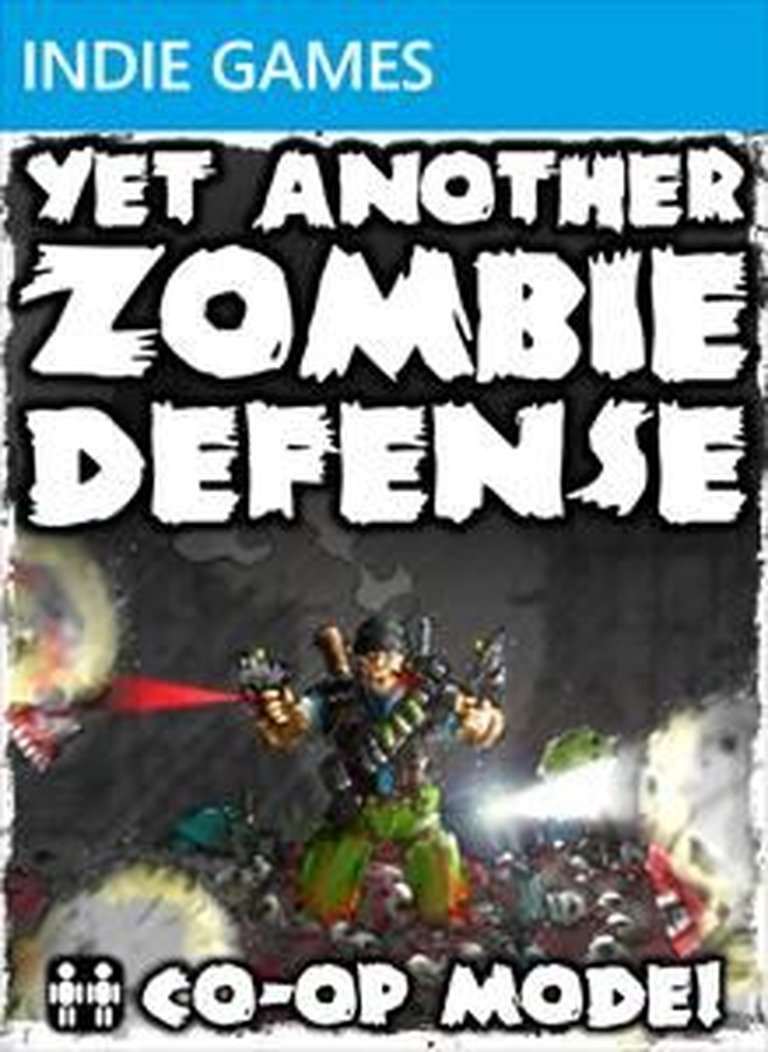
Yet Another Zombie Defense is an isometric twin-stick shooter where players survive increasingly intense waves of zombies each night. Earning money for each kill, players strategically spend it between waves on weapons, ammo, barricades, and customizable turrets to build defenses. Defeated zombies may drop health, ammo, or money, adding a layer of resource management to the relentless zombie-slaying action.
Gameplay Videos
Where to Buy Yet Another Zombie Defense
PC
Yet Another Zombie Defense Mods
Yet Another Zombie Defense Guides & Walkthroughs
Yet Another Zombie Defense Reviews & Reception
metacritic.com (59/100): competent but unremarkable dual-stick shooter with sentry turrets and blocks- reasonably fun, but quickly forgettable.
gamergeddon.com : Overall, Yet Another Zombie Defense is a fun title, and well worth checking out.
Yet Another Zombie Defense: Review
Introduction
In an industry saturated with zombie titles, Yet Another Zombie Defense (YAZD) stands as a testament to how a simple, well-executed concept can transcend its humble origins. Emerging from the Xbox Live Indie Games scene in 2010, this twin-stick shooter defied expectations to become a cult phenomenon. Its legacy—evolving from a “one-weekend project” to a multi-platform franchise with HD remasters—illustrates the power of addictive gameplay loops and iterative design. This review argues that YAZD’s enduring appeal lies not in narrative depth or graphical fidelity, but in its masterful synthesis of arcade intensity and strategic depth, cementing its place as a foundational title in the zombie defense subgenre.
Development History & Context
Born from developer Marcin Draszczuk’s post-Duel: The Art of Combat disillusionment, YAZD began as a 2009 experiment. Conceived over a single weekend using assets from his failed XNA-based Xbox Live Indie Games (XBLIG) debut, Draszczuk leveraged the era’s zombie trend and reused resources (models from turbosquid.com, sound effects from soundsnap.com, and Kevin MacLeod’s royalty-free music). The XBLIG platform, with its low barriers to entry and digital distribution model, provided a fertile ground for such experimental projects. Technologically constrained by XNA and limited indie budgets, YAZD prioritized core mechanics over polish—a pragmatic choice that inadvertently fostered its addictive purity. The game’s success was unexpected: earning Draszczuk more in its first month than his day job, enabling him to found Awesome Games Studio and pursue full-time indie development. This bootstrap origin story remains integral to its identity.
Narrative & Thematic Deep Dive
YAZD eschews traditional narrative in favor of existential abstraction. Players assume the role of an unnamed survivor trapped in a perpetual night, defending against waves of undead that grow inexorably stronger. The setting—a desolate isometric street illuminated by a single, flickering streetlamp—serves as a microcosm for societal collapse. Thematic depth emerges from the game’s cyclical structure: the “day” phases represent fragile moments of preparation and hope, while “night” embodies the inevitability of overwhelming adversity. The absence of dialogue or named characters amplifies themes of isolation and futility, transforming each playthrough into a metaphor for humanity’s struggle against entropy. The zombies themselves function as a relentless, faceless horde, symbolizing the indifferent march of time and mortality. Despite minimalism, the game’s power lies in its emotional resonance—players aren’t just surviving; they’re defying an inescapable doom.
Gameplay Mechanics & Systems
YAZD’s brilliance lies in its elegantly brutal core loop. The day/night cycle creates rhythmic tension:
– Day Phase: Players spend currency earned from zombie kills on upgrades. The store offers weapons (pistol, shotgun, flamethrower, laser), ammo, barricades, and customizable turrets. Turret mounts, particularly, allow strategic depth—mounting a sniper rifle creates long-range suppression, while a machine gun offers crowd control.
– Night Phase: A twin-stick shooter where movement and aim are decoupled. Zombies spawn in escalating waves, increasing in speed, numbers, and lethality after “Day 8.” Environmental factors like darkness restrict visibility, incentivizing players to stay near the streetlamp.
Progression is purely score-based, with no permanent upgrades. Death forces a restart from Day 1, yet the pursuit of high scores and leaderboard dominance fosters obsessive replayability. The original Xbox 360 version was strictly single-player, but later iterations added local/online co-op and PvP deathmatch—features that expanded its appeal. UI is minimalist yet functional, with clear menus and responsive controls. Flaws include repetitive enemy variants beyond Day 8 and occasional balance quirks (e.g., the flamethrower’s rapid ammo drain), but these are minor blemishes on a tightly designed experience.
World-Building, Art & Sound
The game’s world-building is distilled to its essence: a claustrophobic, isometric urban street at night. The lone streetlamp acts as both a narrative anchor (symbolizing hope) and a gameplay mechanic (limiting movement). Early versions featured rudimentary 3D models and stiff animations, but the HD remaster (2017) overhauled this with fluid zombie animations, improved physics, and dynamic lighting. Art direction prioritizes functionality—zombies are instantly recognizable silhouettes, while environments are texture-rich yet uncluttered.
Sound design amplifies the dread. Weapon effects are distinct and weighty, from the pew of a pistol to the roar of a flamethrower. Kevin MacLeod’s score, blending industrial and ambient tones, escalates during wave crescendos, mirroring the gameplay’s escalating tension. The absence of voice acting heightens the sense of isolation, leaving only the crunch of footsteps and distant moans to fill the void. Together, audio-visual elements create an oppressive yet addictive atmosphere.
Reception & Legacy
YAZD’s reception evolved dramatically across its lifecycle. The 2010 Xbox 360 launch (priced at 80 MSPoints) was modestly received. Gamergeddon praised its addictive nature but noted its lack of co-op, while player scores on MobyGames averaged a lukewarm 2.0/5. However, word-of-mouth and its viral success on XBLIG cemented its cult status. The 2014 Steam release marked a turning point, earning a “Very Positive” rating (86% based on 5,826 reviews) for its accessibility and polish. Critics like 148Apps and AppSmile highlighted its “simple but effective” dual-stick mechanics, though Gamezebo lamented its lack of strategic depth.
Legacy-wise, YAZD spawned a franchise: Yet Another Zombie Defense HD (2017) added co-op and visual upgrades, while YAZD 2 (2016) and YAZD Survivors (2023) iterated on the formula. Its influence is evident in titles like Zombie Builder Defense and the burgeoning “survival horde” genre. Draszczuk’s journey—from part-time dev to studio founder—underscores its cultural impact, proving that indie projects could achieve commercial viability and artistic merit. Today, it remains a free-to-play staple on Steam, with over 12,000 reviews affirming its staying power.
Conclusion
Yet Another Zombie Defense is a masterclass in iterative design and minimalist brilliance. What began as a “quick weekend project” evolved into a genre-defining experience through its unrelenting focus on core mechanics. The game’s genius lies in its duality: the frantic twitch gameplay of twin-stick shooting coexists with the cerebral satisfaction of strategic base-building. While its narrative and art are purposefully sparse, they serve the gameplay, creating an experience that is both viscerally exciting and philosophically resonant. Its legacy—spanning multiple platforms, a dedicated fanbase, and a successful franchise—speaks to its enduring appeal. For players seeking pure, unadulterated survival horror strategy, YAZD remains not just “another” zombie game, but an essential artifact of indie gaming history. Verdict: A must-play cult classic that proves the best games often start as simple ideas executed with ruthless precision.