
- Release Year: 2019
- Platforms: Macintosh, Windows
- Publisher: GoldFire Studios, Inc.
- Developer: GoldFire Studios, Inc.
- Genre: Strategy, Tactics
- Perspective: Diagonal-down
- Game Mode: MMO
- Gameplay: Massively Multiplayer, RPG elements, Space flight, Vehicular
- Setting: Futuristic, Sci-fi
- Average Score: 50/100
Description
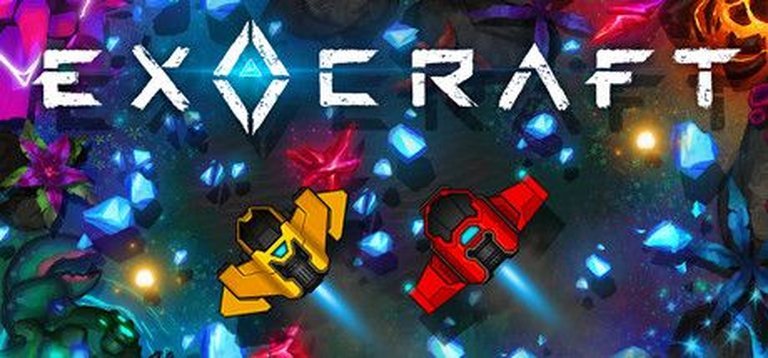
Exocraft is a free-to-play, real-time multiplayer strategy game set in a sci-fi/futuristic universe where players design, pilot, and customize spacecraft to explore, mine, and battle in a persistent online space environment. Developed by GoldFire Studios, it combines vehicular combat, RPG progression, and massive multiplayer interaction, featuring diagonal-down perspective and downloadable content.
Gameplay Videos
Where to Buy Exocraft
PC
Exocraft Patches & Updates
Exocraft Guides & Walkthroughs
Exocraft Reviews & Reception
metacritic.com (50/100): While the aesthetics of the game are decent, like the graphics and the music, this feels and plays like a Flash-based mobile game. Both the mining and game mechanics are a real grind that doubtless will deter most players from digging too deep.
opencritic.com (50/100): While the aesthetics of the game are decent, like the graphics and the music, this feels and plays like a Flash-based mobile game. Both the mining and game mechanics are a real grind that doubtless will deter most players from digging too deep.
Exocraft Cheats & Codes
PC
Click the cargo/level in the bottom left, go to “Settings” and enter your code in the “Promo Code” section.
| Code | Effect |
|---|---|
| NEW63G1DSO | Unlocks Exocraft Starter Pack |
Exocraft: Review
Introduction
In the vast, often repetitive landscape of free-to-play multiplayer games, few titles emerge with ambitions as audacious as Exocraft. Released in March 2019 by Oklahoma City-based GoldFire Studios, this indie experiment promised to be the “next evolution of the [IO game] genre,” blending real-time strategy, vehicular combat, space simulation, and persistent MMO progression into a single, cohesive experience. Set on a dying alien world, it tasked players with building interstellar mining empires, customizing fleets, and battling ancient guardians for resources. Yet, despite its grand vision, Exocraft arrived with a whisper rather than a bang, quickly fading into the crowded free-to-play marketplace. This review dissects its legacy, examining how its ambitious concepts collided with the realities of execution, market saturation, and player expectations to cement its place as a fascinating, if flawed, footnote in gaming history.
Development History & Context
GoldFire Studios, founded by James Simpson, built Exocraft upon the foundations of its earlier browser-based titles like CasinoRPG, demonstrating a consistent commitment to free-to-play models and cross-platform accessibility. The initial web launch in 2018 served as a proof-of-concept, testing the core mechanics of ship design and multiplayer conflict before the studio pivoted to a full Steam release on March 12, 2019. This transition was technologically ambitious, leveraging the Electron framework for cross-platform Windows/macOS support and integrating Greenworks for Steam API features like achievements and overlays—a choice that enabled rapid development but inadvertently tied the game’s performance and aesthetic to its web origins.
The 2019 gaming climate was saturated with multiplayer experiences, from battle royales to hero shooters, leaving Exocraft to compete for attention in a crowded field. Its niche—combining fleet management, resource extraction, and large-scale PvP—was both a strength and a vulnerability. Simpson articulated a clear vision: to create a game with “persistent progression, gameplay depth, and an extensive community element,” moving beyond the fleeting appeal of typical IO games. However, as a small studio with limited resources, GoldFire faced the monumental task of realizing this vision while competing against industry giants with vastly superior polish and marketing budgets. The result was a title that felt both technologically constrained and conceptually ahead of its time.
Narrative & Thematic Deep Dive
Exocraft presents a stark, minimalist narrative centered on survival and exploitation. Set on a “dying alien world,” a desolate desert wasteland, the story unfolds through environmental storytelling rather than explicit plot. Players are cast as space-faring entrepreneurs, tasked with harvesting resources from a world guarded by colossal “ancient guardians”—silent, enigmatic automatons left by a long-vanished civilization. The guardians serve as both environmental hazards and narrative symbols, their imposing presence hinting at a forgotten history of cosmic stewardship now corrupted by greed.
Themes of ecological decay and industrial exploitation permeate the experience. The dying planet, with its cracked earth and rusting ruins, functions as a powerful metaphor for resource depletion, while the elemental powers drawn from its core suggest a fragile symbiosis between exploitation and preservation. Yet, the game deliberately avoids explicit exposition, leaving lore to player interpretation. This ambiguity fueled community speculation, notably a popular Steam theory positing a shared universe with Terratech due to similar block-based construction mechanics and autonomous drone systems. The theory suggested Exocraft could be a prequel, citing its “less futuristic” thrusters as evidence of technological evolution. Though unconfirmed, this fan-driven narrative highlights the world-building’s latent potential, which the game itself never fully realized. Ultimately, Exocraft prioritizes gameplay over storytelling, resulting in a world rich in atmosphere but thin in narrative depth.
Gameplay Mechanics & Systems
Exocraft‘s gameplay revolves around three interconnected loops: ship design, resource extraction, and combat, all underpinned by a persistent multiplayer framework.
Ship Design & Customization:
The core innovation lies in its near-limitless ship-building system. Players combine hulls, engines, weapons, thrusters, and utility modules, with extensive paint options allowing for profound personalization. This creative freedom is a standout feature, enabling everything to nimble raiders to lumbering dreadnoughts. However, the system suffers from a lack of guidance; new players often struggle with optimal loadouts, and physics-based movement can feel imprecise, especially in combat.
Resource Extraction & Fleet Management:
Resource gathering forms the game’s progression backbone. Players mine nodes (crystals, gems, elemental cores) using drones, fueling ship upgrades and fleet expansion. The emphasis on multi-vessel management adds strategic depth, but progression is hampered by a punishing grind. Resources are scarce early on, compounded by competition from other players depleting nodes, creating a frustrating loop that disincentivizes sustained play.
Combat & Drone Warfare:
Combat blends player-controlled ship skirmishes with automated drone battles. Elemental drones—deployed with abilities like fire or ice—offer strategic depth, but their AI is rudimentary, often misprioritizing targets or failing to navigate obstacles effectively. Guardian battles, intended as epic encounters, devolve into repetitive patterns due to limited enemy design, while PvP suffers from performance issues in crowded instances.
Dynamic Multiplayer & Squads:
The most ambitious feature is its single, persistent world that scales to player count—a radical departure from server-sharded MMOs. This theoretically fosters emergent gameplay and community, but in practice, it causes severe lag and frame rate drops. Squad-based cooperation, including chat and tournaments, adds social layers but lacks meaningful endgame goals, reducing alliances to casual social groups.
UI & Quality of Life:
The interface is functional but cluttered, with minimal quality-of-life features. No auto-mining for drones or fleet management tools amplify the tedium of resource gathering, making an already grind-heavy experience more arduous.
World-Building, Art & Sound
Exocraft‘s world-building is its most compelling asset, an atmospheric alien desert wasteland rich with environmental storytelling. Rust-colored dunes, jagged rock formations, and the skeletal remains of ancient guardians create a haunting tableau of desolation. The dying planet is palpable, with a perpetually dusky sky and wind-carved ruins evoking a sense of cosmic tragedy. Resource nodes glow with otherworldly light, serving as beacons of hope and targets of conflict, while the guardians—colossal, biomechanical constructs—loom as silent enforcers of the planet’s forgotten laws.
The art direction excels in establishing mood but falters in consistency. Ship designs are detailed and satisfyingly customizable, while environments convey harshness through color and texture. However, landscapes suffer from repetition, and character/drone designs appear simplistic, likely reflecting web-based constraints. The 2D top-down perspective ensures clarity but limits visual dynamism.
Sound design is serviceable but unremarkable. The ambient soundtrack—low drones and synth melodies—effectively enhances the alien atmosphere but lacks dynamism, rarely adapting to gameplay events. Sound effects are functional yet underwhelming, failing to elevate combat or resource gathering. The absence of voice acting aligns with the game’s minimalist narrative but also robs the world of character. Despite these flaws, the world remains memorable—a testament to its potential, even if unrealized.
Reception & Legacy
Exocraft received a muted reception, reflecting its status as a niche experiment. Critically, it holds a 50/100 Metascore based on a single review from COGconnected, which praised its “decent” aesthetics while condemning its “Flash-based mobile game” feel and “real grind.” On Steam, it holds a “Mixed” rating (52% positive from 361 reviews), with players lauding its customization and multiplayer chaos while decrying performance issues and shallow gameplay. Common complaints included lag, progression gating, and a lack of polish, leading many to abandon the game after short sessions.
Commercially, Exocraft made little impact. Its free-to-play model attracted initial curiosity, but in-app purchases failed to sustain revenue against competitors like Star Trek Fleet Command. Its concurrent player counts rarely exceeded double digits, signaling a failure to retain an audience. Legacy-wise, it remains a footnote—a cautionary tale of ambition outpacing execution. Its dynamic multiplayer world was an interesting experiment, but technical limitations and a lack of depth prevented it from influencing the genre. The community’s Terratech theory, while speculative, underscores the latent appeal of its world-building, which GoldFire never capitalized on.
Conclusion
Exocraft stands as a poignant example of visionary ambition colliding with harsh market realities. Its ship-customization system and dynamic multiplayer world offered genuine innovation, while its alien desert wasteland provided a rich, atmospheric backdrop. Yet, these strengths were consistently undermined by a punishing grind, technical flaws, and a lack of narrative depth. For players seeking creative freedom and fleeting multiplayer chaos, it offered moments of delight; for most, it was a frustrating, incomplete experience.
In the pantheon of gaming history, Exocraft will not be remembered as a classic. It is a flawed artifact—an indie experiment that dared to blend genres but lacked the polish or cohesion to succeed. Its legacy lies not in its gameplay but in its ambition: a reminder that even well-executed innovation can falter without the resources to match its vision. For historians, it documents the challenges of small-scale MMO development; for players, it serves as a case study in why execution matters as much as ideas. Ultimately, Exocraft is a ghost ship adrift in a crowded sea—a fascinating, if forgotten, testament to the risks and rewards of indie game development.