
- Release Year: 2011
- Platforms: Windows, Xbox 360
- Publisher: DreamRoot Studios
- Developer: DreamRoot Studios
- Genre: Puzzle
- Perspective: Top-down
- Game Mode: Single-player
- Gameplay: Box Pushing, Laser puzzles, Puzzle
- Setting: Castle, Caves, Crystal Caves, Forest
- Average Score: 85/100
Description
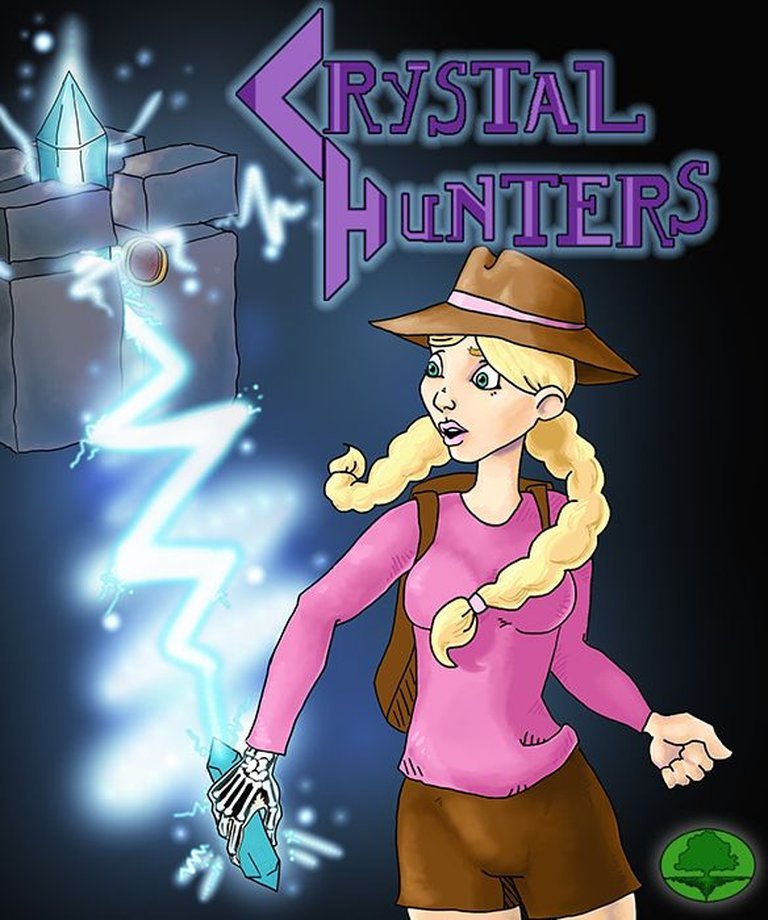
Crystal Hunters is a top-down puzzle adventure game where players guide two characters, Thomas and Amelia, through four distinct worlds—caves, forest, castle, and crystal caves—collecting crystals to unlock exit doors. With an optional tutorial by Grampa Buckley, players solve puzzles by pushing boxes to block enemies or manipulating lasers and mirrors to trigger switches, facing escalating challenges like new enemies and advanced mechanics. The game also features an art gallery, time challenges, and achievements.
Crystal Hunters Reviews & Reception
xotig.itch.io (85/100): DreamRoot Studios first entry into the gaming scene is a successful and fun one…Crystal Hunters is absolutely worth exploring.
Crystal Hunters: Review
Introduction
In the crowded pantheon of indie puzzle games, few titles manage to capture the elegant simplicity and punishing difficulty of the classics quite like Crystal Hunters. Released in 2011 by DreamRoot Studios, this top-down puzzler arrived during an era of burgeoning digital distribution, where its XNA-based roots on Xbox Live Arcade and PC positioned it as a love letter to golden-age titles like The Adventures of Lolo and Chip’s Challenge. Yet, despite its clear homage to these forebears, Crystal Hunters carves its own niche through meticulous design and a restrained, almost meditative approach to challenge. This review posits that while its technical limitations and niche appeal may have relegated it to obscurity at launch, Crystal Hunters stands as a masterclass in distilled puzzle design—a testament to the enduring power of brain-teasing gameplay over spectacle.
Development History & Context
Emerging from the fledgling DreamRoot Studios, Crystal Hunters was the brainchild of a small, passionate team led by Caleb Crawford (design and code) and Oscar Sweatman (art and effects). The project was born from a desire to recapture the essence of 8/16-bit era logic puzzles, reimagined for a modern audience. Technologically, it leveraged Microsoft’s XNA framework—a tool democratizing game development for indie creators but constrained by its reliance on Xbox Live Arcade’s distribution ecosystem and the waning popularity of the platform by 2011. This context is crucial: XNA enabled rapid prototyping and a low barrier to entry, but it also limited the game’s visibility beyond dedicated indie circles. The gaming landscape of 2011 was dominated by the rise of Steam and mobile gaming, with AAA giants overshadowing smaller titles. Yet, Crystal Hunters thrived in this environment by embodying the indie ethos: a small team, a focused vision, and gameplay-first design. Its eventual 2012 Xbox 360 port expanded its reach slightly, but its legacy remains rooted in its PC origins—a digital relic of a time when puzzle games could still thrive on pure mechanical ingenuity.
Narrative & Thematic Deep Dive
Crystal Hunters eschews elaborate storytelling in favor of a fable-like simplicity that underscores its puzzle-centric design. The narrative, framed by Grampa Buckley’s tutorial guidance, follows Thomas and Amelia on a quest to collect crystals across four distinct worlds: the Caves, Forest, Castle, and Crystal Caves. The plot serves as a thin narrative thread, connecting 45 increasingly complex levels. Thematically, the game operates on archetypal principles: the journey represents the pursuit of knowledge (crystals as metaphorical enlightenment), while the environments symbolize stages of growth—from the primal Caves to the transcendent Crystal Caves. Dialogue is sparse, with Grampa Buckley offering tips rather than exposition, reinforcing the game’s focus on player agency. This minimalism is intentional; the “story” is one of incremental mastery, where each solved puzzle is a triumph over entropy. The absence of grand lore or character development positions the game as a pure expression of problem-solving—a thematic purity that aligns with its inspirations while distancing it from narrative-heavy contemporaries. The crystals themselves, unlocked only through methodical effort, become tangible rewards for perseverance.
Gameplay Mechanics & Systems
The core gameplay loop of Crystal Hunters is a refined iteration of the action-logic puzzle subgenre. Players must collect all crystals in a level to unlock an exit door, navigating top-down arenas fraught with environmental hazards and enemies. The mechanics pivot on three pillars:
1. Puzzle Design: Levels introduce elements incrementally—initially requiring simple box-pushing to block patrolling enemies (Medusa-like scarecrows or zapping chests), evolving into intricate laser-and-mirror puzzles. The design excels in its “aha!” moments, where environmental interaction (e.g., redirecting beams to trigger switches) creates satisfying eureka experiences.
2. Enemy Dynamics: Enemies act as obstacles rather than combatants. Players must use boxes to block their paths or exploit their patrol patterns. The tension arises from limited resources—pushing a box into water as a temporary bridge, for example—demanding precision and risk assessment.
3. Character Controls: Both Thomas and Amelia control identically, with movement grid-aligned in spirit but not in visual clarity. This, a key flaw, causes frustration as players misjudge distances, leading to avoidable deaths. The game mitigates this with a “restart from last safe point” mechanic, but the underlying control looseness undermines otherwise stellar puzzle design.
Supporting systems include a time-challenge mode for speedrunners, achievements, and an art gallery unlocked through level completion or time trials. These extras add replay value without diluting the core experience. The progression—four worlds with distinct visual palettes and puzzle types—maintains a consistent difficulty curve, though late-game laser puzzles border on sadistic. Ultimately, Crystal Hunters succeeds by making players feel clever, not punished, for its flaws.
World-Building, Art & Sound
DreamRoot Studios crafts a world through environmental storytelling rather than lore. Each of the four biomes is thematically cohesive: the Caves evoke claustrophobia with stalactites and dark corridors, the Forest introduces organic puzzles like rotating logs, the Castle employs gothic architecture with drawbridges and chandeliers, and the Crystal Caves culminate in crystalline landscapes that reflect light through lasers. Oscar Sweatman’s art style is functional yet charming, with sprite-based characters and backgrounds that evoke The Legend of Zelda: Link’s Awakening in their pixel-art simplicity. The visual clarity, however, falters during complex laser puzzles, where overlapping beams can obscure solutions—a rare lapse in otherwise solid design.
Sound design leans into atmospheric utility. Adam Bielik’s soundtrack, described as “synth-driven ambience” in credits, provides a low-key backdrop without overwhelming concentration. Sound effects—enemy zaps, crystal chimes, box slides—are functional but unremarkable. The art gallery, accessible post-level, offers a narrative-less reward system: concept art and menu sketches that celebrate the game’s visual identity. This absence of overt world-building is deliberate; the worlds exist as puzzle playgrounds, their aesthetic serving mechanical clarity. The result is a cohesive, if subdued, atmosphere that prioritizes gameplay immersion over spectacle.
Reception & Legacy
At launch, Crystal Hunters received muted attention. MobyGames lists a lone 2.3/5 player rating based on zero reviews, while Metacritic shows no critic scores and only one user submission. Xbox Live Arcade’s oversaturated market likely drowned out its release, and its niche genre limited mainstream appeal. Yet, it found champions in indie circles. Jason Arriola of 8bitfix awarded it 8.5/10, praising its “successful and fun” design, while IndieGamerChick lauded it as a “mind-bending” experience that goes “all origami on your brain.” These reviews highlight a core truth: Crystal Hunters was a cult classic waiting to be discovered.
Its legacy is twofold. As a game, it represents the pinnacle of XNA-era indie puzzle design—proof that small teams could deliver sophisticated, nostalgic experiences. Its re-release on itch.io in 2023 (as a “name your price” title) by Xotig underscored its enduring appeal, with the developer encouraging modding via accessible XML level files. This gesture reflects the game’s spirit: collaborative, player-driven, and unapologetically retro. Influence-wise, it joins a lineage of puzzle games (e.g., Baba Is You, Unravel) that prioritize elegant mechanics over narrative, though its direct impact is limited by its obscurity. Yet, for puzzle enthusiasts, Crystal Hunters remains a hidden gem—a reminder that true challenge never goes out of style.
Conclusion
Crystal Hunters is a paradox: a flawed yet flawless achievement in puzzle design. Its control issues and minimalist narrative may frustrate modern players, but its brilliance lies in the purity of its mechanics. DreamRoot Studios crafted a game where every level is a carefully constructed riddle, every crystal a victory of intellect over impulse. The game’s place in history is secure not as a commercial juggernaut, but as a testament to the indie spirit—a labor of love that honors its influences while forging its own identity. For those willing to forgive its technical quibbles, Crystal Hunters offers one of gaming’s most satisfying cerebral experiences. It is, ultimately, a diamond in the rough: unpolished, brilliantly faceted, and destined to be rediscovered by generations of puzzle lovers.