
- Release Year: 2010
- Platforms: Windows
- Publisher: Focus Home Interactive SAS
- Developer: Cyanide S.A.
- Genre: Driving, Racing, Simulation, Sports
- Perspective: 3rd-person (Other)
- Game Mode: LAN, Single-player
- Gameplay: Business simulation, Managerial
- Setting: France
- Average Score: 72/100
Description
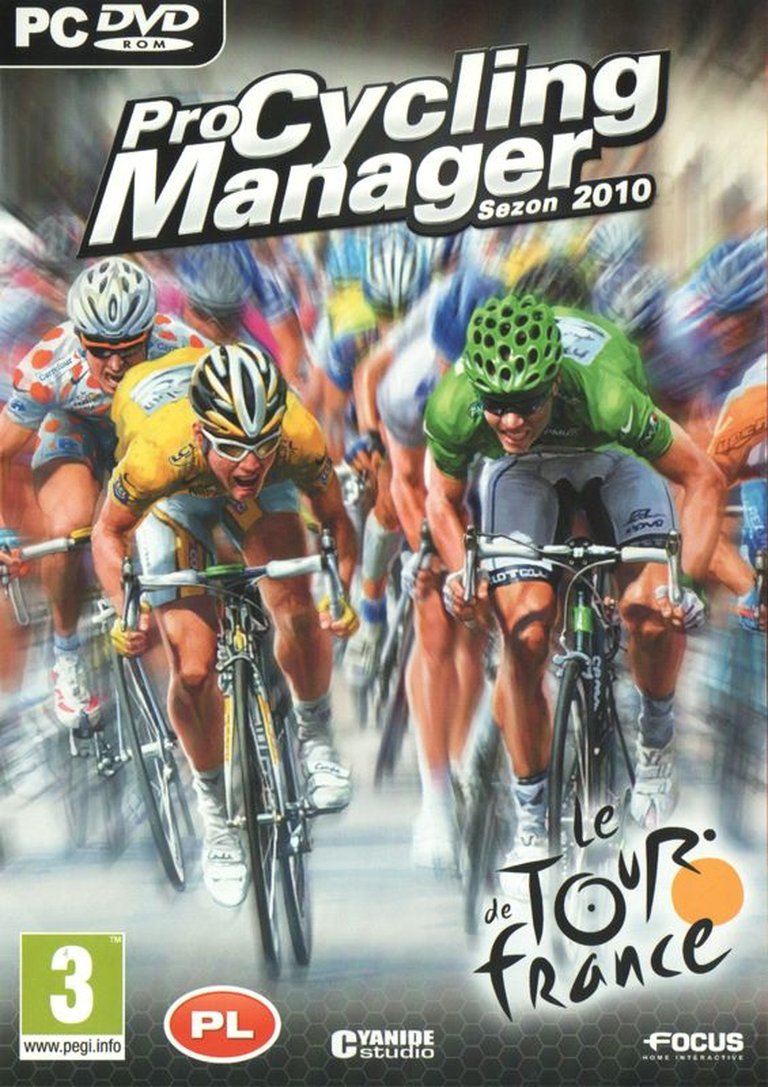
Pro Cycling Manager: Season 2010 is a cycling team management simulation that tasks players with overseeing both the athletic and financial success of a professional cycling squad. Featuring a new graphics engine and 65 licensed teams, players handle training regimens, transfers, sponsorships, and equipment while assigning detailed roles to cyclists based on their unique stats. The core gameplay involves making strategic decisions through menu systems and adjusting real-time tactics during races using interactive sliders to secure victories.
Gameplay Videos
Where to Buy Pro Cycling Manager: Season 2010
PC
Pro Cycling Manager: Season 2010 Patches & Updates
Pro Cycling Manager: Season 2010 Mods
Pro Cycling Manager: Season 2010 Guides & Walkthroughs
Pro Cycling Manager: Season 2010 Reviews & Reception
metacritic.com (72/100): Even if Pro Cycling Manager is complete and realistic as usual, this edition may result a little bit tricky for newbies and a ‘déjà vu’ for the veterans.
Pro Cycling Manager: Season 2010 Cheats & Codes
PC
Enter the bolded term as your profile’s last name for the cheat effect.
| Code | Effect |
|---|---|
| freire | Adds ten points to all managerial stats. |
| simulateisnotrace | Wins all simulated races. |
Pro Cycling Manager: Season 2010: Review
Introduction
In the pantheon of sports management simulations, few niches are as fiercely contested or as passionately followed as cycling. Pro Cycling Manager: Season 2010, the tenth anniversary edition of Cyanide Studio’s annual franchise, stands as a pivotal moment in this lineage. Arriving in June 2010 amidst the grueling spectacle of the Tour de France, it promised both evolution and continuity. While its predecessors had built a reputation for meticulous stat-crunching and strategic depth, 2010 heralded a seismic graphical overhaul. Yet, beneath this shiny facade lay a familiar core, sparking a debate that would define the series for years to come: was this a revolutionary leap forward, or merely a coat of paint on an aging chassis? This exhaustive review will dissect Season 2010’s development context, gameplay intricacies, artistic ambitions, and its enduring legacy within the broader landscape of sports gaming.
Development History & Context
Cyanide Studio, founded in 2000 by seven former Ubisoft employees in Nanterre, France, carved a unique niche blending strategy sports simulations with a distinctly European sensibility. After establishing themselves with titles like Blood Bowl, they pivoted to cycling with the original Cycling Manager in 2001, laying the groundwork for an annualized model. By 2010, the series was a well-oiled machine, operating under the moniker Pro Cycling Manager since 2005, and benefiting from crucial licensing partnerships with the UCI, AIGCP, and professional teams. This ensured authenticity, granting access to official teams (like Astana, HTC-Columbia, Saxo Bank), riders, and the coveted Tour de France itself.
The technological context of 2010 is paramount. PC gaming was on the cusp of significant visual upgrades, with DirectX 11 emerging, but the market was dominated by DirectX 9 hardware. Cyanide faced a choice: iterate on their existing engine or risk a full overhaul. They chose ambition. Season 2010 introduced a completely new 3D graphics engine, a move justified as the “most important step since the beginning of the series” by the publisher, Focus Home Interactive. This engine leveraged “true-life geographical data” for race decors, promising enhanced realism through dynamic lighting, shading, and bloom effects. However, this ambition came with constraints. The development cycle, typical for annual releases, offered limited time to debug and refine the new technology. The team, led by Producer Patrick Pligersdorffer and Lead Programmer Mikaël Lemercier, focused heavily on visual fidelity while the core gameplay systems saw more incremental adjustments than radical redesigns. The gaming landscape in mid-2010 saw annual sports sims (like Football Manager) dominating the management space, but cycling remained a niche pursuit. Season 2010 aimed to capitalize on the Tour de France frenzy, releasing on June 16th, 2010, for Windows, with a PSP version following on July 1st, targeting handheld accessibility with simplified mechanics.
Narrative & Thematic Deep Dive
Pro Cycling Manager: Season 2010 eschews traditional narrative structures in favor of emergent storytelling. There is no overarching plot or scripted dialogue; instead, the narrative is forged in the crucible of managerial decisions and race outcomes. The player assumes the role of an unnamed team manager, their character defined solely by their choices. The primary narrative arc is the season-long campaign – the struggle to build a winning organization from the ground up. This involves navigating financial pressures, negotiating contracts with riders who possess distinct personalities and morale stats, managing sponsor expectations, and guiding the team through the brutal gauntlet of over 500 stages, including the three Grand Tours and major classics like Paris-Roubaix.
The core themes are deeply rooted in the realities of professional cycling:
1. Financial Pragmatism vs. Sporting Ambition: The player must balance tight budgets dictated by sponsor contracts against the desire to sign top-tier talent or invest in expensive training camps. Failure to meet sponsor objectives (e.g., race wins, UCI points) risks losing funding and potentially the team itself.
2. The Weight of Expectation: Riders possess morale and form curves. Success boosts morale, fostering a cohesive team spirit; failure or perceived neglect can lead to discontent, plummeting form, and potential transfer requests. The manager becomes a psychologist, managing fragile egos alongside physical attributes.
3. The Chess Match of Tactics: The narrative unfolds in real-time during races. The manager is a puppet master, directing eight riders simultaneously. Do you order a breakaway on a steep climb? Set up a sprint train? Conserve energy for a decisive mountain stage? These choices create dramatic, tension-filled moments as the peloton surges, attacks are launched, and fatigue sets in. The game’s new “career mode simulation motor” provided a visual overview and text commentary, attempting to capture the ebb and flow of the race, though this was often criticized for its abstraction.
4. Legacy and History: While not explicit, the game leverages the real-world calendar and rosters. Recreating historic rivalries or attempting to replicate a legendary rider’s season (like Alberto Contador’s 2010 win) becomes a player-driven narrative. The database editor allowed users to craft custom scenarios, further extending the storytelling potential.
Gameplay Mechanics & Systems
Season 2010’s gameplay is a complex interplay of deep management simulation and real-time race direction. It operates on several interconnected levels:
-
The Management Core:
- Finances & Sponsorship: The lifeblood of the team. Players negotiate with up to three sponsors whose contributions depend on “trust” scores fulfilled by meeting objectives (e.g., winning a specific classic, achieving a certain UCI ranking). Budgets must be allocated carefully to staff salaries, rider contracts, equipment, training camps, and scouting.
- Rider Management: This is the heart of the simulation. Each rider has detailed stats (Stamina, Climbing, Sprinting, Recovery, Morale, Form, Injury Risk, etc.). Players set individual roles within the team (Leader, Domestique, Sprinter, Climber, Puncheur, Rouleur). Training regimens can be tailored to improve specific attributes, though progress is gradual. Scouts can be hired to identify talent, and the transfer market involves a complex system of contact points, negotiations, and contract offers (salary, duration, role).
- Team Building: Players start with a default team but can shape its composition through transfers and nurturing young talent from development squads. Balancing experience with youth and ensuring the team suits the chosen strategy (GC focus, classics, sprints) is crucial.
-
The Race Simulation:
- Real-Time Tactics: This is where Season 2010 aimed for its most dynamic experience. During races, players control their team using a suite of sliders and commands:
- Positioning: Drafting in the peloton to conserve energy.
- Attacking: Launching breakaways or solo efforts.
- Team Orders: Coordinating sprints, protecting leaders, or chasing down rivals.
- Energy Management: Monitoring rider fatigue levels and managing water/gel intake. Weather (wind direction/speed) and terrain significantly impact energy expenditure and strategy.
- Automation: For less critical riders or complex maneuvers, players could automate tactics, focusing their attention on key moments.
- Real-Time Tactics: This is where Season 2010 aimed for its most dynamic experience. During races, players control their team using a suite of sliders and commands:
-
Game Modes & Customization:
- Career Mode: The core experience, guiding a team through multiple seasons, aiming for promotion to the elite UCI WorldTour.
- One-Off Race: Jump into any single race without the long-term commitment.
- Track Cycling Mode: A nod to the velodrome, featuring 7 disciplines (Sprint, Keirin, Points Race, Scratch, 200m TT, Elimination Race, Omnium) with arcade-style gameplay, distinct from the management focus.
- Customization: A database editor allowed players to modify riders, teams, stats, and create entirely custom rosters. A stage editor, using real geographical data, empowered users to design their own races and entire custom seasons, a feature lauded for its replayability potential.
Innovations & Flaws: The primary innovation was undeniably the new graphics engine, offering vastly improved visual fidelity over previous titles. However, gameplay-wise, Season 2010 felt evolutionary rather than revolutionary. Critics noted the steep learning curve and daunting menu complexity for newcomers, who were often “overwhelmed” by the sheer volume of options and lack of intuitive tutorials. The AI, while improved, could still exhibit predictable behaviors. The collision detection was frequently criticized as “abysmal,” leading to frustrating, unrealistic pile-ups. Persistent bugs and technical issues, like repeated stages in different tours, marred the experience for some, as noted by Spazio Games (“bugged and error-prone”). The database, while vast, was sometimes criticized for lacking depth or updates compared to dedicated fan efforts.
World-Building, Art & Sound
Season 2010’s world-building is its greatest strength, built upon an unparalleled foundation of authenticity:
- Licensing & Scope: The game featured 65 officially licensed teams and a roster of over 500 real-world races, meticulously recreated from the 2010 calendar. This included all three Grand Tours (Tour de France, Giro d’Italia, Vuelta a España), the five Monuments (Milan-San Remo, Tour of Flanders, Paris-Roubaix, Liège-Bastogne-Liège, Giro di Lombardia), and countless one-day races and stage races. The inclusion of the official 2010 Tour de France route was a major selling point.
- Art Direction & Visuals: The new engine delivered a noticeable, if uneven, visual upgrade:
- Environments: Landscapes were constructed from “true-life geographical data,” providing a more believable sense of place compared to the more generic look of previous titles. Mountains, valleys, and coastal roads felt more distinct.
- Lighting & Effects: Enhanced lighting, dynamic shadows, bloom effects, and improved depth of field added atmosphere. The new handling of flora resulted in “more luxuriant and diverse” vegetation, adding texture to the roadside views.
- Character Models & Animation: While still a step behind contemporary AAA titles, rider models were more detailed, and animations for pedaling, attacks, and sprints were smoother. However, the infamous polygon clipping (“compenetration”) and occasional awkward animations remained issues.
- UI & Presentation: The interface remained largely unchanged from previous years – dense, text-heavy, and utilitarian. While functional for veterans, it was a significant barrier for newcomers. The in-race interface provided the necessary tactical sliders, but its integration could feel clunky.
- Sound Design: The audio experience was functional but unremarkable. Commentary was provided via the text-based simulation engine, lacking the dynamic flair of modern sports games. Sound effects were adequate – the whirr of wheels, crowd noise, and the subtle cues for attacks or sprints – but nothing groundbreaking. The absence of licensed commentary tracks or dynamic crowd reactions was a missed opportunity for immersion. The soundtrack, if present, was not prominently featured in the source material.
The overall atmosphere successfully evoked the grueling beauty and strategic complexity of professional cycling, particularly during the grand tours. The game captured the scale of the events and the tension of key moments, even if the presentation occasionally faltered.
Reception & Legacy
Pro Cycling Manager: Season 2010 received a mixed-to-average critical reception, reflecting its status as a significant but flawed entry. On Metacritic, it scored 72/100 (based on 5 reviews), classifying it as “Mixed or Average.” Critic scores aggregated on MobyGames averaged 69% (based on 12 reviews). Player reviews were similarly lukewarm, with an average score of 4.0/5 (based on 2 ratings, though more user reviews on platforms like Metacritic scored it 6.3/10).
Praises:
* Graphical Leap: The new engine was almost universally praised as the game’s standout feature. Meristation (80%) and PCM: Personal Computer Magazine (80%) highlighted the “stunning race experience” and “very beautiful and realistic environments.”
* Authenticity & Depth: Licensing (teams, riders, races) and the sheer scope of the simulation (500+ stages) were major draws for cycling enthusiasts. GamingXP (70%) noted it made players “feel really like a manager,” while GameQuarter (75%) appreciated the “enormous Umfang” (scope).
* Tactical Potential: The real-time tactics slider system offered significant strategic depth for those willing to master it, rewarding careful planning and in-race adjustments.
* Customization: The stage and database editors were seen as powerful tools for extending longevity and fostering creativity within the community.
Criticisms:
* Lack of Innovation: The most common complaint was that the core gameplay felt overly familiar. Game Captain (70%) lamented the “same procedure as every year,” while InsideGamer (65%) stated it “brings little new features to the table.”
* Steep Learning Curve & Accessibility: The complex UI and dense mechanics were major barriers. Gamezone (Germany) (67%) criticized it for presenting “a huge wall” for new players, and Tech-Gaming (referencing later editions) would later note its “excessive complexity.”
* Technical Issues: Persistent bugs, poor collision detection, and performance hiccups were frequently cited. Spazio Games (69%) called it a “wasted opportunity” due to “bugs and errors,” and rotku (IGN user) specifically bemoaned the “abysmal collision detection.”
* Database & Polish: Some felt the database lacked the depth or accuracy of fan-made patches, and the overall presentation felt dated compared to other genres.
Legacy: Season 2010 occupies a specific place in the series history:
* The Graphics Benchmark: It set a new visual standard for the franchise, proving the viability of a more ambitious engine. This paved the way for future graphical improvements, culminating in the significant leap to Unreal Engine 5 in 2025.
* The “Déjà Vu” Catalyst: Its reception, particularly the cries for more innovation, likely pressured Cyanide to explore new features in subsequent years (like the “Be a Pro” mode introduced in 2015).
* Niche Solidifier: Despite its flaws, it remained the definitive cycling management simulation for fans, solidifying the series’ position as the genre’s sole major player. Its modding community, already active, continued to thrive, using the editor tools to fix issues and enhance the database.
* Bridge to Modernity: It represented the culmination of the series’ “classic” era before significant structural shifts in management and publishing (the transition from Focus Home Interactive to Nacon/Bigben). It preserved the core experience while offering a necessary visual refresh that kept the series relevant for its dedicated audience. While not a revolutionary title, it was a necessary evolution that maintained the franchise’s momentum through a critical anniversary year.
Conclusion
Pro Cycling Manager: Season 2010 is a game of stark contrasts and defining compromises. It delivered on its promise of a visual revolution, introducing a new graphics engine that dramatically improved the game’s graphical fidelity and atmosphere, making the world of professional cycling more immersive than ever before. The inclusion of the full 2010 calendar, authentic teams and riders, and the powerful customization tools (stage editor, database editor) provided an unparalleled depth of simulation for its dedicated niche audience. It successfully captured the intricate dance of financial management, rider development, and real-time race strategy that defines cycling.
However, Season 2010 ultimately falls short of greatness due to its adherence to the status quo. The core gameplay loop, while deep, felt overly familiar to veterans of the series, lacking significant mechanical innovation. The infamous issues of a steep learning curve, a labyrinthine UI, persistent technical bugs, and poor collision detection remained largely unaddressed, hampering accessibility and immersion for newcomers and veterans alike. It was a game that prioritized incremental updates over systemic overhaul.
In the grand tapestry of video game history, Pro Cycling Manager: Season 2010 is not a landmark title that redefined its genre or pushed the boundaries of interactivity. Instead, it serves as a crucial, if flawed, stepping stone. It was the anniversary edition that provided the necessary graphical polish to keep the series competitive and satisfied its core fanbase during a transitional period. Its legacy is one of solidification – it cemented the Pro Cycling Manager series as the undisputed, albeit niche, king of cycling management simulations, proving that faithful representation of a passionate sport could sustain a dedicated following year after year. For cycling enthusiasts, its flaws were forgivable in the face of its unmatched authenticity and strategic depth; for the broader gaming world, it remained a challenging but rewarding dive into one of sport’s most demanding managerial challenges. It is a testament to the series’ enduring appeal that, despite its shortcomings, Season 2010 remains a respected chapter in the long history of virtual pelotons.