
- Release Year: 2014
- Platforms: Windows Apps, Windows Phone, Windows
- Publisher: Hitcents.com, Inc.
- Developer: Hitcents.com, Inc.
- Genre: Strategy, Tactics
- Perspective: Side view
- Game Mode: Single-player
Description
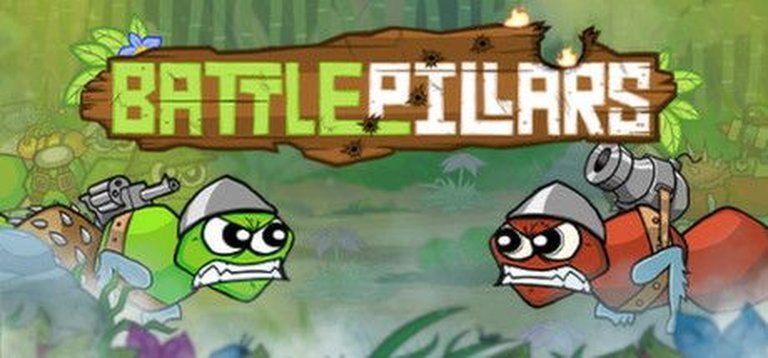
Battlepillars: Gold Edition is a real-time strategy game where players command armies of heavily armed caterpillars in tactical tug-of-war battles across whimsical 2D landscapes. Armed with an arsenal including flamethrowers, sticky honey, mines, and machine guns, players deploy strategic formations in side-scrolling combat to outmaneuver opponents and secure victory.
Gameplay Videos
Where to Buy Battlepillars: Gold Edition
PC
Battlepillars: Gold Edition Mods
Battlepillars: Gold Edition Guides & Walkthroughs
Battlepillars: Gold Edition Reviews & Reception
steamcommunity.com : It is good fun, and a challenging Tug of War game.
Battlepillars: Gold Edition: Review
Introduction
In a gaming landscape saturated by gritty realism and sprawling epics, Battlepillars: Gold Edition emerges as a whimsical, strategic anomaly. Released in 2014 by Hitcents—the studio behind the beloved Draw a Stickman series—this real-time tug-of-war strategy game tasks players with commanding caterpillars armed with flamethrowers, sticky honey, machine guns, and rocket launchers. Its premise, as absurd as it is delightful, belies a surprisingly deep and addictive gameplay loop. Despite its cult status and critical praise (Very Positive on Steam with an 85% rating), Battlepillars remains a niche gem often overlooked in discussions of indie strategy classics. This review delves into its idiosyncratic genius, dissecting its development, mechanics, artistic vision, and enduring legacy to argue that it is not merely a quirky curiosity but a masterclass in accessible, creative strategy design.
Development History & Context
Battlepillars: Gold Edition emerged from the Kentucky-based studio Hitcents, then known for its Draw a Stickman series, which blended puzzle-solving with charming hand-drawn aesthetics. The team, led by producers Clinton Mills, Chris Mills, and Ed Mills, and designer Phil Williams, sought to translate their knack for inventive gameplay into a new genre. Released on April 28, 2014, for Windows (with subsequent ports to Windows Phone and Windows Apps), the game was developed on modest technological constraints: DirectX 9.0c compatibility, dual-core processors, and a mere 500MB storage requirement. This accessibility was deliberate, targeting a broad audience beyond hardcore strategy gamers.
The timing of its release is noteworthy. 2014 marked the peak of indie innovation on Steam, where titles like FTL and Papers, Please proved that unconventional ideas could thrive. Battlepillars capitalized on this trend by merging accessible real-time tactics with absurdist humor. Its Gold Edition (2014) refined the original 2013 Battlepillars rebalancing difficulty, improving art and sound quality, and adding a soundtrack and concept artbook. The studio’s willingness to iterate and expand—evidenced by community-driven balance updates and translation edits—demonstrates a commitment to player-centric development, even as the game’s niche appeal limited its commercial impact.
Narrative & Thematic Deep Dive
While Battlepillars lacks a traditional narrative, its thematic depth lies in its absurdist interpretation of warfare. The game’s plot is a minimalist “caterpillar war”: players command a blue caterpillar army against the red “Battlepillars” across 50+ campaign levels and 5 boss encounters. This setup functions as a darkly comedic metaphor for conflict, where biological creatures (caterpillars) become weapons of mass destruction, armed with flamethrowers and cannons. The narrative unfolds through level design and visual storytelling—from verdant gardens to lunar landscapes—each reflecting the escalating absurdity of the conflict.
Boss battles like “Frankenpillar” and “Scrap Queen” personify this theme, presenting grotesque amalgamations of segments that parody war machines. The game’s dialogue is sparse but purposeful, conveyed through character animations and environmental cues (e.g., apples as currency, symbolizing nature’s exploitation). Themes of creativity and destruction are central: players must balance strategic aggression with experimental builds, turning the battlefield into a chaotic R&D lab. This lack of explicit narrative, however, is a double-edged sword; while it prioritizes gameplay, it leaves the world’s lore underdeveloped, relying on whimsy rather than substance.
Gameplay Mechanics & Systems
At its core, Battlepillars is a real-time tug-of-war strategy game where players construct and command segmented caterpillars. Each segment—head, body, weapon, armor, or support—grants unique abilities. For example, flamethrowers deal area damage, armor segments increase durability, and “Slug Medics” heal allies. The genius lies in the emergent complexity of combining these segments: a “Kamikazepillar” with sticky honey and mines can immobilize enemies, while a “Tankerpillar” with cannons and armor acts as a siege engine. This customization encourages experimentation, with 43 Steam achievements rewarding diverse strategies.
The campaign’s structure tests adaptability: levels introduce new enemy types and terrain constraints, demanding retooling of builds. Progression relies on “apples,” earned by completing levels or achieving golden bonuses, which unlock segments and upgrades. While some players noted the grind (“minor farming of apples”, per one reviewer), the Test Zone mode mitigates this by allowing unlimited experimentation. Multiplayer, though limited by a small player base, offers competitive skirmishes with leaderboard support, though it suffers from technical issues like crashes (“Crash on startup” reports). Controls are intuitive—keyboard hotkeys and mouse commands cater to casual players—while the AI remains challenging, requiring precise timing and resource management. The Endless Mode provides replayability, but the core loop’s repetition eventually reveals its thin strategic depth.
World-Building, Art & Sound
Battlepillars thrives on its vibrant, cartoonish aesthetic. The 2D scrolling side view showcases lush environments—from forests to moonscapes—rendered in a bold, hand-painted style. Character designs are meticulously absurd: caterpillars sport googly eyes, weapon-tipped appendages, and exaggerated armor, turning warfare into a slapstick spectacle. The Gold Edition’s improved art quality sharpens these details, with the included concept artbook revealing iterative designs that blend biology and weaponry. This visual language reinforces the game’s themes, transforming caterpillars into symbols of industrialized nature.
Sound design is equally distinctive. The original soundtrack, composed by Matt Bitner, features upbeat, dubstep-infused tracks that some found grating (“Music for me got very annoying”), though it is easily disabled. Sound effects—from the sizzle of flamethrowers to the thud of mines—add tactile weight to combat. While audio assets are functional rather than groundbreaking, they complement the game’s chaotic energy. The absence of voice acting emphasizes visual storytelling, making the world’s absurdity a silent character in itself.
Reception & Legacy
Battlepillars received a warm reception at launch, praised for its creativity and accessibility. On Steam, it boasts an 85% “Very Positive” rating from 218 reviews, with players highlighting its “fun and creative gameplay” and “addictive mechanics.” Critics lauded its strategic depth and whimsical premise, though some lamented its short playtime and repetitive elements. The MobyGames platform, with its sparse user ratings (2.0/5 based on 1 review), underscores its niche status, while VideoGameRanker’s “Good” rating reflects its cult appeal.
Commercially, the game found modest success, with an estimated 256K players on Steam (per PlayTracker Insight), but its legacy lies in its influence on indie strategy. It inspired clones and homages, yet its true impact is as a blueprint for accessible, experimental design. The developer’s ongoing support—balancing patches and community feedback—demonstrates a commitment to longevity. Its legacy is also cultural: it remains a beloved “hidden gem” among strategy fans, celebrated for proving that niche concepts, executed with polish, can endure.
Conclusion
Battlepillars: Gold Edition is a paradox: a game so absurdly simple in premise yet strategically rich in execution. Its genius lies in transforming caterpillars into complex war machines, offering a blend of accessibility and depth that defies its casual label. While it stumbles in narrative ambition, technical polish, and long-term replayability, its core gameplay loop—creative experimentation in real-time combat—remains unmatched. For a $4.99 price point, it delivers a polished, innovative experience that honors its indie roots. In a gaming world obsessed with realism, Battlepillars stands as a testament to the power of whimsy, proving that the most memorable battles are often the strangest. Its place in history is secure: not as a blockbuster, but as a cherished, eccentric classic that redefines strategy through the lens of pure, unadulterated fun.