
- Release Year: 2022
- Platforms: Linux, Macintosh, Windows
- Genre: Action
- Perspective: 1st-person
- Game Mode: Single-player
- Gameplay: Open World, Sandbox
- Average Score: 56/100
Description
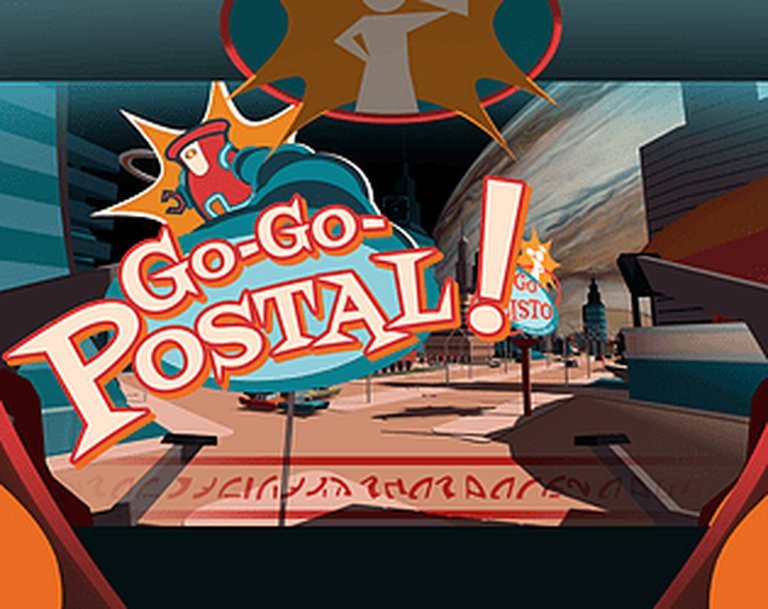
Go-Go-Postal is a first-person action game set in an open-world sandbox environment where players pilot a giant mecha robot. Released in 2022 for Windows, Linux, and Macintosh, the game emphasizes unrestricted exploration and vehicular combat, offering players freedom to navigate a dynamic world and engage in mechanized warfare.
Go-Go-Postal Reviews & Reception
metacritic.com (56/100): The selling point of Postal is still its best feature – unabashed anarchy and a willingness to go where other games haven’t.
Go-Go-Postal! Review
Introduction
In the annals of video game history, few franchises embody the spirit of unapologetic anarchy and satirical provocation like Postal. Spawned from the controversial 1997 isometric shooter by Running with Scissors, the franchise built its legacy on dark humor, societal critique, and gleeful transgression. Within this chaotic canon, Go-Go-Postal! (2022) emerges not as a mainline sequel but as a gleeful spin-off, reimagining the “going postal” ethos through a lens of retro-futuristic absurdity. Set aboard a debt-ridden space pizzeria orbiting Jupiter, it trades suburban carnage for mechanized mayhem, delivering a uniquely anarchic experience that distills the franchise’s core appeal into a compact, high-octane package. This review examines Go-Go-Postal! as both a standalone product and a cultural artifact, analyzing how it navigates the legacy of its controversial forebears while carving out its own identity through innovative gameplay, thematic satire, and unbridled creative chaos.
Development History & Context
Go-Go-Postal! was developed by Honey Datura, an indie studio with a penchant for absurdist comedy, and released on July 22, 2022, for Windows, Linux, and macOS. Its origins, however, are deeply intertwined with the Postal franchise’s DNA. The original Postal (1997) emerged from Running with Scissors’ (RWS) desire to break free from the constraints of licensed children’s games they had previously developed. RWS conceived Postal as a “murder simulator” inspired by arcade classics like Robotron: 2084 and the cultural phenomenon of “going postal,” creating a top-down shooter that blended frenetic violence with satirical commentary on societal decay. This ethos—prioritizing shock value and narrative provocation over conventional gameplay—became the franchise’s defining trait. By 2022, the Postal universe had expanded through sequels, remakes (e.g., Postal Redux), and a cult following drawn to its unflinching embrace of taboo subjects. Go-Go-Postal! arrives as a spiritual successor, inheriting RWS’ legacy while operating under a new creative team. It was developed during an era where indie games thrived on niche markets and digital storefronts like itch.io, allowing titles with high-concept premises and limited budgets to find dedicated audiences. The game’s release also coincided with a renewed interest in satirical, anti-establishment media, positioning it as a timely, if anachronistic, commentary on modern labor culture and technological hubris.
Narrative & Thematic Deep Dive
The narrative of Go-Go-Postal! is a masterclass in deadpan absurdism, set in the year 2000 AD aboard EAT AT JOE’S PIZZERIA, a sprawling space station orbiting Jupiter’s moon Ganymede. Once a colonial outpost, it was rebranded as a pizza-themed commercial hub in 1995, embodying the era’s optimistic (yet hollow) vision of the future. Players assume the role of a delivery driver for “Go-Go-Listo,” the station’s mecha postal service, whose motto—”stop at nothing to ensure your package is delivered”—justifies a litany of vehicular destruction. The plot is intentionally minimal, structured as a series of delivery missions in a world where “crippling debt,” “worst drivers in the galaxy,” and ethically dubious corporate policies are the norm. The narrative unfolds through environmental storytelling and a sharply ironic tone, with the official blurb noting that while “ethically, this might be an issue, but legally—it’s fine(d) directly to the parent company!” This encapsulates the game’s core theme: the absurdity of late-stage capitalism and gig-economy exploitation, where efficiency is achieved through reckless disregard for safety or consequence. The mecha itself symbolizes dehumanized labor—a hulking machine representing the worker alienated by corporate demands. Unlike the original Postal‘s focus on psychological unraveling, Go-Go-Postal! externalizes this chaos into a physical, comedic form, using its sci-fi setting to exaggerate real-world frustrations into cosmic-scale anarchy. Characters like Frank (voiced by Allen Chan) and Cheryl (voiced by Luna Raydue), though sparse in dialogue, reinforce this through their resigned, deadpan reactions to the station’s perpetual mayhem, embodying the “just the work culture” ethos that normalizes systemic dysfunction.
Gameplay Mechanics & Systems
Go-Go-Postal! delivers its satire through a gameplay loop centered on vehicular chaos in a first-person perspective. Core mechanics revolve around piloting a giant mecha equipped with a “patented Extendo-Arm™️” technology, used to snatch packages and smash through obstacles. The sandbox/open world structure of EAT AT JOE’S PIZZERIA allows players freedom in navigating delivery routes, though the primary objective—delivering packages—often requires creative destruction. Traffic, populated by reckless NPC vehicles, serves as both an obstacle and a catalyst for mayhem, encouraging players to ram, bash, or blast their way to destinations. This mirrors the original Postal‘s emphasis on player agency in escalating violence but shifts it from civilian slaughter to vehicular rampage, aligning with the franchise’s tradition of turning mundane tasks into opportunities for cathartic chaos.
Combat is physics-based and improvisational, with the mecha serving as both delivery vehicle and weapon. Players can deploy the Extendo-Arm to grab objects (including other vehicles) or use the mecha’s bulk to plow through structures. The system rewards efficiency—delivers are timed and scored—but punishes failure with escalating chaos, as collisions trigger chain reactions of destruction. Character progression is minimal, focusing on unlockable mecha mods or cosmetic upgrades that enhance destructive capabilities, such as reinforced arms or explosive payloads. The UI is intentionally minimalist, displaying mission objectives, a timer, and a damage meter, reinforcing the game’s “low stakes, high octane” philosophy. Multiplayer is absent, but the emergent chaos of the single-player experience fosters a sense of anarchic replayability, as players experiment with increasingly elaborate destruction sequences. Controls are responsive, though the mecha’s size can create unwieldy moments, adding to the game’s slapstick humor.
World-Building, Art & Sound
The world of Go-Go-Postal! is a vivid, self-contained satire of retro-futurism, where the utopian promise of space travel curdles into corporate dystopia. EAT AT JOE’S PIZZERIA is rendered as a claustrophobic, neon-drenched labyrinth of flying cars, pizza-themed billboards, and malfunctioning infrastructure. Its “Ganymede Book of World Records” title for “worst drivers in the galaxy” is not just a joke but a world-building touchstone, emphasizing a society normalized to perpetual collision. The station’s design blends 1950s diner aesthetics with sci-fi futurism—think chrome-plated booths and holographic menus clashing with exposed wiring and structural decay—mirroring the game’s thematic tension between aspiration and decay.
Art direction leans into cartoonish exaggeration, with the mecha design bulky and impractical, its movements deliberate and destructive to emphasize the physical comedy. Textures are vibrant and slightly garish, invoking a B-movie aesthetic that amplifies the game’s absurdist tone. Sound design complements this with a cacophony of metallic crashes, sputtering engines, and deadpan voice lines that underscore the mundanity of the apocalypse. The soundtrack, though not detailed in sources, likely blends synthesized retro beats with chaotic sound effects to mirror the gameplay’s energy. Together, these elements create an immersive atmosphere where the sheer scale of destruction feels both absurd and cathartic, elevating the game beyond a simple cash-in on the Postal name into a cohesive, thematically rich experience.
Reception & Legacy
At launch, Go-Go-Postal! flew largely under the radar of mainstream critics, with no major reviews documented in the provided sources. Its niche release on itch.io and limited marketing meant it garnered a modest audience, primarily drawn from the Postal franchise’s cult following and indie-game enthusiasts. MobyGames records it as collected by only one player, indicating its obscurity, though this may reflect incomplete data rather than true obscurity. The game’s reception within its target community likely leaned positive, with players praising its faithful adherence to Postal-style humor and innovative vehicular sandbox gameplay.
Its legacy, however, extends beyond commercial success. As a spin-off, Go-Go-Postal! enriches the Postal universe by demonstrating the franchise’s versatility—proving that its anarchic spirit could thrive in settings beyond the original’s suburban or post-apocalyptic contexts. Thematically, it prefigures broader industry trends in satirical indie games, which increasingly explore labor exploitation and corporate absurdity. While it lacks the controversy of its predecessors (no international bans or lawsuits were reported), it carries the franchise’s torch by using humor as a lens for critique. In the long term, it may be remembered as a cult curiosity—a testament to the enduring appeal of the Postal ethos and the creative risks indie developers can take.
Conclusion
Go-Go-Postal! is a gleefully chaotic and surprisingly poignant addition to the Postal canon. It distills the franchise’s DNA of satirical provocation and anarchic gameplay into a compact, high-energy experience, reimagining “going postal” as a sci-fi delivery service. While its narrative is sparse and its mechanics may not revolutionize the genre, its strength lies in its thematic consistency and world-building. The retro-futuristic setting of EAT AT JOE’S PIZZERIA is a rich satire of corporate dystopia, and the vehicular mayhem provides a fresh, comedic twist on the Postal formula. For fans of the series, it is a worthy spin-off that honors its legacy without retreading old ground. For newcomers, it offers a bite-sized entry point into the franchise’s unapologetic humor.
Ultimately, Go-Go-Postal! may not achieve the infamy of its predecessors, but it solidifies their legacy by proving that satire and chaos remain potent forces in gaming. It is, in the best tradition of Postal, a game that doesn’t just deliver packages—it delivers a message, wrapped in absurdity and sealed with a sledgehammer. Its place in video game history is as a niche gem, a testament to the enduring power of creative anarchy.