
- Release Year: 2023
- Platforms: Windows
- Publisher: DDreams Games
- Developer: DDreams Games
- Genre: Role-playing (RPG)
- Perspective: Diagonal-down
- Game Mode: Single-player
- Gameplay: Japanese-style RPG, Turn-based
- Setting: Fantasy
- Average Score: 91/100
Description
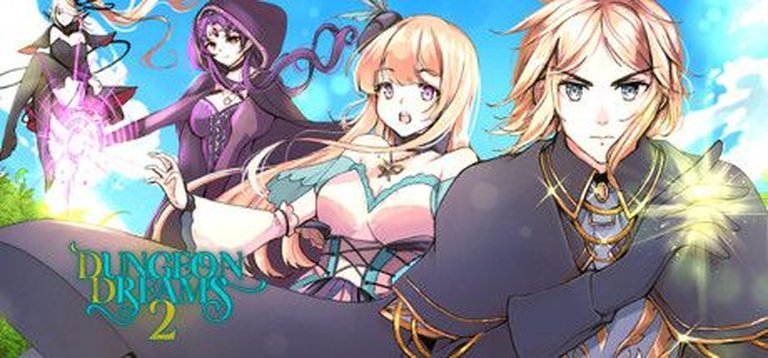
Dungeon Dreams 2 is a turn-based Japanese RPG set in a fantasy world where players control Azure, the child of the original protagonist, to compete in ‘The Challenge’—a competition organized by Elwing of the Magic Academy to conquer the Flux, a mysterious, ever-changing roguelike dungeon. Featuring dungeon crawling, town-building mechanics, character customization, and dating sim elements, the game pits players against the wealthy antagonist Quinn and her party, while offering New Game+ mode and a Love Life DLC for expanded relationship dynamics.
Gameplay Videos
Where to Buy Dungeon Dreams 2
PC
Dungeon Dreams 2 Mods
Dungeon Dreams 2 Guides & Walkthroughs
Dungeon Dreams 2: Review
Introduction
In the ever-evolving landscape of indie RPGs, few titles emerge as ambitiously as Dungeon Dreams 2. As the sequel to DDreams Games’ cult hit Dungeon Dreams, this 2023 release plunges players into a world where lineage, ambition, and moral choices collide. You assume the role of Azure, the child of the first game’s protagonist, navigating a labyrinthine dungeon called the Flux while forging alliances, unraveling conspiracies, and confronting the enigmatic Quinn—a tycoon whose wealth wields more power than magic. This isn’t merely a dungeon crawler; it’s a sprawling narrative tapestry woven with dating-sim mechanics, town-building, and a staggering web of character relationships. Its thesis? Dungeon Dreams 2 redefines ambition in RPGs by offering near-limitless freedom, but this freedom comes at the cost of accessibility, demanding dedication from players seeking its deepest secrets.
Development History & Context
DDreams Games, a small independent studio, crafted Dungeon Dreams 2 using RPG Maker, a choice that both constrained and defined its identity. While the engine limited technical scope, it allowed the team to focus on narrative density and mechanical complexity. The game entered Steam Early Access in February 2024, leveraging community feedback to refine its systems—a process documented exhaustively in the Steam Community guide, which reveals meticulous iteration on class trees, event triggers, and romance mechanics. The developers’ vision was clear: to create a “fantasy kitchen sink” (TV Tropes) where player choice permeates every facet, from Azure’s elemental affinity to the fate of minor NPCs. Released officially on September 18, 2023, it arrived during a golden age for indie RPGs, where titles like Undertale and CrossCode had proven that passion projects could rival AAA offerings. Yet, Dungeon Dreams 2 stands apart for its sheer scale, a product of Early Access refinement and a labor of love that blends traditional JRPG tropes with modern open-world sensibilities.
Narrative & Thematic Deep Dive
The narrative is a masterclass in branching storytelling, centered on “The Challenge,” a deadly competition hosted by Elwing, the Flux’s creator. Azure’s journey is fraught with betrayals—notably Victor, a childhood friend who defects to Quinn’s side, echoing the rivalry between Azure’s parents in the first game. Quinn herself embodies Ambition Is Evil (TV Tropes), using her fortune to manipulate the Flux while posing as a philanthropic icon. The plot’s brilliance lies in its moral ambiguity: Azure can ally with Quinn, turning villain, or dismantle her empire, embodying heroism. Themes permeate through dialogue and character arcs:
– Lineage vs. Individuality: Azure’s traits (body type, zodiac, even parents’ identities from Dungeon Dreams 1) shape their path, yet choices override destiny.
– Corruption of Power: Quinn’s Karma Houdini status (TV Tropes) critiques unchecked wealth, while Mochi, her sadistic bodyguard, literalizes violence without consequence.
– Betrayal and Redemption: Victor’s Face–Heel Turn (TV Tropes) forces Azure to confront whether forgiveness is weakness or strength.
The dialogue, tailored by disposition (Saint, Villainous) and relationship levels, ensures no two playthroughs feel identical. Even minor characters like Lissbeth, a “Cloudcuckoolander” mage (TV Tropes), gain depth through Azure’s kindness, revealing vulnerability beneath chaos.
Gameplay Mechanics & Systems
Dreams 2’s gameplay is a labyrinthine triumph of systems, anchored by turn-based combat and a class tree spanning 50+ jobs. Combat emphasizes synergy: elemental affinities (fire/water/wind) and traits (e.g., a “Bulky” body boosts defense but weakens magic) demand strategic party composition. Unique classes like the Dragon Knight (Emerald’s route) or Time Lord (Kronos) reward exploration, though unlocking them often requires obscure quests (e.g., Schneider’s recruitment demands retrieving his stolen sword from a clown). The Flux’s roguelike design ensures no two runs are identical, with randomized floors, traps, and rare enemies like the Mr. Re Rabbit (TV Tropes).
Innovative systems include:
– Trait System: Body type, disposition, and zodiacs (e.g., Aries boosts attack) evolve via dialogue or minigames.
– Dating Sim Integration: Romance values unlock quests, perks, and even combat bonuses. The Love Life DLC expands this with “Cute Talk” and scripted dates.
– New Game+: Carries over gear and relationships but resets levels, encouraging multiple playthroughs.
Yet, the game’s bloat is its Achilles’ heel. The Steam guide’s 500+-page testament to its complexity reveals “Guide Dang It!” (TV Tropes) moments, where missable quests or character recruitment (e.g., Lissbeth’s erratic nature) require external wikis. UI cluttered with menus for traits, jobs, and relationships further hampers newcomers.
World-Building, Art & Sound
The Flux is a character in itself—an “Eldritch Location” (TV Tropes) of shifting portals and sentient dungeons. Its floors range from whimsical (F12’s ladder puzzles) to sinister (F28’s Skeleton City), each biome reflecting its inhabitants. Towns like the Magic Academy or Thieves Guild bustle with life, their economies (managed via guild quests) and politics (racial tensions between humans and elves) adding verisimilitude.
Art direction leans into anime/manga aesthetics (MobyGames), with vibrant character designs—Lissbeth’s chaotic attire, Quinn’s regal elegance—contrasting the Flux’s grimy dungeons. Sprites are expressive, though environments occasionally repeat due to RPG Maker’s constraints. Sound design, though not detailed in sources, complements the atmosphere: haunting Flux themes underscore dread, while jauntier town tracks evoke camaraderie. Voice acting is absent, relying on text that adapts dynamically to Azure’s pronouns and relationships.
Reception & Legacy
At launch, Dungeon Dreams 2 polarized critics. MobyGames lists no aggregated score, but Steam’s “Very Positive” reviews highlight its depth, while bemoaning its learning curve. TV Tropes celebrates its “Cast Full of Gay” (TV Tropes) and polyamory options, yet notes rushed pacing in late-game arcs. Its legacy, however, is undeniable. It influenced indie RPGs like Sea of Stars by proving that RPG Maker could support sprawling narratives. The Steam guide’s community-driven documentation—chronicling 100+ party members and 300+ events—has become a gold standard for player-driven preservation. Its New Game+ system and romance mechanics inspired titles like Citizen Sleeper to embrace nonlinear storytelling. Though niche, Dreams 2 endures as a testament to RPGs as living, breathing worlds.
Conclusion
Dungeon Dreams 2 is a double-edged sword: a magnum opus of choice and consequence, yet a victim of its own ambition. It excels in weaving narrative and gameplay into an unforgettable experience, where recruiting a quirky mage or betraying a friend carries weight. Yet, its complexity often eclipses clarity, demanding encyclopedic guides to unlock its full potential. For patient players, it offers unparalleled replayability; for casual adventurers, it may feel overwhelming. In the annals of gaming history, it stands as a bold, flawed masterpiece—a monument to indie ingenuity that asks not just what you’ll do in its world, but who you’ll become. Verdict: Essential for JRPG veterans, daunting for newcomers, but unforgettable for all who brave its depths.