
- Release Year: 2023
- Platforms: Quest, Windows
- Publisher: Fast Travel Games AB
- Developer: VirtualAge
- Genre: Action
- Perspective: First-person
- Game Mode: Online Co-op, Single-player
- Gameplay: Real-time strategy, Shooter
- Setting: Futuristic, Sci-fi
- Average Score: 72/100
- VR Support: Yes
Description
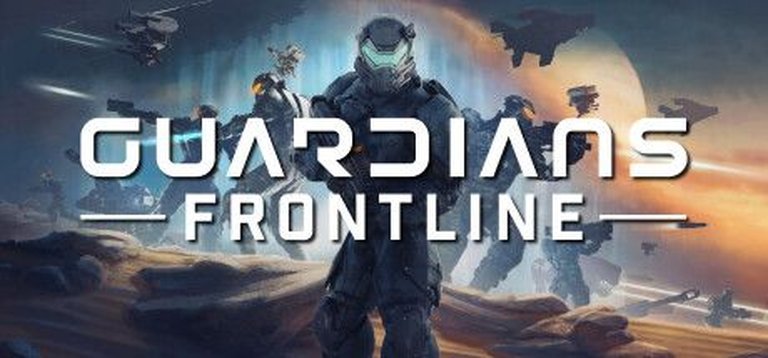
Guardians Frontline is a sci-fi VR shooter that combines real-time strategy with first-person combat, placing players in dual roles as frontline soldiers and tactical commanders. Set in a futuristic battlefield, players build bases, command troops, and engage in direct firefights against enemy forces across single-player, co-op (2-4 players), and PvP modes with full cross-play support.
Gameplay Videos
Where to Buy Guardians Frontline
PC
Guardians Frontline Guides & Walkthroughs
Guardians Frontline Reviews & Reception
metacritic.com (65/100): Guardians Frontline might drown in a sea of generic sci-fi games and desperately needs more development, but cleverly uses VR to blend real time strategy with fun boots-on-the-ground action.
store.steampowered.com : Guardians Frontline is easy to recommend as an experience unlike any other on the platform.
pressplaynews.net (80/100): We have to commend VirtualAge Games for how well they managed to realize their vision of blending first person shooting with real time strategy, with the biggest thing holding them back being the lack of horsepower on the Quest 2 – making the visuals lag behind the AAA inspirations they used.
Guardians Frontline: A VR Odyssey at the Crossroads of Action and Strategy
Introduction
In the crowded cosmos of virtual reality shooters, Guardians Frontline emerges not as a mere imitation, but as an audacious fusion of genres—a love letter to the tactical depth of Starcraft and the visceral thrill of Halo, reimagined for VR. Released in March 2023 by developer VirtualAge and published by Fast Travel Games, this title dares to bridge the chasm between first-person shooter intensity and real-time strategy grandeur. Its core thesis is simple yet revolutionary: to immerse players simultaneously as a frontline soldier and a battlefield commander. While the VR landscape is often criticized for gimmickry, Guardians Frontline delivers a compelling argument for the medium’s potential, blending resource management, base-building, and explosive combat into a cohesive, albeit niche, experience. This review will dissect how successfully this ambitious hybrid navigates the complexities of its dual identities, and whether it stands as a landmark achievement or a brilliant-but-flawed experiment in virtual warfare.
Development History & Context
Guardians Frontline is the brainchild of the Stockholm-based studio VirtualAge, a team with a clear vision of revolutionizing VR strategy gameplay. Long before its full launch in March 2023, the game spent two years in Early Access (beginning February 2021), a period crucial for refining its unprecedented blend of mechanics. The developers’ goal was ambitious: to create a “unique sci-fi shooter” where players could “kill an enemy with your machine gun while you simultaneously drop a 5 Ton Mech straight to the battlefield,” as stated in the Steam description. This dual-perspective design was a direct response to the technological constraints and untapped potential of VR headsets like the Meta Quest 2 and SteamVR-compatible devices.
The gaming landscape at its release was dominated by traditional shooters and strategy games, but VR remained a frontier. Guardians Frontline arrived during a pivotal moment when VR hardware was becoming more accessible, yet content struggled to justify the investment. Fast Travel Games, known for titles like Elements Divided, provided publisher expertise, ensuring polished VR controls and comfort options. The use of the Unity engine allowed for cross-platform compatibility, though it also meant grappling with VR-specific challenges like motion sickness and motion fidelity. The result was a game that felt both technologically audacious and commercially cautious—a niche title with mainstream aspirations, developed for players willing to embrace VR’s unique spatial reasoning and immersion.
Narrative & Thematic Deep Dive
The narrative of Guardians Frontline is a straightforward yet effective sci-fi trope that serves as a foundation for its gameplay. Players assume the role of a “Guardian,” an elite soldier in the Federation tasked with protecting a newly discovered energy source called perovskite—a potent, red mineral found only in the galaxy’s outer rim. The plot unfolds across 14 missions across three distinct planets, each presenting environmental challenges from frozen wastelands to alien jungles. While the story lacks the depth of a narrative-driven epic, it succeeds in establishing a clear conflict: defending the Federation against relentless, insectoid enemies (derisively called “bugs”) and rival factions seeking to exploit perovskite.
Thematically, the game explores militaristic sci-fi staples—resource scarcity, technological superiority, and the burden of command. The perovskite resource isn’t just a MacGuffin; it mirrors real-world concerns about energy dependency, framing the conflict as a colonial struggle for control over valuable territory. Characters are minimal, with dialogue largely relegated to mission briefings and tactical updates, but this omission is intentional. The narrative’s focus is on the player’s dual role: as a soldier, you witness the chaos of battle; as a commander, you orchestrate it. This duality is the narrative’s strength, making each engagement feel like a personal crusade and a calculated strategy. The absence of cinematic cutscenes is offset by environmental storytelling—crashed dropships, mined crystal fields, and alien nests—that reinforces the game’s themes of survival and industrial warfare.
Gameplay Mechanics & Systems
Guardians Frontline’s brilliance lies in its seamless integration of FPS and RTS mechanics, though the execution reveals both innovation and compromise. The core loop revolves around resource management (crystals), combat, and base-building, all executed through an intuitive VR interface. Players wield an arsenal of futuristic weapons, from a gravity gun that smashes enemies against cliffs to energy shields and rocket launchers, while simultaneously deploying units like SAM turrets, tanks, and mechs. This dual control is facilitated by a tactical view—a top-down RTS perspective accessed via a controller switch—allowing players to issue commands, build structures (mineral collectors, teleport bunkers), and spawn units without leaving the first-person perspective. The result is a unique rhythm: you might strafe behind cover firing your rifle while, in the same instant, deploying a mech to flank the enemy.
However, this hybrid approach isn’t without flaws. The RTS elements are simplified compared to traditional strategy games, focusing on unit counters and positioning rather than deep economic micromanagement. Critics like CGMagazine noted that players should “not expect the same depth as a ‘real’ RTS,” but praised its accessibility. Combat is satisfyingly tactile, with physics-based interactions (e.g., kicking explosive barrels) and vehicular combat (piloting mechs or spaceships) adding layers. The progression system, tied to a tech tree and daily missions, encourages experimentation with weapons and unit skins, though the grind can feel repetitive. Multiplayer modes—co-op (up to 4 players) and PvP (up to 8 players with cross-play)—extend the game’s longevity, though match quality varies. The inclusion of a robust in-game map editor, allowing players to create and share campaigns, transforms Guardians Frontline into a platform for infinite replayability, as highlighted by the game’s 200+ community maps and the “Trophies” system for accolades.
World-Building, Art & Sound
The game’s sci-fi universe is built on vivid, albeit somewhat derivative, environmental storytelling. Three planets—each with distinct biomes (snow, desert, forest)—serve as battlegrounds, visually inspired by Halo’s alien landscapes and Starcraft’s industrial warzones. Environments are rich with details: crystalline formations, crashed Federation ships, and alien nests that pulse with organic energy. While the art style is cohesive, it’s hindered by the limitations of standalone VR hardware like the Meta Quest 2. As Press Play Media noted, the “lack of horsepower” makes visuals “lag behind AAA inspirations,” though later updates added enhancements like reflections, shaders, and real-time shadows to close this gap. Character and unit designs are functional but uninspired, with generic mechs and drones that prioritize clarity over originality.
Sound design, however, elevates the experience. Combat is punctuated by satisfying weapon impacts and explosions, while ambient sounds—buzzing alien swarms, humming machinery—build tension. The soundtrack adapts dynamically, shifting from “calm” patrol tracks to pulse-pounding combat music during “Holding The Line” or “Critical Breach” scenarios. Voice-acting is minimal but effective, with tactical briefings delivered through a synthesized commander voice that reinforces the game’s military theme. The Gravity Gun’s visceral thump and the whirring of a deploying mech create tactile feedback that makes VR immersion tangible. Though not groundbreaking, the audio and visuals synergize to create a cohesive world that feels alive despite its technical constraints.
Reception & Legacy
At launch, Guardians Frontline received a mixed-to-positive reception, reflecting its niche appeal and ambitious scope. Critics on MobyGames awarded it an average of 72%, with Gameplay (Benelux) praising its “Battlezone meets Starship Troopers” fusion (78%), while CGMagazine noted it “desperately needs more development” (65%). Player reviews on Steam were more enthusiastic, with an 83% “Very Positive” rating from 275 reviews, citing its “solid campaign” and “engaging multiplayer.” However, it struggled to break into mainstream consciousness, partly due to its VR exclusivity and steep learning curve.
Its legacy is defined by innovation rather than commercial dominance. The game won “Best VR Experience” and “Best Gameplay” at the 2023 VR Awards, cementing its status as a genre pioneer. Its influence is evident in the growing trend of VR titles embracing hybrid mechanics, though few have matched its scale. The community-driven content—over 200 user-generated maps and campaigns—ensures its longevity, with VirtualAge continuously updating it with features like text-to-speech narration for custom maps and a “Missions System” to combat burnout. While it hasn’t spawned a franchise, Guardians Frontline remains a benchmark for VR developers, proving that immersive strategy can thrive in virtual spaces. Its reputation has evolved from a niche experiment to a cult favorite, celebrated for its daring design and passionate community.
Conclusion
Guardians Frontline is a triumph of vision over execution—a game that daers to be more than the sum of its parts. In blending FPS action with RTS strategy, it delivers an experience that feels both revolutionary and refreshingly old-school. Its strengths lie in its seamless dual mechanics, robust multiplayer, and unparalleled replayability through community content. While its narrative is thin, and its visuals are hampered by VR hardware, these flaws are overshadowed by its innovative core. For VR enthusiasts and strategy fans, it’s a must-play, offering a taste of what the medium can achieve when it embraces player agency and spatial freedom. As a historical artifact, it stands as a testament to the risks and rewards of genre-bending in VR—a flawed but fascinating chapter in gaming’s evolution. In the end, Guardians Frontline isn’t just a game; it’s a blueprint for the future of immersive strategy, and its legacy will endure as long as players seek to command armies and fight on the frontlines, all within the same breath.