
- Release Year: 2019
- Platforms: Android, iPad, iPhone, Windows Apps, Windows
- Publisher: Aoca Game Lab
- Developer: Aoca Game Lab
- Genre: Adventure
- Perspective: 3rd-person
- Game Mode: Single-player
- Gameplay: Puzzle elements, RPG elements
- Setting: South America
- Average Score: 70/100
Description
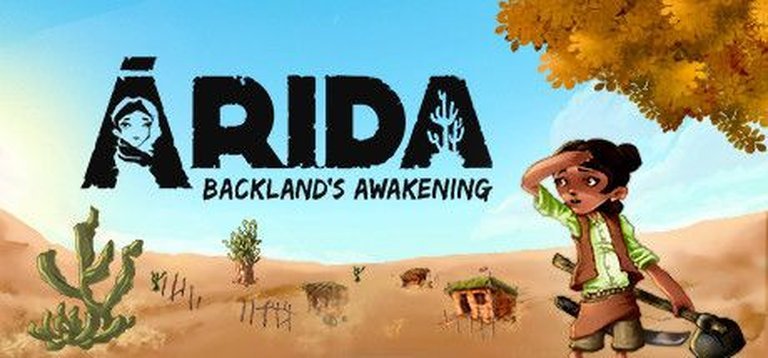
ARIDA: Backland’s Awakening is a survival adventure game set in the drought-stricken Canudos Region of 19th-century Brazil, where players guide Cícera, a young countrywoman, through harsh challenges of hunger and scarcity. Developed by Aoca Game Lab, the game blends puzzle-solving and RPG elements in a historically inspired third-person perspective, immersing players in a realistic depiction of Brazil’s backlands during a catastrophic drought.
Gameplay Videos
Where to Buy Arida: Backland’s Awakening
PC
Arida: Backland’s Awakening Patches & Updates
Arida: Backland’s Awakening Guides & Walkthroughs
Arida: Backland’s Awakening Reviews & Reception
metacritic.com (70/100): At it’s core ARIDA is a narrative experience and if you keep that mind going in I fail to see how you won’t find enjoyment in this short, but sweet, indie game.
opencritic.com (70/100): At it’s core ARIDA is a narrative experience and if you keep that mind going in I fail to see how you won’t find enjoyment in this short, but sweet, indie game.
Arida: Backland’s Awakening: Review
Introduction
In an industry often dominated by sprawling fantasy epics or futuristic sci-fi sagas, Arida: Backland’s Awakening emerges as a poignant, culturally resonant gem. Developed by Brazil’s Aoca Game Lab, this survival-adventure game transports players to the arid Brazilian backlands (sertão) of 1896, where they embody Cícera, a young girl confronting a devastating drought. Far more than a simple survival simulator, Arida is a deeply personal narrative about resilience, cultural heritage, and the human spirit in the face of environmental catastrophe. Its legacy lies in its unwavering commitment to authenticity—a product of Bahian studio Aoca Game Lab’s passion for preserving Brazil’s often-overlooked history. While technical hiccies temper its execution, Arida stands as a landmark work, proving that games can be both vessels for cultural preservation and emotionally resonant storytelling.
Development History & Context
Arida: Backland’s Awakening was born from the vision of historian Filipe Pereira, who founded Aoca Game Lab in Bahia, Brazil, with a mission to weave Brazilian history into interactive experiences. The eight-person team—comprising designers like Vinícius Santos and programmers including Anderson Sampaio—operated with a shoestring budget, funded primarily by SECULT (Secretary of Culture of the State of Bahia) via the Edital Culturas Digitais FCBA 2014. This financial lifeline was crucial for a project aiming to portray the Canudos region’s brutal 19th-century drought with fidelity.
The developers’ commitment to authenticity was meticulous. They traveled to the Canudos region, the site of the infamous War of Canudos (1896–1897), to observe the landscape, local flora, and cultural nuances. This on-the-ground research informed every aspect of the game, from the design of Cícera’s machete to the parched hues of the environment. Built in Unity, Arida was initially released on Windows (August 2019), with subsequent ports to Android (2022), iOS (2022), and finally consoles in 2024. Its development occurred amid a gaming landscape increasingly receptive to indie titles with cultural or historical depth, yet it faced challenges typical of small studios: limited resources, platform-specific optimization issues, and the struggle to balance historical accuracy with engaging gameplay.
Narrative & Thematic Deep Dive
At its core, Arida is a meditation on survival and identity. The narrative follows Cícera, a curious young woman whose life is upended when a catastrophic drought devastates her village. As her parents leave for the backlands in search of sustenance, Cícera stays behind, guided by her grandfather Tiao—a wise elder who embodies the oral traditions and practical knowledge of the sertão. The plot unfolds through a series of quests, where Cícera learns to harvest cassava, dig wells, and craft tools, all while uncovering clues about her parents’ fate.
The game’s themes are ambitious and deeply rooted in Brazilian history. The War of Canudos looms large as a backdrop, framing the conflict between resilient villagers and encroaching modernity. This mirrors Euclides da Cunha’s seminal Brazilian novel Os Sertões (1902), which chronicled the same struggle. Arida reframes this history through a female protagonist, subverting traditional narratives of colonialism and male heroism. Themes of migration—both internal (families fleeing drought) and existential (Cícera’s journey to self-reliance)—underscore the universality of displacement. Dialogue is sparse but impactful, with villagers offering parables about endurance. Cícera’s growth is measured not by leveling, but by her ability to translate ancestral wisdom into action, culminating in a powerful realization: survival is both a physical and spiritual act.
Gameplay Mechanics & Systems
Arida’s gameplay is a streamlined blend of survival and adventure, prioritizing resource management over combat. The core loop revolves around three pillars: gathering materials, crafting tools, and interacting with NPCs. Cícera starts with basic equipment—a machete, hoe, and grindstones—but these degrade over time, forcing players to constantly scavenge for repair resources. Hunger and thirst meters are ever-present threats, mitigated by cooking cassava or digging wells. The crafting system, while simple, encourages experimentation: players learn recipes from villagers to create items like water filters or bandages, turning local knowledge into gameplay mechanics.
Innovation lies in how Arida contextualizes survival. For example, using a hoe to clear paths isn’t just a chore; it’s a nod to agricultural traditions in the sertão. Yet, the system has flaws. Resource management can feel punishing, with drought mechanics occasionally veering into tedium. The UI is minimalist, sometimes obscuring crucial information, and performance issues—especially on release—marred the experience. Progression is narrative-driven, with Cícera’s skill growth tied to completing quests rather than traditional RPG elements. This approach reinforces the story’s themes but may frustrate players seeking deeper mechanics. Overall, Arida succeeds in making survival feel visceral and culturally grounded, even if its systems lack the polish of AAA titles.
World-Building, Art & Sound
The Brazilian backlands of Arida are a character in themselves, rendered with stunning art direction and atmospheric design. The environment is a study in contrasts: ochre earth cracked by drought, juxtaposed with bursts of green from resilient crops. The team’s research in Canudos pays dividends; the catingueiras (dry forests), winding rivers, and adobe villages feel lived-in, not stereotyped. Character art leans into stylized realism—Cícera’s wide-eyed determination and Tiao’s weathered face—making the world feel tangible.
Sound design elevates this immersion. Composer Aldemar Júnior’s soundtrack blends traditional forró and xote rhythms with ambient sounds, creating a soundscape that evokes both desolation and hope. Footsteps crunch on dry earth; the carrasquejo (a local insect) buzzes in the background. These details transport players to the sertão, where the heat feels palpable and silence is oppressive. Even minor elements, like the clinking of Cícera’s tools, reinforce the tactile nature of survival.
This synergy between art and sound crafts a unique atmosphere—one that celebrates Brazilian culture while confronting its hardships. The game’s visual identity, with its warm color palette and expressive character animations, has rightly been praised, winning “Best Art” at the 2017 Gamepólitan festival. It’s a world that, despite its harshness, feels rich with life and history.
Reception & Legacy
Upon its 2019 release, Arida garnered a “Very Positive” reception on Steam (93% based on 605 reviews), with players lauding its art, music, and emotional storytelling. Critics were equally kind, though more measured. GameSpace (2021) awarded it 70/100, calling it a “short, but sweet” narrative experience, while Pocket Gamer highlighted its cultural significance. However, reviews noted technical shortcomings: frame drops, bugs, and a lack of polish at launch.
Commercially, Arida found unexpected success on mobile, with over 100,000 Android downloads—no small feat for a premium indie title. This was bolstered by Google’s Indie Games Fund (2023), which recognized its cultural impact. Awards followed, including nominations at the Nordic Discovery Contest and SBGames, alongside a “Best Art” win at Gamepólitan.
Its legacy transcends sales. Arida is frequently cited as a pioneer of Brazilian game development, showcasing the country’s stories to a global audience. Aoca Game Lab has since expanded the IP with an art book (ÁRIDA: The Art of ÁRIDA) and plans for sequels (ARIDA II: Rise of the Brave) and even adaptations into animation and film. It has inspired a wave of developers to explore regional narratives, proving that games can be cultural artifacts as much as entertainment.
Conclusion
Arida: Backland’s Awakening is a flawed masterpiece. Its technical roughness and simplistic gameplay may deter some, but these shortcomings are overshadowed by its ambition and heart. As a historical artifact, it preserves the spirit of the Brazilian sertão with reverence and creativity. As a game, it offers a meditative, emotionally resonant experience centered on survival, identity, and community.
In the pantheon of indie games, Arida occupies a unique space: it is both a love letter to Brazil’s past and a blueprint for its future. While it may not redefine the survival genre, its cultural authenticity and narrative depth make it indispensable. For players seeking a story that transcends borders and speaks to the universal struggle for hope, Arida is not just a game—it’s a awakening. Verdict: Essential.