
- Release Year: 2021
- Platforms: Nintendo Switch, PlayStation 4, Windows
- Publisher: Koei Tecmo Games Co., Ltd.
- Developer: Gust
- Genre: Role-playing (RPG)
- Perspective: 3rd-person (Other)
- Game Mode: Single-player
- Gameplay: JRPG, Turn-based
- Setting: Fantasy, Futuristic, Sci-fi
- Average Score: 67/100
Description
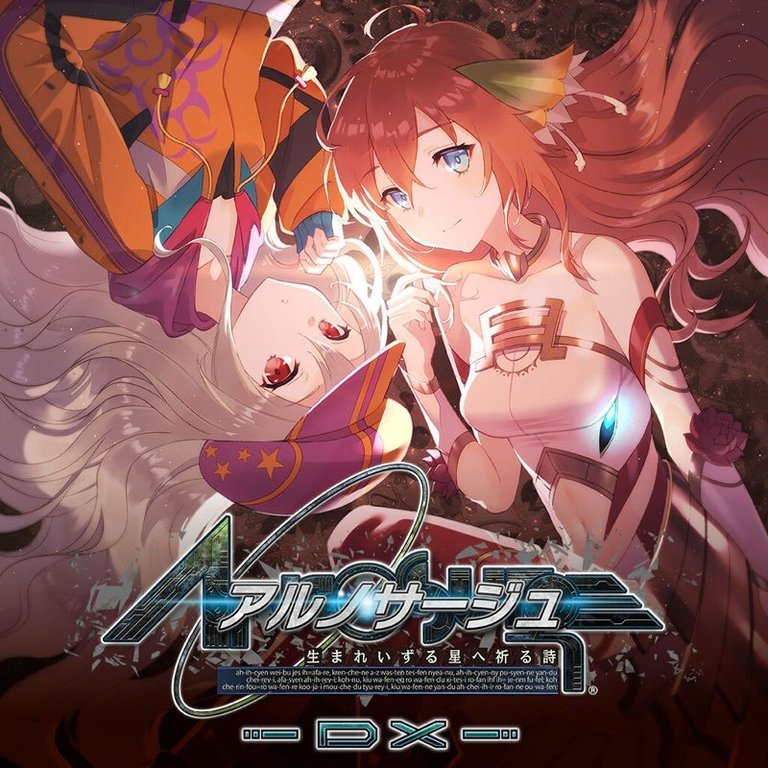
Ar nosurge: Ode to an Unborn Star – Deluxe is a Japanese role-playing game set in a futuristic sci-fi space opera, blending fantasy and futuristic elements with an anime art style. Developed by Gust and published by Koei Tecmo, the story follows two character duos—Delta and Casty, and Earthes and Ion—as they navigate conflicts with the hostile Sharl race while confronting personal past traumas. The game immerses players through a narrative-driven experience that combines traditional JRPG exploration, turn-based combat with timed mechanics, and visual novel segments, blurring the line between player and character. Released in 2021 for Windows, PlayStation 4, and Nintendo Switch as a deluxe edition including all DLC, it emphasizes deep storytelling and character relationships.
Ar nosurge: Ode to an Unborn Star – Deluxe Patches & Updates
Ar nosurge: Ode to an Unborn Star – Deluxe Mods
Ar nosurge: Ode to an Unborn Star – Deluxe Reviews & Reception
metacritic.com (67/100): By enforcing a system of communication and bond development amongst its characters, Ar nosurge: Ode to an Unborn Star achieves what great novels and only the most lovingly crafted virtual experiences can: it offers the opportunity to not only interact with the characters but to, possibly, form memorable relationships with them as well.
Ar nosurge: Ode to an Unborn Star – Deluxe: Review
Introduction
In the sprawling cosmos of JRPGs, few series possess the intricate lore and emotional depth of Gust’s Exa Pico universe. Ar nosurge: Ode to an Unborn Star – Deluxe (hereafter Ar nosurge DX) stands as a crowning achievement in this lineage—a hybrid sci-fi fantasy odyssey that redefines narrative immersion. As the culmination of the Surge Concerto duology (a prequel to Ar Tonelico and sequel to Ciel nosurge), it dares players to forge bonds beyond the screen, transforming the console into a conduit for empathy. This review dissects Ar nosurge DX not merely as a game, but as an interactive symphony of love, loss, and cosmic-scale survival—a testament to how JRPGs can transcend genre conventions to become living, breathing worlds.
Development History & Context
Ar nosurge emerged from Gust’s ambitious 20th-anniversary plans, helmed by director Akira Tsuchiya, architect of the Ar Tonelico trilogy and Ciel nosurge. Conceived as a self-contained narrative within the Exa Pico universe, it ingeniously merged the studio’s signature anime art style—popularized by Atelier—with a sweeping space opera setting. Development prioritized “immersion,” where players are the protagonist (Earthes), breaking the fourth wall to communicate directly with characters via the console. This radical concept was balanced by pragmatic constraints: the PS3/Vita era’s technical limits necessitated compromises in visual fidelity, while the narrative’s complexity required meticulous world-building. Initially released for PS3 in 2014 (worldwide) and Vita as Ar nosurge Plus (2015, bundled with all DLC), Ar nosurge DX arrived in 2021 as a Japan-only HD remaster for Switch/PS4/Windows. Its exclusivity sparked Western frustration, yet the DX version—featuring refined visuals and expanded content—cemented its status as a definitive experience for dedicated fans.
Narrative & Thematic Deep Dive
Ar nosurge’s narrative is a tapestry of despair and resilience. Humanity clings to existence aboard the colossal space station Soreil, adrift for 5,000 years after their homeworld, Ra Ciela, was consumed by its sun. Within this bleak setting, fairy-like abductors—the Sharl—wield “Song Magic” to lure victims, sowing division between those who resist (led by the militant city of Felion) and a cult advocating surrender. The story unfolds through dual perspectives:
– Delta and Cass: Childhood friends and “Ancients” (awakened cryogenically) from Felion. Delta, a PLASMA elite, fights alongside Cass, whose Song Magic is humanity’s fragile hope.
– Ion and Earthes: Ion, a wielder of rare Song Magic, escapes a sealed dimension with Earthes—a robotic vessel inhabited by the player. Earthes’ silent presence allows direct communion with characters, shattering the fourth wall.
Thematic depth permeates every interaction. Love is both salvation and vulnerability, exemplified in the “Purification Ceremonies”—intimate meditative scenes where characters (often scantily clad) bond in pools, discussing traumas with romantic overtones. These sequences, criticized as risqué, serve Tsuchiya’s goal of “realistic relationships,” where vulnerability fuels strength. The Sharl’s ambiguity—neither purely evil nor benevolent—explores colonialism and cultural erasure, while the Genometrics (subconscious dream worlds) delve into mental health, using DP (Dive Points) earned in battle to “heal” characters. The narrative’s jargon—Hymmnos language, Planetarians, Crystal Song—creates a dense, rewarding lore, but its non-linear pacing risks overwhelming newcomers. Yet, as paths converge, revelations about Sharl origins and Ion’s fate unravel into a cathartic exploration of memory, identity, and rebirth.
Gameplay Mechanics & Systems
Ar nosurge defies traditional JRPG structures, blending exploration, combat, and visual novel elements into cohesive systems:
Core Gameplay
- Exploration: Players navigate compact areas on Soreil (e.g., Felion, Tenryosara), interacting with NPCs and collecting items. A dynamic battle probability bar signals escalating encounter chances, encouraging strategic movement.
- Combat: Turn-based battles feature two-character pairs (e.g., Delta/Cass or Ion/Earthes). Delta/Earthes execute grid-based attacks (assigned to face buttons), while Cass/Ion charge “Song Magic.” Combos extend attack phases; hitting “break” statuses prolongs them. Defenses require timed button presses during enemy waves. Song Magic, the centerpiece, grows with combo efficiency—maxing it auto-wins battles and eliminates random encounters in the area.
- Genometrics: Subconscious dives into character psyches. Players spend DP to unlock narrative fragments, choosing dialogue options that aid/hinder progress. Completion rewards new Song Magic and Genometrica Crystals for stat boosts.
- Synthesis: Atelier-inspired item creation. Recipes are earned via NPC interactions, and crafted items unlock story scenes. Synthesis culminates in whimsical “dance sequences” with party members, adding levity to dark narratives.
Strengths and Flaws
The battle system rewards creativity but risks monotony with its focus on meter-charging. Genometrics, while narratively rich, may feel tedious due to DP constraints. Synthesis, though optional, enriches lore but suffers from verbose descriptions. Yet, these systems serve the story: combat deepens bonds; Genometrics reveal psyches; synthesis fuels character relationships. The result is gameplay where every mechanic is narrative.
World-Building, Art & Sound
Ar nosurge’s world-building is its crowning glory. Soreil—a decaying arcology with neon-lit corridors, cryogenic pods, and overgrown sectors—evokes claustrophobic grandeur. Contrast with Genometrics’ ethereal landscapes (crystalline forests, abstract voids) creates a dichotomy between physical and emotional spaces. Art direction marries anime realism (detailed character models) with environmental storytelling: Felion’s dilapidated armor contrasts with the Sharl’s ethereal glow, underscoring humanity’s fragility.
Sound elevates immersion. The J-pop soundtrack—composed by Akira Tsuchiya and Hideyuki Takahashi—ranges from melancholic piano ballads to electrified battle anthems, with vocal tracks like “Em-pyei-n Vari-fen Jang” becoming iconic. The English dub, a rarity for Gust, boasts a star-studded cast (Johnny Yong Bosch, Cristina Vee), whose performances infuse Ion’s sorrow and Delta’s resolve with palpable emotion. Sound design, from Sharl’s choral whispers to Soreil’s mechanical hum, reinforces the setting’s oppressive beauty.
Reception & Legacy
Upon release, Ar nosurge garnered mixed reviews. Metacritic scores reflect this: PS3 (67/100) criticized its pacing and complexity, while Vita’s Plus version (77/100) earned praise for refinement. Critics lauded its narrative ambition (“a handprint across video game narrative design,” Hardcore Gamer) and combat, but lamented jargon overload. Commercially, it was modest: 27,037 PS3 copies sold in Japan’s debut week, with Plus topping Vita’s NA downloads in 2015. Over time, its reputation evolved. Fans celebrated its emotional depth and innovative bond mechanics, while Western audiences lamented DX’s Japan exclusivity. Legacy-wise, it influenced niche JRPGs (e.g., Chronos Materia) for its narrative integration of player-character relationships. As the Surge Concerto’s finale, it bridges Ciel nosurge and Ar Tonelico, enriching the Exa Pico saga while standing as a poignant testament to survival and connection.
Conclusion
Ar nosurge: Ode to an Unborn Star – Deluxe is a flawed masterpiece—a bold, ambitious JRPG that prioritizes heart over spectacle. Its strengths—an unparalleled narrative tapestry, innovative bond systems, and haunting soundtrack—make it a cult classic. Yet, its steep learning curve, repetitive combat, and dense lore may alienate newcomers. For patient players, however, Ar nosurge offers transcendence: it transforms gameplay into empathy, battles into therapy, and pixels into profound relationships. In the pantheon of JRPGs, it endures not as a flawless gem, but as a luminous, flawed star—a testament to the genre’s boundless capacity for emotional truth. Verdict: An essential, if challenging, odyssey for JRPG pilgrims.