
- Release Year: 2023
- Platforms: Windows
- Publisher: Nordcurrent UAB
- Developer: Black Tower Basement
- Genre: Role-playing (RPG)
- Perspective: Side view
- Game Mode: Single-player
- Gameplay: Action RPG, Point-and-click, Soulslike
- Setting: Fantasy
- Average Score: 76/100
Description
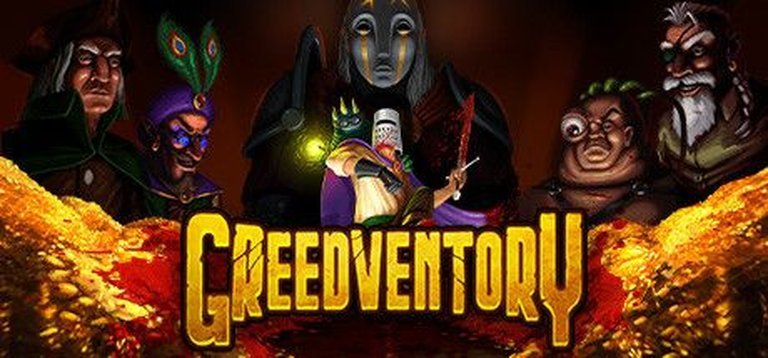
Greedventory is a fantasy Action RPG developed by Black Tower Basement that blends Souls-like combat mechanics with point-and-click adventure elements. Set in a 2D scrolling fantasy world, the game simplifies the challenging Souls formula without sacrificing difficulty, featuring a well-written narrative infused with dark humor. Players navigate through direct-controlled gameplay, facing a steep but rewarding learning curve that offers a refreshing entry point for newcomers while satisfying genre veterans.
Gameplay Videos
Where to Buy Greedventory
Greedventory Mods
Greedventory Guides & Walkthroughs
Greedventory Reviews & Reception
metacritic.com : A fresh and refreshing take on the souls-like genre with beautiful art and an interesting world.
opencritic.com (75/100): Greedventory does something fresh with meshing point-and-click games with some Souls mechanics and its great art style and music show a lot of charm and care.
allgamenofilter.com (80/100): Greedventory immediately caught my eye with its gorgeous pixel art and unapologetically unique combat system.
thatvideogameblog.com : I love the brand of humor that Greedventory is going for. The first obstacle you’ll encounter is a training dummy. It’s literally a barrel stuck on a stick with an upturned bucket for a head.
gamecrate.com (75/100): An intriguing albeit slightly flawed mesh of Dark Souls and old school Point-and-Click adventure titles.
Greedventory: A Brutal Love Letter to Greed and Pixel Art
1. Introduction:
In an era dominated by AAA spectacle and open-world ambition, Greedventory emerges not as a contender for the throne, but as a defiantly pixelated punk-rock rebel. Released on May 17, 2023, this action RPG from Ukrainian studio Black Tower Basement and publisher Nordcurrent dares to be different—a side-scrolling, mouse-only Soulslike that weaponizes greed as both its central theme and core gameplay loop. Its premise is devilishly simple: you are a reluctant adventurer sent to dismantle the Igneous Sigil Brotherhood, a hoarding cabal controlling magical artifacts, in a world where every NPC is a potential backstabber and every chest a potential trap. Yet beneath its charmingly grotesque aesthetic lies a game of unforgiving precision, where a single misclick can cost you hours of progress. This review argues that Greedventory is a flawed masterpiece—a brilliant fusion of genres, dark humor, and artistic ambition that succeeds despite its punishing difficulty and systemic quirks, cementing its place as a cult classic in the making.
2. Development History & Context:
Black Tower Basement’s journey was fraught with adversity. As a Ukrainian studio, the team developed Greedventory while navigating the realities of war and blackouts, chronicled in their poignant documentary Greedventory Dev Diary: Game Development Under the Presence of War. Their vision, shaped by years of playing RPGs like Diablo and World of Warcraft, was born from a simple observation: player motivation is often fueled by pure, unadulterated greed. This ethos permeates the game’s design—from its gold-based progression system to its sardonic view of heroism.
Technically, Greedventory leverages the Unity engine, allowing the small team to focus on its meticulously handcrafted pixel art. The developers embraced constraints as opportunities: the mouse-only control scheme became a core innovation, forcing a rethink of combat mechanics. Early demos during Steam Next Fest revealed stark player reactions—streamers like CohhCarnage and Dan Gheesling praised the parry system but criticized stamina management, leading to immediate adjustments. The team’s willingness to iterate—fixing flask deflection, parry windows, and enemy damage—highlighted their commitment to player feedback. Released into a 2023 gaming landscape dominated by behemoths like Baldur’s Gate 3 and The Legend of Zelda: Tears of the Kingdom, Greedventory arrived as a scrappy underdog, its indie spirit amplified by the very real-world challenges of its creation.
3. Narrative & Thematic Deep Dive:
At its heart, Greedventory is a cynical fable about corruption and consequence. The plot follows a nameless adventurer coerced into dismantling the Igneous Sigil Brotherhood, a group that once hoarded magical artifacts to “protect” humanity but now rules as tyrants. The narrative subverts RPG tropes at every turn: heroes are hypocrites, allies are opportunists, and the “quest” feels more like a grudge match against bureaucracy. The Brotherhood’s name itself—a portmanteau of “igneous” (fire-born) and “Sigil” (magical mark)—hints at their obsession with control, while the player’s journey is framed as a rebellion against systemic greed.
Characters embody this thematic bleakness with dark humor. The ancient Imp companion, nestled in the player’s backpack, offers sarcastic quips, while NPCs like the scheming Library Librarian (Dust Collector) and the duplicitous birds in the Library Transfiguration Puzzle world reveal a universe where trust is currency and betrayal is survival. Dialogue crackles with wit—references to “duping” exploits in Diablo II (a developer inspiration) and jabs at “self-serious” games add layers of meta-commentary. Yet beneath the humor lies a sobering critique of power: the Brotherhood’s well-intentioned hoarding led to societal decay, mirroring real-world failures of authoritarianism. The game’s final message is clear: in a world built on greed, even heroism is transactional.
4. Gameplay Mechanics & Systems:
Greedventory’s genius lies in its deconstruction of Soulslike mechanics into a mouse-driven ballet. Combat is a visceral dance of precision: left-clicks slash, right-clicks parry, and holding charges heavy attacks. Stamina management forces strategic rhythm, turning every enemy into a puzzle. The reactive parry system is the star—timed blocks deflect projectiles (like the halflings’ “piss jars”) or stagger foes, creating opportunities for critical blows. Spellcasting, governed by equipped rings, adds tactical depth; “Vibrance rings” let players stack elemental effects (e.g., bleed) before triggering combos, rewarding experimentation.
Progression is tied to gold, which doubles as currency and experience. Death is costly: you lose gold and drop gear, forcing retrieval via combat. This “risk-reward” loop elevates tension but can feel punitive. Item durability is divisive: weapons and armor degrade rapidly, with a chance to “ascend” (level up) instead of breaking. While this encourages adaptation, it can frustrate during boss fights where replacements are scarce. The UI, minimalist yet functional, emphasizes inventory management over hand-holding.
Flaws emerge in balancing. Early areas like the Halfling Labs spawn one-hit traps that feel cheap, while the Library Transfiguration Puzzle (solved via cryptic potion-based rituals) highlights obtuse design. Patch notes post-launch addressed bugs (e.g., ultra-wide screen camera issues) and tweaked enemy AI, but core systems like durability remain divisive. Ultimately, Greedventory rewards mastery—its difficulty is a feature, not a bug, creating moments of euphoric triumph amid inevitable setbacks.
5. World-Building, Art & Sound:
Black Tower Basement’s pixel art is a triumph of grotesque beauty. Environments—from the grimy Halfling Labs to the ethereal Library—are rendered with meticulous detail, evoking the hand-drawn charm of The Bard’s Tale and the surrealism of Lexx. Characters ooze personality: mutated enemies waddle with jerky glee, and NPCs sport exaggerated expressions that convey avarice or malice. The art style balances darkness and whimsy, with vibrant colors contrasting against decaying backdrops, creating a world that’s both horrifying and inviting.
Sound design amplifies this dichotomy. Music shifts jauntily between folk melodies and ominous orchestral tracks, underscoring the game’s tonal whiplash. Voice acting is sparse but impactful—gibberish during gameplay gives way to expressive cutscenes, where NPCs sneer or cajole with palpable relish. Sound effects are equally crucial: the thwack of a parried projectile, the shatter of breaking glass, and the jingle of dropped gold create tactile feedback. The audio-visual synergy crafts an atmosphere where even a treasure chest feels like a loaded question, and every step could trigger a trap or a punchline.
6. Reception & Legacy:
At launch, Greedventory polarized critics. It earned a 79% average on Metacritic (based on limited reviews), with praise for its art and innovation but criticism for its difficulty. That VideoGame Blog awarded it 8.3/10, calling it a “brilliant spin on the Soulslike,” while GameCrate scored it 7.5/10, noting balancing issues. Player reviews on Steam leaned positive (79.5%), with fans celebrating its uniqueness but newcomers lamenting the learning curve.
Legacy-wise, Greedventory has carved a niche. It won “BEST INNOVATION” and “BEST GAME OF THE SHOW” at the 2023 DevPlay Conference, signaling industry recognition. Its influence is subtle but potent: it proves that mouse-only controls can create compelling action combat and that pixel art remains a viable medium for mature themes. The game’s post-launch support—with patches addressing bugs and adding quality-of-life improvements—demonstrated developer dedication. While it lacks the ubiquity of Hades or Dead Cells, it resonates with players seeking a “suffercore” challenge, as streamer Dan Gheesling dubbed it. Its subreddit remains active, with players dissecting puzzles and sharing builds, fostering a cult following that values its authenticity over accessibility.
7. Conclusion:
Greedventory is not a game for the faint of heart—or controller purists. It is a love letter to RPGs that wears its influences on its sleeve: the punishing death mechanics of Dark Souls, the item obsession of Diablo, and the dark humor of Monty Python. Yet it carves its own identity through sheer audacity: a mouse-only Soulslike in a world of dual-stick shooters, a pixelated epic born from war and passion. Its flaws—unforgiving difficulty, obtuse puzzles, divisive durability—are inseparable from its charm, turning frustration into triumph.
For players willing to embrace its masochistic design, Greedventory offers unmatched satisfaction: parrying a projectile back at its sender, ascending a weapon to legendary status, or surviving a boss after a dozen defeats. It stands as a testament to indie ingenuity—a game where death is a teacher, greed is a tool, and heroism is just another transaction. In the pantheon of 2023’s gaming giants, Greedventory may not be the biggest, but it is one of the most memorable—a pixelated parable that reminds us that sometimes, the best treasures are the ones we earn through grit and a little bit of greed.