
- Release Year: 2020
- Platforms: Windows
- Publisher: Big Fish Games, Inc
- Developer: Amax Interactive
- Genre: Puzzle, Special edition
- Perspective: 1st-person
- Game Mode: Single-player
- Gameplay: Hidden object
- Setting: Detective, Mystery
Description
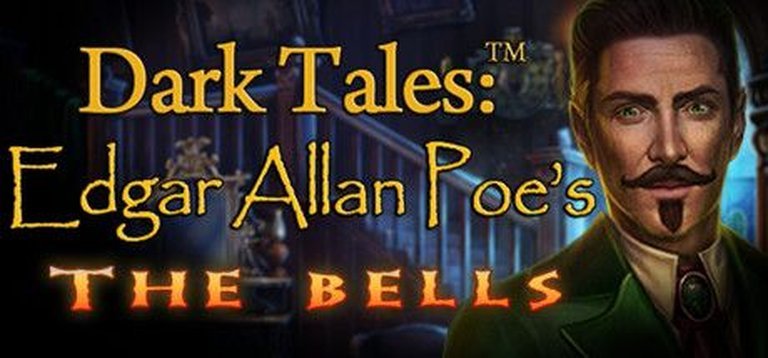
In the Dark Tales: Edgar Allan Poe’s The Bells (Collector’s Edition), players assume the role of a detective investigating the mysterious disappearance of an author whose latest novel, inspired by Poe’s eerie poem ‘The Bells,’ is being terrifyingly recreated by an unknown villain. This hidden object adventure challenges you to explore dark, atmospheric scenes, uncover hidden clues, solve intricate puzzles, and navigate a gothic narrative as you race to stop the sinister events unfolding before it’s too late.
Gameplay Videos
Where to Buy Dark Tales: Edgar Allan Poe’s The Bells (Collector’s Edition)
Dark Tales: Edgar Allan Poe’s The Bells (Collector’s Edition) Patches & Updates
Dark Tales: Edgar Allan Poe’s The Bells (Collector’s Edition) Guides & Walkthroughs
Dark Tales: Edgar Allan Poe’s The Bells (Collector’s Edition): A Masterclass in Atmospheric Puzzle Adventures
Introduction
In the shadowed canon of Edgar Allan Poe, few works resonate with such visceral auditory terror as “The Bells,” a poem that transforms sound into a harbinger of doom. Now, AMAX Interactive and Big Fish Games breathe chilling new life into this gothic masterpiece with Dark Tales: Edgar Allan Poe’s The Bells (Collector’s Edition). As the latest entry in the long-running Dark Tales series—renowned for its literary adaptations—this 2020 release thrusts players into a race against time to unravel the disappearance of a clairvoyant author and avert a cataclysm foretold in his novel. This review dissects how the game translates Poe’s symphony of horror into an interactive odyssey, balancing intricate puzzles with haunting atmosphere to deliver a compelling, if formulaic, experience for Hidden Object Puzzle Adventure (HOPA) enthusiasts.
Development History & Context
AMAX Interactive, a studio with over a decade of HOPA pedigree, spearheaded development under the stewardship of producers Lauren Horsley and Joseph E. Ezell. The game’s creation unfolded against the backdrop of 2020’s digital boom, where pandemic-driven surges in casual gaming saw HOPA titles thrive. Leveraging a modest technological framework—Windows 7/10 compatibility, 1.4 GHz CPUs, and DirectX 9.0 compatibility—AMAX prioritized accessibility over graphical spectacle. This pragmatism reflects the genre’s core ethos: rich storytelling over cutting-edge visuals.
The Dark Tales series, launched in 2010 with The Black Cat, established a template of literary mashups, blending Poe’s psychological horror with point-and-click investigation. By 2020, the series had amassed a loyal following, allowing AMAX to refine its signature mechanics: layered narratives, intricate hidden-object scenes (HOPs), and immersive soundscapes. The Collector’s Edition (CE) format, a hallmark of Big Fish Games’ business model, was strategically deployed to offer exclusive extras—bonus chapters, replayable puzzles, and digital art—justifying a premium price point ($19.50 on Steam at launch). This decision anchored the game within a niche market segment where CE content drives consumer loyalty.
Narrative & Thematic Deep Dive
The narrative’s strength lies in its faithful yet inventive reinterpretation of Poe’s poem. Albert McClain, a novelist cursed with prophetic visions, vanishes during his book launch. His latest work, The Bells, depicts apocalyptic visions of fiery destruction mirroring Poe’s stanzas—ironic, silver, brazen, and final bells symbolizing escalating chaos. As the detective summoned by the recurring series character Monsieur Dupin, players navigate a city teetering on the brink, uncovering clues that bridge literary prophecy with criminal conspiracy.
The plot unfolds across five chapters, each a tableau of escalating dread. From the rain-slicked streets to the claustrophobic factory, locations reflect Poe’s motifs: decay, obsession, and inescapable fate. Characters like the enigmatic McClain and the calculating Dupin are archetypes rather than fully fleshed figures, their dialogue functional in driving the mystery. Yet the narrative excels in thematic cohesion. The bells serve as both plot device and metaphor, their tolls echoing the inevitability of doom—mirroring Poe’s exploration of inescapable mortality. The twist—that McClain’s disappearance is a ploy to expose a city-wide conspiracy—subverts expectations, aligning with Poe’s penchant for unreliable narrators and hidden truths.
Gameplay Mechanics & Systems
As a HOPA title, the game’s core loop revolves around two pillars: hidden-object searches and logic-based puzzles. The 59-person credited team ensured meticulous design, yielding HOPs that blend traditional list-finding with contextual storytelling. Objects are rarely arbitrary; a “bloody letter” or “raven” feather ties directly to Poe’s symbolism, demanding player engagement beyond mere item-spotting. The walkthrough’s complexity—detailed in Big Fish’s official guide—reveals layered challenges: assembling broken artifacts, deciphering cipher-like codes (e.g., “S-I-L-V-E-R-B-E-L-L-S”), and navigating spatial puzzles (e.g., rotating discs to align patterns).
Mini-games, while diverse, lack innovation. Dominated by pattern-matching, jigsaw puzzles, and sliding-block mechanics, they adhere to genre conventions. A notable exception is the “emotion tokens” puzzle, where players align symbols to unlock doors—a refreshing nod to psychological themes. The inventory system is streamlined, with items combining organically (e.g., a fishing rod repaired with thread and hook). The CE extras enhance replayability: a bonus chapter deepens the backstory, while morphing collectibles and achievements incentivize thorough exploration. However, linearity remains a constraint; players solve puzzles in rigid sequence, limiting agency.
World-Building, Art & Sound
AMAX’s art direction elevates the game into a visual poem. Environments are steeped in gothic grandeur: the archive’s dusty tomes, the police station’s flickering gaslights, and the bar’s shadowy corners evoke Poe’s Baltimore. Textures—peeling paint, tarnished metal, and velvet drapery—create tactile immersion, while dynamic lighting amplifies tension (e.g., factory machinery casting jagged shadows). Character designs, though stylized, capture the era’s austerity, with McClain’s disheveled appearance and Dupin’s piercing eyes reflecting their inner turmoil.
Sound design is the game’s crown jewel. Original compositions mimic Poe’s auditory terror: dissonant chimes, distant tolls, and industrial clanks crescendo into dread. Voice acting, though sparing, is effective; Dupin’s measured tones contrast with the city’s panicked whispers. Ambient sounds—wind howling through alleyways, bells tolling ominously—anchor players in the atmosphere, transforming routine HOPs into sensorial experiences. These elements coalesce to create a world where Poe’s words feel tangible, a rare feat in gaming.
Reception & Legacy
At launch, the game polarized critics. Steam’s 91% positive rating (11/12 reviews) praised its atmosphere and puzzles, while WildTangent’s 4.3/5 score highlighted its accessibility. However, Shockwave’s lukewarm 2.5/5 cited derivative mechanics, reflecting a genre fatigue among some players. Commercially, the title thrived in the CE market, with Steam price histories showing consistent demand—peaking at $19.50 and dropping to a historical low of $2.45 during sales. Its longevity is evident in its ports: WildTangent, Shockwave, and GOG’s dreamlist campaign (18 votes) underscore its niche appeal.
Legacy-wise, The Bells solidified the Dark Tales series as a reliable Poe interpreter but offered little innovation. It influenced contemporary HOPA titles by demonstrating how literary depth can elevate genre tropes, yet its adherence to formula limited broader industry impact. Today, it stands as a benchmark for atmospheric storytelling in casual gaming, its CE extras setting a standard for premium content.
Conclusion
Dark Tales: Edgar Allan Poe’s The Bells (Collector’s Edition) is a triumph of atmosphere over innovation. AMAX Interactive’s reverence for Poe’s poetry transforms a standard HOPA into a haunting journey, where every bell toll and shadowy corner deepens immersion. While its puzzles are genre-standard and narrative predictable, the game’s art and sound design elevate it to an interactive gothic tapestry. For fans of the series or Poe’s macabre oeuvre, this is a must-play—a fitting tribute to a master of horror. Yet for gamers seeking narrative or mechanical breakthroughs, it remains a poignant, if familiar, echo of past glories. In the annals of video game history, it is a testament to the enduring power of atmospheric storytelling in the most accessible of formats.