
Description
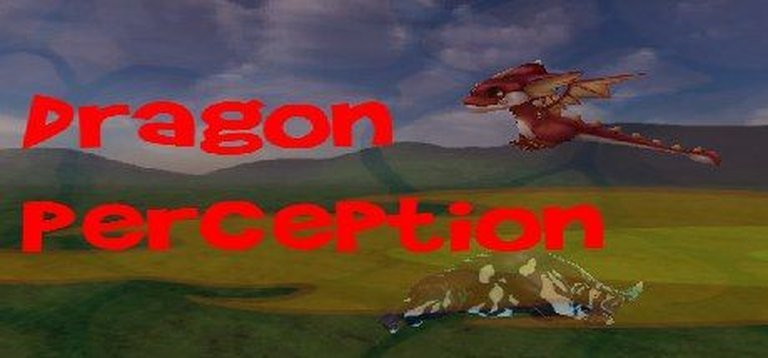
Dragon Perception is a fantasy action platformer developed by ARGames and published by Metal Fox, released for Windows in October 2017. The game features side-view gameplay where players control a character navigating through a fantastical setting inhabited by mythical dragons, using keyboard and mouse for direct control in a commercial downloadable experience.
Where to Buy Dragon Perception
PC
Dragon Perception Guides & Walkthroughs
Dragon Perception: Review
Introduction
In the bustling digital bazaar of independent game development, where ambition often outpaces execution, Dragon Perception (2017) emerges as a curiously titled entry that promises fantasy adventure but delivers a distinctly niche experience. Developed by the Bulgarian studio ARGames and published by Metal Fox, this Windows-exclusive platformer arrives amidst a crowded field of 2.5D titles vying for attention. Its premise – a small dragon defending its lands from aggressive robots – taps into classic fantasy tropes, yet the game’s ultimate legacy rests not on innovation, but on its competent, if flawed, execution of established formulas. This review argues that Dragon Perception, while technically functional and ambitious in scope, is ultimately a product of its time and constraints, remembered more for its obscurity and affordability than for any lasting impact on the genre. It stands as a testament to the challenges faced by small studios in a saturated market, a competent but unremarkable offering that satisfies a very specific, low-cost appetite for classic platforming action.
Development History & Context
Dragon Perception was the brainchild of ARGames, a small Bulgarian development team operating within the burgeoning but highly competitive indie scene of the mid-to-late 2010s. The game was built using the Unity engine, a common choice for indie developers due to its accessibility and robust toolset, allowing ARGames to focus on core gameplay mechanics without needing to build an entire engine from scratch. This technological constraint, however, also meant competing graphically and technically with titles leveraging more advanced engines or larger teams. Released on October 26, 2017, via Steam, Dragon Perception arrived during a period saturated with indie platformers and action-adventure games, many of which garnered significantly more attention. The business model was straightforward commercial, priced at an incredibly accessible $0.99 / €0.99, positioning it as an impulse buy or a “curiosity” title rather than a major release. Metal Fox, its publisher, appeared to specialize in low-budget indie bundles and smaller-scale titles, suggesting Dragon Perception was part of a strategy to fill catalogues with affordable, genre-flavored content. The development context reveals a small team likely working with limited resources, aiming to deliver a functional and entertaining experience that could stand out through its unique dragon protagonist and boss encounters, rather than graphical fidelity or narrative depth. Its release on a single platform (Windows) further limited its potential audience compared to multi-platform contemporaries.
Narrative & Thematic Deep Dive
Lacking the narrative depth found in games like its name-sake Perception (2017), Dragon Perception offers a remarkably bare-bones plot. According to its official description and the sparse details available, the narrative is pure, unadorned fantasy action: “a small dragon, on whose lands attacked aggressive robots.” There is no indication of a central protagonist beyond the player-controlled dragon, no named characters, no defined lore beyond the immediate conflict, and no significant dialogue or exposition. The setting is a generic fantasy world under threat from a technological invasion – a juxtaposition of the natural (dragon) versus the artificial (robots) that serves as the game’s primary thematic anchor. This theme is explored purely through gameplay, as the dragon navigates platforms and battles mechanical foes, representing the defense of a natural realm against encroaching technology. While this core conflict provides a simple framework for action, the complete absence of story-driven context, character development, or thematic nuance leaves the narrative feeling perfunctory. The game doesn’t delve into the why of the invasion, the dragon’s backstory, or the fate of its world. This minimalist approach prioritizes pure gameplay mechanics, but it also robs the experience of emotional resonance and player investment. The narrative, such as it is, functions solely as justification for the platforming and combat encounters, making it the game’s most significant weakness from an immersive or storytelling perspective. It’s a classic case of “show, don’t tell,” where the “showing” is entirely mechanical and devoid of narrative context.
Gameplay Mechanics & Systems
At its core, Dragon Perception is a 2.5D platformer, blending classic side-scrolling movement with depth and perspective shifts common in the genre. The player controls a small dragon, utilizing fundamental platforming mechanics: running, jumping, and likely basic aerial maneuvers. The core gameplay loop revolves through two primary activities:
- Explation & Navigation: The player traverses designed levels, jumping across gaps, avoiding environmental hazards, and collecting items (though specific collectibles beyond points are not detailed). The “fascinating game world” mentioned in the description likely refers to varied level designs, potentially incorporating different fantasy biomes or mechanical environments, all presented from a side-on perspective with some 3D elements. The Unity engine facilitates this blend, though the visual execution based on available screenshots appears functional rather than spectacular.
- Combat & Boss Battles: The primary threat comes from “aggressive robots.” Combat seems designed around these encounters, likely involving the dragon attacking or avoiding robotic foes. The game explicitly highlights its “Complex bosses” as a key feature. These bosses represent the pinnacle of the gameplay challenge, requiring pattern recognition, precise timing, and mastery of the dragon’s abilities to defeat. The description suggests combat is frequent, with the player “constantly under the gun.” The “various music accompaniment” likely shifts tone to emphasize the intensity of boss fights.
- Scoring & Competition: A unique, albeit minor, system highlighted is the ability to “compete with your friends by the number of points scored as a result of the passage, as well as your approaches to killing each of the bosses.” This implies a scoring system tied to performance (speed, efficiency, damage taken) during levels and especially during boss fights, encouraging replayability to beat high scores or optimize strategies. Leaderboards or shared score displays would facilitate this competition, though such features aren’t explicitly confirmed.
- Accessibility & Challenge: The game promises “Contrast complexity that will give pleasure to both fans of hardcore and simple players.” This suggests the inclusion of difficulty settings or level design that allows for different approaches – potentially allowing skilled players to take risks for higher scores while offering safer paths or forgiving mechanics for those seeking a more relaxed experience. However, the lack of user reviews or detailed descriptions makes the actual implementation of this accessibility hard to gauge.
The interface relies on “Direct control” via Keyboard and Mouse, typical for PC platformers. The inclusion of 8 Steam Achievements provides minor goals beyond the core gameplay and scoring. Overall, the mechanics are built on a solid, if conventional, platforming foundation, with the boss battles and scoring system offering its most distinct gameplay hooks.
World-Building, Art & Sound
The world-building in Dragon Perception is defined by its stark contrast: lush, vibrant fantasy landscapes inhabited by a small dragon, juxtaposed against cold, mechanical threats in the form of invading robots. The official description promises a “fascinating game world,” suggesting that while the narrative is minimal, the visual design provides some environmental interest. Likely drawn from the Unity Asset Store or custom-built, the art direction leans towards a stylized, colorful fantasy aesthetic. Screenshots (though limited in the provided material) imply environments with varied terrain – perhaps forests, mountains, or castles – rendered in 2.5D. The dragon protagonist is the central visual element, designed to be cute and perhaps slightly heroic, contrasting with the blocky or menacing designs of the robot enemies. The “aggressive robots” likely come in different types and sizes, culminating in the visually complex “complex bosses.”
Sound design is mentioned in the features list (“Various music accompaniment”), suggesting a dynamic soundtrack that shifts between exploration, tension, and the climactic intensity of boss battles. While specific details are absent, the music is likely composed to enhance the fantasy setting and the action sequences. Sound effects for the dragon’s movements, jumps, attacks, and the robots’ mechanical actions would be crucial for providing satisfying feedback. However, without user reviews or detailed descriptions, the quality and impact of the audio remain speculative. The Unity engine provides the underlying tools, but the artistic execution ultimately determines whether the world feels alive and immersive or merely functional. The visual style, while potentially charming, appears to lack the distinctive polish of higher-budget titles, fitting its budget and indie status. The atmosphere is likely driven more by the core fantasy-vs-technology conflict presented through gameplay than by deep environmental storytelling.
Reception & Legacy
At launch and in the years since, Dragon Perception has received a resoundingly muted reception, bordering on forgotten. Its Steam page, the primary source for user feedback, displays a “Mostly Negative” rating, with only 31% (5 out of 16) of reviews marked as positive at the time of the last available data snapshot. This low score is reinforced by aggregated data on sites like Steambase, which calculates a “Player Score” of 25 out of 100 based on 57 total reviews (14 positive, 43 negative). Critically, the game appears to have flown almost entirely under the radar. Metacritic lists “Critic Reviews: 0 Critic Reviews are available,” indicating a near-total lack of professional coverage from major outlets or review sites. This absence of critical attention mirrors its commercial obscurity.
The user reviews, though limited, likely reflect the game’s perceived flaws: potentially repetitive gameplay, a simplistic or underdeveloped narrative, technical issues common to low-budget Unity titles (like collision detection bugs or performance quirks), and a visual style that, while functional, might not impress. The incredibly low price point ($0.99) suggests it may have been purchased as a curiosity or part of a bundle, with players feeling the experience didn’t justify even the minimal investment for some.
Its legacy is minimal. It is not cited as an influence on subsequent games, nor does it appear in significant discussions of platformer history or the 2017 indie scene. ARGames continued to produce other titles like Night Fly, Labyrinths of Atlantis, and S.T.R.E.T.C.H., often bundled together, but none achieved significant recognition. Dragon Perception exists as a footnote: a technically functional but uninspired indie platformer released at the tail end of a boom, remembered only by those who played it for its budget price or as part of a publisher’s catalog filler. Its most notable contribution might be its inclusion in various small indie bundles, offering a few minutes of simple dragon-versus-robots action for next to nothing. It serves as a quiet example of the sheer volume of games released on digital storefronts and the difficulty even competent titles have in standing out.
Conclusion
Dragon Perception (2017) encapsulates the double-edged sword of the indie development landscape: the freedom to create unique concepts versus the stark reality of limited resources and market saturation. As a 2.5D platformer featuring a small dragon battling robots, it delivers exactly what its straightforward premise promises: functional, if unspectacular, action-platforming gameplay. The core mechanics of traversal, combat, and particularly the boss encounters, appear to be its strongest suit, offering moments of challenge and potential satisfaction. The low price point and inclusion of scoring for competition provide reasons for targeted players to engage with it.
However, the game’s execution is hampered by significant limitations. The narrative is virtually non-existent, leaving the world-building and thematic potential of the dragon-versus-robots conflict unrealized. Visually and aurally, it lacks the polish and distinct identity needed to compete with contemporaries, appearing as a competent but generic product of the Unity asset store era. The overwhelmingly negative user reception and complete absence of critical attention underscore its failure to make a meaningful impact.
Ultimately, Dragon Perception occupies a niche space in video game history: a technically competent but artistically and narratively barren indie platformer. It stands not as a forgotten gem or a critical darling, but as a representative example of a specific type of budget title that filled digital storefronts but rarely captured the imagination. For players seeking a no-frills, low-cost platformer fix, it might offer a few hours of simple action. For historians and critics, it serves as a reminder of the sheer volume of content released and the high bar even modestly ambitious games must clear to be remembered. Its place is secured only in the archives of digital platforms like Steam, a testament to the ambition of small studios like ARGames, but also a stark illustration of the challenges inherent in bringing a vision to life in a crowded and unforgiving market. It is, at best, a competent footnote; at worst, a forgotten cautionary tale of ambition outpacing execution in the indie space.