
- Release Year: 2021
- Platforms: Nintendo Switch, PlayStation 4, PlayStation 5, Windows Apps, Windows, Xbox One, Xbox Series
- Publisher: Super Powerup Games S.L.
- Developer: Super Powerup Games S.L.
- Genre: Action
- Perspective: 1st-person
- Game Mode: Single-player
- Gameplay: Pinball
Description
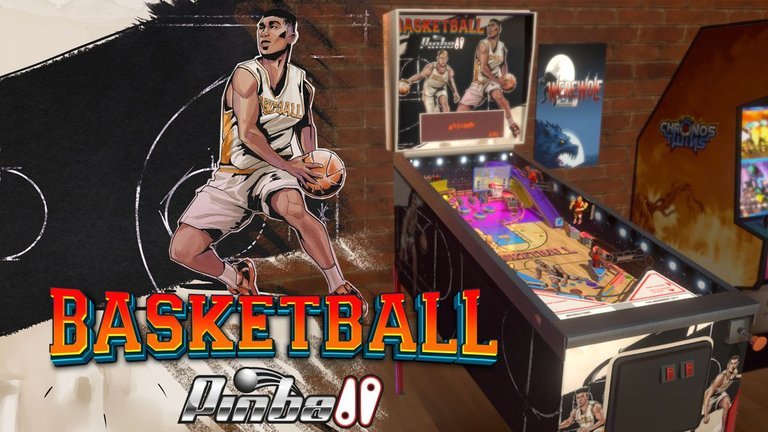
Basketball Pinball is an action pinball game that combines classic pinball mechanics with a basketball theme, featuring flippers, bumpers, and targets set within a basketball court environment. Players launch and control a steel ball to score points by hitting basketball-themed elements while avoiding losing the ball down the drain, all presented in a 2D scrolling or fixed flip-screen perspective available on multiple platforms including Nintendo Switch, PlayStation, Windows, and Xbox.
Gameplay Videos
Where to Buy Basketball Pinball
PC
Basketball Pinball Guides & Walkthroughs
Basketball Pinball: Review
Introduction
In the digital age, where sprawling open worlds and cinematic narratives dominate the gaming landscape, the humble pinball machine remains a testament to the enduring power of pure, unadulterated skill-based gameplay. Basketball Pinball, developed by Super Powerup Games S.L., emerges as a modern ode to this classic arcade experience, transposing the visceral thrills of the hardwood court onto the physics-driven chaos of the silver ball. Released in 2021 across multiple platforms, this game positions itself as a “perfect reproduction” of a traditional pinball table, blending nostalgic mechanics with contemporary digital conveniences. This review will dissect Basketball Pinball through the lenses of its development context, thematic integration, mechanical depth, audiovisual presentation, and legacy within the pantheon of pinball history. Ultimately, while it succeeds in capturing the core appeal of its analog predecessor, its execution reveals both the triumphs and limitations of digital pinball in an era saturated with more complex gaming experiences.
Development History & Context
Basketball Pinball is the product of Spanish developer Super Powerup Games S.L., a studio specializing in genre-focused pinball simulations. The game’s development is deeply rooted in the modern pinball renaissance, a movement characterized by both digital adaptations and a renewed appreciation for physical machines. Built on the ubiquitous Unity engine, the project leveraged cross-platform capabilities to debut on Nintendo Switch (June 4, 2021), followed by PlayStation 4/5 (June 3, 2022), Windows (April 14, 2023), and Xbox One/Series (April 14, 2023). This multi-platform strategy reflects a conscious effort to democratize access, targeting both dedicated pinball enthusiasts and casual gamers on consoles, PC, and handheld devices.
The context of its release is particularly telling. By 2021, pinball had evolved far beyond its electromechanical origins of the 1930s–70s, progressing through solid-state revolutions, licensed tie-ins (e.g., The Addams Family), and digital reboots on platforms like Pinball FX. Basketball Pinball aligns with the “Virtual Pinball and Digital Platforms” trend, aiming to replicate the tactile satisfaction of arcade tables without the physical constraints. However, unlike titles that feature complex narratives or interactive toys (e.g., The Lord of the Rings), Super Powerup Games prioritized authenticity over innovation. Their vision was clear: to distill pinball to its essence—a symphony of flippers, bumpers, and high-score chasing—with basketball serving as thematic seasoning rather than a core gameplay system. The absence of a dedicated in-house engine and reliance on Unity underscores a pragmatic, resource-efficient approach, mirroring the genre’s focus on accessibility over graphical fidelity.
Narrative & Thematic Deep Dive
Unlike narrative-heavy RPGs or story-driven adventures, Basketball Pinball eschews traditional plotlines, characters, and dialogue. Its “narrative” is instead embodied in the thematic integration of basketball into the pinball framework. The table itself becomes a metaphorical court, where bumpers represent defensive players, ramps symbolize fast breaks, and jackpots correspond to scoring opportunities. The missions—such as “complete all the secrets” or “achieve skill shots”—function as micro-objectives, analogous to basketball drills or game-specific challenges. This abstraction avoids literal storytelling but implicitly evokes the sport’s competitive spirit: the relentless pursuit of points, the satisfaction of a perfectly timed shot (or flipper), and the tension between control and chaos.
The underlying themes revolve around mastery and repetition. Pinball, by its nature, is a loop of failure and redemption, and Basketball Pinball amplifies this through its focus on high-score chasing and leaderboard dominance. The absence of a narrative forces players to project their own ambitions onto the game, fostering a personal investment in improving their technique. The basketball theme, while minimal, serves as a familiar cultural shorthand, evoking the grace and athleticism of the sport to heighten the mechanical satisfaction of a well-aimed ball. However, this thematic lightness is a double-edged sword: it ensures broad accessibility but lacks the depth or personality of licensed pinball tables, which often weave intricate lore (e.g., Star Wars or Marvel tables) into their design. In essence, Basketball Pinball is a game about process over product—a meditation on skill, persistence, and the joy of the perfect flip.
Gameplay Mechanics & Systems
At its core, Basketball Pinball adheres to the timeless pinball formula: launch the ball, activate flippers, and keep the silver sphere in play while racking up points through collisions with targets, bumpers, and ramps. The game faithfully reproduces classic pinball mechanics, including multiball (simultaneous play with multiple balls), extraball bonuses, skill shots (precision launch rewards), and jackpots (sequential target hits for massive points). These systems are executed with solid physics, ensuring that ball trajectories feel natural and responsive to player input. The flippers provide satisfying feedback, and the table’s layout balances accessibility with depth, offering both novice-friendly bumper clusters and more advanced shot sequences for experts.
A key innovation is the mission-based structure, which introduces objectives beyond high scores. Players are tasked with uncovering “secrets” and completing challenges, adding a meta-layer of progression akin to RPG quests. This system encourages exploration of the table’s layout, rewarding curiosity and mastery. However, the missions lack narrative context, reducing them to checklists rather than storytelling devices. The four camera angles—including a classic 1st-person view and a dynamic table-wide perspective—allow players to customize their experience, though the default view remains the most immersive for traditionalists.
The online leaderboard adds a crucial competitive dimension, enabling global high-score rivalries and fostering a sense of community. This feature aligns with pinball’s historical roots in arcade competition, where bragging rights were as valuable as tokens. Yet, without a robust multiplayer mode or real-time interaction, the leaderboard feels tacked-on rather than integrated. The UI is clean and functional, displaying scores, ball count, and mission objectives without clutter, though its simplicity can make it feel impersonal compared to the animated score reels of electromechanical tables.
Overall, the gameplay loop is tight and addictive, but its reliance on established mechanics without significant innovation positions it as a competent tribute rather than a genre-redefining title. The basketball theme influences only superficial elements (e.g., target designs), leaving the core physics and scoring systems untouched by sport-specific rules or dynamics.
World-Building, Art & Sound
Basketball Pinball’s world-building is minimal, constrained by the inherent limitations of the pinball format. The “world” is the table itself—a self-contained arena where basketball motifs are visual shorthand rather than a cohesive setting. Bumpers are styled as basketballs, ramps resemble hoops, and the color palette (orange, black, and white) echoes team uniforms. This thematic consistency creates a recognizable basketball atmosphere but stops short of immersive world-building. There are no characters, environments, or lore to explore; the table is a playground, not a narrative space.
Artistically, the game opts for 2D scrolling visuals with a fixed/flip-screen perspective, prioritizing clarity over detail. The Unity engine renders clean, cartoonish graphics that evoke classic arcade aesthetics. Table elements like bumpers and targets are distinct and easy to discern, while the “arcade design” mentioned in the ad blurb suggests a deliberate nod to vintage machines. However, the visual style lacks the flair of modern pinball tables, which often feature intricate hand-drawn art or 3D models. The absence of dynamic lighting or environmental storytelling further flattens the presentation, making it feel functional but uninspired.
Sound design fares better, capturing the auditory signature of pinball. Bumper impacts produce satisfying dings and dongs, while ball launches and flipper activations trigger crisp audio cues. The absence of licensed music or voice acting simplifies the soundscape, allowing the mechanical symphony of the table to take center stage. This auditory authenticity is a strength, evoking the visceral, noise-filled atmosphere of an arcade. Yet, without layered sound effects or dynamic variations, the audio can become repetitive over extended play sessions. In essence, Basketball Pinball delivers a competent audiovisual package that honors tradition but fails to elevate it, prioritizing mechanical fidelity over artistic ambition.
Reception & Legacy
At launch, Basketball Pinball received muted critical attention, with Metacritic noting a “tbd” Metascore due to a lack of professional reviews. This silence reflects its niche status in a gaming market dominated by AAA titles. Player reviews, while scarce, suggest a divided reception: some praised its accessible pinball mechanics and faithful physics, while others criticized its simplistic presentation and lack of innovation. The game’s commercial performance remains opaque, but its multi-platform rollout and budget-friendly pricing (e.g., $1.34 on PlayStation, $1.94 on Steam) indicate an attempt to capitalize on the digital pinball audience’s demand for affordable, no-frills experiences.
Legacy-wise, Basketball Pinball occupies a modest space in pinball history. It represents the democratization of the genre via digital platforms, embodying the “Virtual Pinball and Digital Platforms” trend identified by pinball historians. Its cross-release on Switch, PlayStation, and Xbox underscores the viability of pinball as a genre for consoles, though it ultimately pales in comparison to landmark titles like Pinball FX3 or The Pinball Arcade. The game’s primary contribution is its accessibility: it lowers the barrier to entry for newcomers while offering a familiar experience for veterans. However, its lack of originality and thematic depth prevents it from leaving a lasting impact. In the broader context of pinball’s evolution—from 1930s bagatelle to modern digital recreations—Basketball Pinball is a functional footnote rather than a milestone. It exemplifies the genre’s adaptability but highlights the challenges of innovating within such a rigid, mechanics-focused framework.
Conclusion
Basketball Pinball is a paradox: a game that celebrates the purity of pinball yet struggles to justify its own existence in a crowded market. Its strengths lie in its faithful reproduction of core mechanics—solid physics, satisfying flipper controls, and a compelling high-score chase. The mission-based system and online leaderboards add layers of engagement, while the basketball theme provides a recognizable, if superficial, aesthetic. For players seeking a no-frills pinball fix on modern hardware, it delivers competent, if uninspired, fun.
However, the game’s shortcomings are equally apparent. Its minimalist art, repetitive audio, and absence of narrative or innovation prevent it from standing out in a genre already populated by more polished and creative offerings. The thematic integration of basketball feels underdeveloped, reducing it to a cosmetic choice rather than a meaningful gameplay influence. Ultimately, Basketball Pinball is less a game and more a serviceable digital artifact—a bridge between the clangor of arcades and the convenience of consoles. It honors pinball’s legacy but fails to advance it, serving as a reminder that some experiences are best enjoyed in their original, physical form. For pinball purists, it is a worthy diversion; for everyone else, it is a footnote in the genre’s rich history—functional, forgettable, and ultimately dispensable.