
- Release Year: 2017
- Platforms: Android, Windows
- Publisher: MDickie Limited
- Developer: MDickie Limited
- Genre: Action
- Perspective: Side view
- Game Mode: Single-player
- Gameplay: Open World, Sandbox
- Setting: Post-apocalyptic
Description
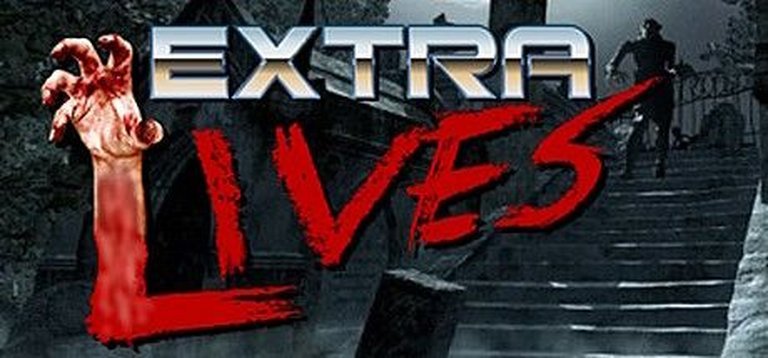
Extra Lives is an open-world sandbox action game set in a post-apocalyptic environment, developed by MDickie Limited. Released in 2017 for Android and later for Windows in 2023, the game features 2D scrolling gameplay where players navigate a desolate landscape through direct controls, focusing on survival mechanics and exploration in a ruined world.
Gameplay Videos
Where to Buy Extra Lives
PC
Extra Lives Cracks & Fixes
Extra Lives Patches & Updates
Extra Lives Mods
Extra Lives Guides & Walkthroughs
Extra Lives: Why Video Games Matter – Review
Introduction
Tom Bissell’s Extra Lives: Why Video Games Matter is not merely a book about playing video games—it is a raw, incisive excavation of why a medium so culturally dominant remains artistically underexplored. As a journalist, novelist, and self-professed “addicted” gamer, Bissell dissects gaming’s paradox: an industry that generates more revenue than film and music yet suffers from a persistent crisis of legitimacy. This work, first published in 2010, stands as a landmark in game criticism, blending personal anecdotes with rigorous analysis to argue that games are not just entertainment but a nascent art form with untapped potential. Bissell’s thesis is clear: video games matter profoundly, but they must overcome their own self-inflicted narrative and design flaws to achieve greatness.
Development History & Context
Bissell’s journey as a writer and gamer shaped Extra Lives. A contributor to The New Yorker and Harper’s, he leveraged his literary pedigree to inject novelistic depth into a field often dismissed as juvenile. The book emerged during a pivotal era: the late 2000s saw the rise of narrative-driven games like Fallout 3 (2008) and BioShock (2007), which blurred lines between cinema and interactivity. Technologically, consoles like the Xbox 360 enabled complex open worlds, yet game criticism lagged. Bissell lamented that most reviews focused on consumer advisories (“Is this game worth $60?”) rather than aesthetic or philosophical inquiry. He positioned himself as a bridge between highbrow literature and gaming, aiming to challenge both gamers and skeptics. His own struggles with game addiction—including missing Barack Obama’s 2008 election night to play Fallout 3—underscore the medium’s seductive power, yet he avoided simplistic moralizing, instead framing gaming as a complex cultural phenomenon worthy of serious study.
Narrative & Thematic Deep Dive
Extra Lives is a mosaic of essays, each dissecting a specific game to probe broader themes. Bissell’s core argument is that games fail to capitalize on their narrative potential. He critiques titles like Fallout 3 for its “Jell-O-mold characterization” and laughable dialogue (“Oh, James, we did it. A daughter. Our beautiful daughter”), arguing that even brilliant worlds are undermined by stories as thin as “PLUMBER’S GIRLFRIEND CAPTURED BY APE!” Yet he champions outliers like Left 4 Dead, which abandons explicit lore in favor of emergent storytelling. Here, Bissell introduces the critical distinction between:
– Framed narrative: Pre-scripted cut scenes (fixed, passive).
– Ludonarrative: Gameplay-driven events (fluid, interactive).
Their dissonance, he asserts, cripples ambitious games. For instance, Call of Duty 4 forces players to “sneak” through Chernobyl while the narrative ignores their actions, creating artificiality. Bissell also interrogates violence, questioning whether games like Resident Evil (with its “clinical” dismemberment) explore morality or merely provide a “laboratory of virtual sadism.” Thematically, the book oscillates between reverence and frustration: Bissell extols games’ ability to evoke profound emotion (e.g., the camaraderie in Left 4 Dead) while lamenting their industry-wide refusal to mature beyond adolescent power fantasies.
Gameplay Mechanics & Systems
Bissell dissects game design as both craft and constraint. He praises mechanics that elevate tension—like Resident Evil’s deliberate tank controls and ammo scarcity—arguing they transform survival into visceral poetry. Conversely, he condemns systems that prioritize spectacle over coherence. For example:
– AI Director: Valve’s dynamic system in Left 4 Dead adjusts enemy placement based on player performance, creating unpredictable, harrowing sequences. Bissell hails this as a masterstroke that merges design and narrative.
– Save systems: He critiques Resident Evil’s typewriter-based saves as “satanically complicated,” artificially inflating difficulty without enhancing fun.
Bissell’s central thesis here is that gameplay must serve theme. When mechanics align—like Left 4 Dead’s emphasis on cooperation—the results are transcendent. When they clash (e.g., Fallout 3’s moral choices feeling tacked onto a sandbox), games feel disjointed. He calls for designers to view mechanics not just as “fun” but as narrative tools, urging a synthesis where player agency and authored intent coexist.
World-Building, Art & Sound
Bissell is a connoisseur of virtual worlds. He lauds Fallout 3’s “George Jetson Beyond Thunderdome” aesthetic—a past-future mélange of 1950s futurism and Cold War decay—as visually and thematically rich. Environmental storytelling, he argues, is where games excel: the ruined Washington Monument in Fallout 3 or the claustrophobic mansion in Resident Evil convey history and dread without exposition. Sound design, too, gets critical attention. Resident Evil’s “blood-freezing moans” and the tactile satisfaction of reloading a shotgun in Call of Duty 4 are celebrated for their immersive power. Yet Bissell notes a paradox: while games can create stunning worlds, they often fail to populate them with meaning. He contrasts Left 4 Dead’s minimalism—where character depth emerges from shared struggle—with bloated epics like Oblivion, whose “elves talking bullshit” he found embarrassing. For Bissell, true artistry lies in cohesion: when world, art, sound, and mechanics fuse into a unified whole.
Reception & Legacy
Extra Lives was met with widespread acclaim, hailed as a “game-changer” for its literary rigor and vulnerability. Critics lauded Bissell’s honesty—his admission of addiction and embarrassment over gaming resonated deeply. The book won nominations for awards like the Los Angeles Times Book Prize, cementing its place in mainstream literary discourse. Commercially, it became a bestseller, reaching beyond gamers to academics and cultural critics. Its legacy is twofold:
1. Elevating Game Criticism: Bissell demonstrated that games could be analyzed with the same tools as literature or film, inspiring a wave of serious game theorists.
2. Industry Influence: Developers like Cliff Bleszinski (Gears of War) cited his critiques, pushing studios to invest in narrative cohesion.
Over time, Extra Lives has been revisited as a snapshot of gaming’s adolescence. While some games now address Bissell’s concerns (e.g., The Last of Us’s emotional depth), his core question—“Can games be art?”—remains contested, ensuring the book’s relevance.
Conclusion
Extra Lives is a flawed masterpiece—much like the games it scrutinizes. Bissell’s prose is electric, oscillating between erudite analysis and confessional vulnerability. He makes a compelling case for gaming as art, but his own ambivalence reveals the medium’s growing pains: a $100 billion industry still grappling with identity. Yet for all its critiques, the book is ultimately a love letter. Bissell’s awe at games’ power to evoke empathy, terror, and joy is infectious. He writes: “What more could one want?” after recounting a harrowing Left 4 Dead triumph. In the end, Extra Lives matters not because it has all the answers, but because it asks the right questions. It demands that we see games not as escapes but as extensions of humanity—flawed, fleeting, and profoundly alive. For anyone seeking to understand why pixels and code can move us to tears, this book is indispensable. It is, quite simply, an extra life for the mind.