
- Release Year: 2020
- Platforms: iPhone, Nintendo Switch, PlayStation 3, PlayStation 4, PlayStation 5, PS Vita, Windows Apps, Windows, Xbox One, Xbox Series
- Publisher: Unique Media LLC
- Developer: Unique Media LLC
- Genre: Action
- Perspective: Side view
- Game Mode: Single-player
- Gameplay: 2D, Shooter
- Average Score: 73/100
Description
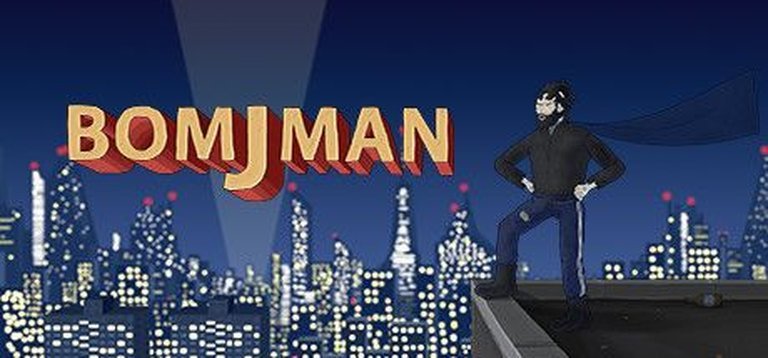
BOMJMAN is a gritty indie shooter set in a dystopian megalopolis overrun by crime, where players assume the role of a hobo-superhero known as Hobosapien. Armed with an arsenal of unconventional weapons—from his fossilized sock to supernatural stench—and fueled by dark humor, the hero wages war against corrupt officials, ruthless factions, and a shadowy organization in a bleak cyberpunk world. The game blends brutal combat with satirical undertones as it explores themes of vigilantism and purpose in a society paralyzed by injustice.
Gameplay Videos
Where to Buy BOMJMAN
PC
BOMJMAN Cracks & Fixes
BOMJMAN Patches & Updates
BOMJMAN Mods
BOMJMAN Guides & Walkthroughs
BOMJMAN Reviews & Reception
metacritic.com (73/100): A very cool game with black humor. Great music.
BOMJMAN: Review
Introduction
In the ever-expanding pantheon of indie gaming, few titles capture the raw, unfiltered spirit of anti-establishment satire quite like BOMJMAN. Released in December 2020 by developer Unique Media LLC, this side-scrolling cyberpunk action thriller is not merely a game—it’s a grimy, pungent, and gloriously offensive love letter to the downtrodden. Based on the creator’s own animated series, BOMJMAN thrusts players into the unwashed boots of a hobo-superhero navigating a dystopian megalopolis paralyzed by corruption. While its technical execution and artistic vision are polarizing, the game has cultivated a fiercely loyal following, achieving a “Very Positive” rating on Steam (86% of 1,377 reviews) and carving out a niche as a cult phenomenon. This review argues that BOMJMAN, despite its flaws, stands as a vital and audacious entry in the indie canon—a testament to the power of unapologetic black humor, chaotic combat, and satirical world-building in an era of homogenized AAA experiences.
Development History & Context
BOMJMAN emerged from the creative forge of Unique Media LLC, a small studio founded by its sole developer, whose vision was deeply rooted in his pre-existing animated series of the same name. Built on the Unity engine, the project was conceived as a passion project—a “hardcore indie shooter” that translated the cartoon’s crude, satirical energy into an interactive medium. Released on December 15, 2020, the game arrived during a turbulent period in gaming history, overshadowed by the COVID-19 pandemic and the burgeoning indie boom on platforms like Steam. The timing was fortuitous; with many gamers seeking novel, affordable experiences during lockdowns, BOMJMAN’s free-to-play model (on Steam) lowered the barrier to entry. This, combined with its unorthodox premise—a hobo combating cyberpunk corruption with stench and stone socks—allowed it to resonate with players weary of polished but formulaic titles. The Unity engine provided flexibility, enabling the developer to iterate quickly, evidenced by post-launch patches addressing bugs and community feedback, though the game’s 2D scrolling side-view and “direct control” interface remained intentionally rudimentary, reflecting its indie roots.
Narrative & Thematic Deep Dive
At its core, BOMJMAN’s narrative is a scathing, absurdist fable about societal decay and the futility of heroism. The story is framed as an “epic saga” set in a “grim post-cyber-antiutopistic megalopolis” where “an unbelievably colossal wave of injustice” has crippled law enforcement. The protagonist, a “regular person” transformed into a “hobo-man” by a “tragic bout of slacking off” and unemployment, becomes an unlikely vigilante. He wields “superpowers” not to save the world, but to combat crime and evil with a nihilistic flair—”selflessly, senlessly, and unreasonably.” The plot thickens with the emergence of a “secretive and well-organized organization,” a bureaucratic and shadowy force representing systemic corruption. Thematically, the game is a masterclass in dark satire, dissecting unemployment, bureaucratic apathy, and the cyclical nature of violence. The central question—“What for?”—haunts the hero’s actions, underscoring the game’s existential cynicism. Characters are archetypes: the hero (lazy but righteous), corrupt officials (immovable obstacles), and thugs (faceless minions). Dialogue leans heavily on “vulgar and black humor,” with voice acting described as “terrible” and “AI-like” by critics, yet fitting the game’s grim tone. The narrative’s strength lies in its unflinching portrayal of a broken world where even heroism is a messy, chaotic affair.
Gameplay Mechanics & Systems
BOMJMAN is a frenetic blend of 2D scrolling shooter and beat ’em up mechanics, wrapped in a “Violent,” “Gore”-laden package. The core loop is deceptively simple: players navigate side-scrolling levels, hordes of enemies, and boss encounters using a “wide selection of ranged and melee weapons.” Ranged combat includes firearms, while melee options include absurd, signature moves like the “supernatural stench” (a crowd-control ability) and the “fossilized sock” (a blunt instrument). The combat is “violently satisfying,” with visceral feedback and exaggerated gore, but not without flaws. Critics note that gun aiming and melee combat can feel “off,” lacking the precision of more polished titles. Character progression is minimalist, driven primarily through level completion and the acquisition of new weapons. The UI employs “direct control,” ensuring accessibility but sacrificing depth. Boss fights are highlights—struggles against the “bosses of the most ruthless factions”—requiring pattern recognition and creative use of weapons. The game’s “Important thig” (a deliberate misspelling in the Steam description) is to avoid losing oneself in the “murderous intricacies,” a nod to its chaotic nature. Despite its simplicity, the system excels in delivering catharsis, turning each encounter into a messy, cathartic ballet of destruction.
World-Building, Art & Sound
BOMJMAN’s world is a masterclass in dystopian atmosphere. The setting—a “breeding ground of human sin”—is rendered in a “side view,” 2D scrolling aesthetic, enhanced by “2.5D” elements that add depth to the grimy cityscape. Visuals are intentionally crude, mirroring the hero’s unwashed persona; environments are a collage of neon-lit slums, decaying infrastructure, and bureaucratic dystopia. While some character designs are criticized as “way too ugly,” this crudeness serves the game’s satirical tone, emphasizing the ugliness of corruption. The cyberpunk aesthetic is pervasive, from rain-slicked streets to corporate towers, creating a cohesive, oppressive mood. Sound design is a dual-edged sword. The “Great Soundtrack” is lauded for its cyberpunk ambiance, blending industrial beats and ambient noise to heighten tension. However, voice acting is a point of contention, dismissed as “terrible” and robotic, yet ironically enhancing the game’s dystopian feel. Sound effects are over-the-top—from the squelch of gore to the thud of the fossilized sock—amplifying the game’s chaotic energy. Together, the art and sound forge an immersive, if abrasive, world that is as much a character as the hero himself.
Reception & Legacy
Upon release, BOMJMAN polarized critics and players alike. On Metacritic, it holds a mixed “User Score” of 7.3/10, with praise for its “black humor” and “great soundtrack” tempered by criticism of its “ugly” visuals and “terrible” voice acting. Steam, however, tells a different story: a “Very Positive” rating from 1,377 reviews, with players lauding its “violently satisfying” combat, “absurd” humor, and generous length (HowLongToBeat averages 5.5 hours for the main story). The game’s free-to-play model and mature content—”bad language, violence, blood, murder, alcohol use, and drugs”—resonated with a niche audience seeking unfiltered experiences. Commercially, its availability on Windows, Mac, and Linux (though primarily Windows-focused) and low price point (often discounted to under $1) broadened its reach. Legacy-wise, BOMJMAN has become a touchstone for indie satires, influencing games that embrace crude aesthetics and anti-hero narratives. Its active community, evidenced by Steam discussions, user-generated guides (e.g., “Hidden Meaning of the Game”), and artwork, underscores its cult status. Developer Unique Media has maintained engagement, promising updates and porting the game to consoles (Sony and Xbox), signaling a lasting presence in the indie ecosystem.
Conclusion
BOMJMAN is, in many ways, a triumph of spirit over execution. It is a messy, imperfect, and unapologetically offensive game—one that revels in its crudeness while delivering moments of genuine catharsis and satire. Its combat, though flawed, is undeniably visceral; its world, though ugly, is rich in atmosphere; and its narrative, though nihilistic, poses provocative questions about heroism and corruption. While technical shortcomings and divisive artistic choices may alienate some, its “Very Positive” Steam reception and dedicated fanbase prove that authenticity can triumph over polish. In the annals of video game history, BOMJMAN stands not as a masterpiece, but as a vital, idiosyncratic artifact—a testament to the power of indie developers to create experiences that are as thought-provoking as they are transgressive. For players willing to embrace the grime, it is an unforgettable journey into the heart of cyberpunk dystopia.