
- Release Year: 2019
- Platforms: Macintosh, Nintendo Switch, PlayStation 4, Windows Apps, Windows, Xbox One
- Publisher: Humble Bundle, Inc.
- Developer: Blue Manchu Pty Ltd
- Genre: Action, Roguelike
- Perspective: First-person
- Game Mode: Single-player
- Gameplay: Crafting, Roguelike, Shooter, Stealth, Strategy
- Setting: Futuristic, Sci-fi
- Average Score: 76/100
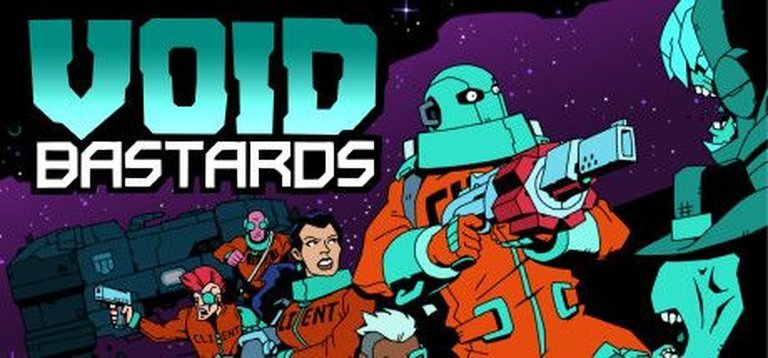
Description
Void Bastards is a first-person shooter and roguelike game set in a science fiction universe where players assume the role of a prisoner stranded aboard a spaceship in the Sargasso Nebula. To repair their vessel, players must explore derelict ships, combat enemies, and scavenge vital resources. The game features permadeath mechanics where upon death, the player is replaced by another prisoner who retains weapon and gadget upgrades and progress but loses all ammo, fuel, and food supplies.
Gameplay Videos
Where to Buy Void Bastards
Void Bastards Mods
Void Bastards Guides & Walkthroughs
Void Bastards Reviews & Reception
metacritic.com (81/100): The thrill of the unpredictable was the driving force behind this charming and spirited rogue-like heister.
pcgamer.com (71/100): A slightly messy first-person shooter lifted by some excellent weapons and a gorgeous art style.
polygon.com : Void Bastards is all about the choices you make, and how you react when things don’t go your way.
Void Bastards Cheats & Codes
PC
Enable the developer console using third-party software and enter commands.
| Code | Effect |
|---|---|
| NO_TURRETS | Deactivate turrets. |
| ALL_TURRETS | Reactivate turrets. |
| Guns | Unlocks all weapons |
| Justguns | Unlocks all weapons but without ammo. |
| Gas | Grants food and fuel. |
| Ghost | Unlocks the ability to fly. |
| Meat | Deactivates flight from the ghost code. |
| Merits (amount) | Grants the specified amount of Merits. |
| Hackskill (amount) | Sets your hack skill to the specified level. |
| God | Turns on God Mode. |
| Human | Turns off God Mode. |
| USA | Turns on God Mode and unlocks all weapons. |
Void Bastards: Review
Introduction
In the treacherous expanse of the Sargasso Nebula, where derelict starships drift like tombstones and mutated citizens lurk in the shadows, Void Bastards emerges as a defiantly original achievement in game design. Crafted by Blue Manchu—a studio founded by Jonathan Chey, co-creator of System Shock 2 and BioShock—this 2019 release is a masterclass in genre fusion, blending the strategic resource management of FTL: Faster Than Light with the environmental tension of immersive sims and the dark humor of British comics. Its legacy lies not in revolutionizing a single genre but in harmoniously merging roguelike permadeath, first-person shooting, and satirical world-building into an experience that feels both timeless and refreshingly modern. Our thesis: Void Bastards is a flawed yet indispensable masterpiece, where brilliant design and audacious artistry elevate it beyond its minor shortcomings to secure its place as a landmark title in the roguelite canon.
Development History & Context
Studio Vision and Inspirations
Blue Manchu’s vision for Void Bastards was deeply rooted in the studio’s pedigree. Jonathan Chey, leveraging his experience at Irrational Games, sought to distill the core tenets of immersive sims—player agency, environmental storytelling, and systemic depth—into a roguelike framework. The result is a game where every decision, from which ship to board to which enemy to engage, carries weight. Inspirations were explicitly drawn from System Shock 2 (atmospheric dread, hacking mechanics) and BioShock (narrative-driven exploration), while the satirical tone nodded to Douglas Adams’ absurdist humor and British sci-fi comics like 2000 AD (e.g., Judge Dredd’s corporate dystopias). Art director Ben Lee, a veteran of Freedom Force, championed a bold comic-book aesthetic to differentiate the title from realistic shooters, transforming constraints into strengths.
Technological Constraints and Execution
Built on Unity 2017, Void Bastards leveraged the engine’s flexibility for rapid prototyping of its procedural ship-generation and crafting systems. This allowed Blue Manchu to iterate on gameplay loops without sacrificing visual flair. The Unity engine also enabled cross-platform compatibility, releasing on Windows, Xbox One (May 28, 2019), and later PlayStation 4/Nintendo Switch (May 7, 2020). Development spanned two years, with a lean team of 10–12 veterans optimizing performance for mid-range hardware. The choice of cel-shading was both artistic and pragmatic: it simplified enemy animations and pathfinding while enhancing readability in chaotic corridors—a concession that became a signature strength.
Gaming Landscape at Release
In 2019, the gaming landscape was saturated with roguelites (Dead Cells, Slay the Spire) and immersive revivals (Prey). AAA shooters dominated, but indies like Celeste proved smaller studios could achieve critical acclaim. Void Bastards entered this milieu as a dark horse: a strategy-shooter with a unique art style and satirical edge. Its day-one inclusion in Xbox Game Pass was pivotal, granting unprecedented visibility and aligning with Microsoft’s push for diverse Game Pass offerings. This strategic move contextualized its success—not as a blockbuster, but as a cult phenomenon flourishing in subscription ecosystems.
Narrative & Thematic Deep Dive
Plot and Satirical Structure
The narrative unfolds as a bureaucratic odyssey. Players are “rehydrated” prisoners of the Void Ark, a prison ship stranded in the Sargasso Nebula. Their AI overseer, B.A.C.S. (voiced by Kevan Brighting), tasks them with scavenging derelict ships to repair the Ark’s FTL drive. The plot progresses through increasingly absurd objectives: forging a Citizen ID card, replacing exploded HR systems, and navigating corporate red tape. Each task is framed with dark humor—e.g., B.A.C.S. deducting “sentence days” for crimes committed during repairs—culminating in a bittersweet ending where the player is re-imprisoned indefinitely for their “heroism.” This structure satirizes capitalist excess and institutional futility, where survival is measured in meaningless metrics.
Characters and Dialogue
- B.A.C.S.: The posh-accented AI narrator, whose dry wit (“Announcement: this announcement is not currently in use”) guides players while embodying the game’s critique of automation.
- Citizens: Mutated denizens of derelict ships, including:
- Juvies: Swearing, agile delinquents.
- Screws: Armored enforcers who stalk players with a “STOMP STOMP STOMP” gait.
- Tourists: Explosive hedonists demanding pampering.
Their dialogue—barking insults like “surprise, buttface!”—humanizes the nebula’s horrors.
- Prisoners: Disposable “Correctional Clients” with randomized traits (e.g., “Smoker” coughing alerts enemies) and trivial crimes (“Using an Expired Coupon”), emphasizing expendability.
Thematic Resonance
- Corporate Dystopia: Mega-corps (CNT, Otori) collapse into chaos, leaving gene-twisted wreckage. Otori’s “brainwashing rooms” satirize surveillance capitalism.
- Bureaucratic Absurdity: Players navigate nonsensical paperwork to escape, mirroring real-world futility.
- Dark Humor: Death is framed as an “End of Life Event,” and resource scarcity is balanced with jokes about cheese-and-onion sandwiches as the nebula’s sole sustenance.
The narrative excels in environmental storytelling—ship logs, corporate signage, and enemy banter flesh out the world more than cutscenes ever could.
Gameplay Mechanics & Systems
Core Loops: Strategy and Survival
- Nebula Navigation: A turn-based star map where players allocate fuel/food for jumps, avoiding hazards like void whales (instant death without torpedoes) or pirates. Risk assessment is paramount: a ship with “No Power” might force stealth, while “Meritous Crew” offers rewards per kill.
- Ship Boarding: First-person exploration with procedurally generated layouts (fixed maps, randomized enemies/hazards). Oxygen depletes, forcing timely resource scavenging (food, ammo, data).
Combat and Crafting
Combat prioritizes tactics over twitch skill. Players equip:
– A primary weapon (e.g., Spiker pistol, Stapler shotgun).
– An explosive/gadget (e.g., Clusterflack grenades, KittyBot distractions).
– A tool (e.g., Zapper for stuns, Rifter for teleporting enemies into vents).
Crafting is meta-progression: salvaged materials unlock permanent upgrades (weapons, armor, passive abilities). Upon death, players lose consumables but retain progress, with new prisoners inheriting traits (e.g., “Colorblind” for grayscale vision).
UI and Innovation
The comic-book UI uses bold lines, onomatopoeia (“WHACK!”), and panel-like framing, blending utility with artistry. Innovations include:
– HAB Rooms: Decontaminate radiation/nausea and grant temporary immunity via merits.
– Ship Modifiers: Dynamic traits like “Blackout Basement” or “Friendly Juves,” forcing adaptive strategies.
– Enemy-Detecting Radar: Spend merits to reveal enemy locations on the helm room map.
Flaws and Balancing
- Repetition: Limited enemy types (Screws, Spooks) grow stale despite varied behaviors.
- UI Clutter: Crafting menus can be overwhelming.
- Difficulty Spikes: Early-game scarcity (fuel/food) creates “Early Game Hell,” mitigated by meta-progression.
World-Building, Art & Sound
Setting and Atmosphere
The Sargasso Nebula is a character itself—a graveyard of corporate failures (XON ambulances selling organs, CNT “Blunt Force Therapy” ships). Isolation is palpable: players navigate airless corridors, avoiding irradiated goo or electrified wires. The nebula’s dangers (void whales, pirates) and absurdities (tourists exploding over tea biscuits) create a unique blend of horror and comedy.
Art Direction and Visuals
Ben Lee’s cel-shading revolutionizes FPS aesthetics. Enemies are flat 2D sprites with dynamic shadows, evoking XIII or Freedom Force. Hand-dined textures, heavy inking, and comic-panel cutscenes unify the world. Color-coded factions (CNT’s blue, Otori’s orange) aid readability, while environmental storytelling—e.g., “Mandatory Gene Therapy” posters—enhances immersion. The style is both functional (clear enemy silhouettes) and expressive, turning limitations into a signature.
Sound Design
- B.A.C.S.: Kevan Brighting’s narration is the game’s soul, delivering deadpan quips that contextualize chaos.
- Audio Cues: Enemy sounds (“SPLOOSH!” for goo, “STOMP STOMP STOMP” for Screws) enable tactical awareness.
- Score: Ryan Roth’s ambient soundtrack blends eerie synths with subtle melodies, amplifying tension during stealth sections and chaos during firefights.
The audio-visual synergy makes even mundane moments—scavenging lockers or hacking terminals—feel narratively rich.
Reception & Legacy
Critical and Commercial Reception
Void Bastards garnered “generally favorable” reviews (Metacritic: PC 81%, Xbox One 75%). Critics lauded its art style and humor:
– GameSpot (8/10): “A droll marriage of the roguelike and immersive sim.”
– PC Gamer (71/100): “Gorgeous art and excellent weapons” offset “repetitive combat.”
– Polygon: “Conquering British space bureaucracy with a staple gun.”
Commercially, it thrived via Xbox Game Pass, with over 200,000 Steam sales. Its accessibility on consoles expanded its audience, though Switch/PS4 ports faced criticism for performance hitches.
Evolution of Reputation
Initially seen as a niche curiosity, Void Bastards is now revered for its influence on roguelite design. Its blend of permadeath, meta-progression, and systemic depth inspired titles like Risk of Rain 2. The game’s legacy is cemented by:
– Awards: Nomination for “Excellence in Visual Art” (IGF 2020) and “Best Debut Game” (GDCA 2020).
– Sequel: Wild Bastards (2024), a spiritual successor expanding on its core mechanics.
– Community: Modders and speedrunners keep it alive, with save-file editing for custom challenges.
Its reputation endures as a testament to indie ingenuity—proving that bold artistry and tight design can outscale AAA polish.
Conclusion
Void Bastards is a flawed gem—a genre-blending triumph where ambition occasionally outstrips execution. Its roguelike tension, immersive sim depth, and comic-book bravura create an experience that is as intellectually stimulating as it is viscerally thrilling. While repetitive combat and a thin narrative hold it back, these shortcomings are overshadowed by its strengths: innovative systems, stunning art, and a satirical heart that beats with Douglas Adams-esque wit.
For players seeking a game that respects their intelligence while embracing failure as part of the fun, Void Bastards is essential. It stands as a landmark achievement—a reminder that the most memorable games are not those that perfect existing formulas, but those that dare to create new ones. In the annals of gaming history, Void Bastards will be remembered not just for what it is, but for what it represents: the unyielding power of creative risk.