
- Release Year: 2000
- Platforms: PlayStation 2, PlayStation, Windows
- Publisher: Electronic Arts, Inc.
- Developer: Electronic Arts Canada, Page 44 Studios, LLC
- Genre: Sports
- Perspective: Behind view, Diagonal-down, Side view, Top-down
- Game Mode: Hotseat, Single-player
- Average Score: 85/100
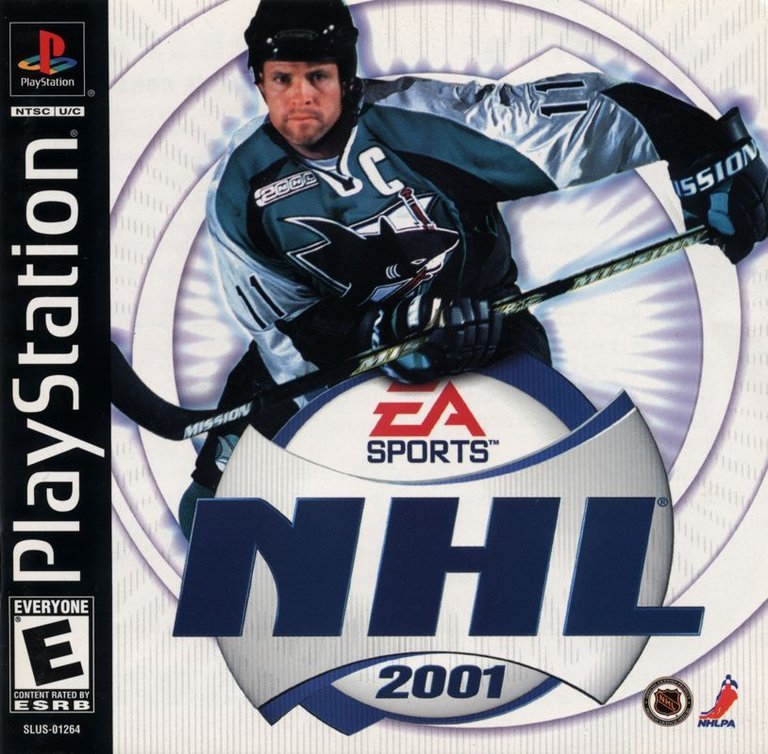
Description
NHL 2001 is a hockey sports simulation game developed by Electronic Arts that immerses players in the fast-paced world of professional ice hockey. The game features all 30 NHL teams including the newly added Columbus Blue Jackets and Minnesota Wild, along with 20 international teams from around the globe. Players can customize their experience with a jersey editor, logo importer, and the ability to create custom team names and cities. The game’s signature “Face in the Game” feature allows players to insert their own likeness and witness fans throwing hats onto the ice after scoring a hat trick. With multiple game modes including Quick Game, Season Play, Career Mode, Playoffs, and Tournaments, NHL 2001 offers comprehensive hockey gameplay across various platforms.
Gameplay Videos
NHL 2001 Free Download
PC
PlayStation
PlayStation 2
NHL 2001 Mods
NHL 2001 Guides & Walkthroughs
NHL 2001 Reviews & Reception
metacritic.com (90/100): EA Sports delivers its most solid hockey game yet — NHL 2001 could be the best sports game released this year.
ign.com : Minus a few quibbles, NHL 2001 is good stuff in almost all of the right places.
mobygames.com (80/100): A great deal of work has been put into the graphics, meaning more realistic player animations and faces.
NHL 2001 Cheats & Codes
PlayStation
| Code | Effect |
|---|---|
| Wayne Gretzky | The player’s jersey number will be 99. |
| Bruce Willis | The announcers will refer to the character as ‘The Dude’. |
| Dude | The announcers will refer to the character as ‘The Dude’. |
| Hammer | The announcers will refer to the character as ‘The Hammer’. |
| Sandis Ozolinsh | The player will have super defenseman ratings. |
| Chris Pronger | The player will have super defenseman ratings. |
| Scott Hannan | The player will have super defenseman ratings. |
| Peter Forsberg | The player will have super forward ratings. |
| Jaromir Jagr | The player will have super forward ratings. |
| Keith Tkachuk | The player will have super forward ratings. |
| Pavel Bure | The player will have super forward ratings. |
| Steve Yzerman | The player will have super forward ratings. |
| Owen Nolan | The player will have super forward ratings. |
| Rob Blake | The player will have super forward ratings. |
| Eric Lindros | The player will have super forward ratings. |
| Nicklas Lidstrom | The player will have super forward ratings. |
| Patrick Roy | The player will have super goalie ratings. |
| Dominik Hasek | The player will have super goalie ratings. |
| Ed Belfour | The player will have super goalie ratings. |
| Hold Triangle | Perform a taunt. |
| Magnet | Loose Puck goes to Goalie if ‘Manual Goalie’ is on. |
| Broken Tomato | Players Bleed. |
| Animal | Announcer refers to the character by that first name. |
| Mario | Announcer refers to the character by that first name. |
| Bill | Announcer refers to the character by that first name. |
| Spanky | Announcer refers to the character by that first name. |
| D0098658 AC43 | Infinite Skill Points. |
| 8009865A 2400 | Infinite Skill Points. |
| 8011FFDC 0000 | Home Team No Momentum. |
| 8011FFDC 03E8 | Home Team Max Momentum. |
| 300486C2 00?? | Home Team Shots Taken 1st Period Modifier. |
| 300486C3 00?? | Home Team Shots Taken 2nd Period Modifier. |
| 300486C4 00?? | Home Team Shots Taken 3rd Period Modifier. |
| 3004868E 00?? | Home Team Score Modifier. |
| 30121678 00?? | Home Team Score Modifier. |
| 8011FFD8 0000 | Away Team No Momentum. |
| 8011FFD8 03E8 | Away Team Max Momentum. |
| 30048722 00?? | Away Team Shots Taken 1st Period Modifier. |
| 30048723 00?? | Away Team Shots Taken 2nd Period Modifier. |
| 30048724 00?? | Away Team Shots Taken 3rd Period Modifier. |
| 300486EE 00?? | Away Team Score Modifier. |
| 30121714 00?? | Away Team Score Modifier. |
| 8007A5D4 00?? | Goal’s Score Modifier. |
PlayStation 2
| Code | Effect |
|---|---|
| Wayne Gretzky | The player’s jersey number will be 99. |
| Bruce Willis | The announcers will refer to the character as ‘The Dude’. |
| Dude | The announcers will refer to the character as ‘The Dude’. |
| Hammer | The announcers will refer to the character as ‘The Hammer’. |
| Sandis Ozolinsh | The player will have super defenseman ratings. |
| Chris Pronger | The player will have super defenseman ratings. |
| Scott Hannan | The player will have super defenseman ratings. |
| Peter Forsberg | The player will have super forward ratings. |
| Jaromir Jagr | The player will have super forward ratings. |
| Keith Tkachuk | The player will have super forward ratings. |
| Pavel Bure | The player will have super forward ratings. |
| Steve Yzerman | The player will have super forward ratings. |
| Owen Nolan | The player will have super forward ratings. |
| Rob Blake | The player will have super forward ratings. |
| Eric Lindros | The player will have super forward ratings. |
| Nicklas Lidstrom | The player will have super forward ratings. |
| Patrick Roy | The player will have super goalie ratings. |
| Dominik Hasek | The player will have super goalie ratings. |
| Ed Belfour | The player will have super goalie ratings. |
| Olaf Kolzig | The player will have super goalie ratings. |
| Hold Triangle | Perform a taunt. |
| ECC0D148 1456E60A | Master Code (Must Be On). |
| 4CA11D86 1456E7A5 | Top Team Scores 0. |
| 4CA11D86 1456E788 | Top Team Scores 99. |
| 4CA11D2A 1456E7A5 | Bottom Team Scores 0. |
| 4CA11D2A 1456E788 | Bottom Team Scores 99. |
PC
| Code | Effect |
|---|---|
| Wayne Gretzky | The player’s jersey number will be 99. |
| Bruce Willis | The announcers will refer to the character as ‘The Dude’. |
| Hammer | The announcers will refer to the character as ‘The Hammer’. |
| Sandis Ozolinsh | The player will have super defenseman ratings. |
| Chris Pronger | The player will have super defenseman ratings. |
| Peter Forsberg | The player will have super forward ratings. |
| Jaromir Jagr | The player will have super forward ratings. |
| Patrick Roy | The player will have super goalie ratings. |
| Dominik Hasek | The player will have super goalie ratings. |
| Ed Belfour | The player will have super goalie ratings. |
| Hold V | Perform a taunt. |
NHL 2001: Review
Introduction
In the frozen expanse of sports gaming history, few franchises have commanded as much reverence as EA Sports’ NHL series. Released in September 2000, NHL 2001 stands as a pivotal monument in this lineage—a game that crystallized the transition from 32-bit to 128-bit consoles, redefined hockey simulation, and set new benchmarks for athletic authenticity. As the tenth installment and the series’ swan song on the original PlayStation, it was also its ambitious debut on the nascent PlayStation 2. This review argues that NHL 2001 represents a masterful fusion of arcade accessibility and strategic depth, whose innovations—particularly the Momentum Bar and “Face in the Game” feature—redefined player immersion while cementing EA Sports’ dominance in sports gaming. Despite technical hiccups in its launch, its legacy endures as a high-water mark for hockey simulations, influencing design philosophies for years to come.
Development History & Context
Developed by EA Canada (formerly Distinctive Software, acquired by EA in 1991) and published under the EA Sports banner, NHL 2001 emerged from a studio deeply entrenched in sports simulation expertise. The team, led by Executive Producer Scott Rohde and Producer Christopher Smith, leveraged annual iteration cycles to refine core mechanics while adapting to unprecedented hardware shifts. The PlayStation 2 launch in late 2000 posed both opportunity and challenge: EA Canada had to rebuild the game for Sony’s new console while maintaining parity with the PlayStation and PC versions. Technological constraints were evident; the PS2 version suffered from occasional frame-rate drops and clipping issues due to rushed launch-window deadlines. This was the era of the “console wars,” where Sega’s NHL 2K on Dreamcast posed stiff competition, pushing EA to prioritize innovation over incremental upgrades. The game was a launch title for the PS2 in North America, arriving on October 26, 2000, just weeks after the console itself—a high-risk, high-reward move that tested EA’s ability to deliver next-gen polish.
Narrative & Thematic Deep Dive
While lacking a traditional plot, NHL 2001 weaves a compelling narrative of athletic triumph and systemic depth through its game modes. The Career Mode serves as the game’s emotional core, casting players as rising NHL stars navigating a 10-year journey. Here, themes of persistence and identity emerge: players draft rookies, manage trades, and negotiate free agents, with a “face-in-the-game” system allowing users to insert their likeness into the crowd—a meta-commentary on digital self-representation. The Momentum Bar introduces a dramatic tension system; team performance directly influences gameplay speed, shot accuracy, and AI behavior, turning a simple hockey match into a psychological battle of ebb and flow. This mechanic embodies the sport’s inherent unpredictability, rewarding aggressive play while penalizing complacency. The NHL Challenge mode further deepens this narrative, offering structured quests like hat-tricks or shutouts that transform individual achievements into legendary moments. Thematically, the game explores hockey’s dual nature: the raw violence of checking versus the finesse of one-timers. The absence of a true franchise mode (akin to High Heat Baseball) remains a notable gap, highlighting a tension between simulation depth and arcade accessibility that would define the series’ future.
Gameplay Mechanics & Systems
NHL 2001‘s gameplay is a symphony of refined mechanics and systemic innovation. The core loop revolves around fluid skating, precise passing, and strategic shooting, all elevated by responsive analog controls. Players execute dekes using the right analog stick, with timing-based one-timers and slapshots rewarding patience. The Momentum Bar is a standout innovation: when filled by goals, big hits, or sustained pressure, a team gains speed and accuracy boosts, while a depleted bar leads to sluggish play. This mechanic dynamically alters game flow, encouraging tactical plays like icing to reset momentum. The AI customization allows granular adjustments—from aggression levels to puck physics—enabling players to dial in experiences from arcade brawls to hyper-realistic simulations. However, systemic flaws persist: the PS2 version’s occasional AI stalling (defenders watching forwards skate past) and the over-reliance on “EA Sports” shots (rebounds and long-range goals) undermine realism. The “Face in the Game” feature, while novel, produced uncanny results, with user-generated faces often appearing as pixelated smudges in the crowd. Customization tools shine, including a jersey editor, logo importer, and city/team naming options, fostering unprecedented personalization. Multiplayer supports up to 8 players via split-screen, making couch co-op a communal highlight.
World-Building, Art & Sound
NHL 2001 constructs a vivid hockey universe through meticulous world-building. The game features all 30 NHL teams—including expansion franchises like the Columbus Blue Jackets—and 20 international squads (notably debuting Latvia and Ukraine). Arenas are visually distinct, with unique ice textures, though stadium interiors remain identical—a missed opportunity for immersion. Player models are exceptional for the era, boasting detailed facial animations (blinking, celebrations) and fluid motion-captured movements. The PS2 version leveraged hardware for enhanced lighting and player textures, though occasional clipping marred its presentation. Sound design is equally layered: Jim Hughson’s play-by-play and Bill Clement’s commentary deliver insightful analysis, though repetition sets in during extended sessions. The soundtrack—a blend of licensed rock (Collective Soul’s “Heavy”) and EA-composed tracks—fuels menu energy but is absent during gameplay to focus on on-ice authenticity. Arena ambience crackles with crowd chants and puck impacts, while the satisfying thwack of checks via DualShock vibration adds tactile immersion. The Elitserien/SM-Liiga 2001 expansion further enriched the world by adding Swedish and Finnish leagues, complete with local announcers and arenas, underscoring EA’s commitment to global hockey culture.
Reception & Legacy
NHL 2001 was met with rapturous critical acclaim, cementing its status as a genre benchmark. The PC version scored a “universal acclaim” 90/100 on Metacritic, praised for its depth and customization. PlayStation and PS2 versions earned 88/100 and 85/100, respectively, with outlets like GameSpot (8.8/10) lauding the “responsive controls and customizable AI.” Critics lauded the Momentum Bar as a game-changing innovation, while GamePro hailed the PS2 version as “one of the finest console sports games ever.” Commercially, it sold 1.6 million units worldwide, with 190,000 PS2 copies in the U.S. alone. Its legacy is multifaceted: it popularized the “Face in the Game” concept, later seen in Madden, and the Momentum Bar evolved into the “Be a Pro” momentum system in NHL 09. As the final NHL title on PlayStation, it set a high bar for the series’ PS2 debut, though technical issues (AI quirks, PS2 frame drops) were cited as growing pains. The Elitserien expansion foreshadowed EA’s later embrace of DLC, and its international teams paved the way for global rosters in modern titles. Decades later, it remains a cult classic on PC (via abandonware and patches) and PS2 (via PCSX2 emulation), praised for its balance of accessibility and depth.
Conclusion
NHL 2001 stands as a towering achievement in sports gaming—a game that refined the hockey simulation while pioneering features that transcended its era. Despite technical flaws and AI inconsistencies, its core gameplay loop—enhanced by the Momentum Bar and customization depth—remains exhilarating. Its legacy is etched not just in sales and critical scores but in its lasting influence on the NHL series and sports gaming at large. As a swan song for the PlayStation and a launch title for the PS2, it embodied the ambitions of a generation transitioning into 3D dominance. For hockey enthusiasts, it remains a definitive experience—a testament to how a game can capture the speed, strategy, and spectacle of the sport. In the pantheon of sports gaming, NHL 2001 is not merely a relic but a timeless classic, proving that the most immersive games are those that let you feel the ice beneath your skates.