
- Release Year: 2018
- Platforms: PlayStation 4, PlayStation 5, Windows Apps, Windows, Xbox One, Xbox Series
- Publisher: Focus Home Interactive SAS
- Developer: New World Interactive LLC
- Genre: Action
- Perspective: 1st-person
- Game Mode: Co-op, Online PVP
- Gameplay: Shooter, Tactical shooter
- Setting: Modern
Description
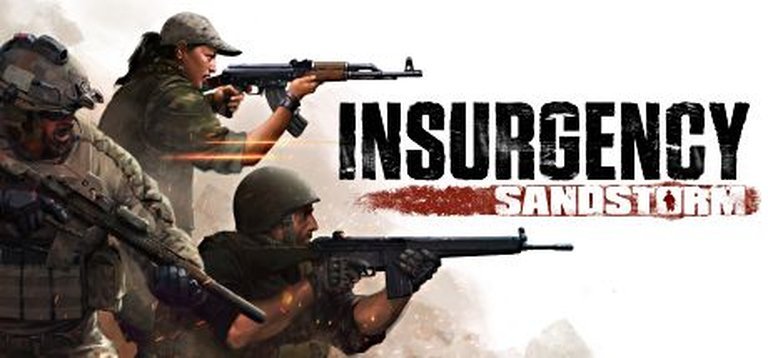
Insurgency: Sandstorm is a tactical first-person shooter developed by New World Interactive and published by Focus Home Interactive, set in a modern conflict environment emphasizing teamwork, realistic combat, and high-lethality gameplay. The game features objective-based multiplayer modes across diverse locations, challenging players with strategic depth, limited resources, and intense firefights requiring coordinated tactics to achieve victory.
Gameplay Videos
Where to Buy Insurgency: Sandstorm
PC
Insurgency: Sandstorm Free Download
Insurgency: Sandstorm Mods
Insurgency: Sandstorm Guides & Walkthroughs
Insurgency: Sandstorm Reviews & Reception
ign.com : Insurgency: Sandstorm punches well above its weight, offering phenomenal gunplay that shows up much of its big-budget competition.
vg247.com : It’s the way all these sounds, together with nigh-constant voice acted lines from human and AI soldiers, build the scene.
Insurgency: Sandstorm Cheats & Codes
PC
Press ` key to open the console.
| Code | Effect |
|---|---|
| God | God mode on |
| SwitchLevel | Changes level to |
| GiveAmmo [Amount] | Adds ammo |
| GiveSupplyPoints [Amount] | Adds more supply points |
| GiveWeapon [Name] | Adds a weapon of your choice |
| GiveWeaponUpgrade [Modification Name] | Adds a weapon upgrade modification |
| GiveItem [Name] | Adds items and explosives |
| RespawnMe | Respawns you |
| RespawnAllBots | Respawns all bots |
| ResupplyNow | Gives you full ammo |
| NoClip | Pass through everything |
| HurtMe [Number] | Will hurt you badly if you want to |
| CheatCaptureObjective | Captures the objective quickly |
| Camera Thirdperson | Changes camera view |
| ChangeSize [Amount] | Become Hulk |
| Camera Spectate | Broken Thirdperson camera |
| Fly | I believe I can fly |
Insurgency: Sandstorm: A Brutal Masterclass in Tactical Realism
Introduction
In an era saturated with arcade shooters and bombastic military spectacles, Insurgency: Sandstorm emerges not as a contender for mainstream appeal, but as a relentless, unforgiving purveyor of authentic combat. As the spiritual successor to New World Interactive’s cult classic Insurgency (2014), Sandstorm doubles down on the series’ core tenets: hyper-lethal gunplay, asymmetric warfare, and a commitment to realism that borders on simulation. Yet, this sequel is no mere refinement—it is a technological and philosophical rebirth, powered by Unreal Engine 4 and driven by a vision to bridge the chasm between military sims like Arma and action shooters like Call of Duty. The result is a game that feels both punishingly authentic and viscerally exhilarating, a rare achievement in a genre often criticized for sacrificing depth for accessibility. This review will dissect Insurgency: Sandstorm as both a landmark in tactical FPS design and a product of its turbulent development, arguing that while it stumbles in technical polish and narrative ambition, it stands as an essential, uncompromising experience for those who crave the raw, unvarnished truth of modern warfare.
Development History & Context
New World Interactive’s Vision and Technological Constraints
Developed by New World Interactive (NWI), the studio behind Insurgency and Day of Infamy, Sandstorm was conceived as a quantum leap for the series. Lead designer Michael Tsarouhas explicitly aimed to “find a balance” between the meticulous realism of Arma and Squad and the high-octane pace of mainstream shooters. This philosophy was enabled by a critical technological shift: abandoning the Source Engine for Unreal Engine 4, which allowed for enhanced destructibility, larger maps, and drivable vehicles—a first for the series. However, this transition was fraught with challenges. The cancellation of planned Linux and macOS releases in 2019 underscored the difficulties of cross-platform optimization, while repeated delays for PlayStation 4 and Xbox One (from 2018 to 2021) reflected the complexities of adapting a hardcore PC experience to consoles. Most notably, the indefinite shelving of a single-player/co-op campaign in January 2018—despite a 2017 E3 trailer—revealed the studio’s prioritization of multiplayer. Tsarouhas cited “high production requirements” and a desire to deliver the game in 2018, framing the move as a shift toward a “fictional but inspired” conflict to avoid “sensitive” real-world parallels. This decision, while pragmatic, left a palpable narrative void.
The Gaming Landscape of 2018
Released on December 12, 2018, Sandstorm entered a crowded market dominated by Battlefield V and Call of Duty: Black Ops 4. Yet, its timing was serendipitous. As mainstream shooters grappled with loot box controversies and declining innovation, Sandstorm offered a stark alternative: a game where skill, not progression gates, dictated success. Its indie roots—evolving from a Half-Life 2 mod—allowed NWI to resist industry trends, focusing instead on community feedback and free post-launch content. This ethos resonated with a niche but dedicated audience, culminating in over 5 million units sold by 2021. The game’s eventual console ports (PS4/Xbox One in 2021, PS5/Xbox Series X/S in 2024) solidified its status as a platform-agnostic tactical staple, albeit with compromises like reduced player counts (10v10 vs. 14v14 on PC) to accommodate older hardware.
Narrative & Thematic Deep Dive
A Conflict Defined by Asymmetry and Ambiguity
Sandstorm‘s narrative is deliberately sparse, set in an unnamed fictional Middle Eastern nation inspired by the Syrian Civil War, Iraqi insurgency, and Chechen conflicts. The factions are archetypes: the “Security” forces, a coalition of Western-backed PMCs, local militias, and Kurdish fighters (e.g., YPG/YPJ), face off against “Insurgents,” a ragtag mix of terrorists, defectors, and Russian/Chechen mercenaries. This asymmetry is mirrored in gameplay—Security boasts NATO-grade weapons and air support, while Insurgents rely on aging Soviet hardware and guerrilla tactics like IEDs and chemical attacks. The lore, as gleaned from voice lines and community discussions, hints at a complex geopolitical tapestry: Insurgent “Mercenary” characters shout in Russian, suggesting foreign intervention, while Security’s “Militia” voice lines betray a local, less professional force. Yet, NWI intentionally avoids explicit backstory, treating the conflict as a canvas for player-driven narratives. As one Redditor noted, the game prompts players to ask, “Why are we fighting?”—a question left unanswered, forcing immersion through ambiguity rather than exposition.
Characterization and Dialogue
Character development is minimal, serving as a blank slate for player projection. No named protagonists exist; instead, identity is forged through class roles and cosmetic choices. Dialogue emphasizes realism over heroism. Arabic and Russian dominate Insurgent chatter, while Security forces mix English with Arabic commands, reflecting multinational coalitions. Voice lines are raw and reactive: “S, s, I’ve got to reload!” or “Contact left!” convey panic, not bravado. This authenticity extends to death rattles and coughs, which IGN described as “disturbing” but essential to war’s horror. Yet, the lack of a campaign robs these interactions of context. As PCGamesN lamented, “nameless locations with nameless conflicts” reduce the war to a mechanical exercise, missing opportunities for deeper storytelling like the scrapped Iraqi women-focused narrative teased in early trailers.
Themes of Brutality and Futility
The game’s themes emerge from gameplay, not cutscenes. High lethality—often one-shot kills—underscores war’s fragility. Weight systems and stamina penalties simulate physical exhaustion, while restricted ammo counts force resourcefulness. The gas mask mechanic, protecting against chemical strikes but limiting vision, symbolizes the double-edged sword of survival technology. Yet, Sandstorm avoids glorification. Victory feels fleeting, and defeat is permanent until objectives are captured. This futility is intentional, as NWI sought to depict war’s “horrific nature” without sanitization, as IGN noted. Still, the absence of narrative context prevents thematic exploration beyond surface-level brutality. As TVTropes observed, the game is a “Fackler Scale of FPS Realism” entry—realistic in mechanics but sterile in emotional resonance.
Gameplay Mechanics & Systems
Core Loop: Minimalism and Lethality
Sandstorm‘s gameplay is defined by restraint. A minimalistic HUD omits health bars, ammo counters, or minimaps, forcing players to rely on environmental cues and audio cues. Weapons kill in few shots, often one to two hits, making every engagement a high-stakes gamble. This creates a unique tension: success hinges on positioning, sound discipline, and teamwork, not twitch reflexes. Most modes (e.g., Push, Firefight) lack instant respawns; dead players spectate until their team captures an objective, amplifying the weight of failure. This design, inherited from its predecessors, reinforces the game’s hardcore ethos, as PC Gamer noted: “Somehow in this most well-travelled of multiplayer FPS paths, Sandstorm feels fresh and innovative at every turn.”
Asymmetric Combat and Class Systems
The eight classes (Rifleman, Breacher, Advisor, Demolitions, Marksman, Gunner, Observer, Commander) ensure role specialization, but asymmetry defines faction identities. Security wields NATO staples like the M4A1 and M110 SASS, while Insurgents use Soviet-era AK variants, Chinese QBZ rifles, or even relics like the M1 Garand. Weapon customization is deep but balanced: “Supply Points” (SP) limit loadouts, and weight affects movement speed. A heavily armored Marksman sacrifices mobility for protection, while a light Breacher trades armor for agility. Fire support systems add strategic depth: Security calls in A-10 strafes or Apache gunships, while Insurgents deploy drone strikes or chemical mortars—requiring an Observer to relay coordinates. However, classes like Marksman are limited per server, often leading to Rifleman dominance, as critics noted.
Modes and Progression
Game modes emphasize objectives over kill counts. Push involves sequential objective captures and cache destruction, akin to Rust or Squad. Firefight focuses on three-point control with no respawns, creating nail-biting endgames. Co-op modes like Checkpoint pit players against AI in objective-based waves, with hardcore variants offering limited respawns. Progression is purely cosmetic: unlocks include uniforms, weapon skins, and accessories. This approach, praised for avoiding pay-to-win mechanics, can feel shallow for players seeking power progression. Limited Time Playlists (e.g., “Team Deathmatch,” “Gang War” with handguns-only) add variety but often feel gimmicky. Controversially, the Skirmish and Competitive modes were removed due to low player counts, highlighting NWI’s commitment to refining core gameplay over bloat.
UI and Technical Quirks
The clean UI prioritizes immersion, but map boundaries are poorly defined, as IGN criticized. “Restricted areas” appear as invisible walls with inconsistent penalties (e.g., instant death vs. weapon disabling), leading to frustrating exploits. Vehicle handling, while novel, suffers from jank—technical debt from the Source Engine era. Optimization issues plagued the PC release, with frame dips in dense maps like Summit, though console ports fared better post-patches. NWI’s responsiveness to feedback is evident; for example, reverting a contentious weapon-loadout change after community backlash, demonstrating a commitment to player experience.
World-Building, Art & Sound
Setting and Atmosphere
Sandstorm‘s world is a character unto itself. Maps like Farmhouse and Crossing evoke war-torn urban and rural landscapes, with rubble-strewn streets and makeshift defenses. The fictional Middle Eastern setting—avoiding real nation names—allows NWI to draw inspiration from conflicts without direct political commentary. This “Qurac” trope, as TVTropes terms it, is executed through environmental storytelling: graffiti in Arabic, destroyed technicals, and abandoned caches hint at a brutal insurgency. Yet, maps often feel homogenous, with critics like 4Players.de noting “aesthetic fatigue” due to similar color palettes. Night-vision and gas mask filters add layers of tension, turning familiar spaces into claustrophobic nightmares.
Visual Design and Uncompromising Detail
Powered by Unreal Engine 4, Sandstorm prioritizes functional realism over graphical spectacle. Character models display meticulous weapon animations—chambering rounds, toggling fire selectors—with transparent magazines visibly depleting. Gore is visceral: .50-cal rifles dismember bodies, and headshots create “pink mist.” However, textures can be muddy on low settings, and lighting lacks the dynamism of AAA contemporaries. Cosmetic customization mitigates this, with over 100 gear sets (e.g., “PMC Gear,” “Ghillie”) allowing personalization. The art direction excels in its grittiness, but technical hiccups—like collision bugs or pop-in—occasionally break immersion.
Sound Design: The Game’s True Weapon
If any element elevates Sandstorm, it is its sound design. Positional audio is peerless, as VG247 asserted: “In audio terms, it’s peerless.” Weapons report with deafening clarity—a burst from an M249 near concrete walls is “almost deafening,” while RPG whizzes carry terrifying weight. Death sounds are equally haunting: “labored, wailing death rattles” and “blood-spewing coughs” (IGN) blur the line between human and AI. Voice lines are contextually driven, with panic overriding heroism. Proximity chat fosters tension, as insults like “F* YOU!” echo through corridors. Even silence is weaponized; the absence of enemy footsteps creates paranoia. This auditory mastery makes Sandstorm one of the most immersive shooters ever crafted, despite visual limitations.
Reception & Legacy
Critical Acclaim and Lingering Criticisms
Insurgency: Sandstorm received “generally favorable” reviews (80% on MobyGames, 78 Metacritic). Critics lauded its gunplay and atmosphere: IGN awarded it 8.8/10, calling it “a pleasant surprise that’s worthy of your time,” while PC Gamer (85/100) praised its “terrifying realism.” Sound design and asymmetric warfare were universal highlights. However, technical issues marred the experience. “Mikroruckler” (micro-stutters) on PC, as GameStar noted, and optimization woes on consoles frustrated players. The map design drew mixed reactions; some praised choke points, while others criticized linearity (e.g., Precinct). The absence of a campaign was a recurring gripe; Metro.co.uk called it “a shame,” though others argued multiplayer was sufficient. Controversies arose with updates: the 2021 “Lunar New Year” Chinese-themed cosmetics (e.g., a red changshan) were scrapped after backlash for clashing with the game’s aesthetic, highlighting NWI’s community-centric approach.
Commercial Success and Sustained Evolution
Commercially, Sandstorm defied expectations. With 5 million units sold by 2021, it became NWI’s most successful title. Console ports expanded its reach, while free “Operations” (e.g., Nightfall, Cold Blood) added maps, weapons, and cosmetics post-launch. The game’s legacy is cemented by its influence on the tactical shooter genre. It occupies a niche between Squad‘s complexity and Call of Duty‘s accessibility, proving that realism can be commercially viable. Its community remains active, with custom servers and mod.io support extending longevity. Yet, its “hardcore” label limits mainstream appeal, as Rock, Paper, Shotgun noted: “I’ve only got so much patience for games where the victor is nearly always whoever doesn’t get spotted first.”
Conclusion
Insurgency: Sandstorm is a triumph of vision over execution—a game that dares to be uncompromising in a market obsessed with accessibility. NWI’s commitment to realistic combat, asymmetrical warfare, and team-based strategy creates an experience that is as punishing as it is rewarding. The game’s sound design and gunplay are genre-defining, while its technological leap to Unreal Engine 4 showcases indie ambition at its finest. Yet, it is not without flaws: technical hiccups, repetitive map layouts, and a narrative void prevent it from reaching perfection. The canceled campaign and underdeveloped themes reflect a game focused on multiplayer purity at the expense of depth.
Ultimately, Sandstorm stands as a landmark achievement in tactical FPS design. It is the definitive game for players who seek authenticity over spectacle, proving that hardcore shooters can thrive without sacrificing fun. As the series evolves—culminating in the upcoming Insurgency: Sandstorm sequel—this game will be remembered as the brutal, beautiful foundation upon which modern tactical realism was rebuilt. For those willing to embrace its learning curve, Insurgency: Sandstorm offers not just a game, but a harrowing glimpse into the chaos of modern warfare.