
- Release Year: 2015
- Platforms: PlayStation 4, Windows
- Publisher: Square Enix Co., Ltd.
- Genre: Special edition
Description
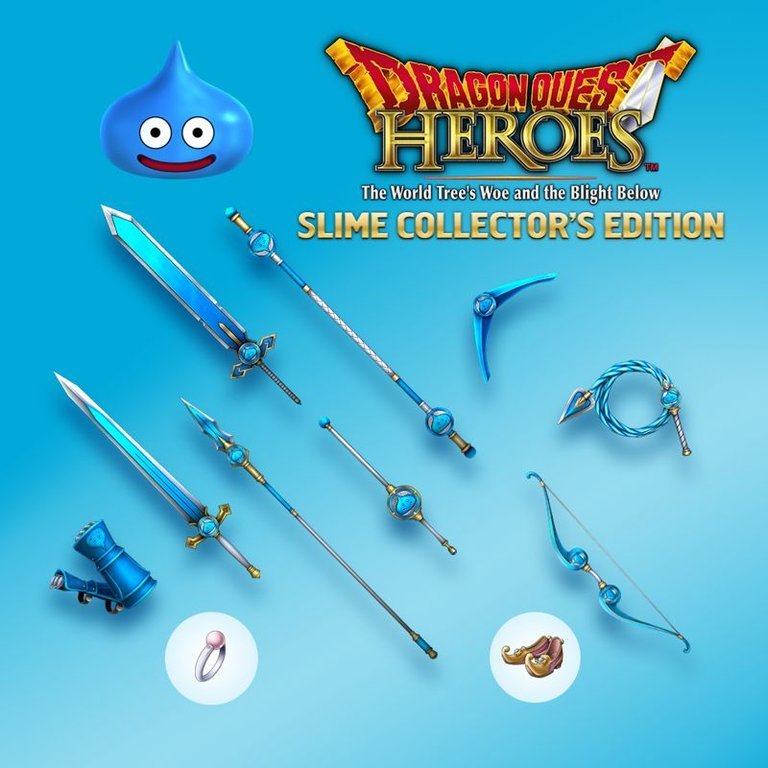
Dragon Quest Heroes: Slime Edition is presented as a special digital collection, offering the complete experience of the action role-playing game Dragon Quest Heroes: The World Tree’s Woe and the Blight Below. This edition enhances the base adventure by including a unique set of nine ‘goopy’ Slime Weapons and two exclusive bonus maps, all designed for integrated use within the main game.
Gameplay Videos
Where to Get Dragon Quest Heroes: Slime Edition
Patches & Mods
Guides & Walkthroughs
Reviews & Reception
mobygames.com : This digital collection includes the full game… as well as a set of nine goopy Slime Weapons and two bonus maps!
reddit.com : A Reddit post sharing a link to a review of Dragon Quest Heroes: Slime Edition.
Dragon Quest Heroes: Slime Edition: A Historian’s Look at a Thematic Digital Collection
1. Introduction
In the annals of video game history, certain franchises cast long, revered shadows, and among them, Dragon Quest stands as a titan. For decades, the series has defined the very essence of the Japanese role-playing game, cultivating a vibrant universe brimming with unforgettable characters, charming monsters, and a distinctive artistic flair. However, as the industry evolved, so too did the strategies for expanding beloved IPs. This brings us to Dragon Quest Heroes: Slime Edition, released in 2015, not as a standalone mainline entry, but as a specially curated digital collection.
This review, approached from the perspective of a game historian and journalist, aims to dissect Dragon Quest Heroes: Slime Edition not just for its immediate appeal, but for its place within the broader Dragon Quest legacy and the burgeoning trend of special editions. While the primary allure of this package is the inclusion of the full base game, Dragon Quest Heroes: The World Tree’s Woe and the Blight Below, the “Slime Edition” differentiates itself through exclusive, thematically-tied digital extras. Our thesis posits that this edition represents a strategic move by Square Enix to offer enhanced value to dedicated fans, leveraging the iconic appeal of the Slime monster to create a distinct, desirable entry point into the Dragon Quest Heroes spin-off series. Despite the inherent challenge of evaluating a “special edition” largely defined by its bundled content, this analysis will meticulously unpack every available detail to illuminate its historical and commercial significance.
2. Development History & Context
The creation of Dragon Quest Heroes: Slime Edition is inextricably linked to the development and release of its parent title, Dragon Quest Heroes: The World Tree’s Woe and the Blight Below. Released first on PlayStation 4 on October 13, 2015, and later for Windows on December 3, 2015, this digital collection emerged from the publishing arm of Square Enix Co., Ltd. While the source material for the Slime Edition itself does not detail its specific development team, the bundled base game’s official description attributes its creation to a formidable collaboration: ARMOR PROJECT/BIRD STUDIO/KOEI TECMO GAMES/SQUARE ENIX All Rights Reserved. © SUGIYAMA KOBO.
This collaborative credit reveals a pivotal context. ARMOR PROJECT (led by Yuji Horii, the series creator), BIRD STUDIO (helmed by the legendary character designer Akira Toriyama), and SUGIYAMA KOBO (representing the iconic composer Koichi Sugiyama) are the pillars of the traditional Dragon Quest creative team. Their involvement signifies that The World Tree’s Woe and the Blight Below was not merely a licensed cash-in, but a legitimate extension of the beloved universe, albeit one diverging from its traditional turn-based RPG roots. The crucial addition of KOEI TECMO GAMES strongly indicates that the foundational gameplay of the Dragon Quest Heroes series was developed by Omega Force, Koei Tecmo’s renowned studio behind the Warriors (Musou) franchise. This partnership allowed Dragon Quest to explore real-time action combat, a significant shift for the IP.
The “Slime Edition” specifically represents a commercial enhancement. The creators’ vision for this package was to provide a distinct, value-added offering. By bundling the full game with exclusive “nine goopy Slime Weapons” and “two bonus maps,” Square Enix aimed to entice players with immediate access to themed digital extras. This approach was common in the mid-2010s gaming landscape, where digital distribution platforms like PlayStation Store and Steam facilitated various editions (Standard, Deluxe, Collector’s, etc.) that included pre-order bonuses or exclusive in-game items. The release on PlayStation 4 and Windows allowed for a broad reach, capitalizing on the capabilities of then-current generation consoles (1080p HD Video Output, DUALSHOCK®4 support, Remote Play functionality) and the ever-growing PC gaming market. The 26GB minimum save size also indicates a game of considerable scope for its time.
This period was also marked by a broader expansion of the Dragon Quest IP into various spin-off genres. The “Dragon Quest Heroes series” itself was new with The World Tree’s Woe and the Blight Below, preceding Dragon Quest Heroes II (2016). Furthermore, the Dragon Warrior / Dragon Quest universe was no stranger to Slime-centric titles, as evidenced by earlier releases like Dragon Quest Heroes: Rocket Slime (2005) and the announcement of Slime Heroes (2025). The “Slime Edition” thus positioned itself as a fun, fan-service nod within this rich ecosystem, tapping into the enduring popularity of the series’ most recognizable, albeit low-tier, monster.
3. Narrative & Thematic Deep Dive
The Dragon Quest Heroes: Slime Edition is, at its core, a package that includes the complete narrative experience of Dragon Quest Heroes: The World Tree’s Woe and the Blight Below. Crucially, the “Slime Edition” itself does not introduce new plot points, characters, or dialogue that diverge from the base game’s story. Instead, its additional content serves to augment the existing narrative journey through thematic items and expanded gameplay spaces.
As the provided source material does not offer a detailed synopsis of The World Tree’s Woe and the Blight Below, we must infer its thematic direction from its title and the overarching Dragon Quest universe. The phrase “The World Tree’s Woe and the Blight Below” strongly suggests an epic fantasy conflict, centered around a significant cosmic or natural entity (the World Tree) facing a catastrophic threat (“Woe” and “Blight”). This immediately aligns with classic Dragon Quest themes of protecting a fantastical world from encroaching evil, often involving a journey to gather allies, overcome formidable foes, and restore balance. The narrative likely involves a protagonist (or multiple protagonists, given the “Heroes” moniker) tasked with addressing this blight, implying themes of heroism, sacrifice, and the enduring struggle between light and darkness.
The “Slime Edition” primarily enhances the thematic experience rather than the narrative. The inclusion of “nine goopy Slime Weapons” is a direct appeal to fans’ affection for the iconic Slime monster. These weapons, while perhaps having unique in-game properties, are first and foremost cosmetic and symbolic. They immerse the player further into the whimsical, yet often perilous, world of Dragon Quest by allowing them to wield the very essence of its most beloved creature. This adds a layer of playful irony and fan service, transforming a common foe into a tool for heroism. The “two bonus maps” likewise extend the thematic exploration of the world, providing new arenas that are presumably integrated into the base game’s overarching setting, potentially offering additional lore or environmental storytelling without introducing new narrative arcs.
In essence, while the Slime Edition does not redefine the story, it deepens the player’s connection to the established Dragon Quest mythology through its exclusive content, particularly by celebrating the universally recognized Slime. Its thematic contribution lies in its ability to enhance the player’s engagement with the world through unique, universe-specific items, making the journey through “The World Tree’s Woe and the Blight Below” a distinctly “Slime-flavored” experience.
4. Gameplay Mechanics & Systems
As a “Special edition” that bundles the full base game along with “Digital extras” and “Extra content,” Dragon Quest Heroes: Slime Edition does not introduce entirely new core gameplay mechanics or systems. Instead, it provides enhancements and additions that integrate seamlessly into the pre-existing structure of Dragon Quest Heroes: The World Tree’s Woe and the Blight Below. Without explicit details of the base game’s combat or progression, we must analyze the impact of the Slime Edition‘s specific inclusions based on the available information.
The core gameplay loop, while not detailed, can be inferred to involve a single-player experience (“1 player”) as indicated by the PS4 specifications. The discussion of the base game within the r/rpg_gamers subreddit, which covers “action games with RPG elements,” strongly suggests that Dragon Quest Heroes deviates from the traditional turn-based combat of mainline Dragon Quest titles. This implies real-time action combat, likely with elements of character progression, customization, and possibly strategic monster-slaying, typical of its implied genre. The requirement of a DUALSHOCK®4 controller further reinforces its action-oriented design on the PlayStation 4.
The primary additions of the Slime Edition are:
* Nine goopy Slime Weapons: These are the most significant gameplay-affecting extras. In any RPG or action game with RPG elements, weapons are integral to a character’s offensive capabilities. While “goopy” suggests a thematic, perhaps even humorous, aesthetic, these weapons would undoubtedly offer distinct stats, potentially unique attack animations, or even special abilities tied to their Slime theme. For players, this would translate into more options for character customization and combat strategy from the outset. Early access to these themed weapons could alter the initial progression curve or simply provide cosmetic variety, enhancing the player’s agency in how they approach combat encounters within the base game.
* Two bonus maps: These additions directly expand the playable content of the base game. “Bonus maps” typically imply additional combat arenas, challenge zones, or areas for exploration and resource gathering. For a game focusing on action and combat, these maps would offer new environments to fight in, potentially against unique enemy formations or specific objectives not found in the main campaign. This extends the overall playtime and replayability, providing more opportunities to utilize the game’s core combat mechanics and character abilities.
The user interface (UI) and other system-level details are not provided. However, given that this is an edition of an existing game, it would undoubtedly share the same UI as The World Tree’s Woe and the Blight Below, with the Slime Weapons and bonus maps simply integrated into existing menus for equipment and map selection. The 26GB minimum save size implies a substantial game world and content, underscoring the value of the full game included in this edition, even before considering the extras. The “digital extras” and “extra content / game” genre classifications further solidify its role as a content bundle designed to enhance the existing framework rather than revolutionize it.
5. World-Building, Art & Sound
While the Dragon Quest Heroes: Slime Edition itself does not directly define the aesthetic or auditory experience, it acts as a gateway to the richly established world-building, distinctive art style, and memorable sound design of Dragon Quest Heroes: The World Tree’s Woe and the Blight Below. The very name “Dragon Quest Heroes” and its placement within the Dragon Warrior / Dragon Quest universe are crucial indicators.
The foundational elements of the Dragon Quest aesthetic are internationally recognized. The involvement of BIRD STUDIO (Akira Toriyama) in the base game’s creation guarantees the iconic, instantly recognizable character and monster designs that have defined the series since its inception. This means players of the Slime Edition would experience a world populated by Toriyama’s unique blend of charming, often whimsical, and occasionally formidable creatures and heroes. The art direction would likely feature vibrant color palettes, exaggerated forms, and a sense of lighthearted adventure, even amidst dire circumstances. The title “The World Tree’s Woe and the Blight Below” suggests a fantastical setting, likely with grand landscapes, ancient structures, and a central, perhaps mystical, “World Tree” acting as a focal point for the world’s health and stability. This typical Dragon Quest environmental storytelling contributes significantly to the atmosphere.
The sound design, though not explicitly detailed, is also strongly implied by the credit © SUGIYAMA KOBO. Koichi Sugiyama is synonymous with the Dragon Quest series’ orchestral scores, providing its heroic fanfares, melancholic melodies, and stirring battle themes. His involvement means players would be immersed in a soundtrack that evokes nostalgia for long-time fans while establishing a grand, adventurous tone for newcomers. The sound effects, too, would likely adhere to the series’ established conventions, contributing to the overall cohesive experience.
The “Slime Edition” specifically contributes to the world-building through its thematic focus on the Slime. The inclusion of “nine goopy Slime Weapons” not only provides in-game utility but also serves as a playful homage to the series’ most iconic, adorable, and ubiquitous monster. This reinforces the Slime’s status as a beloved mascot, deeply integrated into the fabric of the Dragon Quest universe. The “bonus maps” would likely fit seamlessly into this visual and auditory framework, offering new vistas and arenas that maintain the distinctive Dragon Quest charm and atmosphere. Ultimately, the Slime Edition leverages the deep, well-established world-building, art, and sound of the Dragon Quest franchise, offering a familiar yet enhanced aesthetic experience through its themed digital content.
6. Reception & Legacy
Evaluating the reception and legacy of Dragon Quest Heroes: Slime Edition presents a unique challenge, primarily due to the sparse official data provided in the source material. According to MobyGames, the “Moby Score” for this specific edition is “n/a,” and both “Critic Reviews” and “Player Reviews” sections explicitly state, “Be the first to add a critic review for this title!” and “Be the first to review this game!” respectively. This indicates a complete absence of public critical or player consensus on MobyGames regarding this particular edition.
Commercial reception is equally difficult to gauge. The provided data notes that it has been “Collected By 13 players” on MobyGames. While this is a tracking metric on the platform, it is an extremely small sample size and by no means reflects the total sales or broad commercial success across PlayStation Network and Steam. The listing of prices ($42.99 on PlayStation.com and $39.99 on Steam) indicates its commercial availability and value proposition at the time of publication, but not its sales volume.
Despite the lack of direct reception data, we can infer its intended impact and place within the Dragon Quest legacy. As a “Special edition” and “Digital extras” package, its primary purpose was to offer an enhanced entry point to Dragon Quest Heroes: The World Tree’s Woe and the Blight Below. Its legacy, therefore, is largely intertwined with that of its base game and the broader Dragon Quest Heroes series.
The existence of the “Slime Edition” signifies Square Enix’s strategy to diversify its offerings for a core title. By providing thematic bonuses like “nine goopy Slime Weapons” and “two bonus maps,” the publisher aimed to cater to the dedicated fanbase that appreciates such exclusive content and the iconic Dragon Quest mascot. This move is part of a larger trend in the industry where special editions and DLC bundles extend the lifecycle and perceived value of a game.
Its influence on subsequent games and the industry is more subtle. It reinforced the viability of the Dragon Quest Heroes spin-off concept, which continued with Dragon Quest Heroes II released in 2016. The emphasis on the Slime mascot in the edition’s title also highlights the enduring marketing power of Dragon Quest‘s whimsical monster designs, a strategy seen in earlier titles like Dragon Quest Heroes: Rocket Slime (2005) and upcoming releases like Slime Heroes (2025). This shows a consistent effort to leverage the universal appeal of these characters across various genres and editions.
Ultimately, while the Slime Edition itself might not have generated widespread individual critical acclaim, its significance lies in its role as a commercial and fan-service package within a thriving franchise. It contributed to the ongoing expansion of the Dragon Quest universe into new gameplay territories and demonstrated a clear understanding of what excites a dedicated fanbase: exclusive, thematically rich content that celebrates the series’ most beloved elements.
7. Conclusion
Dragon Quest Heroes: Slime Edition stands as a fascinating artifact in the expansive history of the Dragon Quest franchise, not as a revolutionary standalone game, but as a meticulously curated digital collection. Released in 2015 for PlayStation 4 and Windows, it offered players Dragon Quest Heroes: The World Tree’s Woe and the Blight Below bundled with a distinctive suite of “nine goopy Slime Weapons” and “two bonus maps.” This package served as a testament to Square Enix’s strategic approach to its beloved IP, aiming to provide enhanced value and thematic immersion for its dedicated fanbase.
Our analysis has shown that the edition’s historical context is rooted in a period of creative expansion for Dragon Quest, venturing into action-oriented gameplay through a collaboration with Koei Tecmo. While the Slime Edition itself offered no new narrative, its included Slime-themed content shrewdly tapped into the iconic imagery and whimsical charm that define the Dragon Quest universe, enhancing the player’s connection to the world and its most recognizable monster. Similarly, its contribution to gameplay was in expanding options and content, offering unique weaponry and additional arenas within the existing framework of the base game. The visual and auditory experience, though not explicitly detailed for the edition, was unequivocally that of a classic Dragon Quest title, imbued with Akira Toriyama’s character designs and Koichi Sugiyama’s musical scores.
Despite the notable absence of official critical and commercial reception data for this specific edition, its legacy is evident in its place within the ongoing Dragon Quest Heroes series and the broader strategy of leveraging beloved mascots like the Slime. It represents a common industry practice of offering themed bundles to deepen player engagement and extend a game’s market presence.
In final verdict, Dragon Quest Heroes: Slime Edition is not a game to be celebrated for groundbreaking innovation, but rather for its definitive role as a fan-focused, value-added package. It provided a charmingly themed entry point to a significant spin-off in the Dragon Quest saga, affirming the enduring appeal of the universe and its delightful inhabitants. For enthusiasts and historians alike, it serves as a valuable case study in how a venerable franchise can evolve and cater to its audience through thoughtful, thematically consistent digital offerings, solidifying its place as a cherished, albeit supplementary, piece of video game history.