
- Release Year: 2014
- Platforms: Linux, Macintosh, Nintendo 3DS, Nintendo Switch, PlayStation 4, PS Vita, Wii U, Windows, Xbox One
- Publisher: Nicalis, Inc., Pikii
- Developer: Nicalis, Inc.
- Genre: Action
- Perspective: Diagonal-down
- Game Mode: Co-op, Single-player
- Gameplay: Permadeath, Procedural generation, Roguelike, Shooter, Twin-stick shooter
- Setting: Horror
- Average Score: 85/100
Description
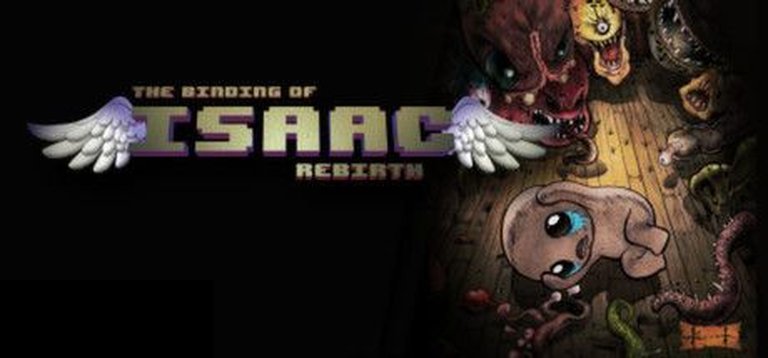
The Binding of Isaac: Rebirth is a roguelike action shooter where players control young Isaac, who escapes into the treacherous depths of his basement to evade his fanatical mother, who has been commanded by a twisted interpretation of God to sacrifice him, drawing from the biblical story in a dark, grotesque narrative. Featuring procedurally generated rooms filled with over 450 unique items that alter abilities, new enemies, bosses, environments, and expanded content including co-op play for two players, secret areas, challenge runs, and unlockable characters like Azazel, Lazarus, and Eden, this remake and sequel delivers addictive, permadeath gameplay with pixel-art visuals and haunting music.
Gameplay Videos
Where to Get The Binding of Isaac: Rebirth
Patches & Mods
Guides & Walkthroughs
Reviews & Reception
metacritic.com (88/100): An improvement in nearly every way to the original. It is a fun, highly addictive, and immersive experience.
gamespot.com : It’s creepy, blasphemous, and obsessed with poo. Despite all that, good luck walking away from The Binding of Isaac: Rebirth.
imdb.com (80/100): The Binding of Isaac: Rebirth is a game that improves upon the original in every way.
opencritic.com (87/100): The creepy-cute dungeons of The Binding of Isaac: Rebirth are amazingly different and challenging every time.
The Binding of Isaac: Rebirth: Review
Introduction
In a gaming landscape increasingly dominated by polished blockbusters and narrative-driven epics, few titles dare to embrace the chaotic, unforgiving essence of roguelikes with such unapologetic fervor. Enter The Binding of Isaac: Rebirth, Edmund McMillen’s 2014 remake and spiritual sequel to his 2011 indie sensation. This pixelated descent into biblical horror and familial dysfunction isn’t just a game—it’s a fever dream wrapped in procedural generation, where every run feels like a fresh nightmare. Born from McMillen’s desire to transcend the limitations of Flash technology, Rebirth revitalizes the original’s cult following while expanding its grotesque universe into a sprawling masterpiece of replayability and discovery. My thesis: Rebirth isn’t merely a refinement of its predecessor; it’s a pivotal evolution that cements roguelikes as a genre capable of profound emotional depth, innovative mechanics, and enduring cultural impact, all while challenging players to confront the darkest corners of childhood innocence.
Development History & Context
The origins of The Binding of Isaac trace back to a pivotal moment in indie gaming’s burgeoning renaissance. In 2011, shortly after the triumph of Super Meat Boy—a punishing platformer that showcased McMillen’s penchant for tight controls and masochistic difficulty—McMillen and collaborator Florian Himsl crafted the original Binding of Isaac during a game jam. Released as an Adobe Flash title on Steam, it exploded in popularity, selling over a million copies despite its niche appeal. However, Flash’s constraints—laggy performance, limited scalability, and platform restrictions—hobbled its potential. McMillen envisioned a deeper experience inspired by The Legend of Zelda‘s dungeon-crawling and Spelunky‘s roguelike peril, but Flash couldn’t support the expansive content he craved, leading to the abandonment of a planned second expansion after Wrath of the Lamb.
Enter Nicalis, Inc., the indie publisher founded by Tyrone Rodriguez in 2007, known for porting gems like Cave Story and VVVVVV to consoles. Rodriguez approached McMillen in 2012 with an offer to rebuild the game from the ground up, freeing it from Flash’s shackles. McMillen, scarred by the business side of Super Meat Boy, agreed on the condition that Nicalis handle publishing logistics, allowing him to focus on design. Announced in November 2012 as a console-focused remake, Rebirth ballooned into a semi-sequel, incorporating Wrath of the Lamb content while adding over 160 new items, three playable characters (Azazel, Lazarus, and Eden), black hearts for health, larger scrolling rooms, and a new final chapter. Development shifted to a custom engine, enabling 16-bit pixel art upgrades and filters for smoother visuals.
The era’s gaming landscape was ripe for this rebirth. The early 2010s saw roguelikes resurging via indie darlings like Spelunky (2008, full release 2012) and Rogue Legacy (2013), blending procedural generation with accessible twists. Steam’s Greenlight and console digital stores democratized distribution, while Kickstarter successes like Planetary Annihilation highlighted indies’ potential. Yet, Nintendo’s content policies nearly derailed Rebirth; initial 3DS plans were scrapped due to religious themes, only revived for the New Nintendo 3DS in 2015 after internal advocacy. Technological constraints lingered—Vita and 3DS ports demanded optimization—but Nicalis’ expertise shone, releasing on PC, PS4, and Vita in November 2014, followed by Xbox One, Wii U, and New 3DS in 2015. McMillen’s vision, a psychotherapeutic exorcism of his religious upbringing, transformed personal trauma into a genre-defining work, influencing the indie wave amid a post-Minecraft procedural boom.
Narrative & Thematic Deep Dive
At its core, The Binding of Isaac: Rebirth is a twisted retelling of the biblical tale where Abraham nearly sacrifices his son Isaac at God’s command. Here, McMillen flips the script: Isaac’s mother, a devout Christian radicalized by “voices from above,” interprets divine will as a call to purge her son’s “corruption.” She confiscates his toys, strips him naked, locks him in his room, and ultimately wields a knife to “prove her faith.” Isaac flees into the basement, a labyrinthine hellscape teeming with grotesque familiars—fetal horrors, demonic siblings, and fecal abominations—symbolizing his fractured psyche.
The plot unfolds through cryptic, stick-figure cinematics unlocked by progression, revealing a layered tragedy. Isaac isn’t a hero; he’s a child suffocating in his toy chest, his “adventures” a hallucinatory death throe amid parental strife. Endings escalate this: Defeating Mom exposes her knife-wielding rage; deeper paths confront It Lives (a pulsating fetus representing unwanted birth), Satan (self-perceived corruption), and Delirium (madness’s light at the tunnel’s end). Expansions like Afterbirth and Repentance deepen the lore—Hush embodies suffocation, Mother a monstrous matriarch—culminating in Repentance‘s ascent, where Isaac relives his parents’ divorce, abuse, and suicide delusion. His father’s abandonment (hinted via “Dad’s Key” item) and mother’s fanaticism paint a portrait of generational trauma, with Isaac’s tears as futile cries against inevitable doom.
Thematically, Rebirth dissects religious indoctrination, maternal betrayal, and childhood vulnerability with unflinching brutality. McMillen, raised in a strict Christian household, infuses autobiography: parental fights echo his youth, where games like Dungeons & Dragons were “demonic.” Characters like Magdalene (tank-like vitality) or Judas (betrayer’s offensive edge) embody archetypes—sacrifice, redemption—while items (e.g., “Dead Bird” for vengeful companionship) warp innocence into horror. Dialogue is sparse but poignant: narrated whispers and item descriptions (cryptic, like pills labeled “???”) evoke paranoia. Expansions explore suicide (Isaac boss), greed (Ultra Greed modes), and finality (The Beast as apocalypse), transforming a simple escape tale into a profound meditation on faith’s toxicity and familial bonds’ fragility. It’s not subtle—poo-themed rooms mock purity rituals—but this rawness elevates Rebirth beyond shock value, mirroring Silent Hill‘s psychological dread or Braid‘s introspective puzzles.
Gameplay Mechanics & Systems
Rebirth‘s core loop is a hypnotic blend of roguelike peril and twin-stick shooting, where permadeath fuels endless experimentation. Each run begins with Isaac (or an unlocked character) descending procedurally generated floors—Basement, Caves, Depths, Womb—via connected rooms filled with enemies, obstacles, and secrets. Combat revolves around tear projectiles: basic shots evolve via 450+ items (290 from the original, 160 new), synergizing wildly. Passive pickups like “Brimstone” (laser beams) or “My Little Unicorn” (invincibility rainbow) stack for godlike builds—imagine homing tears homing in on homing bombs—while active items (e.g., “Lemon Mishap” for slippery chaos) recharge via room clears. Trinkets and pills add risk-reward: a “?” pill might heal or halve health, embodying the game’s sadistic whimsy.
Progression hinges on resource management: hearts (red, soul, black) track health; keys unlock chests/doors; coins fund shops (upgradable via donations); bombs shatter rocks for secrets. Floors end in boss fights—Mama Gurdy’s rolling undead, The Fallen’s resurrecting fury—demanding pattern recognition amid bullet-hell chaos. Innovations shine: seeds allow replayable layouts (100 special seeds with effects), two difficulties (Normal/Hard), and save-anywhere pauses prevent frustration. Co-op supports up to two (later four in expansions), with the second player as a controllable familiar—heart-costly but chaotic fun. Challenges (20 new runs with modifiers, like blindfolded flight) and greed modes (timed survival waves) extend longevity.
Yet flaws persist. UI is minimalist—pixel art map, item codex unlocked gradually—bordering on opaque; cryptic descriptions force wikis or experimentation, alienating newcomers. Luck dominates: bad seeds yield weak items, turning skill-based dodges (Spelunky-esque) into crapshoots. Achievements (339, many secret) reward obsession but feel grindy. Still, innovations like larger rooms, blue fires (pill-dispensing mushrooms), and Eden’s randomized stats per run elevate it, creating emergent narratives where a poo-powered build triumphs over Mom’s Heart. Compared to successors like Enter the Gungeon, Rebirth pioneered item synergy as roguelike soul, flawed but foundational.
World-Building, Art & Sound
Rebirth‘s basement is a visceral womb of revulsion, procedural yet thematically cohesive: fleshy walls pulse in Utero (crimson, Spelunky-inspired unease), Necropolis drips skeletal decay, and Cathedral’s stained-glass sanctity mocks piety. Rooms vary—standard grids, sprawling scrolls, secrets behind mushroom patches or donation machines—fostering exploration amid curses (darkness, slow movement). Enemies embody biblical perversion: floating fetuses, poop globlins, sibling horrors like Magdalene’s rosary-wielding twin. Bosses like Monstro (spewing fly swarms) or The Lamb (apocalyptic fury) tie into lore, their arenas procedural puzzles of survival.
Visually, McMillen’s 16-bit overhaul discards Flash’s “lazy eyesore” for vibrant, grotesque sprites—Isaac’s teary-eyed innocence contrasts with gore-soaked environs. Filters smooth pixels without losing retro charm, while animations (tears splattering, bodies convulsing) add fluidity. Art evolves thematically: early floors mimic toys (blocky, colorful), deepening to hellish abstractions, evoking unease like Nirvana’s raw edge.
Ridiculon’s (Matthias Bossi and Jon Evans) soundtrack replaces Danny Baranowsky’s original after a fallout, shifting from melodic hums to ambient dread. Early tunes are whimsically catchy (Super Meat Boy-esque), darkening into ominous drones—piano stabs punctuate bosses, synthesizers underscore tension. Sound design amplifies horror: wet squelches of tears hitting flesh, guttural enemy gurgles, and mom’s echoing knife scrapes build immersion. Together, these elements craft an atmosphere of claustrophobic madness, where every poop-stain or blood pool reinforces themes of corruption, making the world a psychological trap that lingers long after the run ends.
Reception & Legacy
Upon release, Rebirth was a critical darling, earning an 86-93 Metacritic across platforms (IGN: 9/10 for “non-stop fun”; Destructoid: 10/10 as the “best version yet”). Critics lauded its replayability, synergies, and accessibility tweaks (controller support, saves), though some decried cryptic items and luck dependency (GameSpot: 8/10, praising “neverending features” but noting frustration). Players echoed this: MobyGames averages 8.2/10 from 39 reviews, with praise for depth (2000+ hour veterans) but gripes over tutorials and negative items (e.g., HP-draining chests). Commercially, it sold briskly—combined with the original, over five million by 2015—fueled by Steam sales and PS+ inclusion. Expansions like Afterbirth (85/100) added content but drew ire for bugs and ARG distractions; Afterbirth+ (85/100) shone with modding but frustrated API limits; Repentance (2021) redeemed with narrative closure.
Reputation evolved from “shock indie” to roguelike benchmark. Initially polarizing for themes (child violence, religious satire), it garnered academic nods for exploring trauma. Influence is profound: Enter the Gungeon and Dead Cells borrow item chaos and procedural runs, while Hades echoes character unlocks. As a 2014 Indie of the Year nominee (5th in ModDB Players’ Choice), it bridged Flash-era quirks to modern indies, inspiring mod communities (Antibirth integrated officially). Post-Repentance (2021) and Repentance+ (2024, adding online co-op), its legacy endures as a “singular phenomenon,” with YouTube Let’s Plays amplifying its cult status amid roguelike revivals like Vampire Survivors.
Conclusion
The Binding of Isaac: Rebirth transcends its origins as a Flash oddity, emerging as a roguelike colossus that masterfully weaves procedural innovation with thematic gut-punches. From development’s tech rebirth to gameplay’s addictive synergies, art’s grotesque allure, and a narrative probing faith’s shadows, it demands investment yet rewards with infinite variety. Flaws—opaqueness, luck’s tyranny—pale against its highs, evolving through expansions into a definitive edition. In video game history, Rebirth stands as a cornerstone: McMillen’s exorcism not just revitalized a genre but influenced its future, proving indies can be as profound as they are profane. Verdict: Essential masterpiece—9.5/10. Dive in, but brace for the tears.