
- Release Year: 2024
- Platforms: Windows
- Publisher: Tybug Studios
- Developer: Tybug Studios
- Genre: Action, Adventure
- Perspective: First-person
- Game Mode: Single-player
- Gameplay: Puzzle elements
- Setting: Aquatic, Underwater
- Average Score: 80/100
Description
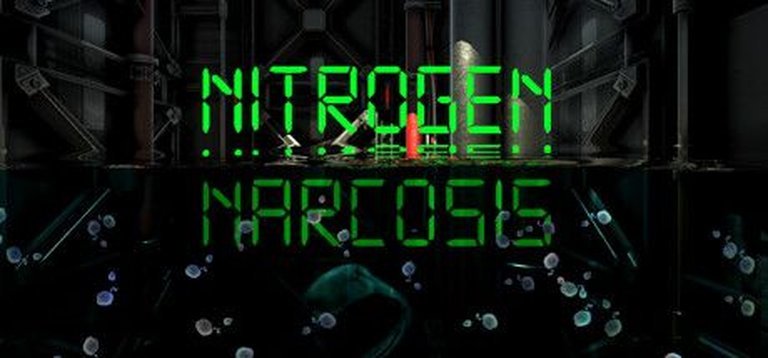
Nitrogen Narcosis is a first-person action-adventure horror game set in the treacherous depths of abandoned and sinking underwater facilities, where players and up to seven others don cheap dive suits to recover valuable materials for their captain’s submarine. As they navigate procedurally generated layouts from the sunlit shallows to the lightless deep, they must solve puzzles, evade keycard-locked doors and hazardous airlocks, and survive against nitrogen narcosis-induced hallucinations, sharks, loot-hoarding crabs, and grotesque mutant horrors lurking within.
Where to Get Nitrogen Narcosis
PC
Guides & Walkthroughs
Reviews & Reception
steambase.io (80/100): Nitrogen Narcosis has achieved a Steambase Player Score of 80 / 100 from 5 total reviews.
Nitrogen Narcosis: Review
Introduction
Imagine plummeting into the inky abyss of the ocean, where the weight of untold fathoms presses against a flimsy dive suit, and the line between reality and hallucination blurs under the intoxicating grip of nitrogen narcosis. Nitrogen Narcosis, the 2024 indie debut from Tybug Studios, plunges players into this thalassophobic hellscape, transforming abandoned underwater facilities into arenas of cooperative dread. As a game journalist with a penchant for unearthing hidden gems in gaming history, I’ve long championed titles that weaponize environmental terror—think Subnautica‘s isolation or Amnesia‘s psychological unraveling. Released in full on December 16, 2024, after an Early Access debut in August, this first-person action-adventure stands as a bold, if nascent, entry in the co-op horror genre. My thesis: While its rough edges betray its indie origins, Nitrogen Narcosis carves a niche for multiplayer underwater survival, blending procedural exploration with hallucinatory horror to deliver a fresh descent into oceanic madness that could inspire future deep-sea indies.
Development History & Context
Tybug Studios, a diminutive outfit helmed by a passionate solo or small-team developer (credits remain sparse, as is common for bootstrapped indies), emerged in the vibrant 2024 landscape of Steam’s Early Access ecosystem. Founded amid the post-pandemic boom in remote-friendly game dev tools, Tybug’s vision for Nitrogen Narcosis draws from real-world diving perils—nitrogen narcosis, a decompression sickness that induces euphoria and delusions at depths beyond 30 meters. The studio’s choice of Unity as the engine underscores pragmatic constraints: Unity’s accessibility allowed rapid prototyping of water physics, procedural generation, and multiplayer syncing without the budget for proprietary tech. Released initially on August 29, 2024, as an invite-only Early Access title (eschewing server browsers to foster intimate lobbies), it reflects the era’s emphasis on community-driven testing, akin to Lethal Company or Content Warning, which popularized chaotic co-op horror scavenging.
The gaming landscape of 2024 was saturated with survival crafts and asymmetrical multiplayer, but underwater settings remained underexplored post-Subnautica (2018). Tybug navigated hardware limits—minimum specs demand a GTX 1080 equivalent—by prioritizing atmospheric immersion over graphical excess, a nod to the indie ethos of Substance over spectacle. Technological hurdles like realistic buoyancy and light refraction in water were approximated via Unity assets, occasionally leading to janky controls that evoke the clumsiness of actual diving gear. The full release incorporated the “Arctic Freeze Update,” expanding to icy polar depths, signaling Tybug’s iterative approach amid Steam’s algorithm favoring frequent updates. In a year dominated by AAA behemoths like Black Myth: Wukong, Nitrogen Narcosis embodies the scrappy resilience of indies, betting on niche appeal to thalassophobes and co-op enthusiasts in an oversaturated market.
Narrative & Thematic Deep Dive
At its core, Nitrogen Narcosis eschews verbose scripting for an emergent, player-driven tale of corporate exploitation and primal fear. The plot unfolds as a terse corporate directive: You and up to seven “employees” don the “cheapest deep-dive suit money can buy” to salvage materials from derelict underwater facilities—abandoned oil rigs, research labs, and industrial hulks now claimed by the sea. Tasked with hauling loot back to a distant submarine captain, the narrative arc mirrors a descent literal and metaphorical: from the sun-dappled shallows, where facility outlines pierce the surface like skeletal fingers, to the lightless deeps where pressure warps both metal and mind.
Characters are archetypal and voiceless, defined by their suits’ anonymity—faceless divers whose camaraderie emerges through frantic radio chatter or synced movements in co-op. No named protagonists; instead, the “narrator” is the environment itself, whispering horrors via flickering holograms, bloodied logs, and hallucinatory visions induced by nitrogen narcosis. Dialogue is minimal, limited to garbled comms (“Contact! Deep end—it’s moving!”) that heighten isolation, forcing players to infer backstories from environmental storytelling: Scrawled warnings about “Specimen 2626,” a grotesque mutant born of facility experiments, or crab-like scavengers hoarding salvage like greedy squatters.
Thematically, the game interrogates humanity’s hubris against nature’s indifference. Nitrogen narcosis serves as a metaphor for encroaching madness—euphoric bubbles distort reality, spawning phantom sharks or writhing shadows that blur foe from figment. This psychological unraveling critiques exploitative labor: Players as disposable “employees” in a profit-driven submersible economy, their sanity sacrificed for scrap. Underwater confinement amplifies thalassophobia, evoking existential dread akin to Lovecraftian abyssal unknowns, while co-op dynamics explore trust and betrayal—will a teammate hoard loot, or sever your oxygen line in panic? Post-Arctic update, themes extend to environmental collapse, with melting ice facilities symbolizing climate peril. Though lacking cinematic flair, the narrative’s subtlety fosters replayable paranoia, making each session a unique chronicle of survival or slaughter.
Gameplay Mechanics & Systems
Nitrogen Narcosis thrives on a tense core loop of exploration, scavenging, and evasion, fused with light puzzle-solving in a first-person vista of submerged ruin. Direct control feels weighty and deliberate—swimming mechanics simulate suit encumbrance, with sluggish propulsion and oxygen management dictating pace. Up to eight players (invite-only via Steam lobbies) form ad-hoc crews, emphasizing coordination: One scouts shallows for keycards, another fends off crabs pilfering your haul, while the group debates breaching a mutant-infested airlock.
Combat is asymmetric and unforgiving, skewing toward survival horror over action. Armaments are improvised—harpoon guns for sharks that dart from murky corners, or flare kits to repel “Specimen 2626,” a hulking, bioluminescent abomination with tendril lashes. No health bars; damage manifests as suit breaches, leaking precious air and triggering narcosis haze that inverts controls or spawns illusions. Progression ties to depth tiers: Shallows offer tutorial-like familiarity (visible surface, minimal flooding), escalating to Deeps’ procedural labyrinths—randomized rooms with auto-doors, secondary locks, and “dangerous” portals that flood sections or unleash hordes. Loot economy drives replay: Gather metals, tech scraps, and rarities (Arctic update adds frozen artifacts) to “return” via sub extraction, but hoarding crabs or greedy teammates can sabotage runs.
Innovations shine in procedural generation: Each facility remixes layouts, ensuring no two dives repeat, bolstered by Unity’s robust water sim for dynamic currents that sweep players into hazards. Puzzles integrate organically—keycard hunts require splitting the team, airlocks demand timed oxygen shares—fostering emergent teamwork. Flaws persist: UI is cluttered, with oxygen readouts and comms overlays obscuring the viewport; multiplayer desyncs plague deeper sessions, and solo play (supported but unoptimized) feels punishingly lonely. Character progression is vestigial—upgrades like reinforced suits unlock via cumulative loot, but Early Access roots mean balance teeters, with mutants overwhelming undergeared squads. Overall, the systems cohere into a addictive “one more dive” rhythm, rewarding caution over aggression in a genre craving co-op depth.
World-Building, Art & Sound
The game’s world is a drowned dystopia, where human ambition rusts beneath indifferent waves, crafting an atmosphere as oppressive as the ocean’s crush. Settings span procedural facilities: Entry at the Shallows evokes cautious intrigue—half-flooded corridors with shafts of light piercing turquoise murk, bioluminescent algae clinging to bulkheads. Deeper tiers plunge into chiaroscuro horror—the Deep’s cavernous voids, where spotlights carve fleeting paths amid perpetual gloom, and Arctic expanses (post-update) layer glacial shards over iron skeletons, amplifying desolation with frozen detritus.
Art direction leans realistic yet stylized, leveraging Unity’s particle effects for silt clouds and bubble trails that enhance immersion without taxing mid-range hardware. Visuals prioritize mood: Distorted HUDs during narcosis episodes warp textures into fever-dream abstractions, turning familiar pipes into vein-like horrors. Creature design impresses—sharks glide with predatory grace, their jaws glinting in flashlight beams; mutant “Specimen 2626” distorts like a Deep One from myth, its form shifting in hallucinatory throes. Facilities feel lived-in and lethal, with details like dangling hoses or cracked viewports narrating silent apocalypses.
Sound design elevates the dread, a symphony of submergence: Muffled thuds of distant collapses, the rhythmic hiss of regulators, and escalating heartbeats syncing to oxygen depletion. Ambient tracks swell from eerie drones in shallows to dissonant, narcosis-fueled whispers in the deep—think The Abyss meets Soma‘s sonic unease. Creature audio startles: Shark charges heralded by low rumbles, crab skitters like chitinous Morse code, and mutant roars warped by water pressure. Co-op comms crackle with static, humanizing the void. These elements coalesce into a sensory chokehold, where silence is as threatening as screams, immersing players in a world that feels alive—and hostile.
Reception & Legacy
Launched into obscurity, Nitrogen Narcosis garnered scant attention in 2024’s deluge of releases. Commercial metrics are modest: Priced at $7.99 on Steam, it boasts only one collector on MobyGames and a handful of players in-game at any time. Critical reception is nonexistent—no Metacritic scores, zero MobyGames critic reviews—befitting an indie without PR muscle. User feedback, however, paints a promising picture: Steam’s three-to-five reviews yield a 80/100 player score (four positive, one negative), praising its “chilling co-op vibes” and “unique underwater scare factor,” though griping about bugs and limited content. Backloggd and GameFAQs echo the void, with zero ratings, while Steam discussions reveal niche appeal—one thread seeks European co-op partners, hinting at grassroots communities.
Its reputation has evolved from Early Access curiosity to full-release sleeper, buoyed by the Arctic update that quelled launch critiques on procedural variety. Influence remains embryonic but potent: By fusing Lethal Company-style multiplayer scavenging with Subnautica‘s aquatic terror, it paves ways for hybrid indies—envision future titles layering procedural co-op onto other phobias. In industry terms, it underscores Early Access’s double-edged sword: Invite-only gating built hype but stifled visibility. Long-term, Nitrogen Narcosis risks cult obscurity unless Tybug expands lobbies or ports to consoles; yet, as a thalassophobic touchstone, it could legacy-wise echo Pressure (unreleased but influential) in inspiring deeper dives into underwater multiplayer horror.
Conclusion
Nitrogen Narcosis is a gripping, if imperfect, submersion into cooperative abyss, where procedural facilities and narcosis-induced madness forge unforgettable runs amid procedural peril. Tybug Studios’ vision—blending survival scavenging, puzzle navigation, and psychological horror—shines through Unity’s framework, crafting a world of drowned dread that lingers like decompression sickness. Bolstered by atmospheric art and sound, it falters on polish and breadth, demanding refinements for broader appeal. Yet, in video game history’s vast ocean, this indie gem earns its place as a pioneering co-op thalassophobe’s trial, warranting a solid 7.5/10. Divers, suit up— the deep awaits, and it hungers.