
- Release Year: 2014
- Platforms: Android, iPad, iPhone, Linux, Macintosh, Nintendo Switch, Windows
- Publisher: Filimundus AB
- Developer: Filimundus AB
- Genre: Puzzle
- Perspective: Side view
- Game Mode: Single-player
- Average Score: 84/100
Description
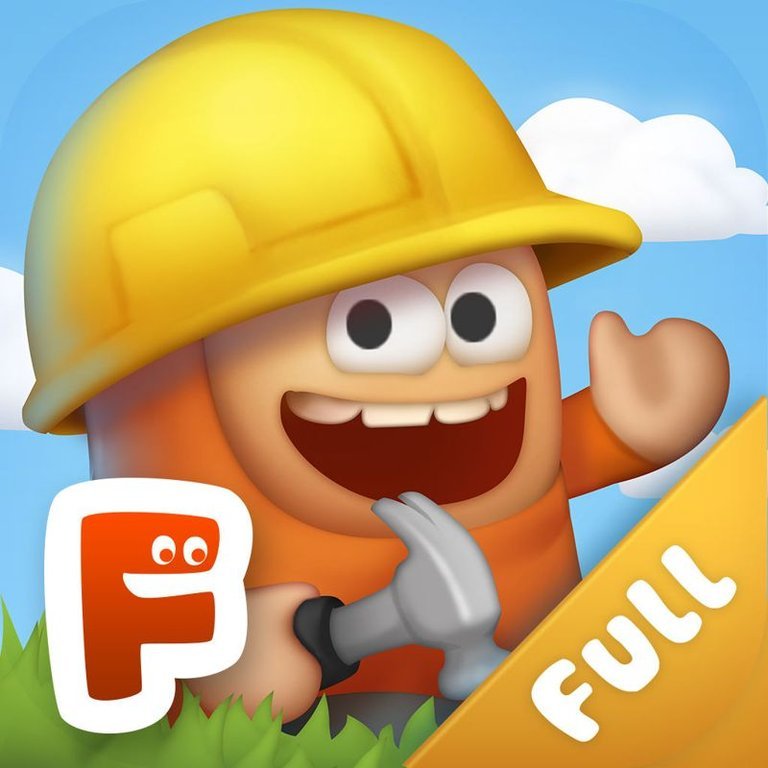
Inventioneers is a whimsical puzzle game where players collaborate with tiny, unique helpers called Inventioneers to construct creative and often eccentric inventions in order to solve inventive challenges. Set in a charming 2D side-scrolling world inspired by the works of Sven Nordqvist, including Pettson and Findus, the game emphasizes experimentation and problem-solving as players drag and drop objects and leverage the Inventioneers’ special abilities to build contraptions that achieve specific goals across various levels.
Gameplay Videos
Where to Get Inventioneers
PC
Guides & Walkthroughs
Reviews & Reception
rapidreviewsuk.com : I was not disappointed! What the game brings is dozens of levels requiring you to achieve a goal with the objects provided, which is fun for all ages.
steambase.io (84/100): Inventioneers has earned a Player Score of 84 / 100, giving it a rating of Positive.
Inventioneers: A Charming Blueprint for Creativity and Physics in Puzzle Gaming
Introduction
Imagine a world where a mischievous penguin needs rescuing from a slippery iceberg, or a backyard barbecue requires a contraption involving jumping bunnies and magnetic pulls to light the grill—welcome to Inventioneers, a 2014 mobile puzzle game that transforms the arcane principles of physics into a playground of whimsical invention. Developed by the Swedish studio Filimundus AB, Inventioneers quickly carved out a niche as an educational gem disguised as lighthearted fun, earning accolades like the Parents’ Choice Gold Award and a nomination for the Best Nordic Children’s Award. Its legacy endures not just as a title for young tinkerers but as a pioneer in accessible, family-friendly physics simulation games, predating the explosion of creative tools like The Incredible Machine reboots or modern hits such as Human Fall Flat. This review argues that Inventioneers masterfully balances educational depth with joyful experimentation, cementing its place as an underappreciated cornerstone of indie puzzle design that encourages intergenerational play and sparks scientific curiosity without ever feeling like a lecture.
Development History & Context
Filimundus AB, a boutique Swedish developer founded in 2006 and based in Älvsjö, Stockholm, specializes in child-centric educational games, drawing from a Scandinavian ethos of play-based learning. The studio’s portfolio includes titles like Pettson’s Inventions series, which directly influenced Inventioneers through special thanks to Sven Nordqvist, the creator of the beloved Pettson and Findus books—whimsical tales of inventive farmers and their animal companions. Concept and production lead Linus Feldt envisioned Inventioneers as an evolution of these inspirations, aiming to democratize physics education via interactive invention-building. Feldt, alongside lead programmer Fredrik Flyg and a tight-knit team of 14 developers (including programmers Clint Andersson and Ulrika Hjälmgården, and graphics artist Jonas Persson), crafted the game during the mid-2010s mobile boom, when touch-screen interfaces were revolutionizing casual gaming.
Technological constraints of the era shaped its design profoundly. Launched initially on iOS (iPhone and iPad in December 2014), Inventioneers leveraged Unity engine’s cross-platform capabilities to ensure smooth 2D physics simulations on modest hardware—requiring only SSE2 support and 1GB RAM for PC ports. This was crucial in an era dominated by iOS and Android’s rise, where battery life and touch precision limited complexity; the game’s side-view perspective and realtime physics (handling elements like wind, fire, and magnetism) were optimized for quick iterations, avoiding the computational heft of full 3D simulations like those in Kerbal Space Program. The 2015 PC ports (Windows, Mac, Linux) and 2016 Android release expanded accessibility, while the 2019 Nintendo Switch version introduced Joy-Con couch co-op, adapting to console family gaming amid the Switch’s hybrid appeal.
The gaming landscape of 2014 was fertile for Inventioneers. The indie puzzle scene was thriving post-World of Goo (2008) and The Room series, with educational titles like Lightbot emphasizing logic. Mobile free-to-play models (e.g., Candy Crush) pressured monetization, but Filimundus opted for a one-time purchase ($6.99 on Steam, with a free chapter trial), bucking trends to prioritize “integrity for children” and avoid in-app consumables. This vision-aligned release came amid growing parental demand for screen time that doubled as learning tools, positioning Inventioneers as a thoughtful counterpoint to hyper-casual distractions.
Narrative & Thematic Deep Dive
Inventioneers eschews a linear plot for episodic vignettes across eight thematic chapters, each a sandbox of scenarios demanding inventive problem-solving. There’s no overarching story arc or protagonist; instead, the “narrative” unfolds through 112 bite-sized inventions (15 per chapter), where players aid 18 quirky characters in absurd, everyday dilemmas. In the Tropics chapter, you assist pirates by rigging sails with wind-powered fans to snag treasure; the Backyard launches rockets via elastic bunnies; Night levels zap lasers through mirror mazes to detonate bombs; Winter rescues penguins from icy perches; and Fairy Tale teleports potions amid enchanted woods. These aren’t scripted tales but emergent stories born from player ingenuity, fostering a sense of authorship akin to Scribblenauts.
Central to the experience are the eight titular Inventioneers—adorable, Minion-like helpers with distinct superpowers that embody thematic depth. Windy generates gusts for propulsion (exploring aerodynamics); Blaze ignites fires (thermodynamics); Sporty bounces for elastic momentum; Zappy conducts electricity; Bunny embodies perpetual motion via hops; Magneta manipulates ferrous objects (electromagnetism); Freezy creates ice barriers (states of matter); and Maggie… well, her “magnetic personality” adds versatile pulls, though sources hint at subtle variations per chapter. Dialogue is minimal—sparse, cartoonish quips like a pirate’s “Arrr, me treasure!” or a penguin’s cheerful squeak—serving more as flavor than exposition. No voice acting exists, relying on sound cues and visual feedback, which keeps the focus on mechanics.
Thematically, Inventioneers delves into creativity as empowerment and the joy of failure in scientific trial-and-error. It celebrates whimsy over realism: objects can “levitate” if glued mid-air, subverting strict physics for playful abstraction, much like Nordqvist’s illustrations. Underlying motifs of collaboration shine in multiplayer modes, where up to four players (via Joy-Con on Switch) co-build, mirroring real-world teamwork in engineering. For children, it subtly teaches resilience—replaying failed inventions builds perseverance—while adults appreciate the absurd humor, like catapulting a teddy bear into a cradle. Critiques note its childish veneer belies sophisticated themes of cause-and-effect, making it a bridge between play and pedagogy, though the lack of deeper lore might leave narrative purists wanting more cohesion.
Gameplay Mechanics & Systems
At its core, Inventioneers revolves around a intuitive invention-building loop: observe a puzzle scenario, select from 100+ objects (gears, ropes, balloons, cannons, funnels, engines), place and connect them in a 2D side-view canvas, then hit play to simulate physics in realtime. Success means achieving the goal—e.g., getting a cat from a tree via pulleys and wind—unlocking stars (up to three per level for efficient or creative solutions) and new parts. Progression is chapter-based: start with Windy’s basics in a free trial chapter, then purchase full access for advanced Inventioneers and objects. No combat exists; “conflict” is environmental, like gravity or friction, resolved through clever Rube Goldberg-esque chains.
The UI is a standout—clean, touch-friendly with drag-and-drop inventory at the screen’s bottom, zoomable canvas for precise placement, and rewind/test buttons for iteration. Innovations include the Inventioneers’ powers as “active” elements: Blaze’s fire spreads realistically, Magneta’s pulls simulate fields, and Bunny’s jumps add unpredictable bounce, teaching physics organically (e.g., momentum conservation via colliding objects). The level editor is a highlight—a fully functional tool for custom inventions, shareable with up to 16 friends via in-game lists (though no public database disappoints, limiting community depth). Multiplayer shines on Switch, enabling couch co-op where players divide labor (one places magnets, another ropes), though PC versions lack local split-screen.
Flaws emerge in simulation inconsistencies: physics can vary slightly per run (e.g., a rope-swing failing then succeeding identically), frustrating precision seekers, as noted in Steam forums (e.g., “Scissors do not cut the rope” bugs in Fields level 7). Younger players might struggle with abstract sequencing, and the editor’s omissions (no conveyor belts or rotatable wheels in create mode) curb full creativity. Yet, the loop’s addictiveness—trial, error, eureka—makes it endlessly replayable, with achievements like “Supreme Inventioneer” (complete all levels) rewarding mastery. Average playtime hovers at 4 hours for the campaign, but editor extensions balloon it indefinitely.
World-Building, Art & Sound
Inventioneers‘ world is a vibrant mosaic of eight stylized biomes, each enhancing immersion without overwhelming the puzzle focus. Tropics bustle with palm-fringed shores and pirate ships; Backyard evokes suburban whimsy with fences and barbecues; Night’s starry voids host mirror labyrinths; Winter’s frosty tundras feature igloos and sleds; Fairy Tale sprinkles magic with castles and potions. These aren’t vast open worlds but contained dioramas—pre-built scaffolds where players graft inventions—fostering a toy-box atmosphere that feels alive yet contained, like a child’s diorama come to interactive life.
Art direction, handled by Jonas Persson, employs a soft, hand-drawn 2D style: rounded characters with expressive eyes, pastel palettes, and exaggerated animations (bunnies mid-hop, flames flickering cartoonishly). Scrolling side-view keeps puzzles legible, though dense levels can clutter the canvas. This visual warmth contributes to accessibility, making complex physics (e.g., laser refraction) approachable for kids while evoking Where’s Waldo?-esque charm for adults. On Switch, it scales beautifully in handheld mode, though early Linux ports suffered display glitches (e.g., Ubuntu 16.04 rendering issues).
Sound design, credited to Clint Andersson and Thomas Huttenlocher, amplifies the playfulness. Kevin MacLeod’s royalty-free tracks (e.g., upbeat “Monkey Spinning Monkeys” for Nursery, tropical “Bassa Island Game Loop”) loop per chapter, creating thematic vibes—lively for Tropics, eerie for Night—but repetition grates during long sessions. Effects shine: satisfying clanks of gears, whooshes of wind, zaps of electricity, and character-specific squeaks (penguins’ joyful slides) provide auditory feedback that reinforces learning (e.g., a “crack” signals ice forming). Overall, these elements craft a cozy, encouraging atmosphere, turning potential frustration into delightful chaos, though varied tracks would elevate endurance.
Reception & Legacy
Upon 2014 iOS launch, Inventioneers garnered positive but niche reception, with App Store users praising its educational value (e.g., a parent noting their 5-year-old’s joy in co-creating levels). Steam’s 84/100 player score (from 25 reviews) highlights its appeal: “a colorful puzzle with brain food” (miRAGE, 2019), though some decry porting oversights like absent video settings or editor limitations. No aggregate MobyScore exists, and critic reviews are sparse—IGN lists it without a rating—but awards underscore family acclaim. Commercially, it achieved 1M+ Android downloads and steady Steam sales ($3 during discounts), bolstered by cross-platform ports, though its mobile roots limited mainstream buzz.
Reputation has evolved positively: early mobile focus yielded to Switch’s 2019 co-op emphasis, revitalizing it for family gaming amid Overcooked-style trends. Bugs (e.g., inconsistent physics) prompted patches, but community forums reveal lingering gripes like custom level sharing’s friend-lock. Its influence ripples through indie physics puzzlers—echoed in Patty Stack‘s building or Unpacking‘s tactile joy—and educational titles like Kerbal Space Program derivatives, popularizing “couch-solving” for STEM. Filimundus’ model inspired kid-safe monetization, impacting games like Toca Boca series. Today, Inventioneers endures as a cult educational classic, its legacy in fostering creativity over competition, though broader visibility could amplify its industry footprint.
Conclusion
Inventioneers weaves a tapestry of inventive puzzles, physics education, and family bonding, its 112 levels and robust editor offering timeless replayability despite minor simulation quirks and sharing constraints. Filimundus AB’s vision—rooted in Nordqvist’s whimsy and executed with Unity’s precision—delivers a game that entertains while enlightening, from Windy’s breezy basics to Maggie’s magnetic mastery. In video game history, it occupies a vital niche: not a blockbuster like Minecraft, but a blueprint for thoughtful indie design that prioritizes wonder over wallets. Verdict: Essential for families and puzzle aficionados—a solid 8.5/10, deserving rediscovery on modern platforms like Switch for its enduring spark of genius.