
- Release Year: 2008
- Platforms: Windows
- Genre: Action
- Perspective: First-person
- Game Mode: Single-player
- Gameplay: Maze solving, Rune launching, Time-based defense
- Setting: Fantasy
- Average Score: 20/100
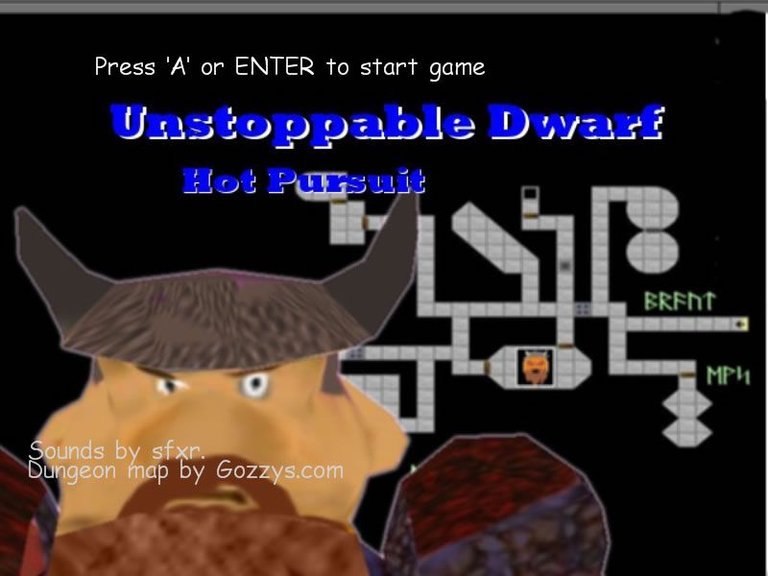
Description
Unstoppable Dwarf: Hot Pursuit is a 2008 freeware action game developed for the VGNG competition, set in a fantastical 3D maze where players must prevent an unstoppable dwarf from destroying precious artifacts. Viewed from a first-person perspective, players navigate the labyrinthine environment, strategically launching rechargeable runes—a blast rune to create new paths and divert the dwarf, and a barrier rune to slow its advance—while monitoring positions via a top-left minimap to ensure at least one artifact survives the 150-second onslaught.
Guides & Walkthroughs
Unstoppable Dwarf: Hot Pursuit: Review
Introduction
Imagine a rampaging dwarf, barreling through a labyrinthine maze with single-minded fury, hell-bent on smashing ancient artifacts to dust—while you, an unseen guardian, scramble to thwart his path with magical runes and desperate maneuvers. This is the chaotic essence of Unstoppable Dwarf: Hot Pursuit, a 2008 indie gem that captures the wild spirit of early experimental game design. Released as a freeware title for Windows, this XNA-powered action game emerged from the TIGSource VGNG competition, a niche event celebrating bite-sized, creative prototypes. Though it flew under the radar and garnered minimal attention, Unstoppable Dwarf stands as a testament to the ingenuity of solo developers in the pre-Steam indie boom era. In this review, I’ll argue that while its rough edges and simplistic mechanics prevent it from being a masterpiece, the game’s innovative rune-based interception system and dwarven destruction theme offer a fascinating snapshot of indie evolution, influencing the “unstoppable pursuer” trope in later titles and highlighting the raw potential of competition-driven creativity.
Development History & Context
Unstoppable Dwarf: Hot Pursuit was born out of the indie gaming scene’s golden age of experimentation, specifically the TIGSource Very Grand eNgine Game (VGNG) competition in 2008. TIGSource, an influential online forum for independent developers (often hailed as the precursor to modern platforms like itch.io), hosted VGNG as a 48-hour game jam-style event encouraging participants to build prototypes using Microsoft’s XNA framework. XNA, launched in 2004 and peaking in popularity around 2008, democratized game development by providing tools for cross-platform creation on PC and Xbox 360, but it came with steep learning curves—requiring C# programming knowledge and handling its own content pipeline for assets.
The developer remains unknown, listed simply as an anonymous contributor in archival sources, which aligns with the era’s ethos of pseudonymous or collective indie efforts. No formal studio is credited; this was likely a solo or small-team passion project, pieced together in the competition’s tight timeframe. Technological constraints were pronounced: XNA’s early versions struggled with complex 3D rendering on lower-end hardware, leading to basic polygonal models and minimal textures. The game supports keyboard and mouse input, with no controller options, reflecting the PC-centric focus of indie jams at the time.
The broader gaming landscape in 2008 was dominated by AAA blockbusters like Grand Theft Auto IV and Metal Gear Solid 4, but indies were carving out space through portals like TIGSource and early Steam Greenlight precursors. Freeware models were common for jam entries, distributed via forum threads (a download link persists in TIGSource archives). Unstoppable Dwarf arrived amid a surge in fantasy-themed micro-games, capitalizing on dwarves as a staple of RPG lore from titles like Warcraft III. The VGNG context emphasized quick, thematic prototypes—here, the “hot pursuit” mechanic cleverly twisted the dwarf archetype from stoic miner to unstoppable destroyer, showcasing how constraints fostered bold ideas over polish.
Narrative & Thematic Deep Dive
At its core, Unstoppable Dwarf: Hot Pursuit eschews traditional storytelling for a minimalist, objective-driven plot that unfolds through gameplay alone—no cutscenes, dialogue, or voice acting disrupt the frenetic pace. The narrative is implied rather than explicit: you play as an ethereal guardian in a 3D maze, tasked with protecting sacred artifacts from a rampaging dwarf whose motivations are left intriguingly ambiguous. Is he a cursed berserker, a greedy looter, or a force of chaotic nature? The lack of exposition invites player interpretation, turning the dwarf into a symbol of inevitable destruction—a thematic nod to entropy and futile resistance, echoing mythological tales like Sisyphus or Ragnarok’s doom.
Thematically, the game delves into contrasts between order and chaos. The artifacts represent fragile cultural heritage, evoking real-world concerns about preservation in an age of rapid technological change (meta, given 2008’s shift toward digital media). The dwarf, drawn from fantasy tropes (bearded, axe-wielding, and tireless), subverts expectations: instead of allying with the player as in Dragon Age or The Lord of the Rings adaptations, he’s the antagonist, embodying unyielding momentum. This “hot pursuit” dynamic creates tension around themes of interception and redirection—much like herding cats, but with runic magic. The 150-second timer amplifies urgency, mirroring life’s fleeting battles against inevitable loss.
Character development is sparse, as the player is voiceless and the dwarf is a silent juggernaut. However, the mini-map’s dual icons—your subtle marker versus the dwarf’s bold, charging blip—personify a cat-and-mouse rivalry, where the pursuer becomes the pursued. Dialogue is absent, but environmental storytelling shines through the maze’s crumbling walls and glowing artifacts, hinting at a larger lore of ancient dwarven ruins now under siege. In extreme detail, this setup critiques player agency: your “victory” (saving one artifact) feels pyrrhic, as the dwarf’s unstoppable nature suggests endless cycles of pursuit. For an indie prototype, these themes punch above their weight, blending humor (a dwarf on a rampage!) with philosophical undertones on futility, prefiguring narrative experiments in games like Super Meat Boy.
Gameplay Mechanics & Systems
Unstoppable Dwarf: Hot Pursuit distills action into a tense interception loop, viewed from a first-person perspective that immerses players in the maze’s confines. The core mechanic revolves around pursuing and hindering the titular dwarf as he barrels toward destructible artifacts scattered across the 3D environment. Free movement via keyboard (WASD-style) and mouse-look allows fluid navigation of the labyrinth, but collision detection feels rudimentary—walls clip slightly, and turning can be sluggish on period hardware, a hallmark of XNA’s optimization challenges.
Combat eschews direct confrontation for strategic rune deployment, an innovative system that elevates the prototype beyond basic chases. Two rune types form the arsenal: the blast rune, which explodes on impact to carve new pathways or entrances in the maze, cleverly redirecting the dwarf’s path like a magical demolition tool; and the barrier rune, a temporary wall that slows his advance, buying precious seconds. Both require recharge times (visually cued by cooldown meters), enforcing resource management—overuse leaves you vulnerable, as the dwarf’s AI follows predictable yet aggressive paths toward the nearest artifact. Launching runes involves aiming via mouse and a simple fire button, with physics-based trajectories adding skill (e.g., banking shots off walls).
Progression is absent in a traditional sense—no levels, upgrades, or branching paths—but the 150-second timer creates escalating difficulty as the dwarf gains speed or the maze feels more claustrophobic in later attempts. Victory demands protecting at least one artifact, turning failure into iterative learning: early runs teach rune timing, while mastery involves predictive positioning via the top-left mini-map, which overlays player and dwarf locations without revealing full layouts (encouraging exploration).
The UI is spartan yet functional: a heads-up display shows rune cooldowns, timer, and artifact health bars, with no HUD clutter to break immersion. Flaws abound—AI pathfinding can glitch, leading to dwarf stalls; controls lack fine-tuning, causing frustration in tight corridors; and the single-player offline mode offers no replayability beyond high-score chases (though none are tracked). Innovations like rune recharges promote tactical depth, prefiguring ability cooldowns in MOBAs, but the system’s simplicity borders on repetition. Overall, it’s a flawed but engaging loop that rewards spatial awareness over reflexes, ideal for short bursts but testing patience in longer sessions.
World-Building, Art & Sound
The game’s world is a compact 3D maze of ancient stone corridors, evoking dwarven ruins with low-poly geometry and earthy textures—think fog-shrouded halls lit by ethereal artifact glows. Built in XNA, the visuals prioritize functionality over spectacle: blocky walls in muted grays and browns create a labyrinthine atmosphere of confinement, while the dwarf model is a delightfully crude standout—a squat, bearded figure with glowing eyes and a comically oversized axe, animating in a relentless forward charge. Art direction leans minimalist fantasy, with artifacts as crystalline pedestals pulsing blue light, symbolizing vulnerability amid the drab stonework. Performance is lightweight, running on 2008-era PCs without listed specs, but aliasing and pop-in betray the prototype’s haste.
Atmosphere builds through spatial audio cues: the dwarf’s distant thuds grow to thunderous footsteps as he nears, heightening paranoia, while rune blasts echo with a satisfying magical whoosh. Sound design is basic—likely placeholder effects from XNA libraries—with no soundtrack, just ambient hums and impacts that amplify isolation. These elements synergize to foster tension: the maze’s echoing confines make every corner a potential ambush point, and the dwarf’s audio pursuit turns the soundscape into a psychological tool. Visually and aurally, it contributes a gritty, urgent experience—charming in its lo-fi aesthetic, like a digital diorama of Tolkien-esque underhalls, but limited by era constraints (no dynamic lighting or particle effects). The result is an intimate, oppressive world that punches up the theme of desperate defense, making triumphs feel earned amid the gloom.
Reception & Legacy
Upon its 2008 release, Unstoppable Dwarf: Hot Pursuit received scant critical attention, as VGNG entries rarely broke into mainstream discourse. MobyGames archives a single player rating of 1.0/5, with zero reviews, suggesting niche appeal or technical hurdles (e.g., XNA installation barriers). Commercially, as freeware downloaded via TIGSource forums, it saw minimal uptake—collected by just one tracked player—but forums buzzed with jam feedback praising its concept amid critiques of polish. No critic scores exist, but indie circles lauded the rune mechanics as clever for a 48-hour build.
Over time, its reputation has evolved into cult obscurity, preserved by archival sites like MobyGames (added March 31, 2008, last updated 2023). Legacy shines in its influence on the “unstoppable enemy” mechanic: related titles like Unstoppable Gorg (2012) and Unstoppable Hamster (2018) echo the pursuit format, while TIGSource alums credit VGNG for fostering indie innovation. It subtly impacted the genre by blending fantasy with arcade chases, inspiring games like Dwarf Fortress expansions or procedural mazes in roguelikes. In the industry, it exemplifies the freeware jam’s role in talent scouting—XNA devs often transitioned to bigger projects—and underscores preservation challenges for ephemeral prototypes. Today, it’s a historical footnote, valued by scholars for documenting indie’s grassroots, though its low score tempers acclaim as more curiosity than classic.
Conclusion
Unstoppable Dwarf: Hot Pursuit is a raw, unpolished artifact of 2008’s indie fervor, blending frantic rune tactics with dwarven mayhem in a maze of modest ambitions. Its development as a VGNG prototype highlights creative constraints yielding innovative interception gameplay, while themes of chaos versus preservation add unexpected depth. Visually and sonically sparse, it leans on atmospheric tension to elevate its world, though mechanical flaws and brevity limit replayability. Reception was muted, but its legacy endures in the “unstoppable” trope’s proliferation and indie’s archival value. Ultimately, this freeware curiosity earns a place in video game history as an emblem of experimental spirit—worthy of emulation for jam enthusiasts, but unlikely to top modern must-play lists. Verdict: A 2.5/5 historical footnote; download it for the novelty, and tip your hat to the unsung dev who unleashed the dwarf.