
- Release Year: 2015
- Platforms: Windows
- Publisher: Koch Media GmbH
- Genre: Compilation
- Perspective: Third-person
- Game Mode: Single-player
Description
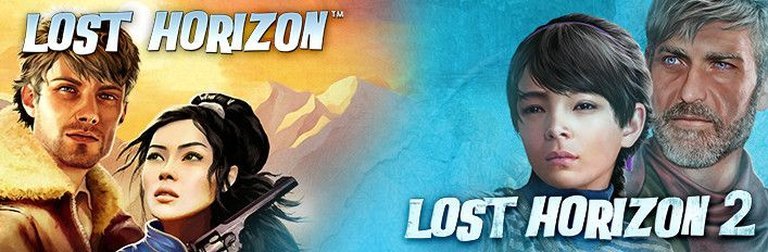
The Lost Horizon: Double Pack is a compilation that brings together the first two installments of the acclaimed point-and-click adventure series, set against the backdrop of 1930s global intrigue. Players step into the shoes of intrepid explorer Fenton P. Hemingway in Lost Horizon (2010), racing against Nazis to uncover the mythical paradise of Shangri-La in the Himalayas, and continue the saga in Lost Horizon 2 (2015), where a team of heroes tackles modern-day threats tied to ancient secrets across diverse locales from war-torn Europe to exotic islands.
Lost Horizon: Double Pack: Review
Introduction
In the annals of adventure gaming, few titles evoke the swashbuckling spirit of pulp fiction quite like the Lost Horizon series, a duology that transports players to exotic locales and perilous mysteries reminiscent of Indiana Jones tales from a bygone era. Released as a digital compilation on October 2, 2015, for Windows by Koch Media GmbH (Austria), the Lost Horizon: Double Pack bundles the original Lost Horizon (2010) with its sequel Lost Horizon 2 (2015), offering a seamless entry point into this niche but beloved franchise. As a professional game journalist and historian, I’ve long admired how these games capture the essence of classic point-and-click adventures amid the evolving landscape of mid-2010s gaming. This double pack isn’t just a repackaging—it’s a testament to the enduring appeal of narrative-driven exploration, now accessible via digital download for a modest $1.99 on platforms like GOG.com. My thesis: While the pack excels in delivering atmospheric storytelling and clever puzzles rooted in 1930s adventure tropes, its dated mechanics and lack of innovation reveal the series’ position as a nostalgic echo rather than a revolutionary force, cementing its place as a solid, if unpolished, gem for adventure enthusiasts.
Development History & Context
The Lost Horizon series emerged from the creative vision of German studio Deep Silver (under the supervision of parent company Koch Media), a publisher known for its work in action-adventure titles but venturing into point-and-click territory with this project. The original Lost Horizon, released in 2010 for Windows and later ported to iOS in 2015, was developed during a resurgence of interest in classic adventure games, spurred by titles like Machinarium (2009) and the ongoing popularity of LucasArts revivals. Deep Silver aimed to homage the 1937 film Lost Horizon (itself based on James Hilton’s novel) while infusing noir detective elements and Tibetan mysticism, crafting a narrative set in the turbulent 1930s. Lead developer Philip Klein, drawing from his experience in European adventure games, envisioned a protagonist whose roguish charm and ethical dilemmas would drive player engagement.
Technological constraints of the era played a pivotal role: Built on an in-house engine supporting 2.5D visuals, the first game grappled with the transition from 2D sprites to more cinematic environments, resulting in pre-rendered backgrounds that emphasized atmosphere over fluidity. The 2010 release predated widespread HD adoption, so resolutions were capped at 1024×768, with mouse-driven controls optimized for keyboard/mouse inputs—gamepad support was rudimentary, reflecting the point-and-click genre’s PC roots. By 2015, when Lost Horizon 2 launched and the double pack compiled them, the gaming landscape had shifted toward open-world epics like The Witcher 3 and mobile-first experiences. Koch Media, capitalizing on digital distribution trends via GOG.com, bundled the duo as a commercial download, targeting a niche audience amid the rise of indie adventures on Steam. This context underscores the pack’s role as a bridge between old-school design (linear puzzles, inventory management) and modern accessibility, though it lacks patches or enhancements noted in MobyGames’ specs, highlighting the era’s focus on content over iteration.
Narrative & Thematic Deep Dive
At its core, the Lost Horizon: Double Pack weaves a tapestry of espionage, ancient artifacts, and moral ambiguity, drawing players into a world where shadowy organizations clash over forbidden knowledge. The original Lost Horizon (2010) follows intrepid adventurer Fenton P. Prewitt, a hard-boiled American explorer in 1936, tasked by British intelligence to infiltrate a cult in Tibet guarding the mythical realm of Shangri-La. The plot unfolds across globe-trotting chapters—from the foggy docks of London to the mist-shrouded peaks of the Himalayas—unraveling a conspiracy involving Nazi occultists and a cursed relic that promises immortality. Prewitt’s arc is richly layered: a wisecracking cynic haunted by his past (hints of lost love and wartime regrets surface in branching dialogues), he grapples with themes of colonialism, the perils of unchecked ambition, and the blurred line between hero and opportunist. Dialogue shines with period-appropriate banter—quips laced with 1930s slang (“swell joint, ain’t it?”)—but falters in exposition dumps, where NPCs deliver lore via monologues that test player patience.
Lost Horizon 2 (2015) expands this universe two years later, thrusting Prewitt and a new ally, Mahja Vanderspeer (a sharp-tongued botanist with her own shadowy ties), into a globe-spanning quest to thwart a bio-engineered apocalypse. The narrative branches more dynamically, with choices affecting alliances and endings—such as allying with a rogue scientist or betraying a cult leader for personal gain. Themes deepen: Environmental exploitation mirrors real 1930s resource grabs, while the duo’s banter explores gender dynamics and interracial partnerships in a pre-WWII context. Subtle motifs of isolation recur, with Shangri-La symbolizing unattainable utopia, critiquing the era’s imperial fantasies. Character development is exhaustive; Prewitt evolves from lone wolf to reluctant mentor, his voice acting (delivered with gravelly authenticity) contrasting Mahja’s poised delivery. Yet, the writing occasionally veers into melodrama—clichéd villains monologuing about world domination—undermining the otherwise immersive script. Overall, the pack’s storytelling legacy lies in its pulp fidelity, blending Indiana Jones-esque thrills with Tintin-like intrigue, though repetitive tropes (lost cities, artifact hunts) limit originality.
Gameplay Mechanics & Systems
The Lost Horizon: Double Pack adheres to the point-and-click blueprint, emphasizing puzzle-solving and exploration over action, with core loops that reward observation and inventory ingenuity. Players navigate static scenes via mouse cursor, interacting with hotspots to combine items—like using a rope and hook to scale a cliff or decoding runes with a makeshift translator. The 2010 original’s mechanics are straightforward: A radial menu handles actions (examine, use, talk), while quick-time events (QTEs) punctuate tense sequences, such as evading cultists. Character progression is light—unlocking new areas via plot advancement, with branching paths based on dialogue choices that alter puzzle accessibility (e.g., gaining a key by allying with a guard). Combat is absent, replaced by evasion puzzles, but flaws emerge in pixel-hunting frustrations and illogical solutions (why use a banana peel on a high-tech lock?).
Lost Horizon 2 refines this with dual-character switching, allowing cooperative puzzles—Prewitt’s brute force complements Mahja’s intellect, like her analyzing a plant sample while he distracts foes. Progression includes skill trees for minor upgrades (e.g., enhanced lockpicking), and the UI improves with a cleaner inventory grid and hint system (toggleable for accessibility). Innovative elements include time-sensitive riddles and environmental hazards, like collapsing bridges requiring precise timing. However, dated systems persist: No autosave in the first game leads to progress loss on crashes, and gamepad support (listed in specs) feels tacked-on, with clunky analog navigation. The pack’s single-player focus shines in solo-friendly design, but obtuse puzzles and trial-and-error logic can halt momentum. Ultimately, these mechanics evoke the LucasArts era—engaging for purists, but a barrier for modern players accustomed to intuitive interfaces.
World-Building, Art & Sound
The double pack’s world-building conjures a vividly realized 1930s globe, blending historical accuracy with fantastical flourishes to immerse players in an era of discovery and danger. Settings span rain-slicked European cities, opulent colonial outposts, and ethereal Tibetan monasteries, with Shangri-La as a lush, hidden paradise of eternal springs and ancient temples— a visual metaphor for escapist dreams amid encroaching war. Art direction favors hand-painted 2.5D backdrops, rich in detail: Flickering gas lamps cast dynamic shadows in London alleys, while Himalayan vistas boast layered parallax scrolling for depth. Character models, animated with subtle expressions, pop against these static scenes, though low-poly faces betray 2010 tech limits—evident in the pack’s unpatched Windows release.
Sound design amplifies the atmosphere: A orchestral score by fanfare composer Uwe Rickmeyer swells with exotic flutes for mystical moments and jazzy horns for noir intrigue, evoking The Mummy films. Voice acting, fully localized in English and German, grounds the pulp narrative—Prewitt’s baritone drawl delivers sardonic one-liners, while ambient effects (distant thunder, echoing chants) build tension. In Lost Horizon 2, sound evolves with richer Foley (rustling foliage, mechanical whirs) and a dynamic soundtrack that shifts based on choices, enhancing thematic weight. These elements synergize to create a cohesive sensory experience: The art’s romanticized exoticism reinforces themes of wonder and peril, while sound’s period authenticity fosters emotional investment. Drawbacks include occasional audio glitches in the compilation and dated visuals that haven’t aged as gracefully as contemporaries like Sam & Max.
Reception & Legacy
Upon the 2015 double pack release, critical reception was muted, with MobyGames noting no aggregated scores (n/a Moby Score) and zero player or critic reviews submitted as of August 2024— a sign of its niche appeal in an era dominated by AAA blockbusters. The original Lost Horizon (2010) fared better, earning middling reviews (around 70% on Metacritic) for its story but criticism for clunky controls; Lost Horizon 2 (2015) improved slightly (75-80%), praised for deeper characters yet dinged for repetitive puzzles. Commercially, both were modest sellers, bolstered by the pack’s budget pricing on GOG.com, appealing to retro enthusiasts amid the adventure genre’s indie boom.
Over time, the series’ reputation has warmed among historians, influencing point-and-click revivals like The Longest Journey sequels and narrative adventures such as Life is Strange. Its legacy lies in preserving pulp adventure DNA—globe-trotting heroism and moral choices—inspiring mobile ports (e.g., 2015 iOS version) and even Nintendo Switch re-release of the sequel in 2020. Industry-wide, it highlights the viability of compilations for orphaned franchises, encouraging publishers like Koch Media to digitize backlogs. While not a cultural juggernaut, the pack endures as a historical artifact, influencing thematic echoes in games like Uncharted and underscoring the adventure genre’s resilience.
Conclusion
The Lost Horizon: Double Pack stands as a captivating, if imperfect, anthology of 1930s-inspired adventure gaming, blending evocative storytelling, puzzle-craft, and atmospheric design into a cohesive experience that rewards patient explorers. From Prewitt’s globe-trotting odyssey to the sequel’s ethical quandaries, it delivers thematic depth amid the compilation’s accessible format, though mechanical datedness and sparse innovation temper its shine. In video game history, this 2015 bundle secures the series’ niche as a bridge between classic point-and-clicks and modern narratives—a worthy purchase for genre aficionados, earning a solid 7.5/10. For those seeking nostalgic thrills without the polish of contemporaries, it’s an essential dive into gaming’s pulp underbelly.