
- Release Year: 2008
- Platforms: Windows
- Publisher: GSP Software
- Developer: Avanquest Software Publishing Ltd.
- Genre: Compilation
- Game Mode: Single-player
- Average Score: 55/100
Description
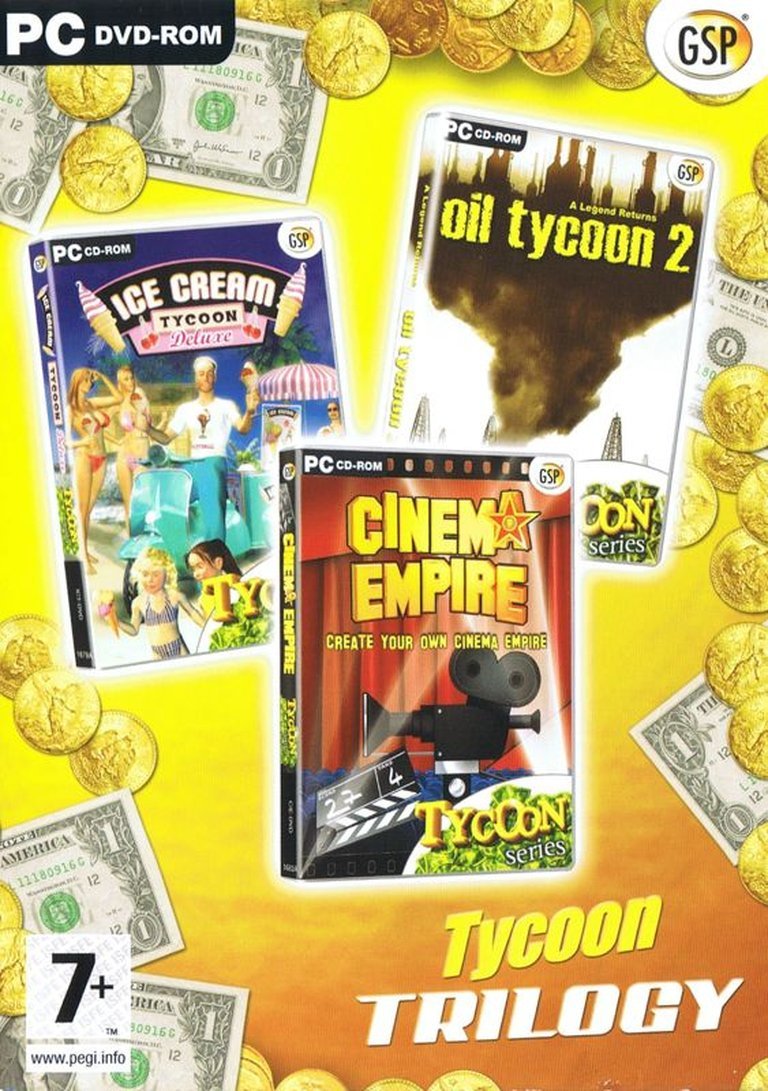
Tycoon Trilogy is a 2008 Windows compilation of three business simulation games from Avanquest’s Tycoon series, where players take on the role of aspiring entrepreneurs building and managing empires in diverse industries. In Ice Cream Tycoon, craft and sell delectable frozen treats to satisfy customers; in Cinema Empire, construct theaters and curate films to attract moviegoers; and in Oil Tycoon 2 (also known as Big Oil), explore resources and refine petroleum to fuel economic dominance, all set in vibrant, strategic simulation environments that emphasize resource management, expansion, and profit maximization.
Guides & Walkthroughs
Tycoon Trilogy: Review
Introduction
In the annals of simulation gaming, few subgenres evoke the thrill of empire-building quite like the tycoon series, where players trade in grand visions of capitalist conquest for the gritty details of spreadsheets, supply chains, and customer whims. Released in 2008 as a budget-friendly compilation for Windows PCs, Tycoon Trilogy bundles three mid-2000s entries from Avanquest’s unassuming Tycoon lineup: Ice Cream Tycoon (2006), Cinema Empire (2007), and Oil Tycoon 2 (also known as Big Oil, 2005). This trio promises a smorgasbord of entrepreneurial escapades, from scooping frozen treats to screening blockbusters and drilling for black gold. As a game historian, I’ve pored over the sparse but telling records of this overlooked gem, and my thesis is clear: Tycoon Trilogy represents the democratizing spirit of early digital-age business sims—accessible, iterative, and unpretentious—but its lack of innovation and depth cements it as a footnote rather than a cornerstone in the genre’s evolution, appealing primarily to nostalgic completists or bargain-bin hunters seeking low-stakes management fun.
Development History & Context
The story of Tycoon Trilogy is less a tale of visionary pioneers and more a reflection of the mid-2000s PC gaming ecosystem, where budget publishers like Avanquest Software Publishing and Global Software Publishing (GSP) churned out compilations to capitalize on the tycoon craze sparked by heavyweights like RollerCoaster Tycoon and Zoo Tycoon. Avanquest, a French company known for aggregating software packs, spearheaded the individual titles under their Tycoon banner, though specific developers remain shrouded in anonymity—listed vaguely as “Various” across databases like MobyGames and GameFAQs. This opacity is typical of the era’s outsourced Eastern European or indie studios, often working under tight deadlines to produce quick-turnaround sims for the European market.
The trilogy’s roots trace back to 2005 with Oil Tycoon 2, a sequel iterating on its predecessor’s oil-rig management, followed by Ice Cream Tycoon in 2006 and Cinema Empire in 2007. Technological constraints were modest: each game targeted entry-level hardware, requiring only a Pentium 4 processor, 512 MB RAM, Windows 98 or later, and a basic 3D accelerator with 128 MB video memory. This aligned with the post-XP era’s push for accessibility, where broadband was becoming standard but high-end GPUs were not. The 2008 compilation arrived on DVD-ROM via GSP (a UK-based arm of Avanquest), bundled for commercial sale at a PEGI 7 rating—suitable for family play without mature themes.
The gaming landscape at the time was dominated by immersive sims like The Sims 2 and expansive strategy titles, but tycoon games thrived in the casual sector. Compilations like this one catered to impulse buyers at retail chains, offering value in an age before digital distribution like Steam fully disrupted physical media. Avanquest’s vision seems to have been pragmatic: repackage solid-if-unremarkable sims to extend shelf life, emphasizing single-player offline modes with optional internet multiplayer (likely for basic leaderboards or co-op trading, though undocumented). No grand innovations here—just efficient recycling of proven formulas amid the bubble of business management games, before mobile tycoons like Hay Day redefined the genre for touchscreens.
Narrative & Thematic Deep Dive
Tycoon simulations like those in Tycoon Trilogy eschew sprawling epics for procedural storytelling, where “plot” emerges from the player’s decisions rather than scripted drama. Across the three titles, narrative is minimalist, serving as a scaffold for gameplay rather than a focal point. In Ice Cream Tycoon, you embody an aspiring entrepreneur starting from a humble street cart, expanding into a frozen dessert empire. The “story” unfolds through tutorial prompts and milestone events—like weathering a heatwave that boosts sales or navigating supplier shortages—culminating in a rags-to-riches arc. Characters are archetypal: quirky customers demanding custom flavors, rival vendors undercutting prices, and a silent avatar representing unyielding ambition. Dialogue is sparse, limited to tooltips and pop-up advice, such as “Hire more staff to handle the rush!” which reinforces themes of scalability and resource allocation.
Cinema Empire shifts to the glitzy world of showbiz, where your tycoon builds and manages cinema chains. The narrative thread follows seasonal blockbusters and audience trends, with “events” like a Hollywood premiere drawing crowds or a scandalous flop tanking ratings. Themes here delve into cultural consumption: the commodification of entertainment, balancing art (indie films) against commerce (popcorn sales and seating upgrades). Characters include faceless patrons with preference meters—families loving animations, teens craving horrors—and managerial NPCs offering dry quips like “Upgrade the projectors to keep the crowds coming back.” It’s a subtle critique of capitalism’s grip on leisure, though never overt.
Oil Tycoon 2 (rebranded as Big Oil in the compilation) grounds the trilogy in gritty realism, with a plot centered on prospecting, drilling, and refining amid environmental and economic hurdles. Starting as a wildcatter in barren fields, you navigate oil booms and busts, with narrative beats tied to global events like price spikes or spills (handled mechanically, not dramatically). Themes explore resource exploitation: the allure of wealth versus ethical costs, hinted at through rising “pollution” penalties or regulatory fines. Characters are utilitarian—geologists reporting reserves, executives demanding profits—with dialogue boiled down to efficiency reports: “New rig online—production up 20%.”
Overall, the trilogy’s themes coalesce around entrepreneurial perseverance, the double-edged sword of growth (innovation vs. overexpansion), and the simulation of real-world business cycles. Lacking voice acting or branching stories, it prioritizes emergent narratives, where success feels earned through trial-and-error. Yet, this depth is superficial; without compelling characters or moral dilemmas, the games evoke the monotony of bureaucracy more than inspirational tales, a hallmark of budget tycoons that prioritize play over prose.
Gameplay Mechanics & Systems
At its core, Tycoon Trilogy delivers iterative business management loops, each game a self-contained sim with shared DNA: resource gathering, expansion, and profit optimization. The UI is straightforward—point-and-click interfaces with drag-and-drop building, radial menus for upgrades, and dashboard overviews—optimized for mouse control on Windows, though clunky by modern standards (no controller support, and the 2008 compilation lacks patches for post-Vista OSes).
In Ice Cream Tycoon, the loop revolves around flavor R&D, shop placement, and supply chain logistics. Start by mixing ingredients to create scoops, balancing sweetness against cost; hire staff for serving and marketing; and respond to seasonal demands (e.g., sorbets in summer). Progression ties to a tech tree unlocking trucks or franchises, with flawed systems like unpredictable weather events that can bankrupt novices. Innovation shines in customization—experiment with 20+ flavors—but repetition sets in without varied challenges.
Cinema Empire refines the formula for entertainment management: scout films from a catalog, build multiplexes with themed screens, and micromanage concessions/snacks. Core mechanics include audience simulation (mood meters affected by wait times or film quality) and expansion via loans, with multiplayer allowing online trading of movie rights (a rare feature for the era, requiring internet). Character progression? Minimal—your tycoon levels up via achievements, unlocking perks like VIP lounges. Flaws emerge in the rigid scheduling system, where poor film picks lead to empty seats, and the UI’s cluttered theater blueprints can overwhelm.
Oil Tycoon 2 emphasizes strategic depth in extraction: survey lands for deposits, deploy rigs and pipelines, and sell refined products amid fluctuating markets. The loop integrates risk—drilling failures waste cash, environmental disasters hike costs—with progression through company tiers (from startup to conglomerate). Innovative elements include a dynamic economy model simulating OPEC-like influences, but bugs in pathfinding (e.g., inefficient truck routes) and opaque AI rivals frustrate. Combat? Absent—these are pure sims, “battling” via economic warfare like price undercutting.
Across the board, systems are solid for 2005-2007 tech: autosave prevents total loss, tutorials ease entry, and scalability allows endless play. Yet, flaws abound—no mod support, dated graphics causing slowdowns on period hardware, and multiplayer that’s vestigial at best. As a compilation, seamless menu-switching adds value, but shared engine quirks (e.g., 800MB install bloat) highlight budgetary corners cut.
World-Building, Art & Sound
The worlds of Tycoon Trilogy are functional dioramas, not immersive realms—cartoonish 2.5D environments rendered in low-poly 3D that prioritize clarity over spectacle. Ice Cream Tycoon paints a vibrant urban sprawl: bustling parks with pastel carts, evolving into neon-lit malls under sunny skies (or rainy downturns). Art direction evokes whimsical capitalism—adorable animal mascots on vans, flavor icons popping with color—fostering a lighthearted atmosphere that makes micromanagement feel playful. Sound design complements with jaunty chiptunes, customer chatter (“Yum!”), and scooping SFX, though loops grow grating after hours.
Cinema Empire‘s Hollywood homage builds a glamorous yet gritty setting: art deco theaters amid cityscapes, interiors aglow with marquee lights and velvet seats. Visuals capture the magic of movie nights—crowds filing in, trailers blaring—but exteriors feel static, lacking dynamic weather. Audio shines with orchestral swells for premieres and popcorn-crunching ambiance, enhancing the escapist vibe, yet voice lines are text-only, missing cinematic flair.
Oil Tycoon 2 contrasts with industrial grit: dusty plains dotted by derricks, refineries belching smoke under overcast skies. World-building delves into ecological tension—barren wastelands post-extraction—while art uses muted earth tones for realism. Soundscape is immersive: drilling rumbles, gushing oil, and tense market tickers, punctuated by a folksy soundtrack that underscores rugged individualism.
Collectively, these elements craft approachable atmospheres—colorful for leisure tycoons, somber for oil—bolstering the sim experience by making abstract numbers tangible. On 2008 hardware, they ran smoothly, contributing to a cozy, era-specific charm that evokes office daydreams more than epic adventures.
Reception & Legacy
Upon its 2008 European launch, Tycoon Trilogy flew under the radar, with no critic reviews on Metacritic or MobyGames— a telling silence for a budget title amid Spore‘s hype and Grand Theft Auto IV‘s dominance. Commercial performance was modest; as a DVD-ROM pack from GSP, it targeted value seekers, likely selling in the low thousands via retail bundles. User ratings on sites like VG Times hover at a generic 5.5/10 across categories, reflecting indifference rather than disdain—no passionate forums or fan patches, just quiet obscurity. GameFAQs echoes this with unrated stats, underscoring its niche appeal.
Over time, reputation has stagnated as a curiosity for tycoon historians. Unlike RollerCoaster Tycoon‘s enduring legacy (bolstered by 2021 remasters, as nostalgic Reddit threads gush), Tycoon Trilogy influenced no major titles—its mechanics prefigure mobile sims like AdVenture Capitalist but lack the polish to inspire. Industry-wise, it exemplifies the compilation boom’s role in preserving mid-tier games, yet its absence from modern platforms (no Steam port) limits evolution. For scholars, it’s a snapshot of accessible sims democratizing gaming for non-gamers, but commercially, it’s forgotten amid flashier heirs.
Conclusion
Tycoon Trilogy distills the essence of early-2000s business sims into a tidy, if unremarkable, package: three flavors of management that reward patience over spectacle, built on humble tech for everyday players. Its strengths—intuitive loops, thematic variety, and bargain accessibility—clash with dated systems, narrative shallowness, and critical void, rendering it a relic rather than a revelation. In video game history, it occupies a peripheral space: a testament to the genre’s broad appeal during PC gaming’s golden casual era, worthy of emulation for retro enthusiasts but unlikely to headline any hall of fame. Verdict: 6/10—a solid starter kit for tycoon novices, but don’t expect empires to rival the greats. If you’re archiving the obscure, scoop it up; otherwise, pivot to more illustrious simulations.